Tuberculosis: Symptoms, Testing, Treatment, and Infection Control

Tuberculosis spreads through the air when a person with active pulmonary or throat TB coughs, speaks, sings, or sneezes. TB can be latent, meaning the bacteria are present but inactive and not contagious, or active, meaning illness is present and treatment is needed.
Key Takeaways
- Tuberculosis spreads through the air when a person with active pulmonary or throat TB coughs, speaks, sings, or sneezes.
- TB can be latent, meaning the bacteria are present but inactive and not contagious, or active, meaning illness is present and treatment is needed.
- Testing may include a TB blood test or skin test, chest imaging, sputum tests, and drug susceptibility testing.
- Active TB is treated with a combination of antibiotics taken for several months, and completing treatment is essential.
- Infection control measures, including ventilation, masking, isolation when advised, and contact tracing, help protect families and communities.
Tuberculosis, often called TB, is an infection caused by Mycobacterium tuberculosis that most often affects the lungs but can involve other parts of the body. With timely testing, appropriate treatment, and careful infection control, TB can usually be managed effectively and transmission can be reduced.
Overview
Tuberculosis is an infectious disease caused by bacteria called Mycobacterium tuberculosis. It most commonly affects the lungs, where it is known as pulmonary TB, but it can also affect lymph nodes, bones, the kidneys, the brain and spinal cord, or other organs. TB is a serious condition, but it is also a well-studied disease with established tests, effective treatment pathways, and public health measures that help prevent spread.
TB is usually described in two main forms: latent TB infection and active TB disease. In latent TB infection, a person has TB bacteria in the body, but the immune system keeps them inactive. The person feels well, has no symptoms, and cannot spread TB to others. In active TB disease, the bacteria multiply and cause illness; when active TB affects the lungs or throat, it can be contagious.
Transmission occurs through tiny airborne particles released when a person with contagious TB coughs, speaks, sings, or sneezes. TB does not spread through casual touch, sharing dishes, shaking hands, or touching surfaces. The risk is higher with prolonged indoor exposure, especially in poorly ventilated spaces, and lower with brief outdoor contact.
Symptoms of Active Tuberculosis

Symptoms of active pulmonary TB often develop gradually over weeks or months. Because early symptoms may be mild, some people may delay seeking care or assume they have another respiratory infection. A persistent cough is one of the most important warning signs, especially when it lasts three weeks or longer.
Common symptoms of active TB can include:
- Cough lasting three weeks or more
- Coughing up phlegm or, in some cases, blood
- Chest pain or discomfort with breathing or coughing
- Fever, chills, or night sweats
- Unexplained weight loss or loss of appetite
- Fatigue, weakness, or reduced ability to carry out usual activities
TB outside the lungs, called extrapulmonary TB, may cause different symptoms depending on the organ involved. For example, TB in the lymph nodes can cause persistent swelling, TB in the spine may cause back pain, and TB meningitis can cause headache, fever, confusion, or neck stiffness. These forms are generally not spread through the air unless TB also involves the lungs or throat.
Latent TB infection does not cause symptoms. A person with latent TB may feel completely healthy, but testing can still show immune evidence of TB infection. Treating latent TB may be recommended for people at higher risk of developing active disease.
Causes and Risk Factors
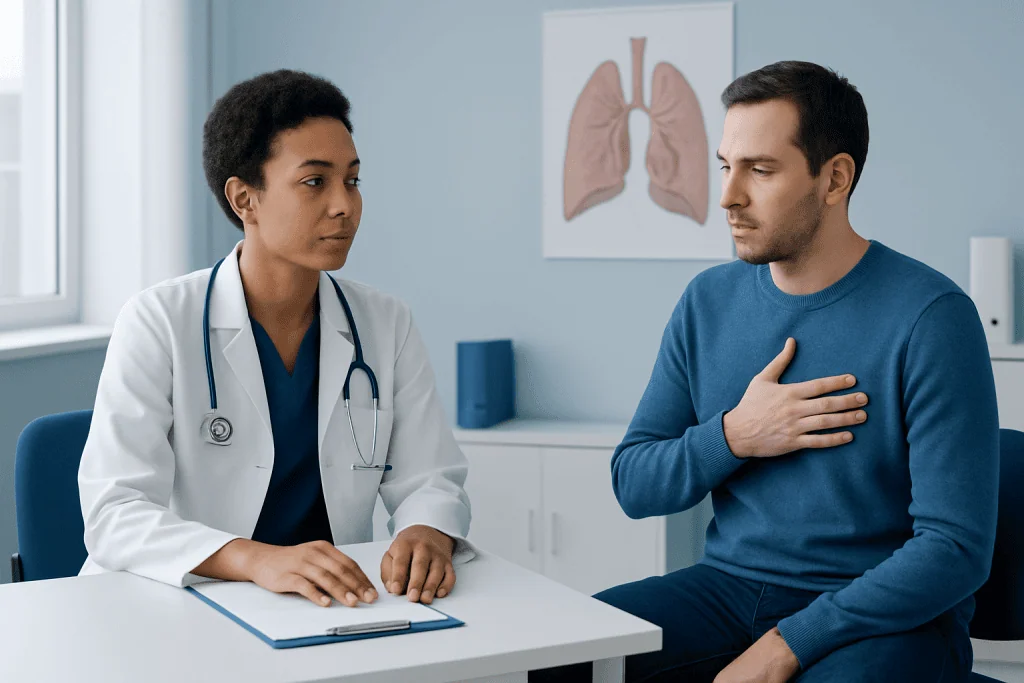
TB is caused by inhaling airborne particles that contain Mycobacterium tuberculosis. After exposure, the immune system may clear the bacteria, contain them in a latent state, or allow them to progress to active disease. Progression can happen soon after infection, but it can also occur years later if the immune system becomes weakened.
Some people have a higher risk of TB exposure, while others have a higher risk of developing active disease after infection. Risk factors include close or prolonged contact with someone who has contagious TB, living or working in crowded settings, being born in or traveling for extended periods to areas where TB is more common, and working in healthcare or community settings where exposure may occur.
Medical and immune-related risk factors also matter. People with HIV, those receiving immune-suppressing medicines, patients with certain cancers or organ transplants, people with chronic kidney disease, and those with poorly controlled diabetes may be more vulnerable. Malnutrition, smoking, and substance use can also affect lung health and immune defense.
Children, older adults, and people with weakened immune systems may develop more severe disease or atypical symptoms. For this reason, healthcare professionals consider both symptoms and individual risk factors when deciding which TB tests are appropriate.
Testing and Diagnosis
TB diagnosis usually begins with a medical history, symptom review, physical examination, and assessment of exposure risk. A doctor may ask about cough duration, fever, weight loss, travel, prior TB treatment, workplace or household exposure, and immune system conditions. This information helps determine whether testing should focus on latent infection, active disease, or both.
Two tests are commonly used to detect TB infection: the TB skin test and TB blood tests, also called interferon-gamma release assays. These tests show whether the immune system has reacted to TB bacteria, but they do not by themselves prove whether TB is active or latent. A positive result usually needs further evaluation, especially if symptoms or chest imaging suggest active disease.
When active pulmonary TB is suspected, chest X-ray or other imaging may be used to look for lung changes. Sputum samples are important because they can be examined for TB bacteria using smear microscopy, molecular tests such as nucleic acid amplification tests, and culture. Culture can take longer, but it is important because it can confirm the diagnosis and allow drug susceptibility testing.
Drug susceptibility testing helps identify whether the TB bacteria are resistant to standard medicines. This is essential for choosing an effective treatment plan. If TB is suspected outside the lungs, doctors may test samples from the affected site, such as lymph node tissue, cerebrospinal fluid, urine, or other body fluids, depending on the symptoms.
Treatment Options
Active TB disease is treated with a combination of antibiotics, usually taken for several months. Multiple medicines are used together because TB bacteria can be slow-growing and may develop resistance if treatment is incomplete or inadequate. The exact regimen and duration depend on the site of disease, drug susceptibility results, previous treatment history, age, pregnancy status, other medical conditions, and possible medicine interactions.
For drug-susceptible pulmonary TB, treatment commonly begins with several medicines and may later continue with fewer medicines once the bacteria are responding and susceptibility is known. Patients need regular follow-up to check symptoms, test results, adherence, and side effects. A healthcare team may request repeat sputum tests to monitor whether TB bacteria are still present.
Latent TB infection is treated differently from active disease. Because the person is not ill and not contagious, the goal is to reduce the risk that latent infection will become active in the future. Several preventive treatment options exist, and a clinician chooses the most suitable plan after considering age, liver health, pregnancy, HIV status, and other medicines.
Drug-resistant TB requires specialist care and a carefully designed regimen. Treatment may involve different medicines and closer monitoring. Regardless of the regimen, completing treatment is critical; stopping early can allow TB to return and may contribute to drug resistance. Patients should contact their healthcare team promptly if they experience concerning symptoms during treatment, such as yellowing of the skin or eyes, severe nausea, vision changes, numbness, rash, or other new problems.
Infection Control and Self-Care
Infection control is an important part of TB care, especially before treatment has made a person noninfectious. A person with suspected or confirmed contagious pulmonary or throat TB may be advised to stay home, avoid visitors, sleep in a separate well-ventilated room when possible, and wear a mask when around others. Healthcare facilities may use airborne isolation rooms and respirators to protect staff and other patients.
Good ventilation helps reduce the concentration of airborne particles. Opening windows when safe, spending time outdoors rather than in enclosed spaces, and avoiding crowded indoor areas during the contagious period can lower risk. Covering the mouth and nose when coughing, disposing of tissues safely, and performing hand hygiene are also helpful general respiratory habits, although TB is mainly airborne rather than spread by hands or surfaces.
Public health teams may arrange contact tracing to identify people who shared air with the infectious person for significant periods. Household members, close contacts, young children, and people with weakened immune systems are often prioritized for testing. Contact tracing is a standard public health measure and should be understood as prevention, not blame.
Self-care during TB treatment includes taking medicines exactly as prescribed, attending follow-up appointments, eating as well as possible, resting, avoiding smoking, and discussing alcohol use with a clinician because some TB medicines can affect the liver. Patients should also tell their doctor about all medicines and supplements they take, as TB medicines can interact with many treatments.
Prevention, Vaccination, and When to See a Doctor
Prevention depends on early diagnosis, effective treatment, and reducing exposure in settings where TB can spread. People known to have been in close contact with someone with contagious TB should follow public health advice for screening, even if they feel well. Treating latent TB infection in people at higher risk is an important way to prevent future active disease.
The bacille Calmette-Guerin vaccine, known as BCG, is used in many countries to help protect young children against severe forms of TB, such as TB meningitis. Its protection against adult pulmonary TB varies, so vaccinated people may still need TB testing if they have symptoms or exposure. A history of BCG vaccination should be shared with the healthcare provider, as it can influence interpretation of some tests.
A doctor should be consulted if a person has a cough lasting three weeks or longer, coughs up blood, has persistent fever or night sweats, loses weight without explanation, or has been in close contact with someone diagnosed with TB. Urgent medical care is appropriate for severe breathing difficulty, confusion, severe headache with neck stiffness, or other serious symptoms.
People planning international travel, starting immune-suppressing treatment, living with HIV, or working in high-risk settings may need TB screening based on medical advice. Acibadem International’s multidisciplinary specialists and JCI-accredited hospitals diagnose and treat tuberculosis and other respiratory infections for international patients, with care planned according to each patient’s clinical needs and public health requirements.
Frequently asked questions
Is tuberculosis contagious?
Active TB in the lungs or throat can be contagious because bacteria can spread through the air. Latent TB infection is not contagious and does not cause symptoms. TB affecting only other parts of the body is usually not contagious unless the lungs or throat are also involved.
What is the difference between latent TB and active TB?
Latent TB means TB bacteria are present in the body but inactive, so the person feels well and cannot spread TB. Active TB means the bacteria are multiplying and causing illness. Active TB needs prompt treatment, and latent TB may also be treated to prevent future disease.
How is tuberculosis tested?
Testing may begin with a TB blood test or a TB skin test to look for immune evidence of infection. If active TB is suspected, chest imaging and sputum tests are often needed. Culture and drug susceptibility testing help confirm TB and guide the most effective treatment.
How long does TB treatment take?
Treatment for active drug-susceptible TB usually takes several months and requires more than one antibiotic. The exact duration depends on the type of TB, test results, drug susceptibility, and the patient’s overall health. Drug-resistant TB or TB in certain body sites may require more complex treatment.
Can TB come back after treatment?
TB can recur, especially if treatment was not completed or if the bacteria were drug-resistant. Completing the full treatment plan greatly reduces this risk. Follow-up appointments help doctors confirm response to treatment and manage any concerns early.
Does the BCG vaccine prevent all tuberculosis?
The BCG vaccine can help protect young children from severe forms of TB, but it does not prevent all TB infections or all adult lung TB. People who received BCG can still need testing after exposure or if symptoms develop. A healthcare professional can choose the most appropriate test based on vaccination history and risk.
References
- World Health Organization
- Centers for Disease Control and Prevention
- European Centre for Disease Prevention and Control
- American Thoracic Society
- National Institute for Health and Care Excellence
This article is for general information only and is not a substitute for professional medical advice. Please consult a qualified doctor about your individual situation.
Tuberculosis in Turkey — costs, top hospitals & a free quote
JCI-accredited · board-certified surgeons · reply within 24h
Add us as a Preferred Source to see more of our trusted health content across Google Search, AI Overviews and Discover.

More from the Health Library



Related Specialists

Dr. Ahmet Emin Yeğinboy
General Surgery
Prof. Dr. Bülent Karabulut
Medical Oncology
Dr. Senem Almaç Deniz
Otorhinolaryngology
Assoc. Prof. Dr. Şevket Tolga Tombul
Urology