Understanding Ankylosing Spondylitis: A Complete Patient Guide

Ankylosing spondylitis is a form of inflammatory arthritis that usually begins in the lower back and pelvis. Typical symptoms include back pain that improves with movement, morning stiffness, and reduced flexibility.
Key Takeaways
- Ankylosing spondylitis is a form of inflammatory arthritis that usually begins in the lower back and pelvis.
- Typical symptoms include back pain that improves with movement, morning stiffness, and reduced flexibility.
- Diagnosis is based on symptoms, physical examination, imaging, and blood tests rather than a single test alone.
- Treatment often combines exercise and physical therapy with anti-inflammatory or biologic medicines when needed.
- Early medical evaluation can help reduce pain, maintain posture, and prevent complications.
Ankylosing spondylitis is a long-term inflammatory disease that mainly affects the spine and sacroiliac joints, often causing persistent back pain and morning stiffness. With early diagnosis, exercise, medication, and ongoing follow-up, many people can control symptoms and protect mobility.
Overview: what ankylosing spondylitis is
Ankylosing spondylitis is a chronic inflammatory disease that most often affects the spine and the sacroiliac joints, which connect the lower spine to the pelvis. It belongs to a wider family of conditions called spondyloarthritis. Over time, ongoing inflammation can cause pain, stiffness, and reduced flexibility, especially in the lower back.
Unlike back pain caused mainly by strain or disc problems, ankylosing spondylitis often behaves like inflammatory back pain. Symptoms tend to be worse after rest, especially in the morning or during the night, and improve with movement. This pattern is one of the most useful clues that medical evaluation is needed.
The condition does not affect everyone in the same way. Some people have mild symptoms that respond well to exercise and medication, while others develop more persistent inflammation involving the hips, chest wall, shoulders, eyes, or other parts of the body. Because the condition can change gradually, diagnosis is sometimes delayed.
Although ankylosing spondylitis is a lifelong condition, it is treatable. Modern care focuses on controlling inflammation, preserving mobility, reducing pain, and helping the person stay active in daily life. A specialist may also evaluate related conditions such as inflammatory arthritis when symptoms overlap.
Symptoms and how they may feel day to day
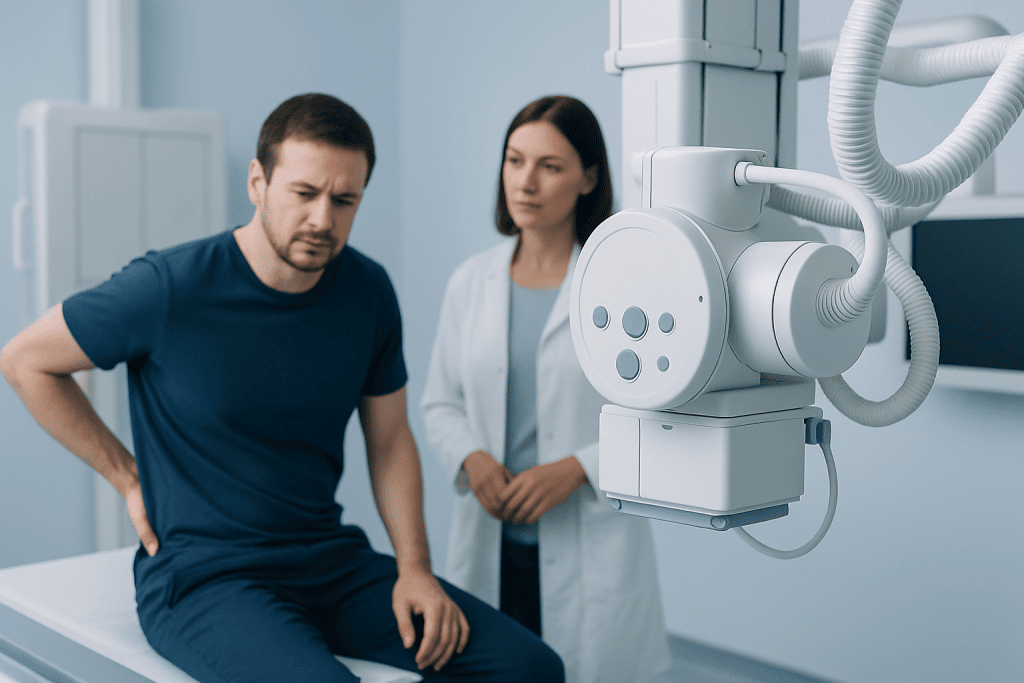
The most common symptom of ankylosing spondylitis is chronic pain and stiffness in the lower back or buttocks. This discomfort often develops gradually rather than suddenly. Many people notice that symptoms are more intense first thing in the morning or after sitting for a long time, and ease once they start moving.
Pain can alternate from one side of the buttocks to the other, especially when the sacroiliac joints are inflamed. Some people also feel stiffness through the middle or upper back, neck, hips, or shoulders. As the chest wall can be involved, taking a deep breath may feel tight or uncomfortable.
Other symptoms may include fatigue, poor sleep due to nighttime pain, and reduced range of motion. In some cases, inflammation affects areas beyond the spine. These extra-articular features may include eye inflammation, bowel symptoms, or heel pain where tendons attach to bone.
- Persistent lower back pain lasting more than 3 months
- Morning stiffness that improves with activity
- Night pain that may wake the person in the second half of sleep
- Hip, buttock, shoulder, or chest wall discomfort
- Fatigue and reduced flexibility
- Episodes of a red, painful eye with light sensitivity
Causes and risk factors

The exact cause of ankylosing spondylitis is not fully understood. It is considered an immune-mediated disease, meaning the body’s immune system drives inflammation in joints and at tendon or ligament attachment sites. Genetics play an important role, but genes alone do not explain why the disease develops.
One gene marker, HLA-B27, is commonly associated with ankylosing spondylitis. However, having HLA-B27 does not mean a person will definitely develop the disease, and some people with ankylosing spondylitis do not carry this marker at all. For this reason, blood testing must be interpreted together with symptoms and imaging results.
The condition often begins in late adolescence or early adulthood, though it can start later. A family history of spondyloarthritis or related inflammatory conditions may increase risk. Some people also have associated conditions such as psoriasis or inflammatory bowel disease, which may help doctors identify the broader disease pattern.
Importantly, ankylosing spondylitis is not caused by poor posture, ordinary wear and tear, or a single lifting injury. Physical strain may make back pain more noticeable, but it does not explain the underlying inflammation. This distinction matters because treatment is different from treatment for routine mechanical back pain.
How doctors diagnose ankylosing spondylitis
Diagnosis starts with a careful history and physical examination. Doctors usually ask when the pain began, whether it improves with movement, whether morning stiffness lasts a long time, and whether there are related symptoms such as eye inflammation, bowel problems, or a family history of inflammatory disease.
During the examination, the doctor may check posture, spinal movement, hip motion, and chest expansion. Because early disease can be difficult to see on plain X-rays, imaging often includes magnetic resonance imaging. MRI can show active inflammation in the sacroiliac joints or spine before more permanent structural changes appear.
Blood tests may be used to support the diagnosis, not to confirm it by themselves. Doctors may look for markers of inflammation such as C-reactive protein or erythrocyte sedimentation rate, and they may test for HLA-B27 in selected cases. Some people with clear symptoms still have normal inflammatory markers.
X-rays can help identify established changes in the sacroiliac joints and spine, while orthopedics and musculoskeletal specialists may work with rheumatology when pain patterns are complex or mobility problems are significant. Because symptoms can overlap with spinal alignment problems or other back conditions, a structured assessment is important.
Treatment options and long-term management
Treatment aims to reduce inflammation, relieve pain, maintain posture and spinal flexibility, and prevent complications. A long-term plan usually combines self-management strategies with medical treatment. The most suitable approach depends on symptom severity, how much inflammation is visible on imaging, and whether other joints or organs are involved.
Nonsteroidal anti-inflammatory drugs are often used as first-line treatment because they can reduce pain and stiffness. If symptoms remain active, doctors may recommend advanced therapies such as biologic medicines or targeted synthetic drugs that act on specific inflammatory pathways. These medicines require follow-up to monitor effectiveness and side effects.
Physical therapy is a central part of care, not an optional extra. A structured program can help improve posture, maintain spinal extension, support breathing mechanics, and reduce stiffness. When helpful, a patient may be referred for physical therapy and rehabilitation to build a sustainable exercise routine tailored to mobility, work, and daily activities.
Surgery is not needed for most people, but it may be considered in selected situations, such as severe hip damage or certain spinal complications. Ongoing review with a rheumatology-led team is important because treatment may need adjustment over time. Near the end of the care pathway, some international patients choose centers such as Acibadem International, where multidisciplinary specialists in JCI-accredited hospitals diagnose and treat ankylosing spondylitis.
Living well: exercise, posture, and self-care
Regular movement is one of the most effective everyday tools for ankylosing spondylitis. Exercise helps reduce stiffness, supports posture, and maintains flexibility. Many people benefit from a mix of stretching, strengthening, walking, swimming, and breathing exercises that expand the chest comfortably.
Consistency matters more than intensity. Short daily sessions are often easier to maintain than occasional strenuous workouts. A physical therapist can teach safe movements for spinal mobility, hip flexibility, and core strength. Activities that trigger sharp pain should be reviewed with a clinician rather than pushed through.
Posture awareness can also help. Supportive sleep positions, periodic standing breaks during desk work, and avoiding long periods of inactivity may ease symptoms. Quitting smoking is strongly advised, as smoking may worsen overall health and can contribute to poorer outcomes in inflammatory spinal disease.
Self-care does not replace medical treatment, but it can make treatment work better. Helpful habits include protecting sleep, maintaining a healthy body weight, and keeping follow-up appointments even when symptoms improve. Tracking symptom patterns can help doctors understand whether the current plan is working.
Possible complications and outlook
If inflammation is not controlled, ankylosing spondylitis can gradually affect spinal mobility and posture. In some people, new bone formation may contribute to stiffness over time. The hips can also be involved, which may have a significant effect on walking and daily function.
Complications do not only involve the spine. Some people develop uveitis, a type of eye inflammation that causes redness, pain, blurred vision, and light sensitivity. Others may have osteoporosis, bowel inflammation, or cardiovascular concerns that require coordinated care with other specialists.
The outlook is often better when the condition is identified early and treated consistently. Many people continue to work, exercise, and lead active lives with the right combination of medication, rehabilitation, and monitoring. Symptom control can improve quality of life even when the disease is long-standing.
Regular review is important because disease activity can change. Doctors may adjust therapy based on pain, stiffness, mobility, imaging findings, and signs of inflammation. The goal is not only to respond to flare-ups, but also to protect function over the long term.
When to seek medical care
Medical advice is important when back pain lasts more than a few weeks, especially if it started before age 45, improves with movement rather than rest, or is associated with prolonged morning stiffness. These features suggest inflammatory back pain and deserve proper assessment rather than repeated self-treatment alone.
Prompt evaluation is also needed for severe hip pain, steadily worsening posture, marked limitation in movement, or symptoms that interfere with sleep and daily activities. A red, painful eye with blurred vision or light sensitivity should be treated urgently because it may be uveitis.
Anyone with known ankylosing spondylitis should contact a doctor if they develop new neurological symptoms, unexplained fever, significant weakness, medication side effects, or a clear flare that is not settling. Early review can help prevent complications and guide treatment changes safely.
Because symptoms overlap with other spinal and joint disorders, self-diagnosis is not reliable. A qualified doctor, often a rheumatologist, can confirm whether ankylosing spondylitis or another condition is the cause and recommend the most appropriate next steps.
Frequently asked questions
Is ankylosing spondylitis the same as ordinary back pain?
No. Ankylosing spondylitis is an inflammatory disease, while ordinary back pain is often mechanical and related to strain, posture, or disc problems. A common clue is that ankylosing spondylitis tends to improve with movement and feel worse after rest.
Can ankylosing spondylitis be cured?
There is currently no complete cure, but the condition can often be managed very effectively. Treatment aims to control inflammation, reduce pain, preserve movement, and lower the risk of long-term joint damage.
What age does ankylosing spondylitis usually start?
It often begins in the teens, 20s, or 30s, although it can start at other ages. Symptoms may develop gradually, which is one reason diagnosis is sometimes delayed.
Does everyone with HLA-B27 have ankylosing spondylitis?
No. HLA-B27 is a genetic marker linked to the disease, but many people who carry it never develop ankylosing spondylitis. Doctors use this test only as one piece of the overall assessment.
What kind of exercise is best for ankylosing spondylitis?
Most people benefit from regular stretching, posture work, strengthening, walking, swimming, and breathing exercises. The best program is one that is safe, consistent, and adapted to the person's symptoms and mobility.
Can ankylosing spondylitis affect parts of the body other than the spine?
Yes. It can affect the hips, shoulders, chest wall, eyes, and areas where tendons attach to bone. Some people also have related bowel or skin conditions, so care may involve more than one specialist.
References
- National Institute of Arthritis and Musculoskeletal and Skin Diseases
- American College of Rheumatology
- Spondylitis Association of America
- National Health Service
- World Health Organization
This article is for general information only and is not a substitute for professional medical advice. Please consult a qualified doctor about your individual situation.
Ankylosing Spondylitis in Turkey — costs, top hospitals & a free quote
JCI-accredited · board-certified surgeons · reply within 24h
Add us as a Preferred Source to see more of our trusted health content across Google Search, AI Overviews and Discover.

Physical Medicine & Rehabilitation
Restoring movement and function after injury, surgery or neurological conditions.
150 specialists in this unit