Understanding Keratoconjunctivitis Sicca: A Complete Patient Guide

Keratoconjunctivitis sicca is another name for dry eye disease. It happens when tear production is too low or tears evaporate too quickly.
Key Takeaways
- Keratoconjunctivitis sicca is another name for dry eye disease.
- It happens when tear production is too low or tears evaporate too quickly.
- Common symptoms include burning, stinging, gritty sensation, redness, and blurred vision.
- Treatment may involve artificial tears, eyelid care, prescription medicines, and managing underlying causes.
- Medical assessment is important if symptoms persist, worsen, or affect vision.
Keratoconjunctivitis sicca is the medical term for dry eye disease, a condition in which the eyes do not make enough tears or the tears do not protect the eye surface properly. It can cause burning, grittiness, fluctuating vision, and eye fatigue, but with proper evaluation and treatment, symptoms are often manageable.
Overview: what keratoconjunctivitis sicca means
Keratoconjunctivitis sicca is the medical term for a form of chronic dry eye. It affects the clear front surface of the eye and the thin tissue covering the white of the eye when tears are not produced in enough quantity or are not stable enough to keep the eye comfortably lubricated. In simple terms, the eye surface becomes dry, irritated, and more easily inflamed.
Tears do more than provide moisture. A healthy tear film helps keep vision clear, washes away debris, and protects the eye from irritation and infection. When that tear film breaks down, even ordinary activities such as reading, using a computer, driving, or being in air-conditioned spaces can become uncomfortable.
This condition may be occasional and mild for some people, but for others it is persistent and interferes with daily life. Keratoconjunctivitis sicca is not always obvious, because symptoms can come and go, and watery eyes may still be part of the problem. That is why diagnosis focuses on tear quality as well as tear quantity.
Symptoms and how the condition may feel day to day
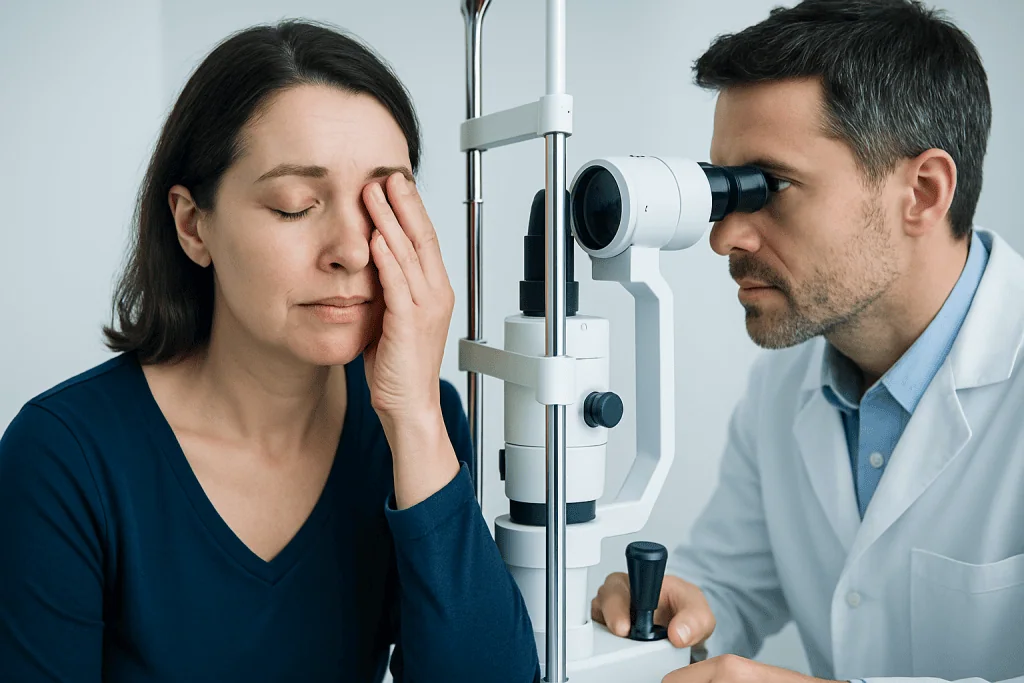
The most common symptoms of keratoconjunctivitis sicca are burning, stinging, itching, redness, and a gritty or sandy sensation. Many people describe it as feeling as though something is in the eye even when nothing is there. The eyes may feel tired, especially later in the day or after prolonged screen use.
Vision can also be affected. Dryness may cause blurred or fluctuating vision that improves temporarily after blinking. Some people become more sensitive to light, wind, smoke, or contact lenses. Others notice stringy mucus, discomfort on waking, or difficulty keeping the eyes open in dry environments.
One confusing symptom is watering. Reflex tearing can happen when the eye surface is irritated, so watery eyes do not always mean the eyes are well lubricated. Instead, they can be a sign that the eye is trying to respond to dryness.
- Burning or stinging
- Gritty, scratchy, or foreign-body sensation
- Redness
- Blurred or variable vision
- Light sensitivity
- Eye fatigue, especially with reading or screens
- Excess tearing despite dryness
Why it happens: causes and risk factors

Keratoconjunctivitis sicca develops when the tear film is disrupted. This can happen because the eyes do not make enough watery tears, because the oily layer from the eyelids is not working properly, or because the tears evaporate too quickly. Often, more than one factor is involved at the same time.
Age is an important risk factor, because tear production often decreases over time. Hormonal changes, especially around menopause, can also contribute. Long periods of screen use may reduce blinking, which allows tears to evaporate more easily. Environmental factors such as air conditioning, heating, wind, smoke, and dry climates can make symptoms worse.
Medical conditions may also play a role. Autoimmune diseases such as Sjogren syndrome, rheumatoid arthritis, thyroid disease, and some skin conditions can affect tears or eyelid function. Certain medicines, including some antihistamines, antidepressants, acne treatments, and blood pressure medicines, may increase dryness. Eyelid inflammation, meibomian gland dysfunction, previous eye surgery, and contact lens wear are other common contributors. In some patients, keratoconjunctivitis sicca overlaps with other ocular surface problems that an eye specialist may need to distinguish from glaucoma or other eye conditions causing discomfort or visual changes.
How doctors diagnose keratoconjunctivitis sicca
Diagnosis starts with a careful history. A doctor or eye specialist asks about symptoms, when they happen, triggers such as screens or wind, contact lens use, medications, and any medical conditions that may affect tear production. Because dryness can have many causes, this conversation is an important part of the evaluation.
The eye examination usually includes looking at the tear film, eyelids, and surface of the eye with magnification. Special dyes may be used to show areas of dryness or irritation. Tear break-up time, tear volume tests, and assessment of the meibomian glands in the eyelids can help identify whether the main problem is low tear production, excess evaporation, or both.
Additional testing may be recommended if an underlying condition is suspected. For example, blood tests may be used when autoimmune disease is a concern. The goal is not just to label the problem as dry eye, but to understand what is driving it so treatment can be better tailored to the individual.
Treatment options and what care may include
Treatment for keratoconjunctivitis sicca depends on severity, causes, and the effect on daily life. Many people begin with lubricating eye drops, often called artificial tears, to improve comfort and support the tear film. Preservative-free options may be preferred when drops are needed frequently. Lubricating gels or ointments may help at night if morning dryness is a problem.
If eyelid inflammation or meibomian gland dysfunction is contributing, warm compresses and gentle eyelid cleansing may be recommended. Some patients benefit from prescription anti-inflammatory eye drops or other medicines that help improve the health of the eye surface and increase natural tear function over time. When dryness is linked to broader eye disease, an ophthalmologist may also assess whether additional corneal care and reconstruction options are relevant in complex cases with significant surface damage, although this is not needed for most patients.
For moderate to severe cases, doctors may consider procedures that help tears stay on the eye longer, such as punctal plugs. Contact lens adjustments, treatment of eyelid disorders, and review of medications that worsen dryness can also be useful. In selected patients, advanced ophthalmic evaluation may be part of broader eye care planning to protect vision and comfort.
Treatment usually works best as a step-by-step plan rather than a single quick fix. The aim is to improve symptoms, reduce inflammation, protect the eye surface, and address the underlying cause whenever possible.
Prevention and self-care habits that can help
Self-care does not replace medical treatment, but it can make a meaningful difference. Blinking regularly during screen use is one of the simplest strategies. Many people blink less when focusing on a phone, computer, or television, so taking brief breaks and consciously blinking can help restore the tear film.
Environmental changes may also reduce symptoms. Using a humidifier, avoiding direct air from fans or car vents, wearing protective glasses outdoors, and limiting exposure to smoke can all help. Staying well hydrated and following the eye drop schedule recommended by a clinician may support better symptom control.
If contact lenses are uncomfortable, it is important not to force continued wear. A clinician may suggest changing lens type, reducing wear time, or pausing use temporarily. Good eyelid hygiene is also important, especially when blepharitis or oil gland dysfunction is part of the picture. For people with ongoing or severe dryness, ongoing follow-up may be needed to monitor the eye surface and rule out related conditions such as retinal detachment when new visual symptoms are clearly different from usual dry eye fluctuations.
- Take regular screen breaks and blink fully
- Use a humidifier in dry indoor spaces
- Avoid direct airflow to the eyes
- Follow eyelid hygiene advice if recommended
- Use lubricating drops as directed
- Discuss medication side effects with a doctor
When to seek medical care
Medical advice is important if dry eye symptoms last more than a short time, keep returning, or begin to affect reading, driving, work, or sleep. An eye specialist should also assess symptoms if over-the-counter drops are not helping, if contact lenses have become difficult to tolerate, or if redness and irritation are becoming more frequent.
Urgent assessment is needed for sudden vision loss, severe eye pain, marked light sensitivity, significant discharge, or injury to the eye. These symptoms may point to a problem other than uncomplicated dry eye and should not be ignored.
People with autoimmune disease, a history of eye surgery, or chronic eyelid problems may benefit from earlier review because dry eye can be more complex in these settings. Near the end of a patient’s care pathway, multidisciplinary specialists at Acibadem International and its JCI-accredited hospitals can evaluate and treat keratoconjunctivitis sicca for international patients when more detailed ophthalmic assessment is needed, including services such as specialized vision and lens evaluation where appropriate.
Frequently asked questions
Is keratoconjunctivitis sicca the same as dry eye?
Yes. Keratoconjunctivitis sicca is the medical term commonly used for dry eye disease. It refers to dryness and irritation of the eye surface caused by low tear production, poor tear quality, or both.
Can keratoconjunctivitis sicca cause blurred vision?
Yes, it can. When the tear film is unstable, the smooth surface needed for clear vision is disrupted, which may cause vision to fluctuate or blur temporarily. Blinking often improves it for a short time.
Why do my eyes water if I have dry eye?
Watery eyes can happen as a reflex response to irritation. The eye may produce extra tears when the surface becomes too dry, but these tears often do not provide the balanced lubrication needed for lasting comfort.
Is keratoconjunctivitis sicca curable?
It is often manageable rather than permanently curable. Many people control symptoms well with eye drops, eyelid care, and treatment of underlying causes. The outlook depends on why the dry eye developed and how severe it is.
Who is more likely to develop keratoconjunctivitis sicca?
Older adults, people who spend long hours on screens, contact lens users, and those with autoimmune or eyelid conditions are at higher risk. Some medications and environmental factors such as dry air or wind can also contribute.
When should someone worry about dry eye symptoms?
They should seek medical advice if symptoms persist, worsen, or start interfering with daily activities. Urgent care is needed for severe pain, sudden vision changes, major light sensitivity, eye injury, or significant discharge.
References
- American Academy of Ophthalmology
- National Eye Institute
- Mayo Clinic
- National Institute for Health and Care Excellence
- American Optometric Association
This article is for general information only and is not a substitute for professional medical advice. Please consult a qualified doctor about your individual situation.
Conjunctivitis in Turkey — costs, top hospitals & a free quote
JCI-accredited · board-certified surgeons · reply within 24h
Add us as a Preferred Source to see more of our trusted health content across Google Search, AI Overviews and Discover.
Check your numbers in seconds
BMI, calories, due date, blood pressure and 30+ more clinical calculators — free, instant, doctor-reviewed ranges.

Ophthalmology
Comprehensive eye care from laser vision correction to retina, cornea and cataract surgery.
75 specialists in this unit