Understanding Nose Melanoma Cancer: A Complete Patient Guide

Melanoma can arise on the external skin of the nose or within the nasal cavity and nearby sinuses, where it is called mucosal melanoma. Nasal mucosal melanoma may cause one-sided nosebleeds, blockage, discharge, reduced smell, or a visible lump, but early symptoms can be subtle.
Key Takeaways
- Melanoma can arise on the external skin of the nose or within the nasal cavity and nearby sinuses, where it is called mucosal melanoma.
- Nasal mucosal melanoma may cause one-sided nosebleeds, blockage, discharge, reduced smell, or a visible lump, but early symptoms can be subtle.
- Diagnosis requires a tissue biopsy, and imaging may be used to determine the extent of disease and guide treatment planning.
- Treatment commonly involves surgery when feasible and may also include radiotherapy, immunotherapy, or other systemic treatments.
- Sun protection helps reduce the risk of skin melanoma on the nose, but it does not prevent all cases of mucosal melanoma.
Nose melanoma cancer is a rare type of melanoma that may begin on the skin of the nose or, less commonly, in the moist lining inside the nasal cavity or sinuses. A new or changing dark spot on the nose, or persistent one-sided nasal symptoms such as bleeding or blockage, should be assessed by a qualified doctor without delay.
Overview: what is nose melanoma cancer?
Nose melanoma cancer is a rare cancer that develops from melanocytes, the cells that produce pigment. It may occur on the external skin of the nose, much like melanoma elsewhere on sun-exposed skin. It can also arise inside the nose, nasal cavity, or paranasal sinuses. This internal form is usually called nasal mucosal melanoma because it begins in the mucous membrane lining these spaces.
Melanoma on the skin of the nose and melanoma inside the nose are related by cell type, but they can behave differently and are assessed differently. Skin melanoma may first appear as a changing mole or pigmented patch. Mucosal melanoma may not be visible from outside the nose and can initially resemble more common nasal problems, such as dryness, allergies, or sinus irritation.
Most nasal symptoms are not caused by cancer. However, symptoms that are persistent, clearly one-sided, worsening, or accompanied by repeated bleeding deserve medical evaluation. Early assessment can identify treatable causes and, if melanoma is found, allow a specialist team to plan care based on its location and extent.
Signs and symptoms to notice
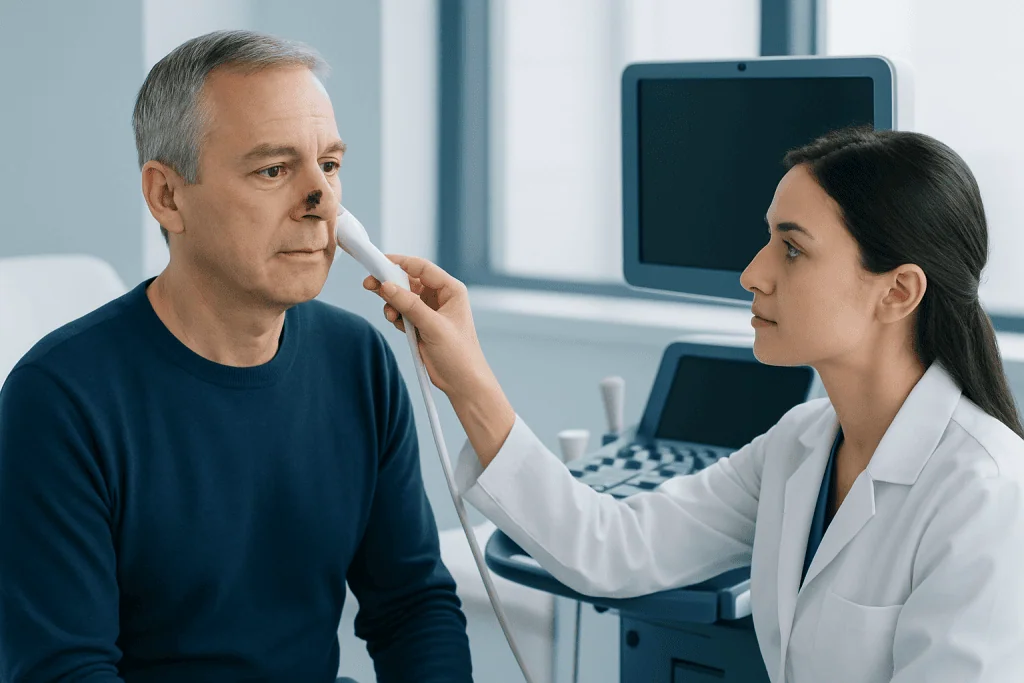
External nose melanoma may appear as a brown, black, blue, red, pink, or skin-colored spot that is new or changing. It may have an uneven shape, irregular border, multiple colors, growth over time, itching, crusting, or bleeding. Not all melanomas are dark, so a non-pigmented lesion that changes or fails to heal should also be checked.
Mucosal melanoma inside the nose can cause repeated nosebleeds, especially from one nostril; ongoing one-sided nasal blockage; blood-stained or persistent discharge; facial pressure; a reduced sense of smell; or a lump that can be seen in the nostril. Some people may have few symptoms initially. Less commonly, more advanced disease may lead to facial swelling, numbness, pain, changes around the eye, or loose teeth, depending on the affected area.
These symptoms overlap with many benign conditions, including infection, polyps, a deviated septum, and irritated nasal lining. Their presence does not mean a person has melanoma. The key point is to seek assessment for a symptom that does not settle, repeatedly returns, or is distinctly different from a person’s usual nasal health.
Causes and risk factors
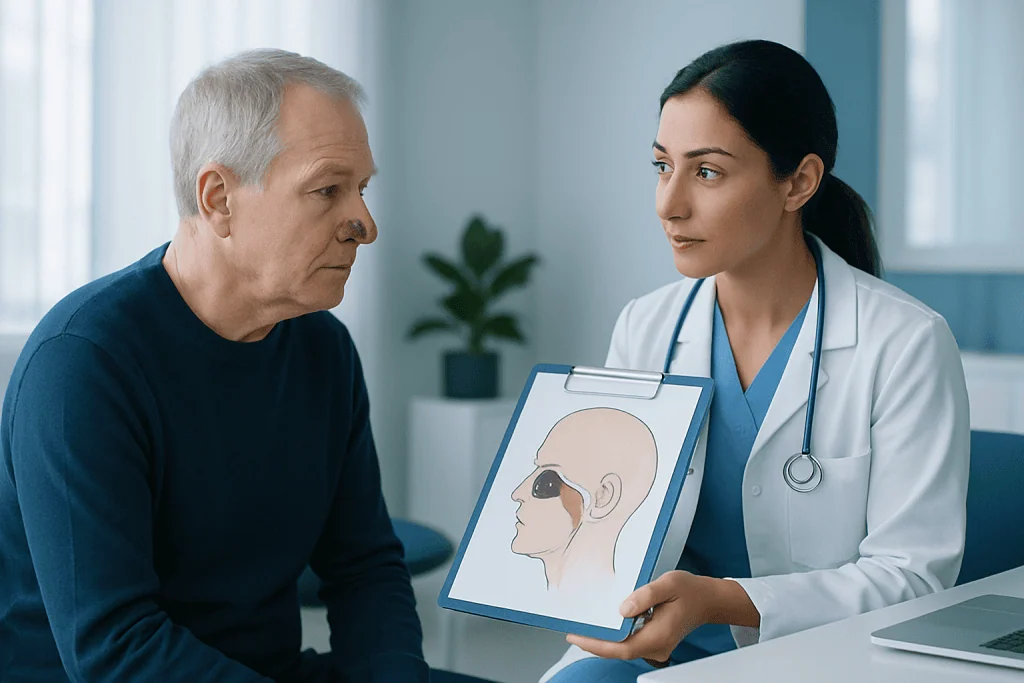
The exact cause of nasal mucosal melanoma is not fully understood. Unlike melanoma on sun-exposed skin, it is not clearly linked to ultraviolet radiation from sunlight. It can occur in people without an obvious risk factor and is not usually something a person could have prevented.
For melanoma affecting the skin of the nose, ultraviolet exposure is an important risk factor. A history of sunburn, cumulative sun exposure, fair skin that burns easily, many or unusual moles, a weakened immune system, and a personal or family history of melanoma may increase risk. Melanoma can occur in people of every skin tone, although its appearance may be more difficult to recognize on darker skin.
Age is also relevant, as mucosal melanoma is more often diagnosed in older adults, although it can occur at other ages. Having risk factors does not mean a person will develop melanoma, and having no known risks does not rule it out. Any concerning lesion or ongoing nasal symptom should be evaluated on its own merits.
How doctors diagnose nasal melanoma
Diagnosis begins with a medical history and examination. A dermatologist may examine a lesion on the outer nose with a dermatoscope, a handheld device that helps assess pigment patterns. For internal nasal symptoms, an ear, nose, and throat specialist may perform nasal endoscopy, using a thin flexible or rigid instrument with a light and camera to inspect the nasal passages.
A biopsy is needed to confirm whether a suspicious area is melanoma. During this procedure, a small sample or, in some cases, the whole visible lesion is removed and examined by a pathologist. Pathology testing identifies the cell type and may include specialized stains or molecular tests that help distinguish melanoma from other tumors and support treatment decisions.
If melanoma is confirmed, imaging such as CT, MRI, or PET/CT may be recommended to assess the primary tumor and look for spread to lymph nodes or other organs. The results are used for staging. Staging does not predict one person’s outcome exactly; rather, it helps the multidisciplinary team discuss appropriate treatment options and follow-up.
Treatment options and follow-up care
Treatment is individualized according to whether the melanoma is on the skin or mucosal lining, its size and location, whether it can be fully removed, and whether it has spread. Surgery is often the main treatment for localized disease. For skin melanoma, this generally involves removing the tumor with a margin of surrounding normal-looking skin. For nasal mucosal melanoma, surgery may be performed through the nostrils using endoscopic techniques or, in selected situations, through an external approach.
Radiotherapy may be advised after surgery for some mucosal melanomas, especially when there is a higher risk of cancer remaining in the local area or returning there. It may also be used when surgery is not suitable or to relieve symptoms. Depending on the stage and tumor features, systemic treatments such as immunotherapy or targeted therapy may be considered, particularly for melanoma that cannot be completely removed or has spread.
Care is usually coordinated by specialists in head and neck surgery or ENT, dermatology, medical oncology, radiation oncology, pathology, radiology, and supportive care. Follow-up visits and, when needed, nasal endoscopy or imaging are important because recurrence can occur. The care team can also help address practical concerns such as nasal comfort, wound healing, appearance, nutrition, emotional wellbeing, and rehabilitation after treatment.
Prevention, self-care, and living with uncertainty
There is no proven way to prevent nasal mucosal melanoma. However, sun protection can lower the risk of melanoma on exposed skin, including the nose. Practical measures include seeking shade during strong sun, wearing a broad-brimmed hat, using broad-spectrum sunscreen on exposed skin, and avoiding tanning beds. Sunscreen should be used as part of a wider sun-protection routine rather than as a reason to stay in intense sun longer.
People can become familiar with the appearance of their skin, including the nose, ears, scalp, lips, and areas that are difficult to see. A partner, family member, or clinician may help inspect these sites. A new spot or a mole that changes in size, shape, color, surface, or symptoms should be checked, rather than monitored indefinitely at home.
Waiting for tests or receiving a cancer diagnosis can be emotionally demanding. It may help to write down questions before appointments, bring a trusted person for support, and ask the care team to explain pathology and scan results in plain language. Reliable cancer organizations and counseling services can provide additional support, while online images or personal stories should not be used to self-diagnose.
When to seek medical care
A person should arrange a prompt medical appointment for a new or changing pigmented lesion on the nose, a sore that does not heal, or a spot that repeatedly crusts or bleeds. They should also seek evaluation for recurrent nosebleeds from one side, persistent one-sided congestion, an unexplained nasal lump, or ongoing blood-stained discharge.
Urgent medical advice is appropriate for a nosebleed that is heavy, does not stop with appropriate first-aid pressure, causes faintness, or occurs with breathing difficulty. Emergency care may also be needed for severe facial swelling, sudden significant vision changes, or other acute symptoms. These signs are not specific to melanoma, but they require timely assessment.
For non-urgent concerns, a primary care doctor, dermatologist, or ENT specialist can guide the next steps. Acibadem International’s multidisciplinary specialists and JCI-accredited hospitals diagnose and treat nasal and skin cancers for international patients, with treatment planning based on each individual’s findings and needs.
Frequently asked questions
Is nose melanoma cancer common?
Melanoma inside the nose and sinuses is rare. Melanoma on the skin of the nose is more common than mucosal melanoma, but it is still less common than many other skin cancers.
Can nasal melanoma look like a normal nosebleed?
Yes, nasal mucosal melanoma can cause nosebleeds, but nosebleeds are very often due to non-cancerous causes such as dryness, irritation, infection, or injury. Repeated bleeding from one nostril, especially with blockage or a lump, should be assessed by a doctor.
Is a dark spot inside the nose always melanoma?
No. Pigmented areas inside the nose can have several causes, and some are benign. Because it is not possible to determine the cause reliably by appearance alone, a suspicious area may need specialist examination and biopsy.
How fast does nose melanoma cancer grow?
Growth can vary greatly between individuals and tumor types. Some lesions change gradually, while others may become noticeable over a shorter period, so any new or changing nasal lesion should be assessed promptly rather than judged by speed alone.
Can nasal melanoma be treated?
Yes, treatment is available and may include surgery, radiotherapy, immunotherapy, targeted therapy, or a combination of approaches. The recommended plan depends on the exact site, stage, tumor characteristics, and the person's overall health.
Does wearing sunscreen prevent melanoma inside the nose?
Sunscreen helps protect the external skin of the nose from ultraviolet exposure and may reduce the risk of skin melanoma. It has not been shown to prevent mucosal melanoma that begins in the internal nasal lining.
References
- American Cancer Society
- National Cancer Institute
- American Academy of Dermatology
- European Society for Medical Oncology
- National Health Service
This article is for general information only and is not a substitute for professional medical advice. Please consult a qualified doctor about your individual situation.
Melanoma in Turkey — costs, top hospitals & a free quote
JCI-accredited · board-certified surgeons · reply within 24h
Add us as a Preferred Source to see more of our trusted health content across Google Search, AI Overviews and Discover.

Medical Oncology Department
Medical treatment of cancer with chemotherapy, immunotherapy and targeted therapies under a multidisciplinary tumor board.
60 specialists in this unit