Varicocele: Scrotal Vein Enlargement, Fertility Impact, and Repair

A varicocele is a widening of veins in the scrotum, most often on the left side, due to changes in blood flow through the testicular veins. Many varicoceles are harmless and need only observation, especially when there is no pain, testicular shrinkage, or fertility concern.
Key Takeaways
- A varicocele is a widening of veins in the scrotum, most often on the left side, due to changes in blood flow through the testicular veins.
- Many varicoceles are harmless and need only observation, especially when there is no pain, testicular shrinkage, or fertility concern.
- Diagnosis is usually made by a physical examination and may be confirmed with scrotal ultrasound, semen analysis, and selected hormone tests.
- Repair may be recommended for persistent pain, abnormal semen parameters in an infertile couple, or reduced testicular size in adolescents.
- Treatment options include microsurgical varicocelectomy, laparoscopic repair, and radiologic embolization, each with benefits and risks to discuss with a specialist.
A varicocele is an enlargement of veins within the scrotum, often described as feeling like a soft bag of worms. Many varicoceles cause no symptoms, but some are linked with aching discomfort, reduced testicular growth, or changes in sperm production.
Overview
A varicocele is an enlargement of the veins in the scrotum, the skin-covered sac that holds the testicles. These veins are part of the pampiniform plexus, a network that helps cool blood before it reaches the testicle. When the valves inside the veins do not move blood efficiently, blood can pool and the veins may become widened and twisted.
Varicoceles are similar in concept to varicose veins in the legs, but they occur around the testicle. They are more commonly found on the left side because of normal differences in the way the left testicular vein drains into the larger veins of the abdomen. Some men have varicoceles on both sides, while an isolated right-sided varicocele is less common and may need careful assessment.
Many varicoceles are discovered during a routine examination, fertility evaluation, or self-check. A varicocele is not cancer, and it does not always mean a man will have fertility problems. However, because it can affect testicular function in some people, a proper medical evaluation is important when symptoms, testicular size changes, or fertility concerns are present.
Symptoms and Signs
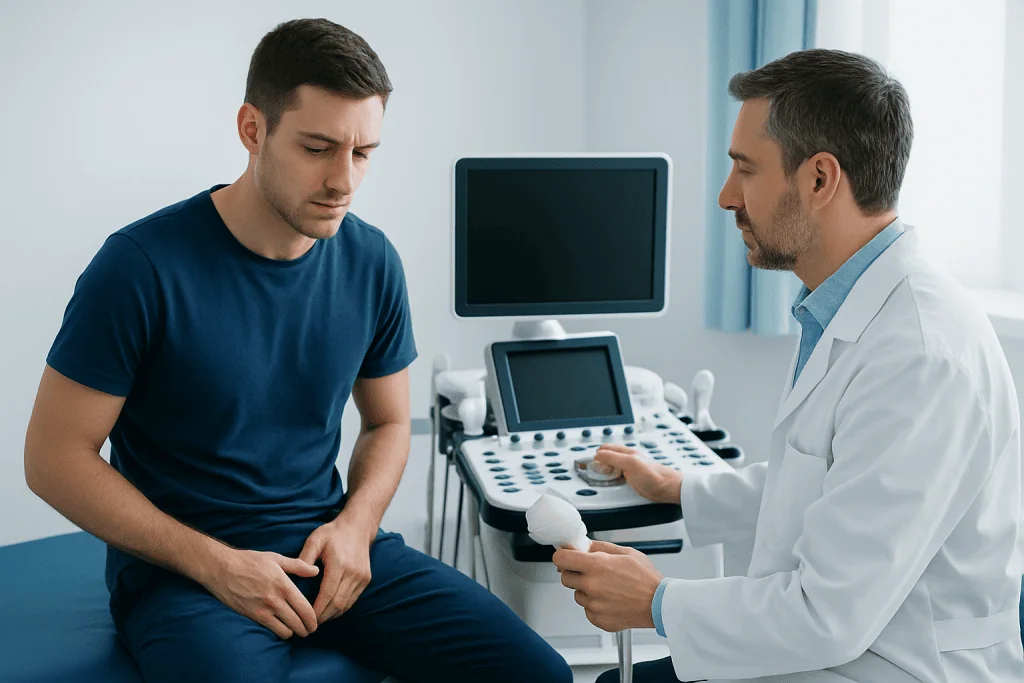
Most varicoceles cause no noticeable symptoms. When symptoms do occur, the most common complaint is a dull, heavy, or aching discomfort in the scrotum. The discomfort may become more noticeable after standing for a long time, exercise, or heavy physical activity, and it often improves when lying down.
Some men notice a soft swelling above the testicle, which may feel like a bag of worms, especially when standing. The affected testicle may appear smaller than the other, particularly in adolescents whose testicular growth is still being monitored. Varicocele-related pain is usually gradual rather than sudden, and it is typically not associated with fever or severe redness.
Possible signs and symptoms include:
- A dull ache or dragging sensation in the scrotum
- Visible or palpable enlarged veins, especially while standing
- Discomfort that worsens during the day and improves with rest
- Difference in testicle size or reduced growth of one testicle in teenagers
- Infertility or abnormal semen test results found during evaluation
Sudden, severe testicular pain is not typical of a simple varicocele and should be assessed urgently because other conditions, such as testicular torsion or infection, may require prompt care.
Causes and Risk Factors

A varicocele develops when blood flow through the testicular veins becomes inefficient. Normally, one-way valves in veins help blood travel upward toward the heart. If the valves are weak or if the vein anatomy creates higher pressure, blood can flow backward and collect in the scrotal veins, causing them to stretch.
The left side is affected more often because the left testicular vein usually drains into the left renal vein at a right angle, which can create higher venous pressure. Anatomy, growth during puberty, and increased blood flow to the developing testicles may also contribute. Varicoceles commonly become apparent during adolescence or early adulthood, though they may be diagnosed later during a fertility work-up.
Risk factors and related considerations include being in adolescence or young adulthood, having a family history of vein problems, or having an occupation or activity pattern that makes scrotal heaviness more noticeable. Physical activity itself does not usually cause a varicocele, but symptoms may be felt more during lifting, prolonged standing, or exercise.
Rarely, a new varicocele that appears suddenly, is only on the right side, or does not reduce when lying down can be associated with a blockage or pressure in the abdomen. This is uncommon, but it is one reason a medical examination is advised rather than relying on self-diagnosis.
Fertility and Testicular Health
Varicoceles are one of the more common correctable findings in men evaluated for infertility, but the relationship is not the same for every individual. Many men with a varicocele have normal sperm production and father children without treatment. In others, a varicocele may be associated with lower sperm count, reduced sperm movement, abnormal sperm shape, or changes in sperm DNA quality.
The exact reasons are complex. The testicles need a temperature slightly lower than core body temperature for healthy sperm production. Enlarged veins may interfere with heat regulation, increase local oxidative stress, or affect blood flow and hormone signaling. Over time, these factors may contribute to reduced testicular function in susceptible men.
In adolescents, doctors may focus on whether the affected testicle is growing normally. A noticeable difference in testicular volume can suggest that the varicocele is affecting testicular development. Monitoring may include repeat examinations or ultrasound measurements over time.
For couples trying to conceive, the decision to repair a varicocele is based on the full fertility picture. This includes semen analysis results, the female partner’s reproductive evaluation, the duration of infertility, age-related factors, and whether assisted reproductive techniques are being considered. A urologist, andrologist, or fertility specialist can help interpret these factors in context.
Diagnosis
Diagnosis usually begins with a medical history and a physical examination. The doctor may examine the scrotum while the patient is standing and lying down. The patient may be asked to perform a Valsalva maneuver, which means gently bearing down as if having a bowel movement, to make enlarged veins easier to feel.
Varicoceles are often graded based on how easily they are detected during examination. Some are visible, some are felt only during straining, and some are found only by ultrasound. A finding seen only on imaging without a palpable varicocele may not have the same clinical importance as one confirmed on examination, so interpretation by an experienced clinician matters.
Scrotal ultrasound may be recommended if the examination is unclear, if testicular size needs to be measured, or if there are other scrotal concerns. Ultrasound can assess vein diameter, blood flow direction, testicular volume, and other possible causes of swelling or discomfort, such as cysts or masses.
If fertility is a concern, semen analysis is central to evaluation. Because sperm production varies, more than one sample may be needed. In selected cases, blood tests for reproductive hormones such as follicle-stimulating hormone, luteinizing hormone, and testosterone may help assess overall testicular function.
Treatment Options
Not every varicocele needs treatment. Observation is appropriate when there is no pain, no concerning testicular size difference, and no fertility issue. Follow-up may include periodic examinations, ultrasound in adolescents, or repeat semen analysis in adults who are planning future fertility.
Treatment may be considered when a varicocele is associated with persistent scrotal discomfort, reduced testicular growth in an adolescent, abnormal semen parameters in a couple with infertility, or progressive changes suggesting impaired testicular function. The goal of repair is to interrupt the abnormal backward blood flow while preserving arteries, lymphatic channels, and normal reproductive structures.
Common repair approaches include:
- Microsurgical varicocelectomy: Often performed through a small groin or subinguinal incision using magnification to identify and tie off enlarged veins while protecting the testicular artery and lymphatics.
- Laparoscopic varicocelectomy: Performed through small abdominal incisions using a camera and instruments to treat the testicular veins higher in the abdomen.
- Percutaneous embolization: A radiologist places a catheter through a vein and blocks the abnormal veins from inside using coils or other materials.
Each option has potential risks, such as recurrence, hydrocele formation, infection, bleeding, discomfort, or, rarely, injury to nearby structures. Recovery time and suitability vary by patient, anatomy, previous surgery, and local expertise. The choice of treatment should be made after a balanced discussion with a qualified specialist.
Prevention, Self-care, and Living With Varicocele
There is no proven way to prevent most varicoceles because they are mainly related to vein anatomy and blood flow patterns. However, self-care can help reduce discomfort and support general reproductive health. Men who have mild symptoms may benefit from supportive underwear, avoiding prolonged standing when possible, and taking breaks during activities that worsen aching.
Healthy lifestyle habits may support fertility and testicular health. These include not smoking, limiting alcohol, maintaining a healthy weight, managing chronic medical conditions, and avoiding unnecessary heat exposure to the scrotal area, such as frequent hot tubs or saunas when fertility is a concern. Men using anabolic steroids or testosterone without medical supervision should discuss this with a doctor, as these can significantly affect sperm production.
For discomfort, a doctor may recommend short-term anti-inflammatory or pain-relief medicines when appropriate, but persistent pain should not be managed only with self-treatment. A sudden change in symptoms, swelling, or testicular tenderness needs medical review to rule out other causes.
Living with a varicocele often involves understanding whether it is stable and whether it is affecting testicular function. Regular follow-up can be reassuring, especially for teenagers and men who may want children in the future. Clear communication with a healthcare professional helps avoid unnecessary procedures while ensuring important changes are not missed.
When to See a Doctor
A doctor should evaluate any new scrotal swelling, visible enlarged veins, persistent scrotal heaviness, or testicular size difference. Men and couples who have been trying to conceive without success should also seek a fertility assessment that includes evaluation of both partners. Early assessment can clarify whether a varicocele is relevant or whether another condition is involved.
Urgent medical care is needed for sudden, severe testicular pain, pain with nausea or vomiting, fever, rapidly increasing swelling, or a high-riding testicle. These symptoms are not typical of an uncomplicated varicocele and may indicate conditions that require prompt treatment.
Specialist care may involve a urologist, andrologist, reproductive endocrinologist, interventional radiologist, or adolescent medicine specialist depending on age and symptoms. At Acibadem International, multidisciplinary specialists in JCI-accredited hospitals diagnose and treat varicocele for international patients, including those seeking fertility-focused evaluation or surgical consultation.
Frequently asked questions
Is a varicocele dangerous?
A varicocele is usually not dangerous and is not a form of cancer. Many people live with a varicocele without symptoms or treatment. Medical evaluation is still important if there is pain, a testicular size difference, fertility concern, or a new right-sided swelling.
Can a varicocele cause infertility?
A varicocele can contribute to infertility in some men by affecting sperm count, movement, shape, or overall testicular function. However, many men with a varicocele have normal fertility. A semen analysis and specialist assessment are needed to understand whether the varicocele is likely to be clinically important.
Does every varicocele need surgery?
No. Treatment is not usually needed if the varicocele is painless, the testicle is normal in size, and fertility is not a concern. Surgery or embolization may be considered when there is persistent discomfort, abnormal semen testing in an infertile couple, or reduced testicular growth in an adolescent.
What is the best treatment for varicocele?
There is no single best treatment for every patient. Microsurgical varicocelectomy is commonly used because it allows careful identification of veins and preservation of important structures, but laparoscopic repair and embolization may be suitable in selected cases. The best option depends on symptoms, anatomy, fertility goals, previous procedures, and specialist experience.
Will fertility improve after varicocele repair?
Fertility may improve in some men after repair, particularly when there is a palpable varicocele and abnormal semen parameters. Improvements, if they occur, usually take time because sperm production cycles take several months. Outcomes vary, so expectations should be discussed with a urologist or fertility specialist.
Can exercise make a varicocele worse?
Exercise does not usually cause a varicocele, but some activities may make aching or heaviness more noticeable, especially heavy lifting or prolonged standing. Supportive underwear and activity modification may help mild symptoms. Persistent or worsening pain should be assessed by a doctor.
Can a varicocele come back after treatment?
Yes, recurrence is possible after any varicocele treatment, although techniques are designed to reduce this risk. A persistent or returning varicocele may be due to untreated small veins, new collateral veins, or incomplete blockage of abnormal flow. Follow-up examination or ultrasound can help determine whether further care is needed.
References
- American Urological Association
- European Association of Urology
- American Society for Reproductive Medicine
- Mayo Clinic
- Merck Manual Professional Edition
This article is for general information only and is not a substitute for professional medical advice. Please consult a qualified doctor about your individual situation.
Varicocele in Turkey — costs, top hospitals & a free quote
JCI-accredited · board-certified surgeons · reply within 24h
Add us as a Preferred Source to see more of our trusted health content across Google Search, AI Overviews and Discover.