Vasectomy: Procedure, Recovery, and Reversal Considerations

Vasectomy blocks the vas deferens, the tubes that carry sperm, but it does not usually change testosterone, erections, orgasm, or overall semen appearance. It should be considered permanent, even though reversal or sperm retrieval with assisted reproduction may be possible in some cases.
Key Takeaways
- Vasectomy blocks the vas deferens, the tubes that carry sperm, but it does not usually change testosterone, erections, orgasm, or overall semen appearance.
- It should be considered permanent, even though reversal or sperm retrieval with assisted reproduction may be possible in some cases.
- Contraception is still needed after the procedure until a semen analysis confirms that sperm are no longer present.
- Most men return to light activities within a few days, but heavy lifting, strenuous exercise, and sex are usually delayed for about a week or as advised by the doctor.
- Vasectomy does not protect against sexually transmitted infections, so condoms may still be needed depending on the situation.
Vasectomy is a highly effective form of permanent male contraception that prevents sperm from entering the semen. Understanding the procedure, recovery, follow-up testing, and reversal considerations helps men and couples make an informed decision.
Overview
A vasectomy is a minor surgical procedure used for permanent male contraception. It works by blocking or sealing the vas deferens, the two small tubes that carry sperm from the testicles toward the urethra. After a successful vasectomy and follow-up confirmation, sperm no longer enter the semen, so pregnancy is prevented during vaginal intercourse.
The testicles continue to produce sperm after the procedure, but the sperm are naturally reabsorbed by the body. A man still ejaculates semen, and the appearance, amount, and sensation of ejaculation usually remain very similar because sperm make up only a small part of semen volume. Vasectomy does not remove the testicles and does not normally affect testosterone levels, sexual desire, erections, or orgasm.
Vasectomy is best suited for men who are certain they do not want future biological children, or who have completed their families. Although reversal procedures exist, vasectomy should be approached as permanent because reversal is not always successful and may not lead to pregnancy. A careful discussion with a qualified urologist helps ensure that the decision matches the patient’s health, family plans, and personal circumstances.
How the Vasectomy Procedure Is Performed
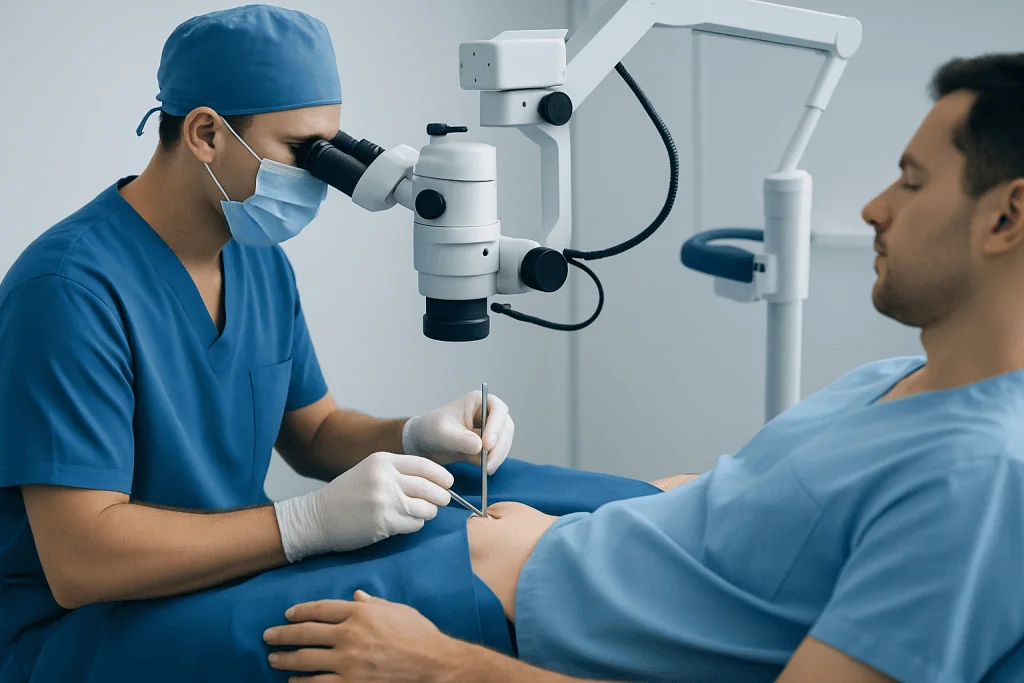
Vasectomy is commonly performed as an outpatient procedure, often under local anesthesia. This means the scrotal area is numbed while the patient remains awake. Some patients may receive additional medication for relaxation depending on the clinic, medical history, and preference. The procedure usually takes a short time, but patients should plan for check-in, preparation, and a brief observation period afterward.
There are two main approaches: conventional vasectomy and no-scalpel vasectomy. In a conventional procedure, the doctor makes one or two small cuts in the scrotal skin to reach the vas deferens. In a no-scalpel technique, a tiny puncture is used to access the tubes. In both methods, each vas deferens is cut, sealed, tied, clipped, cauterized, or treated with a combination of techniques to prevent sperm from passing through.
The choice of technique depends on the surgeon’s training, the patient’s anatomy, and local practice. No-scalpel vasectomy may be associated with less bleeding and a quicker early recovery in some patients, but both approaches are effective when performed properly. Before the procedure, the doctor reviews medications, allergies, bleeding risk, previous scrotal or groin surgery, and any signs of infection or active skin irritation.
Effectiveness and Follow-Up Semen Testing

Vasectomy is one of the most effective forms of contraception, but it is not immediate. Sperm can remain in the vas deferens and reproductive tract beyond the blocked area for weeks after the procedure. For this reason, another form of contraception must be used until the doctor confirms that semen testing shows no sperm, or only an acceptable very low number of non-moving sperm according to the laboratory and clinical guidance used.
A follow-up semen analysis is usually scheduled after a set period, often around 8 to 16 weeks after the procedure, and sometimes after a recommended number of ejaculations. Instructions vary, so patients should follow the specific plan provided by their urologist. The sample is examined in a laboratory to check whether sperm are still present.
If sperm are found, the doctor may recommend repeating the semen analysis later. Most men eventually receive clearance, but relying on vasectomy too early can lead to unintended pregnancy. Rarely, the vas deferens can reconnect or a procedure may fail; this is one reason follow-up testing is an essential part of vasectomy care.
Recovery and Aftercare
Recovery after vasectomy is usually straightforward. Mild soreness, swelling, bruising, or a pulling sensation in the scrotum can occur during the first few days. Supportive underwear, rest, and cold packs wrapped in cloth may help reduce discomfort. Doctors may recommend over-the-counter pain relief when appropriate, but patients should check which medicines are safe for them, especially if they have bleeding risks, stomach ulcers, kidney disease, or take blood thinners.
Most men can return to desk work or light activities within a few days, depending on comfort and the nature of their job. Heavy lifting, vigorous exercise, cycling, running, and sexual activity are commonly avoided for about a week or until the doctor says it is safe. Resuming activity gradually can help prevent increased swelling or discomfort.
General aftercare often includes:
- Keeping the area clean and dry as instructed.
- Wearing supportive underwear for the recommended period.
- Avoiding swimming, baths, or hot tubs until the puncture or incision has healed, if advised.
- Watching for increasing pain, redness, drainage, fever, or significant swelling.
- Using backup contraception until semen testing confirms clearance.
Sex can usually resume when discomfort has settled and the doctor’s recommended waiting period has passed. Ejaculation may feel slightly uncomfortable at first for some men, but this typically improves. Importantly, sperm may still be present for weeks, so condoms or another contraceptive method remain necessary until medical clearance is given.
Benefits, Risks, and Possible Side Effects
The main benefit of vasectomy is reliable long-term contraception without requiring ongoing daily medication or partner-dependent methods. It is a comparatively simple procedure and avoids the need for more invasive permanent contraception in a female partner. For many couples who are certain about their family plans, it can provide reassurance and convenience.
Like any procedure, vasectomy has possible risks. Short-term effects can include bruising, swelling, bleeding under the skin, infection, or temporary discomfort. A small lump called a sperm granuloma may form when sperm leak from the cut end of the vas deferens; it is often harmless, though it can sometimes be tender. Some men experience intermittent scrotal discomfort that improves over time.
Long-term chronic scrotal pain after vasectomy is uncommon but can occur and may need medical evaluation. Treatment may involve supportive care, medication, nerve-related pain management, or, rarely, additional procedures. Patients should also understand that vasectomy does not protect against sexually transmitted infections. Condoms remain important if there is any risk of infection exposure.
Research has not shown that vasectomy causes loss of masculinity, reduced testosterone, weaker erections, or a major change in ejaculation. Men with sexual symptoms after vasectomy should be assessed for other common causes as well, such as stress, medication effects, hormonal conditions, vascular health, or relationship concerns.
Reversal and Fertility Considerations
Although vasectomy is intended to be permanent, some men later consider having children because of changes in relationships, life circumstances, or personal decisions. Vasectomy reversal is a microsurgical procedure that attempts to reconnect the reproductive tract. The surgeon may perform a vasovasostomy, reconnecting the two ends of the vas deferens, or a vasoepididymostomy, connecting the vas deferens directly to the epididymis if a blockage is present there.
Reversal outcomes depend on several factors, including the time since vasectomy, the surgical technique used, the presence of scar tissue or blockage, the surgeon’s microsurgical expertise, and the fertility health and age of the female partner. Even if sperm return to the semen, pregnancy is not guaranteed. Some couples may also need fertility evaluation or assisted reproductive technologies.
Another option is sperm retrieval directly from the testicle or epididymis, often combined with in vitro fertilization and intracytoplasmic sperm injection, known as IVF with ICSI. This approach may be considered when reversal is not suitable, when time is a major factor, or when a female partner also has fertility needs. A fertility specialist and urologist can help compare options, timelines, costs, and realistic expectations.
Because reversal is more complex than vasectomy and is not always successful, men should not choose vasectomy with the assumption that it can easily be undone. If there is uncertainty about future children, temporary contraceptive methods or sperm banking before vasectomy may be discussed.
Preparing for a Vasectomy Decision
Preparation begins with informed counseling. The doctor should explain the procedure, alternatives, benefits, risks, recovery, the need for semen testing, and the permanent nature of the decision. Some patients choose to discuss the decision with a partner, though the final medical consent belongs to the patient. Men who feel pressured, uncertain, or recently affected by a major life event may benefit from taking more time before proceeding.
Before the procedure, patients may be asked to avoid certain medicines that increase bleeding risk, but this should only be done with medical guidance. The scrotal area may need to be trimmed or cleaned according to clinic instructions. Comfortable clothing and supportive underwear are useful for the trip home. Because local anesthesia is often used, some men can travel home without major restrictions, but arranging a companion may be recommended if sedation is given.
Patients should inform the doctor about bleeding disorders, previous hernia repair, undescended testicle surgery, chronic scrotal pain, infections, allergies to anesthetics, and all prescription or non-prescription medicines. These details help the urologist plan the safest approach and identify whether additional assessment is needed before the procedure.
When to See a Doctor
A man considering vasectomy should schedule a consultation with a urologist to review whether the procedure is appropriate for his goals and health status. Medical advice is especially important for anyone with a history of testicular or scrotal surgery, chronic groin pain, bleeding problems, or uncertainty about future fertility. A clinician can also explain other contraceptive options if permanent contraception does not feel right.
After vasectomy, patients should contact a doctor if they develop fever, worsening redness, pus-like drainage, severe or increasing pain, a rapidly enlarging swelling, difficulty urinating, or symptoms that do not improve as expected. Prompt evaluation can identify treatable issues such as infection or bleeding and support a smooth recovery.
Men should also keep all follow-up appointments for semen analysis, even if they feel fully recovered. Clearance from the doctor is the key step before relying on vasectomy for contraception. For international patients seeking evaluation or treatment, Acibadem International’s multidisciplinary specialists and JCI-accredited hospitals provide urology and fertility services, including assessment for vasectomy and reversal considerations.
Frequently asked questions
Is vasectomy painful?
Most patients feel pressure or mild pulling rather than sharp pain because local anesthesia numbs the area. Some soreness, bruising, or swelling can occur after the anesthesia wears off. This is usually manageable with rest, scrotal support, cold packs, and doctor-approved pain relief.
How soon is vasectomy effective?
Vasectomy is not effective immediately. Sperm can remain in the reproductive tract for several weeks after the tubes are blocked. Backup contraception is needed until a semen analysis confirms that sperm are no longer present or that the result meets the doctor’s clearance criteria.
Will vasectomy affect sex drive or erections?
Vasectomy does not usually affect testosterone production, sexual desire, erections, orgasm, or the ability to ejaculate. The semen generally looks and feels the same because sperm are only a small part of semen volume. If sexual problems occur, a doctor can evaluate other possible causes.
Can a vasectomy be reversed?
A vasectomy can sometimes be reversed with microsurgery, but it should still be considered permanent. Success depends on factors such as the time since vasectomy, the type of blockage, surgical expertise, and the fertility health of both partners. Even when sperm return to the semen, pregnancy is not guaranteed.
How long does recovery take after vasectomy?
Many men return to light work within a few days, depending on comfort and job demands. Strenuous exercise, heavy lifting, cycling, and sex are usually delayed for about a week or until the doctor advises it is safe. Full comfort may take longer if bruising or swelling is present.
Does vasectomy protect against sexually transmitted infections?
No. Vasectomy only prevents sperm from entering semen and does not protect against sexually transmitted infections. Condoms may still be needed for protection if there is any risk of infection exposure.
References
- American Urological Association
- European Association of Urology
- Mayo Clinic
- Cleveland Clinic
- World Health Organization
This article is for general information only and is not a substitute for professional medical advice. Please consult a qualified doctor about your individual situation.
Vasectomy in Turkey — costs, top hospitals & a free quote
JCI-accredited · board-certified surgeons · reply within 24h
Add us as a Preferred Source to see more of our trusted health content across Google Search, AI Overviews and Discover.