Wart on Finger — Explained by Medical Evidence, Not Myths

A wart on finger is commonly caused by HPV entering the skin through tiny breaks. Many finger warts are harmless and may disappear over time, but treatment can speed clearance.
Key Takeaways
- A wart on finger is commonly caused by HPV entering the skin through tiny breaks.
- Many finger warts are harmless and may disappear over time, but treatment can speed clearance.
- Not every bump on a finger is a wart, so medical assessment matters if the diagnosis is unclear.
- Avoid picking or biting a wart because this can spread the virus to other areas.
- Medical care is important if a wart is painful, bleeding, changing, or not improving.
A wart on finger is most often a common wart caused by certain types of human papillomavirus (HPV) infecting the top layer of skin. These growths are usually harmless, but they can be bothersome, spread to nearby skin, or need treatment if they are painful, persistent, or uncertain in diagnosis.
Overview: what a wart on finger usually means
A wart on finger is usually a small, rough, noncancerous growth that develops when human papillomavirus infects the outer layer of the skin. In most cases, this is a common wart, also called verruca vulgaris. It often appears on the fingers, around the nails, or on the backs of the hands where minor cuts and friction make it easier for the virus to enter.
Although the word “virus” can sound concerning, common finger warts are generally benign. They are not a sign of poor hygiene, and they do not mean a person has a serious illness. Some resolve without treatment because the immune system gradually recognizes and clears the infection.
That said, a wart can still be frustrating. It may catch on objects, become tender with pressure, spread to nearby skin, or cause cosmetic concern. Because several other skin conditions can look similar, it is helpful to have a persistent or unusual lesion checked by a qualified clinician, especially if there is any doubt about the diagnosis.
How to recognize a finger wart
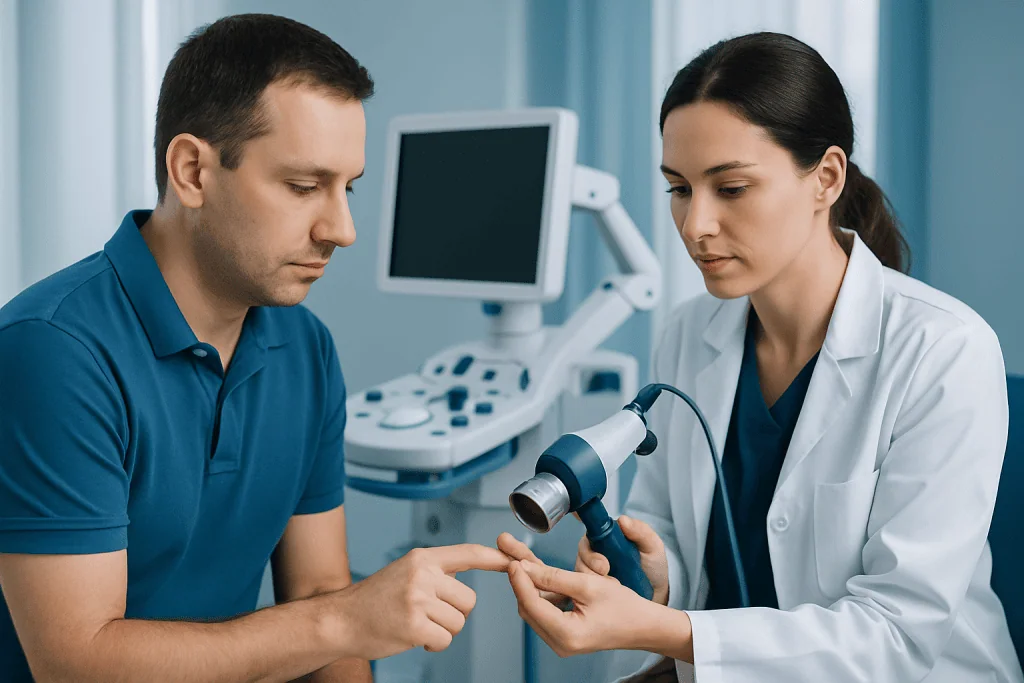
A common wart on a finger often feels rough, firm, and slightly raised. It may be skin-colored, grayish, tan, or a little darker than the surrounding skin. Some have tiny black dots inside them, which are small clotted blood vessels rather than “seeds.”
Finger warts can occur in different patterns. A single wart is common, but some people develop several clustered lesions. Warts near or under the nail, called periungual warts, may distort nail growth or become more difficult to treat because they sit in a delicate area.
Symptoms are often mild, but they vary. Some warts cause no discomfort at all, while others feel sore when pressed, rubbed, or snagged. A finger wart may be more noticeable when it cracks, becomes irritated by handwashing or work-related friction, or interferes with fine hand movements.
- Rough, grainy, or cauliflower-like surface
- Round or irregular shape
- Small black pinpoints within the lesion
- Disruption of normal skin lines over the bump
- Tenderness if located near the nail or over a pressure point
Why finger warts happen: causes and risk factors
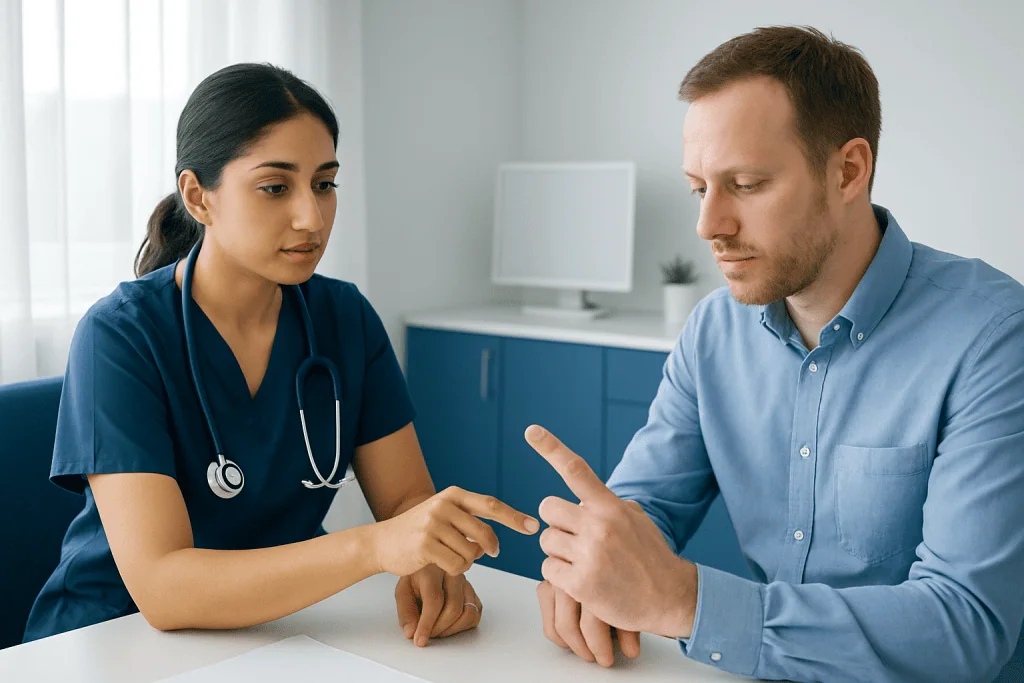
Finger warts are caused by certain strains of human papillomavirus. The virus reaches the skin through tiny breaks that may be too small to notice. Once inside, it triggers extra skin cell growth, which forms the visible wart.
HPV that causes common hand warts is spread through direct skin contact or indirectly through shared surfaces and objects. However, exposure alone does not always lead to a wart. Whether one develops often depends on skin integrity, local friction, and the person’s immune response.
Several factors can increase the chance of a wart on finger. These include nail biting, picking at hangnails, frequent small cuts, wet work, and close contact with someone who has active warts. Children, teenagers, and people with weakened immune systems may be more likely to develop them or to have more persistent lesions.
It is also possible for a wart to spread from one part of the body to another. Picking, shaving nearby skin, or trying to cut a wart at home can transfer the virus. This is one reason clinicians generally advise against home removal methods that damage healthy tissue.
What can be mistaken for a wart on finger
Not every bump on a finger is a wart. Corns, calluses, mucous cysts, skin tags, traumatic scars, and some benign tumors can look similar. Inflammatory conditions, such as eczema around the fingers, may also create thickened or irregular skin that is mistaken for a wart.
Lesions around the nail deserve particular care because the area is small and many conditions can affect it. Persistent swelling, pigment changes, nail distortion, recurrent bleeding, or a sore that does not heal should not automatically be assumed to be a wart. These findings may need closer evaluation by a dermatologist or hand specialist.
Doctors usually diagnose a wart by appearance and examination of the skin surface. If a lesion has unusual features, does not respond to expected treatment, or raises concern for another diagnosis, a clinician may recommend further assessment. In selected cases, this may include dermatoscopic examination or a biopsy to confirm what the growth is.
When a finger lesion is uncertain, the goal is not to alarm but to be accurate. Correct diagnosis helps avoid ineffective self-treatment and ensures that a non-wart condition is not overlooked. For related skin growth concerns, patients may also read about skin cancer when a lesion is changing or atypical, though most finger warts are not cancerous.
Diagnosis and treatment options
A doctor often identifies a wart on finger during a routine skin examination. The diagnosis is mainly clinical, meaning it is based on the lesion’s appearance, texture, and location. If there is pain out of proportion, irregular pigmentation, significant bleeding, or treatment failure, additional evaluation may be advised.
Treatment depends on the size, location, duration, and symptoms of the wart, as well as the patient’s age and skin sensitivity. Many warts can be managed with topical salicylic acid used regularly over time. This helps dissolve thickened skin and allows the immune system to clear the virus more effectively. Patience is important, because treatment often takes weeks to months.
Another common medical option is freezing the wart with liquid nitrogen, known as cryotherapy. This can be helpful for stubborn or spreading lesions, though temporary discomfort, blistering, or skin color change may occur. In some cases, doctors may consider other treatments such as cantharidin, electrocautery, curettage, laser-based approaches, or immunotherapy depending on the wart type and response. Patients needing procedural care may benefit from evaluation in dermatology services.
Warts near the nails or those that interfere with hand function can be more challenging. If there is deeper tissue involvement, uncertainty about the lesion, or concern about nearby structures, assessment may overlap with hand surgery or related specialist care. Treatment is individualized, with the aim of clearing the lesion while protecting surrounding skin and nail growth.
Self-care, prevention, and what not to do
Self-care can help reduce discomfort and lower the chance of spreading a wart. Keeping the area clean, dry, and protected from repeated friction is often useful. If topical over-the-counter wart treatment is being used, it should be applied exactly as directed and only to the lesion, avoiding healthy skin.
Several simple habits can reduce transmission. People should avoid picking, scratching, biting, or cutting the wart. Nail clippers, files, and pumice stones used on the wart should not be shared and ideally should not be used on unaffected skin. Covering the wart during activities that involve close skin contact may also help.
Prevention focuses on protecting the skin barrier. Moisturizing dry, cracked skin, wearing gloves for wet work, and managing habits such as nail biting can all reduce small breaks where HPV may enter. Good general skin care matters because intact skin is less vulnerable to infection.
Home remedies promoted online, such as burning, slicing, or applying harsh chemicals, are not considered safe. These methods can cause infection, scarring, or delayed diagnosis of another skin condition. If a growth is persistent or bothersome, medically guided care is the safer choice. In some situations, associated skin irritation may overlap with conditions seen in eczema, which can also affect the hands and complicate self-treatment.
When to seek medical care
Medical review is appropriate if a wart on finger is painful, repeatedly bleeding, rapidly changing, or spreading despite home care. A doctor should also assess any lesion that interferes with work, writing, sports, or normal hand use. Warts around or under the nail often need professional evaluation because treatment in this area can be delicate.
People with diabetes, poor circulation, nerve problems, or weakened immunity should be cautious about self-treatment and seek advice before using wart products. The same applies if the diagnosis is uncertain or the lesion has an unusual color, shape, or surface. It is better to confirm what the growth is than to assume it is harmless.
If a finger wart does not improve after a reasonable period of treatment, or if multiple warts keep returning, a clinician can discuss other options and check for contributing factors. Acibadem International’s multidisciplinary specialists and JCI-accredited hospitals diagnose and treat skin and hand conditions for international patients, including persistent or complex warts when specialist care is needed.
Frequently asked questions
Is a wart on finger contagious?
Yes, a finger wart can spread through direct skin contact or by touching objects that have virus particles on them. However, spread is not guaranteed, and intact skin is less likely to become infected than skin with small cuts or irritation.
Will a wart on finger go away on its own?
Many finger warts eventually go away without treatment because the immune system clears the virus. This can take months or sometimes longer, so some people choose treatment to speed the process or reduce spread.
Can I cut off or pop a wart at home?
No. Cutting, picking, or trying to remove a wart aggressively at home can cause bleeding, infection, scarring, and spread of the virus to nearby skin. It can also delay the diagnosis if the lesion is not actually a wart.
Why does my finger wart keep coming back?
Recurrence can happen if some infected skin cells remain after treatment or if the virus spreads to nearby skin before the wart fully clears. Warts may also persist longer in people who bite their nails, have frequent skin trauma, or have a weaker immune response.
Are black dots inside a wart dangerous?
Usually not. The small black dots often seen in a wart are tiny clotted blood vessels and are a common feature of common warts. If a lesion has unusual dark pigmentation or changes in appearance, it should still be assessed by a doctor.
What is the best treatment for a wart on finger?
There is no single best treatment for everyone. Options such as salicylic acid, cryotherapy, and doctor-directed procedures can all be effective depending on the wart’s size, location, and duration, as well as the person’s skin sensitivity and preferences.
This article is for general information only and is not a substitute for professional medical advice. Please consult a qualified doctor about your individual situation.
Explore treatments in Turkey — costs, top hospitals & a free quote
JCI-accredited · board-certified surgeons · reply within 24h
Add us as a Preferred Source to see more of our trusted health content across Google Search, AI Overviews and Discover.

More from the Health Library

Mucus after eating: Symptoms, Causes, and Treatment — Complete Patient Guide

Cording — Explained by Medical Evidence, Not Myths

Specific Gravity of Urine: An Evidence-Based Guide for Patients

Chanca Piedra: An Evidence-Based Guide for Patients

Pathologist: What Patients Need to Know