

What Is Dental Anatomy? Why Tooth Structure Matters in Treatment Planning

Dental anatomy includes the crown, root, enamel, dentin, pulp, cementum, and surrounding gum and bone. Tooth structure affects how dentists plan fillings, crowns, root canal treatment, orthodontics, implants, and gum care.
Key Takeaways
- Dental anatomy includes the crown, root, enamel, dentin, pulp, cementum, and surrounding gum and bone.
- Tooth structure affects how dentists plan fillings, crowns, root canal treatment, orthodontics, implants, and gum care.
- Each tooth type has a different shape and role in biting, tearing, and grinding food.
- Changes in anatomy caused by decay, wear, trauma, or gum disease can influence treatment choices.
- Good oral hygiene and routine dental visits help protect tooth structure and detect problems early.
Dental anatomy is the study of the shape, layers, position, and function of teeth and supporting tissues. Understanding tooth structure helps dentists diagnose problems accurately and choose the safest, most effective treatment for each person.
Overview: What dental anatomy means
Dental anatomy refers to the structure, form, and function of the teeth and the tissues that support them. It includes the visible parts of the teeth above the gumline, the roots below the gums, and the internal tissues that keep a tooth alive and responsive. Dentists study dental anatomy to understand how teeth fit together, how they handle chewing forces, and how disease or injury can change them.
For patients, dental anatomy matters because most dental decisions depend on tooth structure. A small cavity in enamel may be treated differently from deeper decay that reaches dentin or the pulp. A cracked tooth, a worn biting surface, or bone loss around a root all call for different approaches. This is why dental treatment is not one-size-fits-all.
Dental anatomy also includes the relationship between teeth, gums, jawbone, and bite. These structures work together during speaking, chewing, and swallowing. When one part changes, others may be affected too. A clear understanding of anatomy helps the dental team preserve healthy tissue whenever possible and restore function in a way that feels natural.
The main parts of a tooth and what they do
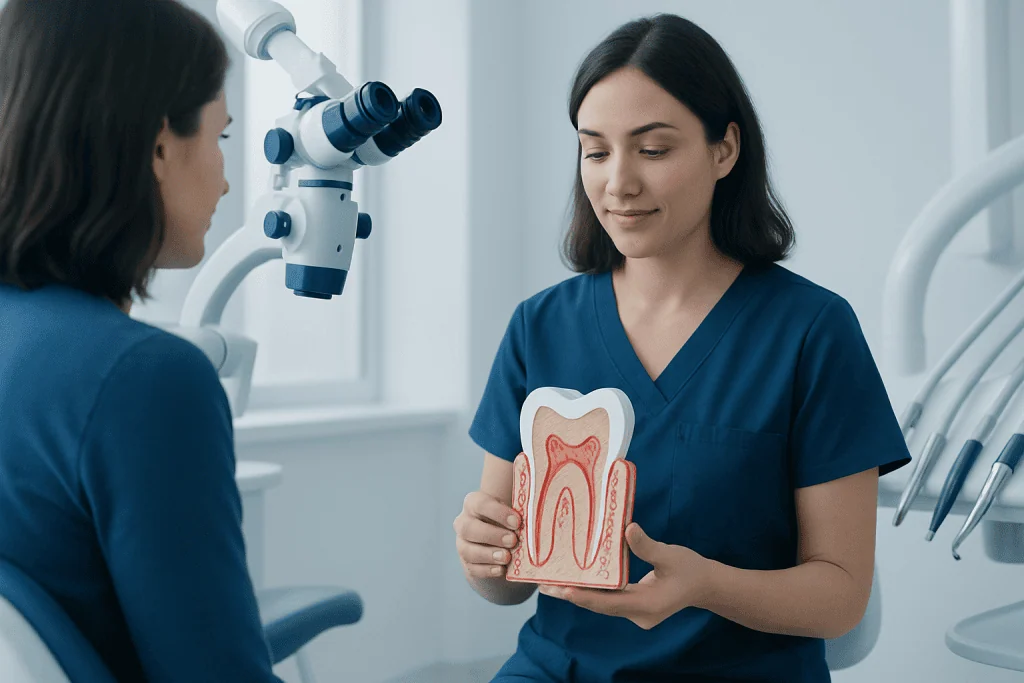
Each tooth has two main external sections: the crown and the root. The crown is the part seen in the mouth, and it is shaped for a specific job, such as cutting or grinding food. The root sits in the jawbone and anchors the tooth in place. Some teeth have one root, while others have two or three, which can affect extraction, root canal treatment, and restorative planning.
Teeth are made of several layers. Enamel is the hard outer covering of the crown and is the strongest substance in the human body. Beneath it is dentin, a less mineralized layer that makes up most of the tooth. Dentin contains tiny tubules that can transmit sensation, which is why teeth may become sensitive when enamel wears down or gums recede. At the center is the pulp, which contains nerves, blood vessels, and connective tissue.
On the root surface, the outer covering is called cementum. This works with the periodontal ligament, a group of small fibers that connect the tooth to the surrounding bone. The gums and alveolar bone support the teeth and protect deeper tissues. When dentists evaluate oral health, they look not only at the tooth itself but also at these supporting structures.
- Enamel: protects the crown from daily wear and acids
- Dentin: supports enamel and can transmit sensitivity
- Pulp: contains the tooth’s living tissue
- Cementum: covers the root surface
- Periodontal ligament and bone: hold the tooth in position
Different tooth types and why shape matters

Human teeth are not all the same. Incisors at the front are thin and sharp for cutting food. Canines are pointed and designed for tearing. Premolars and molars have broader chewing surfaces with cusps and grooves that help crush and grind food. This variation in shape is important in both function and treatment planning.
The contours of each tooth affect how plaque collects, how a dentist places a filling, and how the bite is restored after treatment. For example, the deep grooves on molars can trap food and bacteria, making them more vulnerable to decay. Their larger chewing surfaces also need restorations that can handle stronger biting forces. In contrast, front teeth play a larger role in appearance and speech, so even small changes in shape can matter.
Tooth position also influences care. Teeth that are rotated, crowded, tilted, or worn may be harder to clean and more likely to chip or trap plaque. A dentist considers these anatomical differences during routine checkups, preventive care, and restorative procedures. Modern imaging and digital dentistry can help assess shape, spacing, and bite in greater detail.
Why tooth structure matters in diagnosis and treatment planning
Tooth structure guides nearly every dental decision. When a dentist examines a tooth, they consider how much healthy enamel remains, whether decay has spread into dentin, whether the pulp is involved, and whether the root and surrounding bone are stable. The answer to these questions helps determine whether the best option is monitoring, a filling, a crown, root canal treatment, extraction, or another procedure.
For example, a small surface cavity can often be repaired with a conservative restoration, while a tooth that has lost a large amount of structure may need support from dental crowns to restore strength and shape. If infection or inflammation reaches the pulp, endodontic treatment may be recommended to preserve the tooth. In cases where a tooth cannot be saved, bone quality and neighboring anatomy become important when planning replacement options such as bridges or implants.
Bite and function are also central to treatment planning. A restoration that looks acceptable but does not match the patient’s bite can lead to discomfort, fracture, or jaw strain. Dental anatomy helps the clinician rebuild a tooth in a way that fits naturally with the opposite arch and nearby teeth. This supports comfortable chewing and long-term stability.
Careful planning is especially important when several conditions are present together, such as cavities, tooth wear, gum recession, or missing teeth. In these situations, anatomy helps prioritize treatment and protect as much natural tooth tissue as possible.
How dental anatomy affects common dental treatments
Many routine procedures depend directly on anatomy. Fillings must follow the natural shape of a tooth so food does not become trapped and the bite remains balanced. Crowns need enough healthy tooth structure for support and must be shaped to match neighboring teeth. Root canal procedures depend on the number, curvature, and complexity of the tooth’s canals, which can vary from person to person.
Periodontal and implant care are also anatomy-based. Gum thickness, root exposure, and jawbone volume influence treatment for recession, mobility, or tooth loss. If bone has been lost after extraction or gum disease, rebuilding the site with dental bone grafts may be considered before certain restorative treatments. In addition, the position of nerves, sinuses, and adjacent roots can affect safety and timing.
Cosmetic and functional treatments rely on anatomy as well. Aesthetic changes should respect natural tooth proportions, facial balance, and gum contours. Orthodontic planning depends on tooth size, root length, jaw shape, and the way the upper and lower teeth meet. Even professional cleaning and preventive visits are tailored to anatomy, because crowded areas, deep grooves, and exposed roots may need extra attention through regular dental hygiene care.
What can change tooth anatomy over time
Although basic tooth anatomy is established during development, the mouth changes throughout life. Tooth decay can weaken enamel and dentin. Grinding or clenching can flatten chewing surfaces and cause cracks. Acid erosion from diet or reflux can thin enamel and expose dentin. Trauma may chip the crown, injure the pulp, or even damage the root.
The supporting tissues can change too. Gum recession can expose the root surface, which is softer than enamel and more sensitive to brushing abrasion and decay. Bone loss from periodontal disease may reduce the support around teeth, increasing mobility and affecting the long-term outlook for treatment. Some patients may also have developmental differences in tooth shape, size, or number that influence both function and appearance.
Age-related changes can make the pulp chamber smaller and the tooth more brittle. Previous dental work can also alter anatomy, especially if a tooth has had large fillings, crowns, or repeated repairs. These changes do not always mean major treatment is needed, but they do mean regular reassessment is important. Conditions such as gum recession or bruxism may gradually affect the shape and stability of teeth over time.
Prevention and self-care to protect tooth structure
Protecting dental anatomy starts with daily habits. Brushing twice a day with fluoride toothpaste helps strengthen enamel and remove plaque from the tooth surface. Cleaning between teeth with floss or interdental brushes helps protect areas that a toothbrush cannot reach. Limiting frequent sugary snacks and acidic drinks reduces the risk of decay and erosion.
People who grind their teeth, play contact sports, or have ongoing sensitivity may benefit from a dental assessment. A night guard, mouthguard, or bite evaluation may help prevent further wear or injury in selected cases. It is also helpful to avoid using teeth as tools to open packages or bite hard objects, as this can lead to cracks and fractures.
Routine dental checkups are one of the best ways to preserve natural tooth structure. Early signs of enamel wear, cavities, bite imbalance, or gum problems are often easier to manage before they become more advanced. Dentists can recommend preventive strategies based on individual anatomy, age, and risk factors, usually through personalized care within general dentistry.
When to see a dentist
A person should arrange a dental visit if they notice persistent tooth sensitivity, pain when biting, visible cracks, swelling, bleeding gums, loose teeth, or a change in the way their bite fits together. These symptoms do not always mean serious disease, but they can suggest that tooth structure or supporting tissues need evaluation.
It is also wise to seek care after dental trauma, even if the tooth looks normal at first. A chip, hidden crack, or pulp injury may not be obvious right away. Prompt examination can help protect the tooth and reduce the risk of later complications.
Regular examinations are important even without symptoms, because early decay, wear, and gum disease may not cause pain at first. Near the end of the treatment pathway, some patients may seek coordinated care from centers experienced in restorative and multidisciplinary dentistry. Acibadem International’s multidisciplinary specialists and JCI-accredited hospitals diagnose and treat dental conditions for international patients when advanced evaluation or treatment is needed.
Frequently asked questions
What is dental anatomy in simple terms?
Dental anatomy is the study of the shape and structure of teeth and the tissues that support them. It explains how teeth are built, how they function, and why those details matter in dental care.
What are the main parts of a tooth?
The main parts are the crown, which is visible above the gums, and the root, which anchors the tooth in the jaw. Important tissue layers include enamel, dentin, pulp, and cementum, along with the surrounding gums, ligament, and bone.
Why does tooth structure matter before treatment?
Tooth structure helps the dentist understand how much healthy tissue remains and whether the tooth can be repaired or needs more complex care. It also affects how a filling, crown, root canal, or implant is planned for comfort, function, and durability.
Can damaged tooth anatomy be restored?
In many cases, yes. Dentists can often rebuild lost or weakened tooth structure with fillings, crowns, bonding, or other restorative treatments, depending on the extent of the damage. The goal is usually to preserve as much natural tooth as possible.
How do gums and bone relate to dental anatomy?
Dental anatomy includes not only the tooth itself but also the tissues that support it. Healthy gums and bone are essential because they help hold the teeth in place and protect the roots from infection and damage.
Does every person have the same tooth anatomy?
The basic tooth types are similar in most people, but size, root shape, canal pattern, spacing, and bite can vary. These differences are one reason treatment plans are individualized rather than identical for everyone.
References
- American Dental Association
- National Institute of Dental and Craniofacial Research
- FDI World Dental Federation
- World Health Organization
This article is for general information only and is not a substitute for professional medical advice. Please consult a qualified doctor about your individual situation.
Dental Anatomy in Turkey — costs, top hospitals & a free quote
JCI-accredited · board-certified surgeons · reply within 24h
Add us as a Preferred Source to see more of our trusted health content across Google Search, AI Overviews and Discover.

Dental & Oral Health
Full-scope dental care from implants and aesthetics to oral and maxillofacial surgery.
158 specialists in this unitRelated Treatments
More from the Health Library



Related Specialists

Assoc. Prof. Dr. Ferit Bayram
Oral & Dental Health
Dt. Alara Naz Kenir
Oral & Dental Health
Dt. Gonca Katmer
Oral & Dental HealthDt. Doğa Baysal
Oral & Dental Health