

What is traumatology? A Doctor-Reviewed Answer

Traumatology focuses on injuries caused by external force, including fractures, dislocations, tendon injuries, and soft tissue damage. It is closely linked with emergency care and orthopedic trauma, but may also involve surgeons, radiologists, rehabilitation specialists, and pain experts.
Key Takeaways
- Traumatology focuses on injuries caused by external force, including fractures, dislocations, tendon injuries, and soft tissue damage.
- It is closely linked with emergency care and orthopedic trauma, but may also involve surgeons, radiologists, rehabilitation specialists, and pain experts.
- Diagnosis usually combines a physical examination with imaging tests such as X-rays, CT, MRI, or ultrasound.
- Treatment may be surgical or non-surgical depending on the type, location, and severity of the injury.
- Early assessment can help reduce complications such as poor healing, stiffness, chronic pain, or loss of function.
Traumatology is the branch of medicine that evaluates and treats injuries caused by sudden physical trauma, such as falls, sports injuries, road accidents, and workplace incidents. It often overlaps with orthopedic surgery, emergency medicine, imaging, rehabilitation, and pain management to restore safety, function, and mobility.
Overview: What traumatology means
What is traumatology? Traumatology is the medical specialty concerned with injuries caused by sudden force or trauma, including broken bones, dislocations, joint injuries, muscle tears, ligament damage, and wounds affecting movement and function. In practice, it helps doctors assess what has been injured, how serious the injury is, and which treatment can support the safest recovery.
Traumatology is not limited to major accidents. It also includes injuries from sports, falls at home, work-related incidents, and everyday twists or impacts that damage bones or soft tissues. The field often overlaps with orthopedic trauma, emergency medicine, radiology, anesthesiology, rehabilitation, and sometimes vascular, plastic, or neurosurgical care when injuries are more complex.
A helpful way to understand traumatology is to think of it as the structured medical response to physical injury. The goal is not only to treat immediate damage but also to preserve movement, reduce pain, protect nearby nerves and blood vessels, and support long-term healing. Because trauma can affect several parts of the body at once, care is often multidisciplinary.
What kinds of injuries do traumatologists treat?
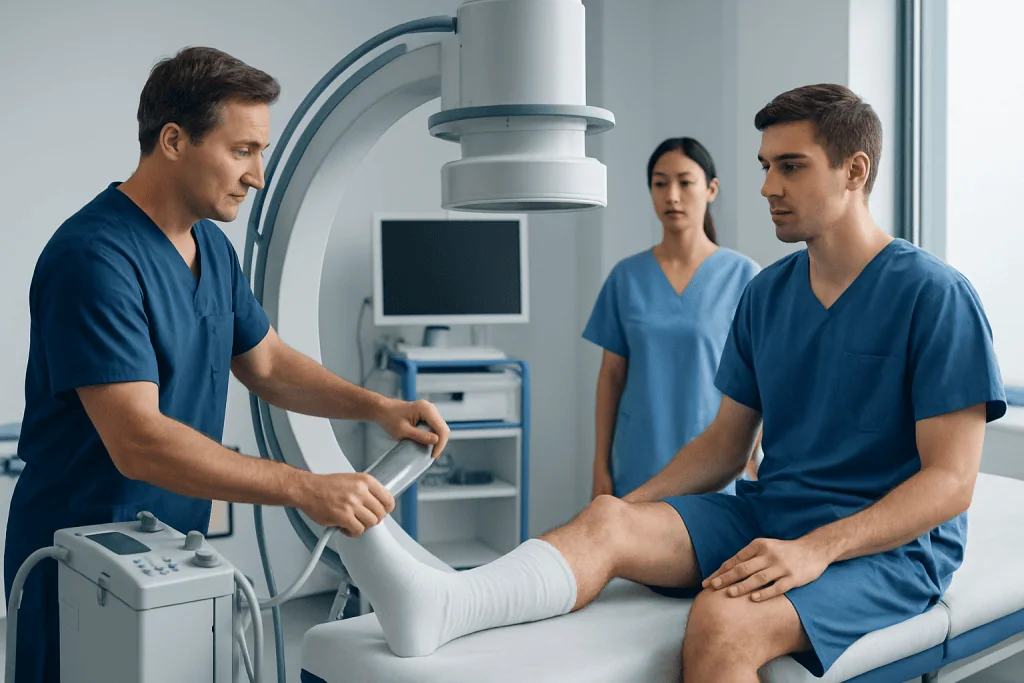
Traumatologists commonly treat injuries affecting the musculoskeletal system. This includes fractures, joint dislocations, ligament sprains, tendon ruptures, cartilage injuries, muscle tears, crush injuries, and some complex wounds. When an injury involves the hip, knee, shoulder, wrist, ankle, or spine, specialists often work together to decide the best treatment approach.
Some injuries are straightforward, such as a simple wrist fracture after a fall. Others are more complex, such as multiple fractures after a traffic accident, an open fracture where bone breaks the skin, or a joint injury with damage to surrounding nerves or blood vessels. In these situations, traumatology focuses on stabilizing the injury quickly and planning staged treatment if needed.
Examples of conditions seen in trauma-related care include:
- Fractures of the arm, leg, pelvis, ribs, or clavicle
- Shoulder, elbow, hip, knee, or ankle dislocations
- Ligament injuries such as ACL tears
- Tendon injuries such as meniscus tears when associated with acute knee trauma
- Hand and foot injuries, including crush or crush-related soft tissue damage
- Complicated wounds that need coordinated surgical repair
Although the word “trauma” can sound severe, many people seen in traumatology have isolated injuries that heal well with timely treatment, follow-up, and rehabilitation.
How traumatology differs from orthopedics and emergency medicine
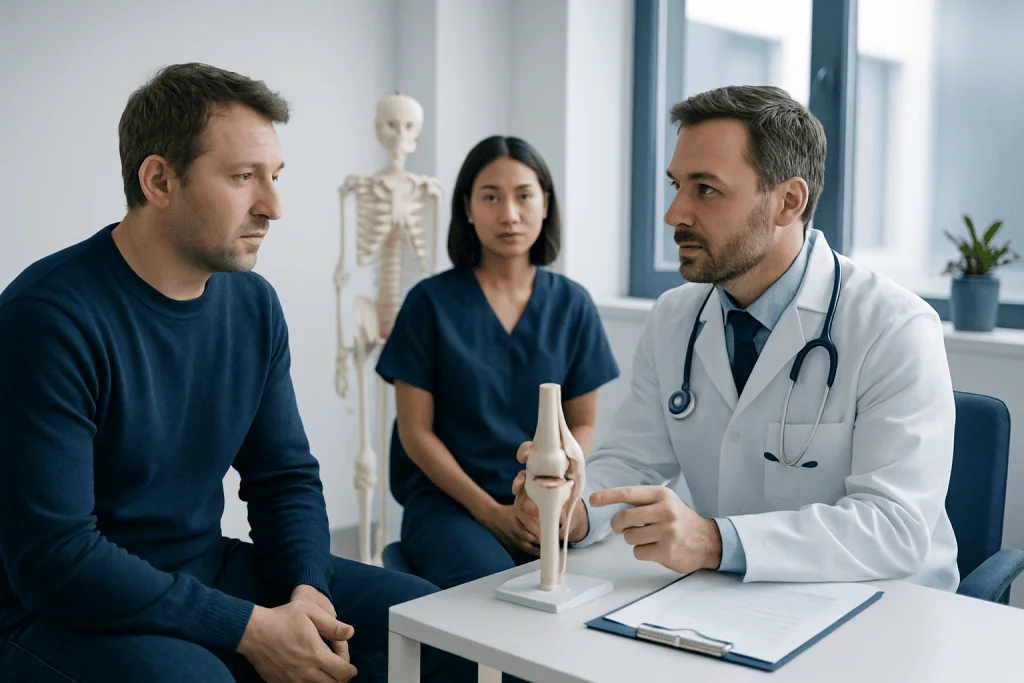
Patients often wonder whether traumatology is the same as orthopedics. The two fields are closely related but not identical. Orthopedics broadly focuses on bones, joints, muscles, ligaments, and tendons, including chronic conditions such as arthritis, deformity, or overuse problems. Traumatology is more specifically centered on sudden injuries caused by accidents or force.
Emergency medicine, by contrast, is responsible for the first assessment and stabilization of urgent problems. In an emergency department, doctors check breathing, circulation, bleeding, and immediate safety. If the injury involves a fracture, dislocation, or serious limb trauma, a traumatology or orthopedic trauma team may then take over or co-manage the case.
For some patients, treatment remains non-surgical with splints, casts, pain control, wound care, and observation. Others may need orthopedic surgery to realign a bone, repair a tendon, or stabilize a joint. After the initial phase, recovery often continues with physical therapy and rehabilitation to improve strength, flexibility, and confidence in movement.
Symptoms and signs that may need traumatology assessment
The symptoms of traumatic injury depend on what structure has been damaged. Common symptoms include sudden pain, swelling, bruising, visible deformity, reduced range of motion, inability to bear weight, weakness, or a feeling that a joint is unstable. Some people hear or feel a “pop” at the time of injury, especially with ligament or tendon damage.
Certain signs raise more concern and usually need prompt medical review. These include severe swelling, worsening pain, numbness, tingling, skin discoloration, uncontrolled bleeding, bone visible through the skin, or inability to move fingers or toes normally. An apparently minor injury can also be more serious if pain and function do not improve as expected.
Children, older adults, and people with osteoporosis or balance problems may be more vulnerable to fractures after relatively low-impact falls. Athletes and physically active adults may be more likely to present with joint instability, tendon tears, or combined soft tissue injuries that require detailed imaging and specialist planning.
How injuries are diagnosed
Diagnosis begins with a careful history and physical examination. Doctors ask how the injury happened, where pain is located, whether the person could continue walking or using the limb, and whether there are symptoms such as numbness, weakness, or locking of a joint. The examination looks for swelling, tenderness, bruising, deformity, skin injury, circulation, nerve function, and range of motion.
Imaging helps confirm the diagnosis and guide treatment. X-rays are commonly used to identify fractures, dislocations, and changes in bone alignment. CT scans may be needed for complex fractures, especially around joints, the pelvis, or areas where surgical planning requires more detail. MRI is especially useful for ligaments, cartilage, tendons, and occult injuries not fully seen on X-ray. Ultrasound may help assess some soft tissue injuries.
Not every injury needs advanced testing right away. Doctors choose imaging based on symptoms, examination findings, and whether the result would change treatment. In some cases, repeat imaging or specialist follow-up is important because certain fractures or soft tissue injuries become clearer over time.
Treatment options in traumatology
Treatment depends on the type of injury, how unstable it is, whether nearby tissues are involved, and the person’s age, health, and activity level. Many injuries can be managed without surgery using rest, ice, elevation, pain relief, immobilization with a brace or cast, and close follow-up. Stable fractures and mild to moderate soft tissue injuries often improve with these measures.
Some injuries need reduction, which means putting a bone or joint back into proper position. This may be done in the emergency setting or operating room, depending on complexity and comfort needs. Surgery is considered when a fracture is displaced, a joint is unstable, tissue is severely torn, healing is unlikely in good alignment, or the injury threatens long-term function.
Surgical care may involve plates, screws, rods, external fixation, wound repair, or reconstruction of ligaments and tendons. For selected joint injuries, minimally invasive techniques such as arthroscopy may be used. When several body regions are affected, treatment may occur in stages so the person can be stabilized first and repaired safely afterward.
Rehabilitation is a core part of trauma care, not an optional extra. Guided exercises, mobility training, swelling control, and gradual return to activity help reduce stiffness and restore function. Recovery time varies widely, and regular follow-up helps doctors check bone healing, joint stability, and progress back to normal daily tasks.
Recovery, prevention, and self-care
Healing after trauma depends on the injured structure, the severity of damage, and whether treatment was surgical or non-surgical. During recovery, patients are usually advised to protect the injured area, follow weight-bearing instructions carefully, and attend follow-up visits. Returning to sport, work, or driving too early may slow healing or increase the chance of re-injury.
Self-care measures are often helpful in the early phase. These may include rest, ice packs used safely, elevation, and keeping splints or casts dry and intact. Pain should gradually become easier to manage; if it becomes significantly worse, reassessment may be needed. Prescribed exercises should be done as instructed, since both overdoing and underusing an injured area can delay progress.
Prevention focuses on reducing injury risk rather than avoiding normal activity altogether. Supportive footwear, seat belts, home fall-prevention measures, workplace safety practices, conditioning for sports, and attention to strength and balance can all help. For older adults, bone health assessment and management may also reduce the risk of future fractures.
In centers that care for international patients, multidisciplinary teams may coordinate diagnosis, surgery, imaging, and rehabilitation in one pathway. Acibadem International’s JCI-accredited hospitals provide this kind of coordinated assessment and treatment for trauma-related musculoskeletal injuries when specialist care is needed.
When to seek medical care
Medical care should be sought promptly after an injury if there is severe pain, visible deformity, inability to stand or use the limb, numbness, major swelling, heavy bleeding, or concern for a broken bone or dislocated joint. Immediate emergency attention is especially important after high-impact accidents, open fractures, head injury, chest pain, shortness of breath, or loss of consciousness.
Even if an injury does not seem dramatic at first, medical review is sensible when pain lasts more than a few days, swelling remains significant, movement is limited, or the joint feels unstable. Children and older adults should be evaluated with a lower threshold because they may have fractures or growth-related concerns that are not obvious initially.
A qualified doctor can decide whether home care is enough or whether imaging, specialist review, or rehabilitation is appropriate. Early evaluation can help identify injuries that are easy to miss and improve the chances of a smoother recovery.
Frequently asked questions
Is traumatology the same as trauma surgery?
Not exactly. Traumatology usually refers to the diagnosis and treatment of injuries, especially musculoskeletal injuries such as fractures, dislocations, and soft tissue damage. Trauma surgery is a broader surgical discipline that may also address life-threatening injuries to the chest, abdomen, or other organs.
Do all traumatic injuries need surgery?
No. Many injuries can be treated without surgery using immobilization, pain management, wound care, and rehabilitation. Surgery is generally reserved for injuries that are unstable, displaced, open, or unlikely to heal well without operative repair.
What doctor should a person see after a fall or sports injury?
This depends on the severity of the injury. Urgent or severe symptoms should be assessed in an emergency setting first, while less severe injuries may be evaluated by a primary care doctor, sports medicine doctor, or orthopedic specialist. If there is suspicion of fracture, dislocation, or significant soft tissue damage, traumatology or orthopedic trauma input may be needed.
How long does recovery from a traumatic injury usually take?
Recovery time varies widely based on the type of injury, the person’s age and health, and whether surgery is needed. Some mild injuries improve within a few weeks, while fractures, tendon repairs, or complex joint injuries may take several months. Follow-up and rehabilitation often play a major role in the final result.
Can a person walk on a fracture?
Sometimes, yes, but that does not mean the injury is minor. Certain fractures still allow limited walking or movement, especially early on. Because walking on an undiagnosed fracture can worsen alignment or pain, medical evaluation is important if there is persistent tenderness, swelling, or difficulty bearing weight.
What imaging test is best for traumatic injuries?
There is no single best test for every injury. X-rays are usually the first step for suspected fractures or dislocations, while CT can provide more detail for complex fractures and MRI is often better for ligaments, cartilage, and tendons. Doctors choose the test based on symptoms, examination findings, and the area injured.
References
- American Academy of Orthopaedic Surgeons
- American College of Surgeons
- National Institute of Arthritis and Musculoskeletal and Skin Diseases
- MedlinePlus
- World Health Organization
This article is for general information only and is not a substitute for professional medical advice. Please consult a qualified doctor about your individual situation.
Joint and spine care in Turkey — expert assessment & treatment
JCI-accredited · board-certified surgeons · reply within 24h
Add us as a Preferred Source to see more of our trusted health content across Google Search, AI Overviews and Discover.

More from the Health Library



Related Specialists

Dr. Mutluhan Temizsoy
Aesthetic Plastic & Reconstructive Surgery
Dt. Rabia Aybala Uslu
Oral & Dental Health
Prof. Dr. Züleyha Çalıkuşu
Internal Medicine
Dr. Utku Alemdaroğlu
Cardiovascular Surgery