Why Does My Eye Hurt? Causes, Explanations, and Next Steps

Many cases of eye pain are caused by dryness, strain, allergies, or surface irritation and improve with simple care. Eye pain that comes with blurred vision, strong light sensitivity, severe redness, headache, nausea, or trauma needs prompt medical review.
Key Takeaways
- Many cases of eye pain are caused by dryness, strain, allergies, or surface irritation and improve with simple care.
- Eye pain that comes with blurred vision, strong light sensitivity, severe redness, headache, nausea, or trauma needs prompt medical review.
- Doctors diagnose eye pain by asking about symptoms, checking vision, examining the eye surface, and measuring eye pressure when needed.
- Treatment depends on the cause and may include lubricating drops, removing an irritant, treating infection or inflammation, or urgent care for pressure-related problems.
- Contact lens misuse, prolonged screen use, and rubbing the eyes can increase the risk of eye discomfort.
Eye pain is common and is often linked to minor problems such as dryness, irritation, eye strain, or a small scratch on the eye surface. However, pain with vision changes, severe redness, light sensitivity, discharge, or injury should be assessed by a doctor to rule out more urgent causes.
Why eye pain happens
If someone asks, “why does my eye hurt,” the answer is often reassuring: many cases come from common issues such as dry eyes, eye strain, allergies, or mild irritation from wind, smoke, cosmetics, or contact lenses. These problems can make the eye feel sore, gritty, burning, or tired without causing lasting harm.
Still, not all eye pain is the same. Pain on the surface of the eye often feels scratchy, stinging, or as if something is in the eye. Pain that feels deeper, stronger, or comes with headache, nausea, vision changes, or marked redness can point to a more serious problem and should not be ignored.
The best way to understand eye pain is to look at the pattern of symptoms. When it started, whether one or both eyes are affected, and whether there is discharge, light sensitivity, or blurred vision can help a doctor identify the cause quickly and safely.
Common symptoms that may come with eye pain
Eye pain may appear on its own or together with other symptoms. Some people describe burning, dryness, itching, tearing, pressure, or a sharp feeling when blinking. Others notice redness, swelling around the eyelids, sensitivity to light, or trouble focusing after long periods of reading or screen use.
Symptoms can offer clues about the likely cause. A gritty sensation often fits with dryness or a small foreign body. Itching is more common with allergies. Thick discharge can suggest infection. Pain when moving the eye may sometimes point to inflammation around deeper eye structures and needs proper assessment.
It can help to note whether the pain is constant or intermittent and whether it is worse in the morning, outdoors, or after screen time. Details like recent contact lens wear, eye makeup use, swimming, illness, or accidental injury are also useful for the doctor.
- Burning or stinging
- Grittiness or foreign-body sensation
- Redness or tearing
- Light sensitivity
- Blurred or reduced vision
- Swollen eyelids or discharge
Frequent causes of a painful eye

Several everyday problems can cause an eye to hurt. Dry eye is one of the most common. The tear film may become unstable because of screen use, air conditioning, aging, some medications, or underlying health conditions. The eye may then feel sore, tired, watery, or paradoxically tear more because of irritation.
Eye strain is another frequent cause. Reading for long periods, using digital screens, poor lighting, or an outdated glasses prescription can lead to aching eyes, headache, and fatigue. This discomfort is usually not dangerous, but it can be persistent until habits or vision correction are adjusted.
Surface irritation is also common. Dust, an eyelash, smoke, chlorine, or a minor scratch on the cornea can cause sudden pain and tearing. Contact lenses can worsen this by drying the eye, trapping debris, or irritating the cornea, especially if lenses are worn too long or while sleeping.
Some causes are medical conditions that need treatment. These include conjunctivitis, blepharitis, styes, corneal infection, inflammation inside the eye, and pressure-related problems such as glaucoma. Pain around the eye can sometimes come from nearby structures too, such as the sinuses, migraine, or facial nerve irritation rather than the eye itself.
Red flags that need prompt medical review
Most mild eye discomfort is not an emergency, but certain symptoms should lead to prompt medical care. Sudden vision loss, new blurred vision, halos around lights, severe headache, nausea, strong light sensitivity, or significant redness can signal a more urgent eye problem. Deep pain after an injury or chemical exposure also needs urgent assessment.
A person should also seek help quickly if pain occurs while wearing contact lenses, especially if there is redness, discharge, or reduced vision. Contact lenses can increase the risk of corneal injury or infection, which may worsen if treatment is delayed.
Children, older adults, and anyone with diabetes, immune system problems, or recent eye surgery should be especially cautious. If the eye cannot be opened comfortably, if there is pus-like discharge, or if symptoms are getting worse instead of better, a doctor should examine the eye.
- Sudden or marked change in vision
- Severe pain or pain after trauma
- Chemical splash in the eye
- Marked redness with light sensitivity
- Pain with headache, nausea, or vomiting
- Contact lens use with redness or blurred vision
How doctors find the cause
Doctors begin by asking focused questions: when the pain started, whether it affects one or both eyes, what the pain feels like, and whether there are triggers such as screen use, allergy exposure, illness, trauma, or contact lenses. They also ask about past eye conditions, medications, and whether vision has changed.
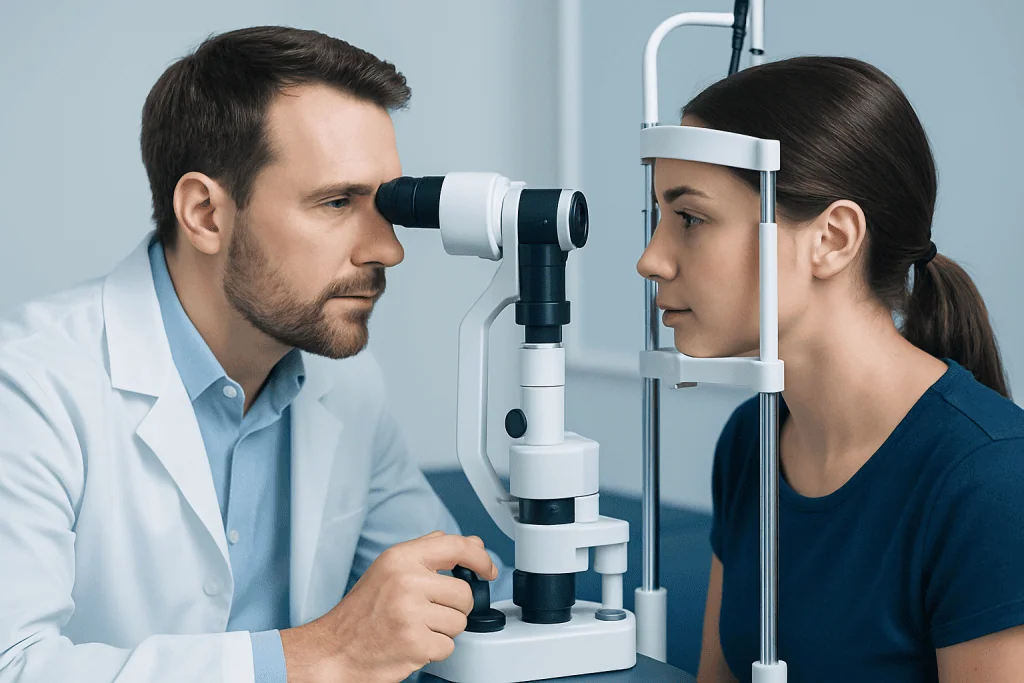
The eye examination usually includes a vision check, close inspection of the eyelids and eye surface, and a light-based examination of the front of the eye. A special dye may be placed on the eye to show scratches or areas of irritation. In some cases, the doctor will check eye pressure or dilate the pupils to look deeper into the eye.
If symptoms suggest an infection, inflammation, pressure problem, or retinal issue, an ophthalmologist may be involved. Depending on the findings, further evaluation may include imaging or specialized testing. When eye pain is linked to another condition, assessment may also involve related problems such as cataract or underlying visual strain that changes how the eyes work together.
Treatment options and what helps
Treatment depends entirely on the cause. Dry eye and irritation are often managed with preservative-free lubricating drops, reducing screen strain, improving room humidity, and avoiding smoke or other triggers. If a foreign body is present, it should be removed by a trained professional rather than rubbed deeper into the eye.
If the problem is related to allergy, eyelid inflammation, or infection, the doctor may recommend targeted treatment such as hygiene measures, medication drops, or other therapies. Pain caused by an abrasion or a contact lens problem may need careful follow-up to make sure the cornea heals properly.
More serious causes need specialist treatment. Pressure-related eye pain, internal inflammation, corneal disease, or structural problems may require urgent ophthalmology care and procedures such as eye surgery or focused medical treatment. Some patients with vision changes from clouding of the lens may later benefit from cataract surgery, while selected pressure-related conditions may be managed with glaucoma surgery when appropriate.
Near the end of the care pathway, a specialist may also discuss long-term eye health and monitoring. Acibadem International’s multidisciplinary specialists and JCI-accredited hospitals diagnose and treat eye conditions for international patients when further evaluation or treatment is needed.
Self-care steps that are usually safe
For mild discomfort without red flags, a few simple measures can help. Resting the eyes, taking screen breaks, blinking more often, and using lubricating drops may reduce dryness and strain. Applying a clean warm compress to closed eyelids can sometimes soothe eyelid irritation, especially when the lids feel crusted or sore.
Good contact lens habits are important. Lenses should be cleaned and replaced as directed, never rinsed with tap water, and generally not worn while sleeping unless specifically approved by a clinician. Eye makeup should be removed gently, and old products should be replaced regularly to lower irritation and contamination risk.
It is best not to rub a painful eye, use leftover prescription eye drops, or try to remove a stuck object with tools or cotton swabs. If a chemical enters the eye, the safest first step is immediate rinsing with clean water for several minutes and then urgent medical care.
When to seek medical care
A medical review is a good idea if eye pain lasts more than a day or two, keeps returning, or interferes with reading, driving, working, or sleep. Even mild pain deserves attention if there is discharge, persistent redness, a feeling that something is stuck in the eye, or symptoms after contact lens use.
Urgent care is needed for severe pain, eye injury, chemical exposure, sudden vision change, or pain with nausea, vomiting, or strong light sensitivity. These symptoms can have several causes, and some need prompt treatment to protect vision.
If there is any doubt, it is safer to let a qualified doctor examine the eye rather than waiting too long. Early evaluation can bring reassurance when the cause is minor and faster treatment when the problem is more serious.
Frequently asked questions
Why does my eye hurt when I blink?
Pain when blinking often points to a problem on the eye surface or eyelid. Common causes include dryness, a trapped eyelash, a small scratch, blepharitis, or a stye. If blinking is painful along with redness or blurred vision, a doctor should assess it.
Can dry eye really cause pain?
Yes. Dry eye can cause burning, stinging, soreness, and a gritty sensation that may feel surprisingly uncomfortable. Symptoms are often worse with screen use, wind, air conditioning, or long periods without blinking.
Is eye pain always an emergency?
No. Many cases are mild and related to irritation, strain, or dryness. However, severe pain, sudden vision changes, trauma, chemical exposure, or pain with nausea and light sensitivity should be treated as urgent.
Should contact lenses be removed if the eye hurts?
In most cases, yes. Contact lenses should be removed if they are uncomfortable or if the eye becomes red or painful. The lenses should not be worn again until the eye has been assessed and feels normal, because contact lens-related problems can affect the cornea.
What should be avoided when an eye hurts?
It is best to avoid rubbing the eye, sharing eye drops, wearing contact lenses, and using leftover prescription medications without guidance. Trying to remove a stuck object with tools can make the injury worse. If symptoms are significant, prompt medical advice is the safest option.
Can sinus problems or headaches cause eye pain?
Yes. Sometimes pain felt in or around the eye comes from nearby structures, especially the sinuses, or from headache disorders such as migraine. A doctor can help distinguish true eye disease from pain referred from surrounding areas.
References
- American Academy of Ophthalmology
- National Eye Institute
- American Optometric Association
- Mayo Clinic
- Merck Manual
This article is for general information only and is not a substitute for professional medical advice. Please consult a qualified doctor about your individual situation.
Explore treatments in Turkey — costs, top hospitals & a free quote
JCI-accredited · board-certified surgeons · reply within 24h
Add us as a Preferred Source to see more of our trusted health content across Google Search, AI Overviews and Discover.