Why Knee Pain Happens After Sitting With Legs Bent

Bent-knee sitting can increase pressure between the kneecap and thigh bone, particularly after a long period of immobility. Common causes include patellofemoral pain, osteoarthritis, tendon or soft-tissue irritation, and less commonly a meniscus problem.
Key Takeaways
- Bent-knee sitting can increase pressure between the kneecap and thigh bone, particularly after a long period of immobility.
- Common causes include patellofemoral pain, osteoarthritis, tendon or soft-tissue irritation, and less commonly a meniscus problem.
- The location, timing, swelling, locking, and any injury help clinicians identify the likely cause.
- Regular movement breaks, supportive activity, and avoiding prolonged deep knee bending may reduce symptoms.
- Urgent assessment is appropriate after a significant injury or when the knee is hot, very swollen, deformed, or cannot bear weight.
Knee pain after sitting with legs bent is often related to prolonged pressure on the front of the knee joint, temporary stiffness, or irritation around the kneecap. It may improve after gently moving the knee, but recurrent, worsening, swollen, or unstable knees should be assessed by a healthcare professional.
Why Knee Pain Can Start After Sitting With Legs Bent
Knee pain after sitting with legs bent commonly occurs because the knee remains in a flexed position for a prolonged time. In this position, the kneecap (patella) is held against the groove at the end of the thigh bone. The longer the position is maintained, the more pressure can build within this patellofemoral joint, especially if the knee is already sensitive.
Many people notice discomfort when standing after a car journey, desk work, a film, or sitting cross-legged. The knee may feel stiff at first and then ease as it starts moving. This pattern is often not an emergency, but repeated symptoms are worth addressing because they may signal an underlying joint, cartilage, muscle, or movement-related issue.
Symptoms can vary from a dull ache around or behind the kneecap to tightness, clicking, or pain during the first few steps. Pain that is new, frequent, worsening, or affecting daily activities should be discussed with a qualified clinician rather than self-diagnosed.
The Role of Knee Angle, Stillness, and Load
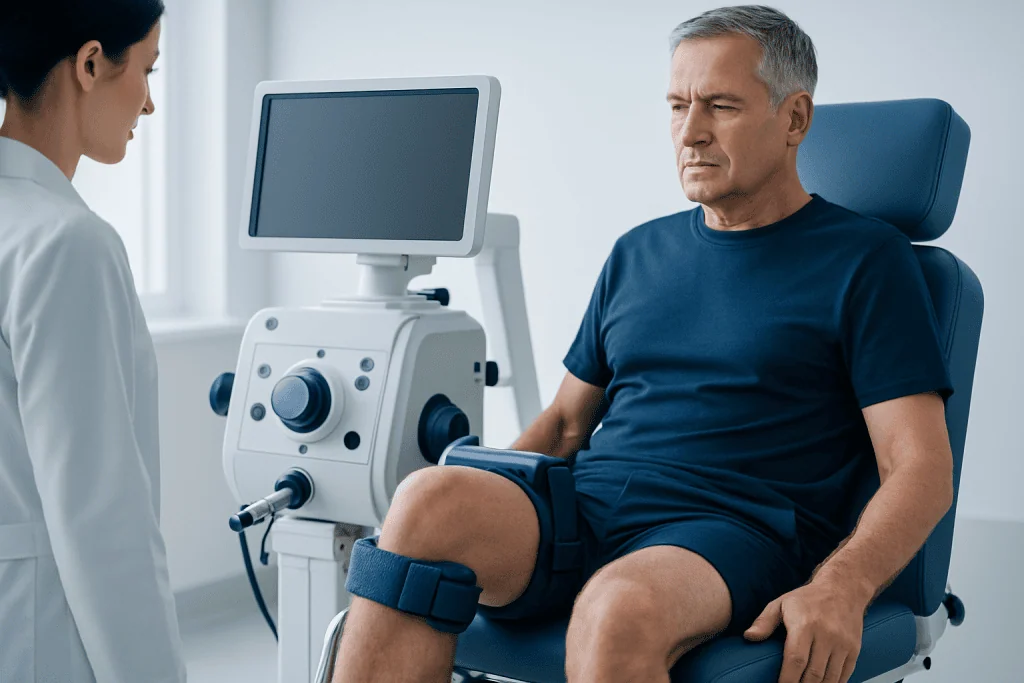
The knee is not designed to stay in one position for long periods. When it is bent, the contact forces between the kneecap and thigh bone change. Deeper bending generally creates greater pressure in this area, which can make prolonged low seating, crouching, kneeling, or sitting with the legs tucked underneath more uncomfortable.
Stillness also contributes. Joint fluid helps nourish cartilage and supports smooth movement, while surrounding muscles and tendons work best when they are used regularly. After sitting, temporary stiffness in the joint capsule and nearby muscles can make the first movement uncomfortable. This is particularly common after long travel, sedentary work, or reduced activity following illness or injury.
Body weight, previous knee injuries, muscle weakness, training changes, footwear, and the shape of an individual’s lower limbs can all influence how the knee tolerates load. Pain does not always mean there is serious structural damage, but it is useful information that the position, activity level, or underlying condition may need attention.
Common Conditions Linked to This Symptom

Patellofemoral pain is one of the most common explanations for pain around or behind the kneecap after sitting with the knee bent. It may also be noticeable when using stairs, squatting, running downhill, or standing up from a chair. It can develop when the kneecap joint is irritated by repeated loading, changes in activity, muscle-control differences, or reduced hip and thigh strength.
Osteoarthritis can also cause pain and stiffness after rest, particularly in middle age and later life or after a prior joint injury. In osteoarthritis, the joint tissues gradually change over time. Symptoms may include aching with activity, stiffness after sitting, reduced range of motion, and occasional swelling. More information on knee osteoarthritis may help explain this common cause of persistent knee discomfort.
Other possibilities include irritation of the patellar tendon or quadriceps tendon, bursitis, and pain referred from the hip or lower back. A meniscus tear may cause pain along the joint line, catching, or a sense that the knee is locking, especially after a twisting injury. Less commonly, inflammatory arthritis, gout, or joint infection can cause marked pain and swelling and require timely medical assessment.
- Front-of-knee pain: often related to the kneecap joint or nearby tendons.
- Inner or outer joint-line pain: may occur with meniscus, ligament, or arthritis-related problems.
- Back-of-knee tightness: can be linked to joint swelling, hamstring or calf structures, or a fluid-filled cyst.
Clues That Help Identify the Cause
The details of the pain often provide useful clues. A clinician may ask exactly where the pain is felt, whether it begins while sitting or only when standing, how long stiffness lasts, and whether the knee gives way, catches, clicks, locks, or swells. They will also ask about a recent fall, twist, sports activity, work demands, fever, and any history of arthritis or prior surgery.
Pain that settles within a few minutes of gentle walking may be consistent with stiffness or patellofemoral irritation. In contrast, pain accompanied by a large swelling after an injury, inability to straighten the knee, repeated locking, or a feeling of instability may suggest a problem that needs more direct evaluation. Persistent morning stiffness or symptoms in several joints can point toward an inflammatory condition.
A healthcare professional will usually examine walking pattern, knee alignment, range of movement, tenderness, swelling, and muscle strength. X-rays can be useful when arthritis, bone injury, or alignment changes are suspected. Ultrasound or MRI may be considered when the examination suggests tendon, ligament, cartilage, or meniscus involvement, but advanced imaging is not necessary for every case of knee pain.
Practical Ways to Reduce Bent-Knee Discomfort
For mild symptoms without a significant injury, changing position regularly is often a helpful first step. During desk work or travel, the person can gently straighten and bend the knee every so often, stand for short movement breaks, and avoid remaining in a deeply flexed position for extended periods. Adjusting a chair so the feet rest comfortably on the floor may also reduce strain.
Gradual strengthening and mobility work can improve knee tolerance. Exercises commonly focus on the thigh, hip, and core muscles as well as gentle flexibility of the calves, hamstrings, and front of the thigh. The appropriate exercise plan depends on the cause of pain, so a physiotherapist can tailor activity and help correct movement patterns. Physical therapy and rehabilitation may be useful when pain persists or returns with normal activities.
Temporary activity modification can be sensible: reducing deep squats, kneeling, repeated stair climbing, or high-impact exercise while symptoms settle. Low-impact options such as walking on level ground, cycling with a comfortable seat height, or swimming may be tolerated by some people. Cold or heat may provide short-term comfort for certain individuals, but neither replaces assessment when symptoms are ongoing.
Over-the-counter pain medicines may be appropriate for some adults, but they are not suitable for everyone. A pharmacist or doctor can advise based on medical history, kidney disease, stomach problems, blood-thinning medicines, pregnancy, allergies, and other treatments. Pain relief should support safe movement rather than encourage someone to push through significant pain.
When to Seek Medical Care
Medical advice is recommended if knee pain after sitting with legs bent lasts more than a few weeks, repeatedly returns, limits walking, sleep, work, exercise, or daily tasks, or does not improve with simple changes in activity and posture. Assessment is also appropriate for pain associated with persistent swelling, reduced ability to bend or straighten the knee, or a history of previous knee injury.
Urgent medical care is needed when the knee is severely painful after a fall or twist, looks deformed, cannot bear weight, is rapidly swelling, or is locked in one position. A hot, red, very swollen knee, especially with fever or feeling unwell, should be evaluated promptly because infection or inflammatory disease must be ruled out.
Symptoms such as calf swelling, warmth, redness, or unexplained shortness of breath need urgent assessment as well, as they may not be caused by the knee joint itself. It is safest not to massage a swollen painful calf or delay care if these symptoms occur.
Assessment and Treatment Planning
Treatment is based on the cause, severity, lifestyle needs, and examination findings. Many cases improve with education about pacing activity, a targeted exercise program, weight management where relevant, and treatment of contributing hip, foot, or muscle-control factors. Clinicians may also recommend bracing, taping, or temporary walking support for selected conditions.
When osteoarthritis or another chronic joint condition is involved, treatment commonly aims to reduce pain, preserve mobility, and support everyday function. Options may include rehabilitation, medication guidance, injections in carefully selected situations, and specialist review. For severe arthritis that has not responded to appropriate non-surgical care, knee replacement surgery may be considered after an individualized discussion of benefits and risks.
At Acibadem International, multidisciplinary specialists in JCI-accredited hospitals can assess and treat knee conditions for international patients. A clear diagnosis and an individualized plan can help a person return to comfortable, confident movement while protecting long-term joint health.
Frequently asked questions
Why does my knee hurt when I stand up after sitting with my legs bent?
A bent knee position can increase pressure around the kneecap joint and allow stiffness to build up in the surrounding tissues. The first few steps may therefore be uncomfortable, particularly after long sitting. Recurrent symptoms can be associated with patellofemoral pain, osteoarthritis, or another knee condition.
Is knee pain after sitting with bent knees a sign of arthritis?
It can be, but it is not always arthritis. Osteoarthritis may cause stiffness and aching after rest, especially alongside reduced movement, swelling, or pain during weight-bearing activities. A clinician can distinguish arthritis from kneecap-related pain, tendon problems, and other causes through history and examination.
Should I avoid sitting cross-legged if my knee hurts?
If sitting cross-legged reliably triggers pain, it is reasonable to limit that position for a while and choose a more supported posture. This does not necessarily mean the position has caused damage. However, persistent pain with normal sitting positions should be assessed rather than managed through avoidance alone.
Can exercise help knee pain after sitting?
Appropriate exercise can often help by improving thigh and hip strength, joint mobility, and tolerance for daily activities. It should be gradual and should not cause sharp, increasing, or prolonged pain. A physiotherapist can recommend exercises suited to the person’s symptoms and diagnosis.
What does knee locking mean?
True locking means the knee becomes stuck and cannot fully bend or straighten, rather than simply feeling stiff or painful. It can occur with certain meniscus or cartilage problems and should be medically assessed, particularly after an injury. Intermittent clicking without pain or loss of movement is often less concerning but can still be discussed at a routine appointment.
When is knee pain an emergency?
Urgent care is appropriate after a serious injury, if the knee is deformed, cannot support weight, becomes rapidly swollen, or cannot move normally. A red, hot, very swollen knee with fever or illness also needs prompt evaluation. New calf swelling or shortness of breath requires urgent medical attention.
References
- American Academy of Orthopaedic Surgeons
- National Institute of Arthritis and Musculoskeletal and Skin Diseases
- National Health Service
- Mayo Clinic
- Arthritis Foundation
This article is for general information only and is not a substitute for professional medical advice. Please consult a qualified doctor about your individual situation.
Joint and spine care in Turkey — expert assessment & treatment
JCI-accredited · board-certified surgeons · reply within 24h
Add us as a Preferred Source to see more of our trusted health content across Google Search, AI Overviews and Discover.

More from the Health Library


Related Specialists

Dr. Mithat Ulay
Aesthetic Plastic & Reconstructive Surgery
Dr. Cem Öncüloğlu
Gynecology & Obstetrics
Prof. Dr. İbrahim Berber
General Surgery
Prof. Dr. Hüseyin Engin
Medical Oncology