Wrist Joint Anatomy: What Bones, Ligaments, and Cartilage Do
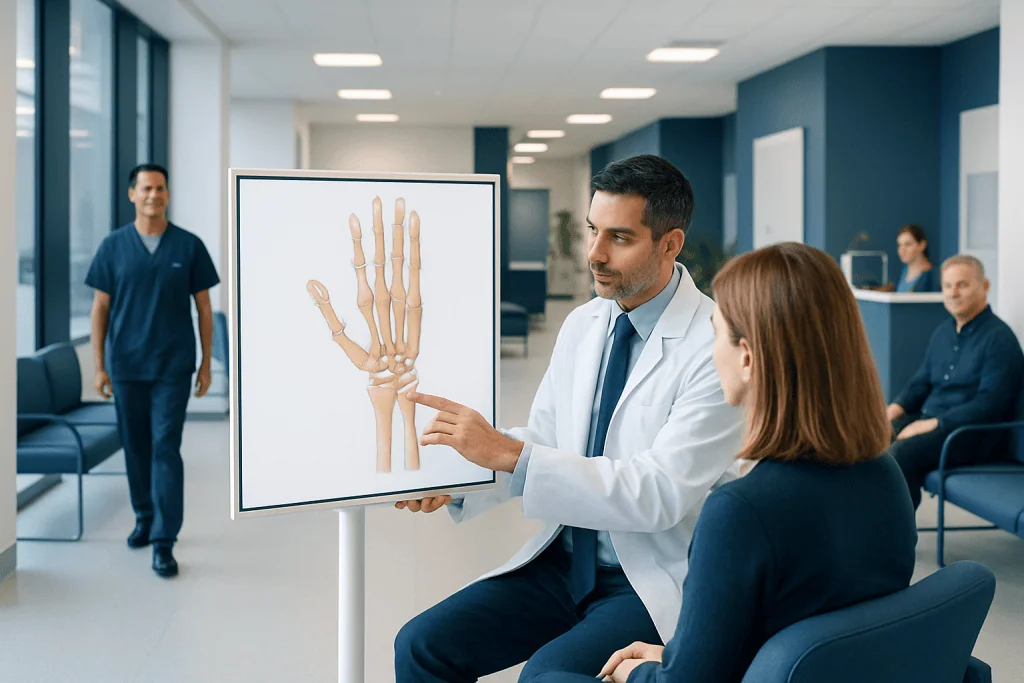
The wrist is made of the forearm bones and eight small carpal bones working together as several linked joints. Ligaments stabilize the wrist by connecting bones to each other and limiting excessive movement.
Key Takeaways
- The wrist is made of the forearm bones and eight small carpal bones working together as several linked joints.
- Ligaments stabilize the wrist by connecting bones to each other and limiting excessive movement.
- Cartilage helps wrist bones glide smoothly and absorb force during daily activities.
- Tendons move the wrist and fingers, while nerves provide feeling and help control muscle action.
- Pain, swelling, weakness, or reduced motion can suggest injury, inflammation, or wear affecting one or more wrist structures.
Wrist joint anatomy is complex but easy to understand when broken into its main parts: bones, ligaments, cartilage, tendons, muscles, and nerves. Together, these structures allow the hand to move smoothly, stay stable, and perform both powerful and delicate tasks.
Overview of Wrist Joint Anatomy
The wrist is not a single simple hinge. It is a highly coordinated region where the forearm meets the hand, made up of several small joints that work together. This design gives the wrist both strength and flexibility, allowing it to bend, straighten, move side to side, and help the hand rotate into useful positions for daily tasks.
Wrist joint anatomy includes bones, ligaments, cartilage, tendons, muscles, blood vessels, and nerves. Each structure has a specific role, but they function as one connected system. When a person writes, lifts, types, grips, pushes up from a chair, or catches a ball, the wrist helps transfer force between the hand and the forearm.
Because the wrist is used so often, it is also vulnerable to overuse, sprains, tendon irritation, fractures, and age-related wear. Understanding the normal anatomy can make it easier to recognize why wrist symptoms happen and why treatment depends on which structure is involved.
What Bones Make Up the Wrist?

The wrist is formed by the lower ends of the two forearm bones and a group of eight small carpal bones. The radius is the main forearm bone that meets the wrist directly on the thumb side. The ulna sits on the little-finger side and contributes to wrist support through soft tissue structures rather than bearing most of the direct joint contact.
The eight carpal bones are arranged in two rows. In the proximal row are the scaphoid, lunate, triquetrum, and pisiform. In the distal row are the trapezium, trapezoid, capitate, and hamate. These small bones fit together like a moving puzzle, helping the wrist balance mobility with stability.
The wrist includes several important joint areas:
- The radiocarpal joint, where the radius meets the carpal bones
- The midcarpal joint, between the two rows of carpal bones
- The distal radioulnar joint, which helps forearm rotation
- The carpometacarpal region, where the wrist connects to the hand
Each bone has a role in guiding movement and distributing force. For example, the scaphoid is especially important for stability and is also one of the most commonly injured carpal bones after a fall onto an outstretched hand.
How Ligaments Hold the Wrist Together

Ligaments are strong bands of connective tissue that connect bone to bone. In the wrist, they are essential because the many small bones must move in a coordinated way without slipping out of alignment. Ligaments guide motion, add stability, and prevent excessive movement that could damage the joint.
Some wrist ligaments are located on the palm side, some on the back of the wrist, and others run between the carpal bones. Important intrinsic ligaments connect the carpal bones to one another, while extrinsic ligaments connect the forearm bones to the carpal bones. Together, these structures help the wrist remain stable during gripping, lifting, and twisting movements.
One well-known area is the scapholunate ligament, which links two key carpal bones. Injury to this ligament can lead to pain, weakness, and long-term instability if not recognized. Sprains may involve stretching or tearing of one or more ligaments, often after a fall, sudden twist, or sports injury.
When ligaments are damaged, the wrist may feel painful, swollen, or unstable. In some cases, persistent symptoms may require assessment by an orthopedic specialist, and treatment can range from rest and bracing to hand surgery when instability is significant.
What Cartilage and Joint Cushions Do
Cartilage is the smooth, protective tissue that covers the ends of bones in a joint. In the wrist, cartilage helps bones glide over one another with very little friction. It also helps distribute load across the joint during movement and weight-bearing, such as pushing off from the floor or carrying heavy objects.
Another important structure in wrist joint anatomy is the triangular fibrocartilage complex, often called the TFCC. This structure sits on the little-finger side of the wrist and acts like a cushion and stabilizer between parts of the ulna and the carpal bones. It helps support rotation of the forearm and absorbs force during gripping and twisting.
When cartilage becomes worn, irritated, or torn, the wrist may become painful, stiff, or prone to clicking. This can happen after an injury, with repeated strain, or as part of degenerative changes over time. Cartilage problems may also contribute to conditions such as osteoarthritis, in which joint surfaces gradually lose their smooth protective lining.
Because cartilage has limited healing capacity compared with many other tissues, early evaluation of persistent wrist pain can be helpful. A doctor may recommend activity changes, splinting, therapy, medications, or, in selected cases, procedures to address the damaged area.
Tendons, Muscles, and Nerves Around the Wrist
The wrist itself does not contain large muscles. Instead, most of the muscles that move the wrist and fingers are in the forearm, and they act through tendons that cross the wrist. Tendons connect muscle to bone and help create movement such as flexion, extension, gripping, and thumb motion.
On the palm side, flexor tendons bend the wrist and fingers. On the back of the wrist, extensor tendons help straighten them. These tendons pass through narrow tunnels and are held close to the bones by retinacula, which are fibrous bands that keep the tendons in place during movement. Irritation of these tendons can cause pain, swelling, or difficulty using the hand.
The wrist also contains important nerves. The median nerve passes through the carpal tunnel and supplies feeling to parts of the thumb, index, middle, and ring fingers, while helping control some thumb muscles. Compression of this nerve can lead to numbness, tingling, or weakness in carpal tunnel syndrome. The ulnar and radial nerves also contribute sensation and movement around the wrist and hand.
Because many structures share a small space, symptoms can overlap. Tendon inflammation, nerve compression, swelling after injury, or joint disease may all cause wrist discomfort. Careful assessment helps identify the source and guide treatment such as splinting, therapy, medication, or physical therapy and rehabilitation.
How the Wrist Moves and Why It Matters
The wrist is designed for a broad range of controlled motion. Its main movements are flexion, which bends the palm downward; extension, which lifts the back of the hand upward; radial deviation, which moves the wrist toward the thumb side; and ulnar deviation, which moves it toward the little-finger side. These motions combine during many daily activities.
The wrist also works closely with the forearm joints that create pronation and supination, the motions that turn the palm down or up. Although these rotational movements happen mainly in the forearm, the wrist must remain stable and adaptable during them. This coordination is important for turning a doorknob, using utensils, typing, lifting, and sports.
A healthy wrist balances mobility with stability. If it is too stiff, hand function becomes limited. If it is too loose or unstable, pain and reduced strength can develop. Even small changes in alignment can affect how force travels through the joint, which is why injuries to a single bone or ligament can have a noticeable effect on overall function.
Good wrist mechanics matter not only for athletes or people with physically demanding jobs but for anyone who uses a keyboard, phone, tools, or repetitive hand movements. Protecting wrist function can help maintain independence, comfort, and dexterity over time.
Common Problems That Affect Wrist Structures
Several common conditions can affect wrist joint anatomy. Fractures may occur in the radius or carpal bones, especially the scaphoid, often after a fall. Ligament sprains and tears can happen with sudden twisting injuries or contact sports. Tendon problems may develop from overuse, repetitive strain, or inflammatory conditions.
Nerve-related problems can also arise. Compression of the median nerve in the carpal tunnel may cause nighttime tingling, numbness, or hand weakness. Cartilage injuries, TFCC tears, and degenerative changes can lead to pain with gripping, turning, or bearing weight through the wrist.
Typical symptoms that may suggest a wrist problem include:
- Pain during movement or at rest
- Swelling or tenderness
- Clicking, catching, or a sense of instability
- Numbness or tingling in the fingers
- Reduced grip strength
- Limited range of motion
Diagnosis often begins with a physical examination and medical history. Depending on the concern, a doctor may use X-rays, ultrasound, CT, or MRI to look at bones and soft tissues in more detail. Some persistent or complex conditions may eventually need consultation with specialists in orthopedics or neurosurgery if nerve-related issues are involved.
Protecting Wrist Health and When to Seek Care
Many wrist problems can be reduced with practical self-care. Using good posture at a workstation, keeping wrists in a neutral position during repetitive tasks, taking regular breaks, and strengthening the forearm and hand under professional guidance may help lower strain. During sports, proper technique and protective equipment can also reduce injury risk.
After minor overuse symptoms, rest, temporary activity modification, cold packs, and a supportive brace may help. However, self-treatment is not enough for every problem. Ongoing pain, visible deformity, marked swelling, numbness, weakness, or pain after a fall should be assessed by a qualified doctor. Early care can help prevent long-term stiffness or instability.
A medical evaluation is especially important if symptoms interfere with sleep, work, or daily tasks, or if the wrist feels unstable or locks during movement. Treatment depends on the cause and may include splinting, therapy, medications, injections, or surgery when needed. Acibadem International’s multidisciplinary specialists in JCI-accredited hospitals diagnose and treat wrist conditions for international patients using individualized care plans.
Understanding wrist joint anatomy can help patients make sense of symptoms and treatment recommendations. When people know how bones, ligaments, cartilage, tendons, and nerves work together, they are better prepared to protect wrist function and seek care when something does not feel right.
Frequently asked questions
What is the wrist made of?
The wrist is made of the ends of the forearm bones, eight small carpal bones, ligaments, cartilage, tendons, nerves, and blood vessels. These parts work together to create movement, stability, strength, and sensation.
How many bones are in the wrist?
There are eight carpal bones in the wrist itself, arranged in two rows. The wrist also works closely with the radius and ulna, the two bones of the forearm, which help form the joint region.
What do wrist ligaments do?
Wrist ligaments connect bones to each other and help keep the joint stable during motion. They guide movement and prevent the small wrist bones from shifting too far out of position.
Why is cartilage important in the wrist?
Cartilage covers the ends of bones and allows the joint to move smoothly with less friction. It also helps absorb pressure and spread force across the wrist during gripping, lifting, and other daily activities.
Can wrist anatomy explain wrist pain?
Yes. Pain can come from different wrist structures, including bones, ligaments, cartilage, tendons, or nerves. The exact location, timing, and type of pain can help a doctor identify the likely source.
When should someone see a doctor for wrist symptoms?
A doctor should be consulted if wrist pain follows a fall, does not improve, or comes with swelling, weakness, numbness, or reduced motion. Early assessment is also important if the wrist looks deformed or daily tasks become difficult.
References
- American Academy of Orthopaedic Surgeons
- National Institute of Arthritis and Musculoskeletal and Skin Diseases
- MedlinePlus
- Cleveland Clinic
- American Society for Surgery of the Hand
This article is for general information only and is not a substitute for professional medical advice. Please consult a qualified doctor about your individual situation.
Joint and spine care in Turkey — expert assessment & treatment
JCI-accredited · board-certified surgeons · reply within 24h
Add us as a Preferred Source to see more of our trusted health content across Google Search, AI Overviews and Discover.

More from the Health Library



Related Specialists

Dr. Duran Özdemir
Intensive Care
Dr. Alper Gölpınar
Orthopedic Surgery & Traumatology
Prof. Dr. Alper Kaya
Orthopedic Surgery & Traumatology
Assoc. Prof. Dr. Yetkin Zeki Yılmaz
Ear Nose & Throat