

Quick answer
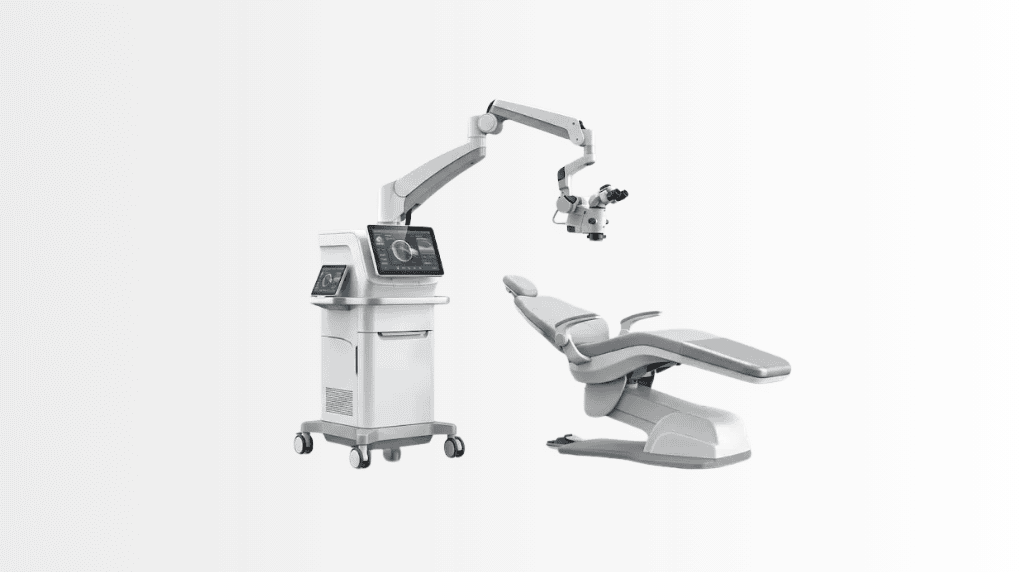
Femto Cataract Laser is a femtosecond laser system that can perform selected cataract surgery steps, such as corneal incisions, lens capsule opening, and lens fragmentation, with image-guided precision. At Acibadem in Turkey, ophthalmologists assess each patient’s eye condition and use laser-assisted techniques when clinically appropriate.
Laser cataract surgery hands the operation’s most delicate manual steps to femtosecond precision. In conventional cataract surgery, the surgeon makes the corneal entry, opens the lens capsule and breaks up the clouded lens with handheld instruments and ultrasound alone. Femtosecond laser-assisted cataract surgery (FLACS) performs those steps with a computer-guided laser mapped to a live 3D scan of your own eye: a perfectly circular capsule opening, pre-softened lens tissue, and incisions placed to plan. The lens implant, and the surgeon’s judgement, remain the heart of the operation.
What is laser cataract surgery?
A cataract is the eye’s natural lens turned cloudy; surgery replaces it with a clear artificial lens (IOL). In the laser-assisted version, an OCT scanner images your eye’s exact anatomy in the operating room, and the femtosecond laser, pulses a quadrillionth of a second long, then performs three preparatory steps: the corneal entry incisions; the capsulotomy, a circular opening in the lens capsule whose regularity matters for lens centring; and lens fragmentation, softening and segmenting the cataract so less ultrasound energy is needed to remove it. The surgeon then completes removal and implants the IOL chosen for your eye.
What the laser genuinely adds
The defensible claims: a capsulotomy more perfectly circular and centred than manual technique can guarantee, relevant to how precisely the implant sits, which matters most with premium lenses; reduced ultrasound energy inside the eye, gentler to the cornea’s inner cell layer; and incision geometry executed exactly to plan, including astigmatism-correcting relaxing incisions where indicated. The honest counterpart: conventional phacoemulsification in experienced hands achieves excellent results, and large comparisons show both methods to be very safe: the laser’s edge is precision and reproducibility, most valuable in premium-lens surgery and complex eyes, not a rescue for an operation that was otherwise risky.
The lens decision, where outcomes are really made
Visual outcome after cataract surgery is decided as much by the implant as by the technique: monofocal lenses give excellent distance vision with reading glasses; toric lenses correct astigmatism; multifocal and extended-depth-of-focus designs reduce spectacle dependence at the cost of individual trade-offs like halos in some patients. Laser precision serves these premium designs particularly well, because their performance depends on sitting exactly where planned. The lens conversation, lifestyle, measurements, trade-offs, is the appointment’s real substance, and no honest page pre-decides it.
Who is a candidate?
Most cataract patients are candidates for the laser-assisted approach; it is particularly rational with premium or toric lenses, significant astigmatism, and certain complex anatomies where a guaranteed capsulotomy is valuable. A small number of eyes, very small pupils, certain corneal scars, suit the conventional route better, and the pre-operative examination says so plainly. Cataract surgery’s timing itself is symptom-led: when clouded vision genuinely limits your life, not when a scan says a number.
The operation and recovery
Surgery is done awake under drop anaesthesia, one eye at a time, and typically takes minutes per eye: the laser phase itself under a minute. Most patients notice clearer vision within days, with vision stabilising over weeks as the eye settles; drops protect healing for a few weeks, and heavy rubbing and swimming wait. The second eye commonly follows after a short interval. Serious complications are uncommon in modern cataract surgery; your surgeon quantifies your personal risk profile before consent, not after.
What determines the cost?
Three honest variables dominate: the lens implant chosen (premium designs cost more than monofocals everywhere in the world), the laser-assisted technique itself, and the examination and follow-up package around surgery. At Acibadem, planned surgery follows the group’s written-estimate practice, lens options and their prices are stated before any decision, and the estimate covers the pathway, not a headline.
Laser cataract surgery at Acibadem
Femtosecond cataract platforms operate within the group’s ophthalmology practice, with corporate-verified femto cataract laser capability including the eye-surgery floors of City Clinic Tokuda in Sofia, and full biometry, OCT and premium-lens portfolios behind every plan. For international patients, recent measurements travel well: a records-based surgical plan and lens recommendation usually precede the visit, and both eyes are commonly treated within one short stay.
Biometry: the measurements that decide your vision
Before any laser fires, the outcome is largely written by measurement. Optical biometry maps the eye’s axial length to hundredths of a millimetre; corneal topography and tomography chart the cornea’s true shape and astigmatism; and modern IOL formulas convert those numbers into lens power, with special formulas for eyes that had LASIK or PRK, whose reshaped corneas fool standard maths. This is why the measurement visit deserves the same respect as surgery day: contact lenses pause beforehand (they mould the cornea), dry eye gets treated first (an unstable tear film corrupts readings), and both eyes are measured even when one is being treated. Where measurements disagree, they are repeated rather than averaged into hope. The femtosecond laser then executes a plan that is only as good as these numbers, precision downstream cannot rescue imprecision upstream, and an honest centre spends its care accordingly.
After surgery: the small print of a smooth recovery
The first hours: vision hazy through a dilated pupil, mild grittiness, a shield for sleeping, and someone else driving. The first week: drops on schedule (their choreography is the patient’s one real job), no eye rubbing, no swimming or dusty work; most daily life, screens included in moderation, resumes within days. The first month: vision steadies as the eye settles; a routine check confirms pressure and healing, and any new glasses prescription waits until refraction stabilises. Two honest footnotes belong in every cataract conversation: many eyes develop posterior capsule opacification months or years later, a film behind the implant restoring haze, cured in minutes by a YAG laser polish at a routine visit; and floaters or flashes appearing suddenly at any point deserve a same-day call, because they are the retina’s language, not the implant’s. Neither footnote is a complication of the laser technique; both are simply the field’s honest cartography.
Frequently Asked Questions
Why do I need so many measurements before surgery?
Because lens power is calculated, not guessed, axial length, corneal shape and validated formulas decide your visual outcome before the theatre does.
I wear contact lenses, does that affect planning?
Yes, lenses mould the cornea, so they pause before measurement; your instructions state how long for your lens type.
What is posterior capsule opacification?
A film that can cloud the capsule behind the implant months or years later, restored to clarity in minutes with a YAG laser at a routine outpatient visit.
Is laser cataract surgery painful?
No, surgery is done under anaesthetic drops; you may feel light pressure and see moving lights, but not pain.
How long does the operation take?
Minutes per eye: the laser phase itself typically under a minute, the whole theatre visit well under an hour.
Am I asleep during surgery?
No, cataract surgery is routinely performed awake with drop anaesthesia; sedation to relax you is available where appropriate.
How soon will I see clearly?
Many patients notice improvement within a day or two, with vision stabilising over the following weeks as the eye settles.
Is the laser method safer than conventional surgery?
Both are very safe in experienced hands; the laser’s genuine edge is precision and reproducibility, most valuable with premium lenses and complex eyes, not the rescue of an otherwise risky operation.
Will I still need glasses afterwards?
That depends on the lens chosen: monofocals usually leave reading glasses; toric, multifocal and EDOF designs reduce dependence with their own trade-offs: the lens conversation decides.
What is the capsulotomy and why does its shape matter?
It is the circular opening in the lens capsule through which the cataract is removed and in which the implant sits; a perfectly round, centred opening: the laser’s speciality, helps the lens sit exactly as planned.
Can astigmatism be corrected at the same time?
Often yes, through toric lenses and laser-placed relaxing incisions; your measurements decide which, and by how much.
Can both eyes be done on one trip?
Commonly yes: the second eye follows the first after a short interval, and international stays are planned around exactly that rhythm.
When can I fly after cataract surgery?
Usually within days, once the first follow-up confirms the eye is settling: your surgeon states your personal timing in the discharge notes.
What are the risks?
Modern cataract surgery is among medicine’s most performed and safest operations; uncommon risks, infection, swelling, retinal events, are quantified for your eye at the pre-operative examination.
When is the right time to have cataract surgery?
When clouded vision genuinely limits your reading, driving or daily life, timing is symptom-led, and an honest examination sometimes advises waiting.
What if I had LASIK years ago?
You can still have cataract surgery, lens power calculation needs your old records or special formulas, so mention prior refractive surgery early.
Related Medical Units
Available at these Hospitals


















Related Treatments
Speak with our medical team
Find out how this technology could support your diagnosis or treatment.