

Quick answer
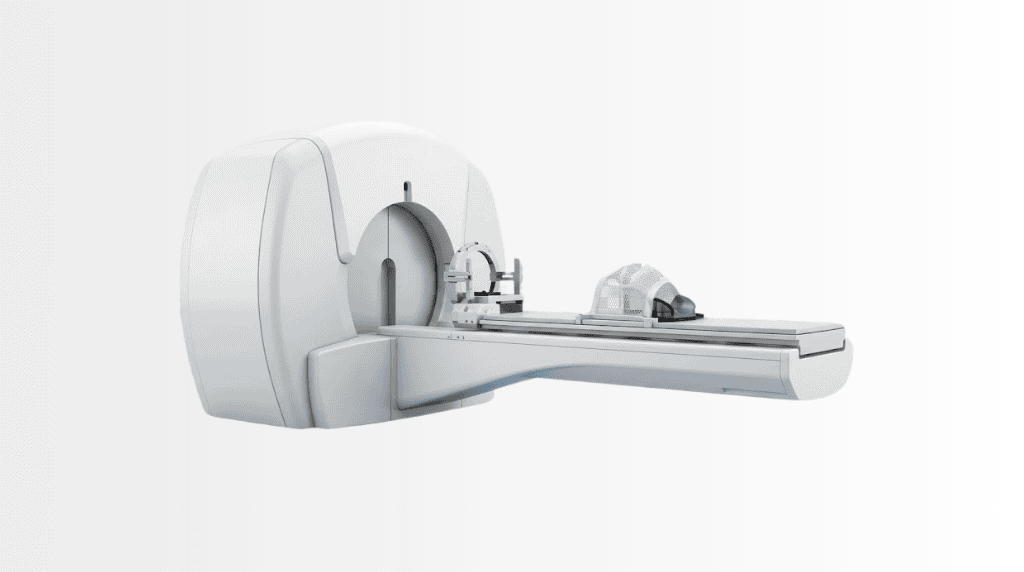
Gamma Knife Esprit is a stereotactic radiosurgery system that delivers highly focused radiation to selected brain targets without an incision. At Acibadem, radiation oncology and neurosurgery teams use imaging-based planning to assess suitability and create an individualized treatment approach.
Gamma Knife is the reference name in brain radiosurgery: treating tumours and malformations deep in the brain without opening the skull, by crossing nearly two hundred finely focused beams of radiation at a single point. Each beam alone is weak; where they converge, the dose is surgical. Esprit is the platform’s newest generation: the same stereotactic precision the method built its reputation on, with frameless workflow options, motion management and dose-shaping software refined for today’s cases. Most treatments finish in a single session, and most patients go home the same day.
What is Gamma Knife radiosurgery?
Despite the name, no knife and no incision are involved. Gamma Knife is stereotactic radiosurgery: imaging maps the target in three dimensions, planning software shapes a dose to its exact geometry, and the machine delivers that dose through ~192 converging cobalt beams with sub-millimetre accuracy. Surrounding brain receives only the weak dose of scattered single beams; the target receives their sum. “Surgery” describes the precision and the single-session decisiveness, not any cutting.
What Gamma Knife treats
The method’s established territory: brain metastases, often several in one session, with the rest of the brain spared; benign tumours such as meningiomas and vestibular schwannomas (acoustic neuromas), where control without craniotomy preserves quality of life; pituitary adenomas; arteriovenous malformations (AVMs), which close gradually over months to years after treatment; and trigeminal neuralgia, where a precisely placed dose on the nerve can relieve pain that medication no longer controls. Whether radiosurgery, open surgery, radiotherapy or observation fits a given case is a tumour-board decision, usually decidable from your MRI before any travel.
What the Esprit generation adds
Esprit builds on the platform’s Icon-generation capabilities: mask-based, frameless immobilisation as an alternative to the classic head frame for suitable cases; continuous motion monitoring that pauses delivery if the head moves; and integrated imaging that verifies position at treatment. In practice this widens options, sessions can be fractionated over a few days for larger or critically located targets, while the classic frame remains available where absolute rigidity serves the plan. The physics of convergence, and the sub-millimetre accountability, remain the method’s core.
The treatment day: what to expect
A typical single-session day: immobilisation (mask fitting, or frame placement under local anaesthetic), high-resolution MRI mapping, planning while you rest, the team shapes the dose to your images, then treatment itself: lying still on the couch, awake, for anywhere from under an hour to a few hours depending on target complexity. Nothing is felt during delivery. Most patients go home the same day and resume normal life within a day or two. Effects unfold on the target’s biological timetable: metastases and adenomas respond over weeks to months, AVMs close over months to years, and follow-up imaging tracks the course.
Radiosurgery vs open surgery: the honest frame
Open neurosurgery removes tissue immediately and remains the right answer for many cases: large tumours with pressure effects, cases needing tissue diagnosis, targets suited to safe resection. Radiosurgery controls without cutting and wins where surgery costs most, deep or eloquently located targets, multiple metastases, patients for whom anaesthesia or craniotomy carries high risk, and residual or recurrent tissue after prior surgery. The two are colleagues in the same tumour board, and the honest sentence is that the scan usually decides: candidacy for Gamma Knife is largely readable from the MRI.
Gamma Knife at Acibadem
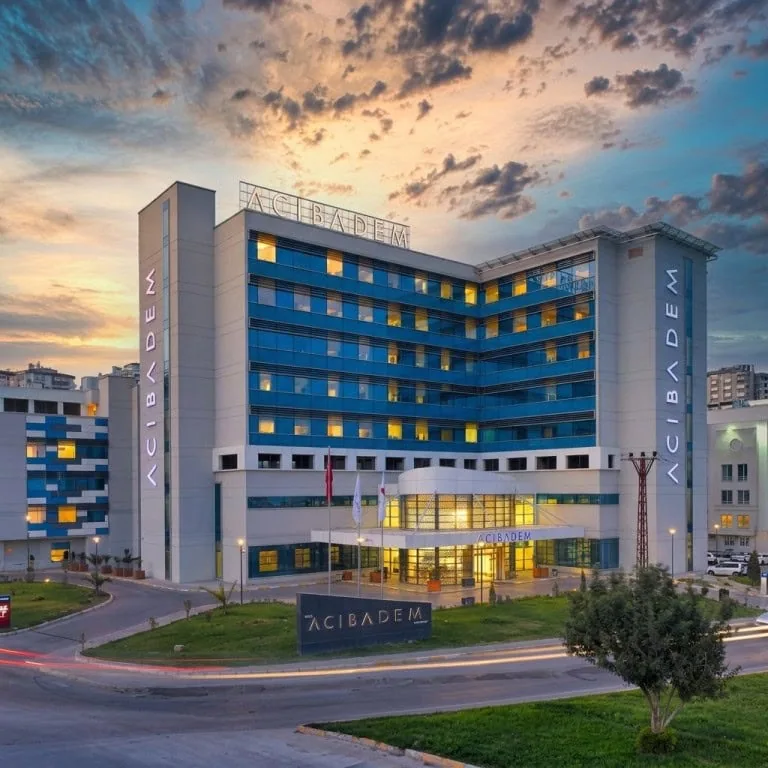
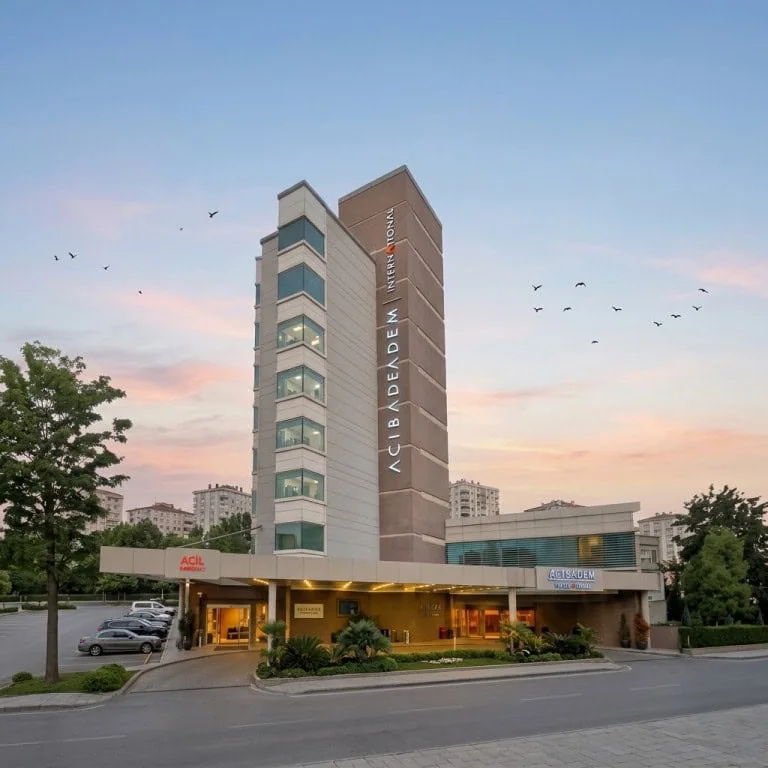
The group’s Gamma Knife programme operates at Acibadem Altunizade Hospitalthe JCI-accredited Istanbul campus whose radiosurgery floor works hand in hand with the neurosurgery and radiation oncology units and the group’s tumour boards. International patients typically send MRI first: the radiosurgery team’s records-based answer, candidate, not a candidate, or better served by another method, usually arrives before any journey is planned.
Planning: the invisible craft of radiosurgery
Patients see a machine; the outcome lives in the planning room. After fusion of MRI, and where relevant CT angiography or specialised sequences, the team contours two geographies: the target, drawn slice by slice, and the organs-at-risk map, optic pathways, brainstem, cochlea, critical vessels, each with dose ceilings the plan must respect. The software then choreographs shots: overlapping spheres of dose whose sizes, weights and positions are tuned until the prescription isodose hugs the target’s shape and the fall-off drops steeply exactly where anatomy demands. Quality is measurable, coverage, selectivity, gradient index, and reviewed jointly by neurosurgeon, radiation oncologist and physicist before anyone treats. Esprit’s contribution is optimisation horsepower and adaptability; the judgement, where a tenth of a millimetre of margin matters and where it does not, remains gloriously human, and accumulates precisely in high-volume centres.
Follow-up: how success is tracked over the years
Radiosurgery’s results are read on a calendar, and knowing it steadies expectations. Metastases and adenomas: first MRI typically within a few months, then intervals your board sets, control usually shows as arrest or shrinkage; transient post-treatment swelling can briefly enlarge an image before it improves, a known pattern read calmly by experienced eyes rather than alarmed ones. Vestibular schwannomas: years-long imaging rhythm, with hearing tracked alongside size. AVMs: the longest arc, closure builds over one to three years and is finally confirmed by angiography, with protection considered incomplete until then. Trigeminal neuralgia: relief often arrives over weeks and medication is tapered deliberately, never abruptly. Every scan lands in the group file against its predecessors, and every report is written for two readers: the board that treated you and the doctor who follows you at home.
Frequently Asked Questions
Who actually plans my treatment?
A team, neurosurgeon, radiation oncologist and medical physicist, contouring target and risk structures together and approving the plan against measurable quality indices before treatment.
My first MRI after treatment shows the lesion slightly larger, has it failed?
Not necessarily, transient post-radiosurgery swelling is a known early pattern; experienced readers interpret the sequence of scans, not one image in isolation.
How is an AVM confirmed closed?
By angiography after the imaging course suggests closure: the definitive check, typically one to three years after treatment, until which protection is considered incomplete.
Is Gamma Knife actual surgery?
No incision is made, “surgery” describes the single-session precision; treatment is focused radiation delivered while you lie awake on the couch.
Does Gamma Knife treatment hurt?
Delivery itself is painless; with frame-based immobilisation the pin sites are numbed with local anaesthetic and ache at most briefly.
How long does a session take?
From under an hour to a few hours of delivery depending on target complexity, with imaging and planning, the whole visit is typically one day.
Do I stay in hospital?
Usually not, most patients go home the same day and resume normal life within a day or two.
What conditions respond best?
Brain metastases, meningiomas, vestibular schwannomas, pituitary adenomas, AVMs and trigeminal neuralgia form the established core, candidacy is decided case by case at tumour board.
Can several brain metastases be treated at once?
Yes, treating multiple targets in one session while sparing the rest of the brain is one of the method’s defining strengths.
Frame or mask, which will I have?
Esprit supports both: the mask suits many cases and allows fractionation; the classic frame remains the choice where absolute rigidity serves the plan. The team decides with you.
When does the treatment take effect?
On the target’s biological timetable, tumour control shows over weeks to months, AVM closure over months to years, with scheduled imaging tracking the course.
What are the side effects?
Commonly mild and short-lived, headache or fatigue around the session; target-specific risks (swelling, nerve effects) depend on location and are explained per-case before consent.
Is Gamma Knife safe near critical brain areas?
Sparing what surrounds the target is the method’s founding purpose, steep dose fall-off is why deep and eloquent locations are its home ground; limits still exist and are stated honestly per case.
Gamma Knife or CyberKnife, what is the difference?
Both deliver radiosurgery; Gamma Knife is a dedicated intracranial platform built around convergent cobalt beams, while CyberKnife delivers via a robotic linac and also treats body targets. For a given case, the tumour board’s choice follows anatomy and plan, not branding.
Can I find out if I am a candidate without travelling?
Usually yes, candidacy is largely readable from a recent MRI, and the radiosurgery team’s written records-based opinion typically precedes any journey.
Will my referring doctor receive the plan and follow-up?
Always: the treatment summary, dose record and imaging schedule are written for the clinician continuing your care at home.
Related Medical Units
Available at these Hospitals














Related Treatments
Speak with our medical team
Find out how this technology could support your diagnosis or treatment.