

Quick answer
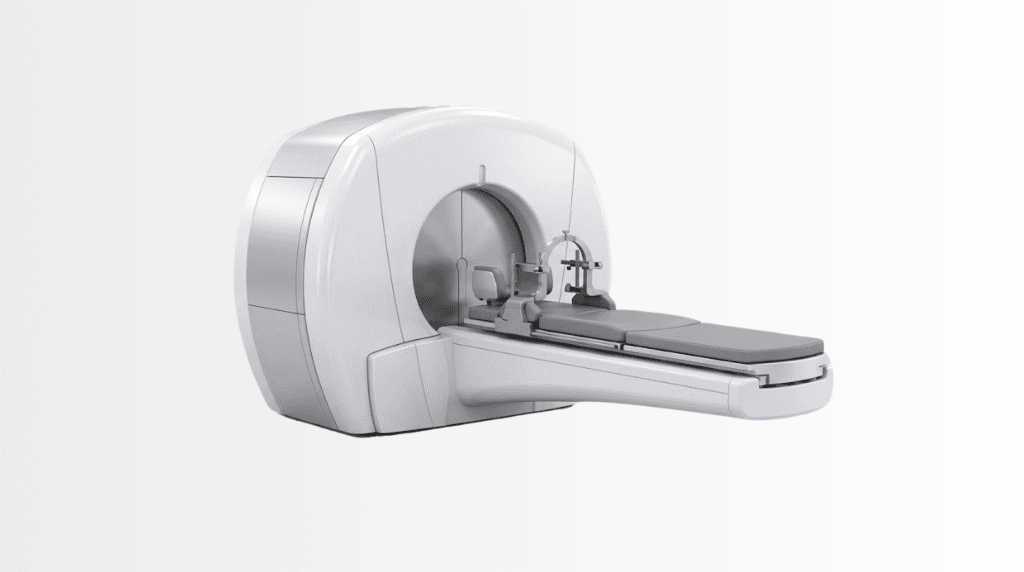
Gamma Knife Perfexion is a stereotactic radiosurgery system that uses multiple focused radiation beams to treat selected brain targets without an incision. At Acibadem in Turkey, treatment is planned by a multidisciplinary team using detailed imaging, with suitability based on the condition, target characteristics, and individual clinical assessment.
Gamma knife surgery is brain surgery’s quiet paradox: no scalpel, no incision, no opened skull, and yet a single session can control a tumour that once demanded a craniotomy. The Perfexion platform is the workhorse generation on which much of the world’s radiosurgery experience was built: ~192 cobalt beams, each harmless alone, converging on a target mapped to sub-millimetre accuracy. This guide explains what having gamma knife surgery is actually like, candidacy, the treatment day, recovery and results, the way a radiosurgery team explains it in consultation.
What is gamma knife surgery?
The name misleads twice: there is no knife, and no cutting. Gamma knife surgery is stereotactic radiosurgery, “stereotactic” meaning located in three-dimensional coordinates, “radiosurgery” meaning radiation delivered with surgical decisiveness, typically in one session. MRI maps the target; planning software shapes a dose to its exact geometry; the Perfexion’s automated collimator system then delivers nearly two hundred converging beams. Tissue a few millimetres away receives a fraction of the dose. That steep fall-off is the entire point, and the reason the method owns the brain’s most unforgiving neighbourhoods.
What conditions is it used for?
The classic list: brain metastases, including several at once; vestibular schwannoma (acoustic neuroma), where hearing-conscious control without craniotomy changed the field; meningiomas, particularly skull-base and residual disease; pituitary adenomas; arteriovenous malformations, which the dose closes gradually over months to years; and trigeminal neuralgia, where a focused dose on the nerve root can silence pain medication no longer touches. Each indication has its own evidence and its own honest limits, target size and location still rule, and the decision is made in a tumour board with neurosurgeons and radiation oncologists at the same table.
Who is a candidate?
Candidacy mostly reads from imaging: target size (radiosurgery favours small-to-moderate volumes), location (deep and eloquent areas favour it; large superficial masses with pressure effects favour open surgery), number of targets, prior treatments, and the patient’s overall picture, radiosurgery asks almost nothing of the heart, lungs or age that anaesthesia asks. This is why a recent MRI usually settles the question before any journey: the written answer is candidate, not a candidate, or better served another way.
The treatment day, step by step
Perfexion treatments classically use the stereotactic head frame, placed under local anaesthetic, it fixes the coordinate system to the skull and holds sub-millimetre truth for the whole session. Then: high-resolution MRI with the frame in place, planning while you rest, and delivery, lying awake on the couch from under an hour to a few hours, feeling nothing, often with music on. The frame comes off immediately after; pin sites are dressed, mild headache is common and short-lived, and most patients go home the same day. Effects follow the target’s biology over weeks to months, tracked by scheduled MRI.
Recovery, side effects and results
Recovery is the method’s luxury: normal life typically resumes within a day or two, no wound, no rehabilitation, no hospital week. Early side effects are usually limited to fatigue, mild headache or pin-site tenderness. Target-specific risks, temporary swelling around a treated lesion, or effects on adjacent nerves, depend on anatomy and are quantified honestly per case before consent. Results, by indication, are the reason the platform earned its reputation: high long-term control rates for the classic benign tumours, effective local control of metastases, gradual but durable AVM closure, and meaningful pain relief in a majority of trigeminal neuralgia cases, with the honest caveat that individual outcomes are exactly that, individual.
Against the alternatives
Open surgery removes and diagnoses tissue immediately, irreplaceable when mass effect demands decompression or histology is the question. Fractionated radiotherapy spreads dose over weeks and suits larger volumes. Radiosurgery’s territory: small-to-moderate, well-defined targets, especially deep, multiple or post-surgical, decided case by case where neurosurgery and radiation oncology sit at one table. A centre that offers all of the above can recommend honestly; the group’s tumour-board method exists exactly for that.
Gamma knife surgery at Acibadem
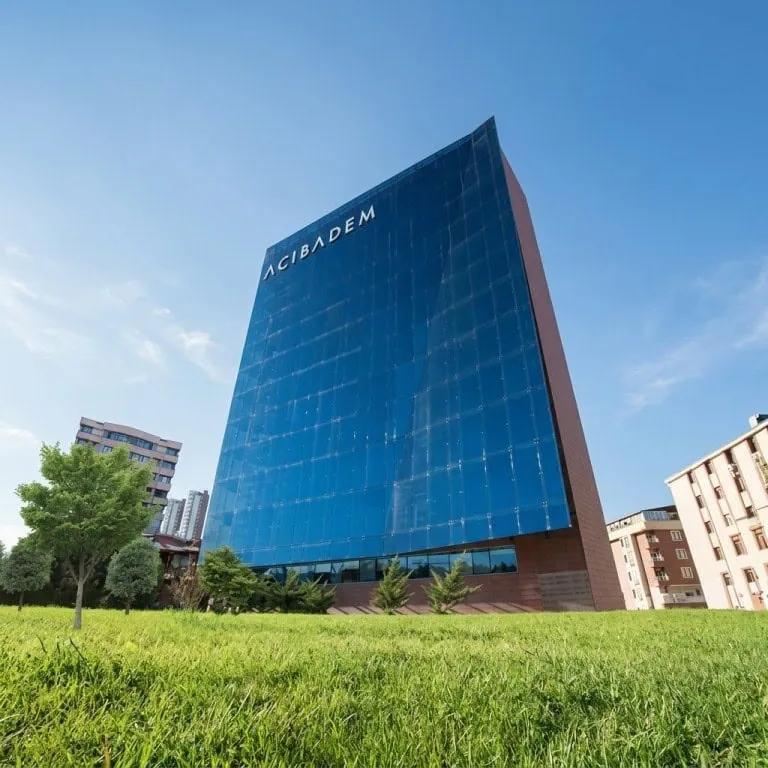
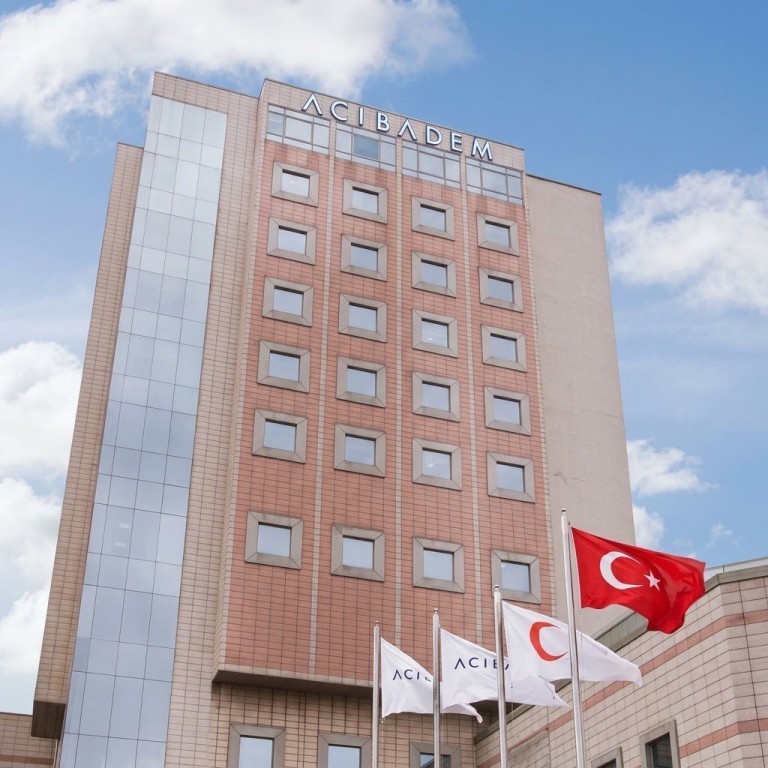
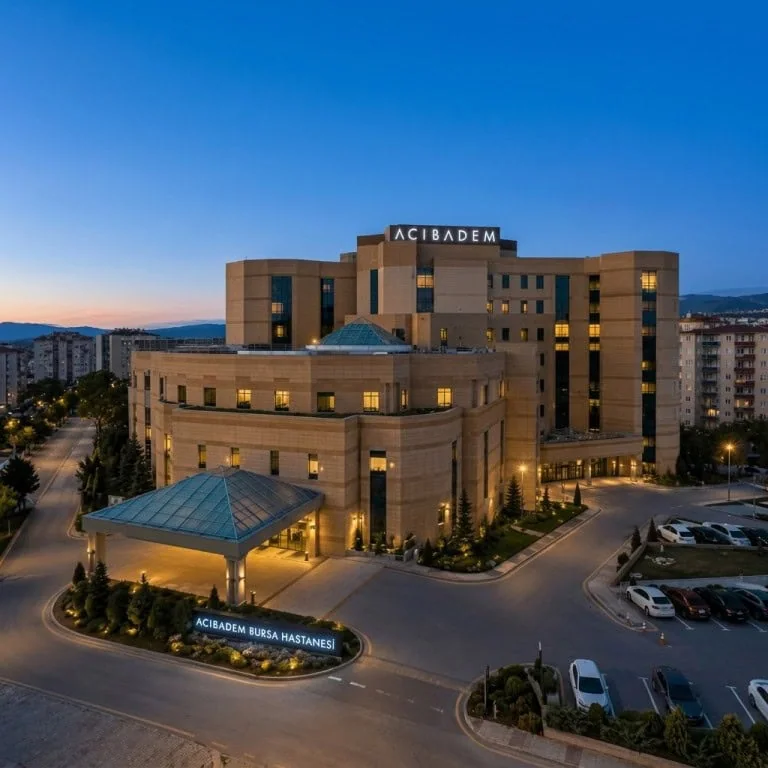
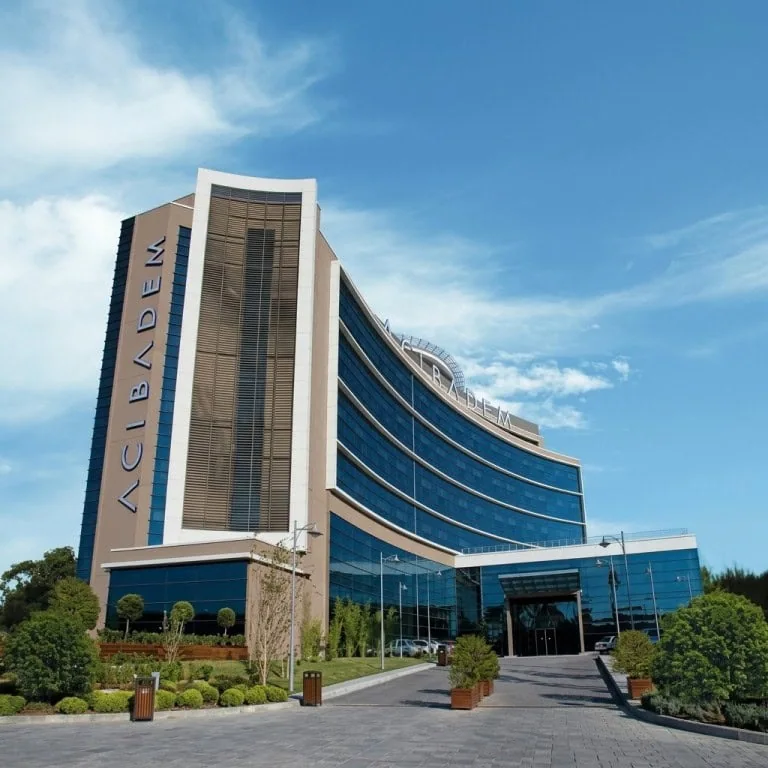
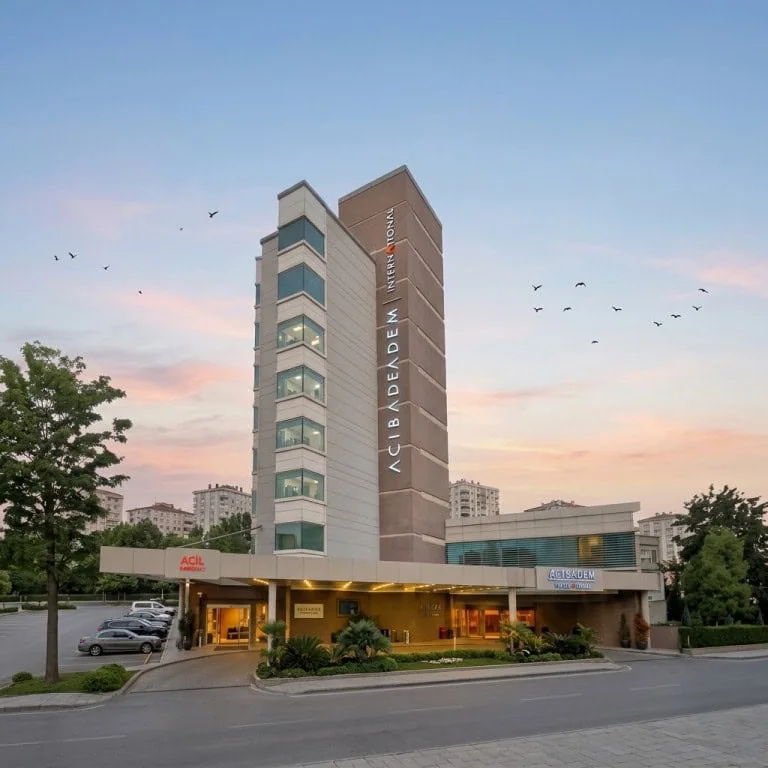
The group’s Gamma Knife programme runs at Altunizade Hospital in Istanbul: JCI-accredited, with the radiosurgery floor, neurosurgical theatres and tumour boards under one roof. For international patients the pathway is records-first: send a recent MRI, receive the radiosurgery team’s written opinion and plan, and travel once, typically for a single treatment day, with the follow-up imaging schedule written for the doctor continuing your care at home.
Two indications in depth: trigeminal neuralgia and AVM
Trigeminal neuralgia shows radiosurgery at its most surgical-without-surgery: the target is not a tumour but a few millimetres of nerve root, mapped on high-resolution MRI and given a focused maximum dose. Relief typically builds over weeks to a couple of months, medication continues meanwhile and tapers deliberately, and a majority of appropriately selected patients achieve meaningful, often complete, pain control; facial numbness is the honest trade-off a minority accept, discussed before consent. Recurrences years later can often be retreated. Arteriovenous malformations sit at the other end of the patience spectrum: the dose injures the malformation’s vessel walls so they thicken and close over one to three years, with imaging tracking the involution and angiography delivering the final verdict. Until confirmed closure, bleeding risk persists, an honest sentence every AVM consultation must contain, and larger malformations are sometimes staged or combined with embolisation in a joint neurovascular plan.
Metastases: radiosurgery in the modern era
The management of brain metastases has been rewritten around focused treatment. Where whole-brain radiotherapy was once reflexive, current practice treats visible lesions radiosurgically and protects the rest of the brain, preserving cognition while systemic therapies, increasingly brain-active themselves, control the microscopic remainder. Perfexion-class platforms made treating multiple targets in one session routine, and follow-up MRI surveillance catches new lesions when they are small and again treatable. The corollary honesty: radiosurgery controls what it can see; it pairs with, never replaces, the systemic plan, and decisions about sequence, surgery for large symptomatic lesions, and retreatment belong to a standing tumour board where neurosurgery, radiation and medical oncology read the same images together. That standing conversation is exactly what a patient should look for in a centre.
Frequently Asked Questions
How well does gamma knife work for trigeminal neuralgia?
A majority of well-selected patients achieve meaningful, often complete pain relief building over weeks; some facial numbness is the recognised trade-off a minority experience, and retreatment is possible for late recurrence.
Is whole-brain radiotherapy still needed for multiple metastases?
Increasingly rarely, modern practice treats visible lesions focally to protect cognition, with MRI surveillance and systemic therapy carrying the rest; your board states where your case sits.
Can an AVM bleed after treatment?
Until closure is confirmed, typically one to three years, bleeding risk persists at a declining rate; that honest window is part of every AVM decision.
Is gamma knife surgery painful?
Delivery is painless; the head frame’s pin sites are numbed with local anaesthetic and at most ache briefly afterwards.
Am I awake during treatment?
Yes: you lie awake and still on the couch, often with music; no general anaesthesia is involved.
How long does gamma knife surgery take?
Delivery runs from under an hour to a few hours by target complexity; with frame, imaging and planning, expect one full day.
How quickly will I recover?
Most patients go home the same day and resume normal life within a day or two: there is no wound to heal.
When will I know it worked?
On the target’s timetable: control of tumours shows on MRI over weeks to months, AVM closure over months to years, follow-up imaging is scheduled from day one.
What are the risks?
Early effects are usually mild, fatigue, headache, pin tenderness; location-specific risks such as swelling or nerve effects are quantified honestly for your exact anatomy before consent.
Will I lose my hair?
Generally no, focused single-session dose spares the scalp in most plans; any small, localised thinning near a superficial target is discussed beforehand if relevant.
Can gamma knife treat multiple metastases in one session?
Yes, several targets in a single session, sparing the rest of the brain, is one of the platform’s defining capabilities.
Is it suitable for acoustic neuroma?
Vestibular schwannoma is one of the method’s classic indications, with long published experience, candidacy and hearing considerations are weighed per case.
What if my tumour is too large?
Then honesty routes you elsewhere, open surgery or fractionated radiotherapy, and a centre with all options at one tumour board says so plainly.
Can treatment be repeated?
Radiosurgery can often be repeated for new or separate targets; cumulative-dose judgement for the same region belongs to the radiosurgery team.
How do I find out if I am a candidate?
Send a recent MRI, candidacy largely reads from imaging, and the team’s written records-based answer usually precedes any travel.
Why choose a high-volume gamma knife centre?
Because planning is the craft: dose-shaping judgement accumulates with cases, and a centre where neurosurgery and radiation oncology plan together recommends the method only when it is genuinely the right one.
Related Medical Units
Available at these Hospitals










Related Treatments
Speak with our medical team
Find out how this technology could support your diagnosis or treatment.