

Medical Genetics Department
Inherited conditions and inherited risk, what a genetic test can and cannot tell you, why a gene is not a diagnosis, what an uncertain variant means, and why a result concerns the whole family rather than one person.

What you were born with, and who else it concerns
Medical genetics asks a different question from the rest of medicine: not what is wrong now, but what was inherited, what it means for the years ahead, and which relatives it reaches. A result here rarely belongs to one person.
Cancers that run in families
Most cancer is not inherited. A minority arises in families carrying a variant that raises risk substantially, and finding those families turns anxiety into surveillance.
Conditions passed from parent to child
Recessive, dominant, X-linked and chromosomal. Carrier status is usually silent, which is why these conditions appear in families with no history at all.
Where a genetic answer changes what happens next
Conditions in which identifying the cause alters surveillance, treatment or the assessment of relatives, sometimes before anything has happened to them.
The counselling appointment comes before the test
That sequence is deliberate. A proper three-generation family history frequently determines which test is worth doing at all; the question has to be defined, because predicting future risk, explaining a condition already present and assessing what could be passed to children are three different questions needing three different tests; and the consequences are discussed before the result exists, which is the only time they can be considered calmly.
It follows that deciding not to test, after a proper discussion, is a legitimate outcome of a genetics appointment rather than a failure of one. A predictive result cannot be un-known, and it may carry implications for siblings and children who have not been asked whether they want the information.
What we will not do
- Act on a variant of uncertain significance, or use one to justify surgery or altered surveillance.
- Report a positive predictive result as a diagnosis when penetrance is incomplete.
- Test a child for an adult-onset condition where nothing would be done before adulthood.
- Accept a consumer DNA report as the basis for a clinical decision without confirming it.
- Press a relative who has decided they would rather not know.
What actually happens, in order
Prepare the family history properly
Three generations: each relative's relationship, current age or age at death, any diagnosis and the age at which it was made. Cancers need the site and the age. This single document determines which test is worth doing at all, and guessing is worse than leaving a gap.
Send previous reports in full
The complete laboratory report, not a summary: the gene, the exact variant nomenclature, the classification and the method. A letter saying "genetic testing was normal" is close to useless without them, and this is the commonest gap in an international referral.
Include the affected relative's result
If someone in the family has already tested positive, their report turns an open-ended search into a single defined question. Without it, testing an unaffected relative is a much larger exercise with a much less conclusive answer.
Most of this happens remotely
Counselling, review of an existing report and a plan for what to test can all be done without travel, and a sample can frequently be arranged locally. Genetics travels better than almost any other specialty because the work is conversation and laboratory analysis.
Expect interpretation to take time
A genetic result can take considerably longer than other laboratory work, because the slow step is classifying what was found rather than finding it. That timeline is given for the specific test rather than as a general rule.
Six things worth knowing first
A gene is not a diagnosis
Penetrance, the proportion of carriers who develop the condition, is rarely complete, and severity varies widely even within one family carrying an identical variant. A positive predictive result raises probability rather than fixing a future.
An uncertain variant is not acted on
A variant of uncertain significance means the laboratory does not yet know whether it causes disease, and most prove benign. It does not justify risk-reducing surgery or altered surveillance; management continues on personal and family history as though it had not been found.
There are two kinds of negative result
Testing negative for a variant already found in your family genuinely returns you to population risk. Testing that simply found nothing, with no variant ever identified in the family, does not: the history stands and surveillance continues to be based on it.
Sickle cell trait is not mild disease
Carriers are healthy, have a normal life expectancy and do not develop sickle cell disease. Two documented qualifications exist around extreme exertion at altitude and a rare kidney tumour, and neither is a reason to change how you live.
A consumer BRCA report is not a clinical one
Most such services check a few specific known variants rather than reading the gene, so a clear result excludes those and nothing else. Someone with a strong family history reassured by one has had an accurate answer to a question they did not ask.
Testing the affected relative first is better
Testing the person who has the condition can identify the causative variant, after which everyone else needs only a simple yes or no. Testing an unaffected relative first usually produces an uninformative result that changes nothing.
Quick answer
The Medical Genetics Department evaluates inherited and congenital conditions, helping identify genetic causes of disease and guide diagnosis, risk assessment, prevention, and treatment planning. At Acibadem in Turkey, care includes genetic consultation, family-history review, appropriate laboratory testing, and coordination with other specialties for children, adults, couples, and families.
What our medical genetics unit covers, and who it is for
Medical genetics is the specialty of inherited conditions and inherited risk. It answers a different kind of question from the rest of medicine: not what is wrong with you now, but what you were born with, what it means for the years ahead, and who else in your family it concerns.
That last clause is what makes the specialty unusual. A result here rarely belongs to one person. It reaches parents, siblings and children who never asked for it, and much of the work is deciding what to test for, what to report, and how to hand a family information that some of them may not want.
At Acıbadem International the work falls into five strands.
- Genetic counsellingthe appointment that comes before any test, establishing what question is being asked and whether a test can answer it.
- Diagnostic testingfinding the cause of a condition already present, in a child or an adult.
- Predictive and carrier testingtesting a healthy person for future risk or for a variant they could pass on.
- Inherited cancer riskidentifying the families in which cancer runs, and turning that into surveillance rather than anxiety.
- Family cascade testingextending a confirmed result outwards through relatives, which is where most of the benefit of a diagnosis is realised.
Where the borders sit. Testing the tumour rather than the person, the somatic panels that select a cancer treatment, belongs with pathology, which sets that boundary out explicitly, and the treatment itself with medical oncology. Screening in pregnancy, NIPT, invasive testing and the counselling around consanguinity belong with perinatology. Preimplantation genetic testing of embryos belongs with IVF and reproductive health. What BRCA status means for breast surgery and surveillance belongs with breast health. What this unit owns is the decision to test, the interpretation of the result, and the family.
What a genetic counselor does, and why the appointment comes first
A genetic counselorgenetic counsellor in British usage, the same role under either spelling, is the reason genetic testing is not simply a laboratory order. The appointment happens before the test rather than after it, and that sequence is deliberate.
Three things happen in it. A family history is taken properly, going back three generations with ages, diagnoses and ages at diagnosis, because the pattern in that history frequently determines which test is worth doing at all. The question is defined: predicting future risk, explaining a condition already present, and assessing what could be passed to children are three different questions needing three different tests. And the consequences are discussed before the result exists, because that is the only time they can be considered calmly, what a positive result would change, what a negative one would not rule out, and who else would need to know.
The last of those is the one people underestimate. A predictive test result cannot be un-known, and it may have implications for siblings and children who have not been asked whether they want the information. Deciding not to test, after a proper discussion, is a legitimate outcome of a genetics appointment rather than a failure of one.
The counsellor also handles the part that is neither technical nor trivial: a result arriving in a family that has been watching a condition move through it for generations lands differently from a result in a family with no history at all.
How conditions are inherited
Most of the confusion patients arrive with dissolves once the inheritance pattern is clear, so it is worth setting out plainly.
Autosomal dominant
An autosomal dominant condition needs only one altered copy of a gene to cause it. An affected parent has a one in two chance of passing it to each child, independently for each pregnancy, and the condition typically appears in every generation. Huntington disease, Marfan syndrome, familial hypercholesterolaemia and most inherited cancer syndromes follow this pattern.
Two points cause repeated misunderstanding. One in two is a per-pregnancy probability, not a quota, three children can all inherit it, or none can. And a child who does not inherit the variant cannot pass it on: the line stops there, permanently.
Autosomal recessive
An autosomal recessive condition needs two altered copies, one from each parent. Both parents are usually healthy carriers with no family history at all, which is why these conditions appear out of nowhere. Each pregnancy carries a one in four chance of being affected, a one in two chance of being an unaffected carrier, and a one in four chance of neither. Cystic fibrosis, thalassaemia, sickle cell disease and most metabolic conditions follow this pattern.
Because both parents must carry a variant in the same gene, relatedness between parents raises the chance of both carrying the same rare one. That consequence for pregnancy, and the counselling around it, is covered by perinatology.
X-linked
An X linked inheritance pattern follows a gene on the X chromosome. Males, having one X, are affected when they inherit an altered copy; females, having two, are frequently unaffected carriers, although some are affected to a variable degree. The characteristic clue is a condition passing through healthy women to affected men, brothers, maternal uncles, cousins, with no father-to-son transmission, because a father gives his son a Y.
Mitochondrial and de novo
Mitochondrial conditions pass only from the mother, since sperm contribute essentially no mitochondria: an affected father cannot pass one on. And a de novo mutation is one that arose newly in the affected person and is present in neither parent, which explains the many severe genetic conditions in families with no history whatsoever. A de novo finding usually means a low recurrence risk for the parents’ next pregnancy, though not zero.
Penetrance: why a gene is not a diagnosis
This is the single most important idea in the specialty and the one most often lost between the report and the patient.
Penetrance is the proportion of people carrying a variant who actually develop the condition. It is rarely complete. Someone can carry a disease-causing variant, pass it to a child who is severely affected, and never develop anything themselves. Expressivity is the companion idea: among those who are affected, severity differs enormously, sometimes within one family carrying one identical variant.
Three consequences follow, and they are practical rather than theoretical.
A positive predictive test states that risk is raised, not that the condition will occur. Reading it as a diagnosis causes real harm, treatment decisions made on a probability presented as a certainty.
An unaffected relative can still be a carrier and can still pass it on, which is why cascade testing follows the gene rather than the symptoms.
And risk figures attached to a variant are population estimates, refined by family history, sex, age and sometimes other genes. Two people with the same variant do not necessarily carry the same risk.
Mosaicism adds a further layer: a variant present in some cells and not others, depending on when it arose during development. It explains why a parent can test negative on a blood sample yet have more than one affected child, because the variant may be present in their egg or sperm cells alone. It is uncommon, and it is the reason a negative parental test does not always reduce recurrence risk to background.
The tests, and what each can and cannot see
Genetic testing is not one test. Each type looks at a different scale, and a negative result means only that nothing was found at the scale examined.
- Karyotypethe chromosomes seen whole under a microscope. It detects extra or missing chromosomes and large rearrangements. It cannot see anything smaller.
- Chromosomal microarraydetects deletions and duplications far below the resolution of a karyotype, and is a first-line test in developmental delay and congenital anomaly. It cannot detect a single-letter change or a balanced rearrangement.
- Targeted single-gene testingused when the diagnosis is already suspected clinically or when testing a relative for a known family variant.
- Gene panelmany genes associated with one condition or group of conditions, sequenced together. The standard approach for inherited cancer risk, cardiac conditions and hearing loss.
- Whole exome sequencingthe protein-coding portion of every gene, about one to two per cent of the genome, where most known disease-causing variants sit. Used when the presentation does not point to a specific gene.
- Whole genome sequencingeverything, including the regions between genes. Detects some things an exome misses, at the cost of far more uncertainty to interpret.
Two properties of these tests are worth holding on to. A negative result is bounded by the method: an exome that finds nothing has not excluded a deletion a microarray would have seen, and a panel that finds nothing has not excluded a gene outside the panel. And the bigger the test, the more uncertainty it generates, which is the subject of the next section.
The variant of uncertain significance
The variant of uncertain significancethe VUS, is the most misread result in genetics, and understanding it prevents a specific and common harm.
It is also the reason genetic test results are read as a classification rather than as a yes or no. Laboratories classify variants on a five-point scale: pathogenic, likely pathogenic, uncertain, likely benign and benign. A VUS means exactly what it says: the laboratory does not currently know whether this change causes disease. Most turn out to be benign when enough data accumulates.
The critical rule follows directly: a VUS is not acted upon clinically. It does not justify risk-reducing surgery, it does not justify altered surveillance, and it is not a reason to test relatives for reassurance. Management continues to be based on personal and family history as though the variant had not been found: a statement that surprises people and is nonetheless the standard.
Two further points. Classifications are revisited as evidence accumulates, and a VUS can later be reclassified in either direction, which is why staying in contact with the genetics service matters more than the original report suggests. And VUS results are considerably more common in people from populations that are under-represented in genomic databases, simply because there is less comparison data: an inequity in the science rather than a feature of the individual.
Inherited cancer risk
Most cancer is not inherited. A minority arises in families carrying a variant that raises risk substantially, and identifying those families is one of the highest-value activities in preventive medicine, because the answer is surveillance and risk reduction rather than treatment.
What raises suspicion
Cancer diagnosed unusually young. The same cancer in several close relatives. More than one primary cancer in one person. A rare pattern such as male breast cancer. Certain tumour types that carry a high inherited fraction regardless of family history. And specific combinations across a family, breast with ovarian, or bowel with womb.
The main syndromes
BRCA1 and BRCA2 raise the risk of breast and ovarian cancer substantially, and also of prostate and pancreatic cancer. What a positive result means in practice, enhanced surveillance, risk-reducing surgery, timing, is managed by breast health and gynaecology. A BRCA test is therefore rarely ordered alone: the combination of breast and ovarian cancer in a family is what defines hereditary breast and ovarian cancer syndrome, and the panel used reflects that. Beyond BRCA, several moderate-risk genes including PALB2, CHEK2 and the ATM gene appear on panels and carry different, generally lower risks, which is why a panel result requires interpretation rather than a single response.
Lynch syndrome is caused by variants in the mismatch repair genes and raises the risk of bowel, womb, ovarian, stomach and urinary tract cancer. It is frequently identified from the tumour itself, when mismatch repair testing on a specimen shows deficiency: the point at which pathology hands a family to this unit. Surveillance colonoscopy at intervals shorter than the general population’s is the main intervention.
Familial adenomatous polyposis, Li Fraumeni syndromecaused by a germline TP53 mutation and raising the risk of several cancers from childhood onwards, von Hippel-Lindau disease and the multiple endocrine neoplasia syndromes MEN1 and MEN2 are rarer and each carries its own surveillance programme, typically beginning in childhood or early adult life. MEN2 is unusual in that a positive result can lead to preventive thyroid surgery in childhood, which is one of the clearest examples of a genetic result changing what happens rather than only what is known.
What a negative result does and does not mean
This distinction matters and is routinely lost. A true negativetesting negative for a variant already identified in the family, genuinely returns that person to population risk. An uninformative negativetesting found nothing, and no variant was ever identified in the family, does not: the family history remains, the cause may be a gene not yet known, and surveillance continues to be based on the history rather than on the report.
Cascade testing: a result belongs to a family
Cascade testing is what happens after a variant is confirmed in one person: relatives are offered testing for that specific variant, and those who test positive enter surveillance while those who test negative are released from it.
It is where most of the benefit of a genetic diagnosis is realised, and it is also where most of it is lost, because a family conversation has to happen for it to occur at all. Genetics services support that conversation, with letters written for relatives, explanations pitched to be shared, and the option of contact being made in some circumstances, but they cannot have it on a patient’s behalf.
Testing a relative for a known family variant is a far simpler exercise than the original test, and the result is far cleaner: a single yes or no about a single defined change, with none of the ambiguity of an open-ended search.
Two situations need care rather than enthusiasm. Testing children is generally deferred for adult-onset conditions where nothing would be done in childhood, so that the person can decide for themselves; where childhood surveillance would begin, testing is offered in childhood. And relatives who choose not to know are entitled to that, which is a position to be supported rather than argued with.
Carrier status, and what it means for you
Being a carrier of a recessive condition means having one altered copy and one working one. The working copy is enough, so carriers are healthy: the finding matters for children rather than for the carrier.
Sickle cell trait is the clearest example and the most misunderstood. It is not a mild form of sickle cell disease. People with the trait are healthy, have a normal life expectancy and do not develop the disease. Two well-documented qualifications belong with that: extreme conditions such as severe dehydration combined with very intense exertion at altitude can occasionally provoke problems, and the trait is associated with a rare kidney tumour and with blood in the urine. Neither changes the central point, and neither is a reason for a carrier to alter their life.
Cystic fibrosis carrier status behaves the same way, as does thalassaemia trait: the last being important in this region, where it is common enough that couples are frequently both carriers without knowing. Thalassaemia trait is also mistaken for iron deficiency on a blood count and treated with iron that does not help, which is a diagnosis worth making correctly.
Where a couple wants to know their position before conceiving rather than react to it afterwards, expanded carrier screening tests both partners across a large number of recessive conditions at once, rather than only the ones suggested by ancestry or family history.
What carrier status changes is reproductive: if both partners carry a variant in the same gene, each pregnancy carries a one in four chance of an affected child, and the options available are discussed before pregnancy rather than during it. Testing in pregnancy belongs with perinatology and embryo testing with IVF and reproductive health.
Inherited metabolic disease
Inborn errors of metabolism are individually rare and collectively not, and they matter disproportionately for one reason: several are treatable, and the treatable ones respond far better when found early.
Pompe disease is the clearest illustration. It is caused by deficiency of an enzyme that breaks down glycogen, and it presents in two very different ways: an infantile form with severe muscle weakness and heart involvement, and a late-onset form that can appear at any age as progressive proximal muscle weakness and breathing difficulty, frequently mistaken for a muscular dystrophy or an unexplained myopathy for years. It is diagnosed by an enzyme assay on a dried blood spot followed by genetic confirmation, and enzyme replacement therapy exists. That combination, a treatable condition that is routinely diagnosed late, is why it appears in the differential of adult unexplained proximal weakness.
Gaucher disease and Fabry disease follow the same shape: lysosomal storage disorders with adult presentations that are missed for years, and available enzyme replacement. Fabry in particular presents with unexplained kidney failure, early stroke, cardiac hypertrophy and neuropathic pain in the hands and feet, and reaches nephrology, neurology and cardiology long before it reaches genetics.
Phenylketonuria is the historical proof of the principle: detected on newborn screening and treated with a strictly controlled diet, it prevents severe intellectual disability entirely, and the dietary management, lifelong and demanding, sits with nutrition and dietetics.
Newborn screening
Newborn screening is the heel-prick blood spot taken in the first days of life, and it is the most successful genetic programme in existence for a reason that is easy to state: it looks for a small number of conditions in which early treatment prevents severe, irreversible harm and in which nothing visible is wrong at birth.
The conditions differ by country, which matters for families who move. What is universal is the principle: this is screening, not diagnosis. An abnormal screening result means further testing is needed, and most abnormal results turn out not to be the condition: an important thing to know for a parent contacted after a screening test.
It also does not screen for everything genetic. A normal newborn screen excludes the specific conditions on that country’s panel and nothing beyond them, which is why it does not answer a question about family history.
Chromosome conditions
These arise from an extra or missing chromosome, or from a structural rearrangement, and they are usually de novo rather than inherited.
Down syndrome, trisomy 18 and trisomy 13 result from an extra copy of a whole chromosome and are usually diagnosed before or shortly after birth. Turner syndrome, in which one X chromosome is wholly or partly missing, presents with short stature, absent puberty and infertility, and is frequently diagnosed late, sometimes in adolescence or adulthood, which is a diagnostic failure worth naming. Klinefelter syndrome, an extra X in males, is also under-diagnosed and typically presents with infertility or delayed puberty.
One category is inherited and matters for reproduction: a balanced translocation, in which chromosome material is rearranged without being gained or lost. The carrier is entirely healthy, because nothing is missing. But their eggs or sperm can carry an unbalanced arrangement, which is why a balanced translocation surfaces after recurrent miscarriage or a chromosomally abnormal pregnancy. It is invisible on a microarray and requires a karyotype to see, one of the few remaining situations where the older test is the right one.
Fragile X and the repeat expansion disorders
A small group of conditions is caused by a short DNA sequence repeated too many times, and they behave unlike anything else in genetics.
Fragile X syndrome is the commonest inherited cause of intellectual disability and of autism with a known genetic cause. Its distinctive feature is the premutation: an intermediate-length repeat that does not cause the syndrome but can expand when passed on, particularly through mothers, so a healthy woman can have an affected child. The premutation itself is not silent either; it carries a risk of early ovarian insufficiency in women and of a late-onset tremor and ataxia syndrome in older men, both of which are missed because the family is not thought of as a fragile X family at all.
Huntington disease is the other well-known example and the one that shaped how predictive testing is done everywhere. It is autosomal dominant, adult-onset, and currently untreatable in the sense of altering its course, so a predictive test tells a healthy person whether they will develop it, with nothing to offer in response. That is why testing follows a formal protocol with counselling before and after and a deliberate interval to reconsider, and why a substantial proportion of people at risk choose not to be tested. That choice is respected without argument.
Inherited cardiac and connective tissue conditions
These reach genetics through a cardiologist or after a family event, and the reason they matter is that the first symptom is sometimes sudden death in a young person.
Long QT syndrome and the other inherited arrhythmia syndromes cause abnormal heart rhythms in structurally normal hearts. Hypertrophic cardiomyopathy thickens the heart muscle and is the commonest inherited cardiac condition. Both are managed by cardiology; genetics identifies the variant and then tests the family, which is the step that finds the relatives at risk before anything happens to them.
Marfan syndrome affects connective tissue, with consequences in the aorta, the eye and the skeleton. The aortic risk drives management, which sits with cardiovascular surgery, and the lens dislocation with ophthalmology. Vascular Ehlers-Danlos syndrome is rarer and more dangerous, and is distinguished carefully from the far commoner hypermobile type, which currently has no identified genetic cause and is diagnosed clinically: a distinction that matters enormously, because the two carry entirely different risks.
Familial hypercholesterolaemia deserves separate mention as the most under-diagnosed treatable inherited condition there is: markedly raised cholesterol from birth, early cardiovascular disease, effective treatment, and a diagnosis that is missed because a cholesterol result is read as a lifestyle finding rather than a genetic one. It is a strong candidate for cascade testing, because each person identified leads directly to several relatives.
Pharmacogenomics
Pharmacogenomics examines how inherited variation changes the way a person handles a medicine, how fast it is metabolised, whether a prodrug is activated, and whether a severe reaction is likely.
Three uses are established rather than speculative. Certain variants predict severe hypersensitivity to specific drugs and are tested for before prescribing them. Enzyme variants determine whether a drug is metabolised too fast to work or too slowly and accumulates, which is relevant to some psychiatric medicines, some pain medicines and some anticoagulants. And in oncology, variants determine whether a standard dose of certain chemotherapy agents would be severely toxic.
The honest limits matter as much. Broad pharmacogenomic panels sold directly to consumers cover many drug-gene pairs for which the evidence is thin, and a result is one input among several, age, kidney and liver function, other medicines and the clinical response all still apply. No result from such a panel is a reason to stop or change a prescribed medicine independently; that decision belongs to the doctor who prescribed it.
Direct-to-consumer tests, and what they do not do
People increasingly arrive with a result from a consumer testing service, and the conversation that follows is a recurring part of this unit’s work.
Direct to consumer genetic testing is genuinely informative about ancestry and about some traits. Its health claims need qualification on three points.
Most such tests use genotyping rather than sequencing: they check specific known positions rather than reading the gene. A service reporting BRCA typically checks a small number of specific variants, so a reassuring result excludes those and nothing else, and someone with a strong family history who is reassured by such a report has been misled by a technically accurate answer to a question they did not ask.
Findings are not clinically confirmed. Anything of consequence is repeated in an accredited diagnostic laboratory before it is acted on, and consumer results are not accepted as a basis for surgery or surveillance.
And risk estimates for common conditions combine many small effects into a score that is far weaker than family history, and considerably less accurate in people whose ancestry is under-represented in the underlying data.
None of that makes these tests worthless. It makes them a reason to come to a genetics appointment rather than a substitute for one.
What genetics cannot do
It cannot tell you what will happen. Penetrance is incomplete and expressivity varies, so a positive predictive result raises probability rather than fixing a future.
It cannot exclude a genetic cause. Every test is bounded by what it examines, and a negative result means nothing was found at that scale, in those genes, with today’s knowledge.
It cannot resolve a variant of uncertain significance by wanting to. A VUS is not acted on clinically, and re-testing does not clarify it, accumulating evidence over time does.
It cannot make a family talk to each other. Cascade testing is where the benefit lives, and it depends on a conversation that no service can have on a patient’s behalf.
It cannot treat most of what it finds. Some conditions have enzyme replacement or targeted management; many have surveillance; several have neither, and saying so plainly before a predictive test is part of consenting to it.
It cannot make a consumer report into a clinical one. Anything of consequence is confirmed in an accredited laboratory before anything is done about it.
Your multidisciplinary team
The clinical geneticist assesses the patient and the family, selects the test, interprets the result in its clinical context and coordinates surveillance. The genetic counsellor takes the family history, defines the question, prepares the family for what a result would mean and supports the cascade conversation afterwards. The laboratory geneticist and bioinformatician run and interpret the sequencing and classify variants against the evidence: the step that determines whether a finding is pathogenic, benign or uncertain. The cytogeneticist reports the chromosome studies that a microarray cannot replace, balanced translocations among them.
Around them: pathology, where a tumour result raises an inherited question and where the somatic-versus-germline boundary is drawn, medical oncology and breast health for inherited cancer risk, gynaecology for gynaecological surveillance and risk reduction, gastroenterology for Lynch and polyposis surveillance, perinatology for everything in pregnancy, IVF and reproductive health for embryo testing, cardiology and cardiovascular surgery for inherited cardiac and aortic disease, neurology for the neurogenetic conditions, nephrology for inherited kidney disease, paediatrics and paediatric surgery for children with syndromic conditions, and nutrition and dietetics for the metabolic diets.
The international patient journey
Genetics travels unusually well, because most of what happens is conversation and laboratory work rather than examination.
What to send before anything else. A family history is the single most valuable document, and it is worth preparing properly: three generations, with each relative’s relationship, current age or age at death, any diagnosis and the age at which it was made. Cancer diagnoses need the site and the age. Guessing is worse than leaving a gap.
Existing genetic reports, in full. The complete laboratory report rather than a summary: the gene name, the exact variant nomenclature, the classification and the methodology all matter, and a letter saying “genetic testing was normal” is close to useless without knowing which test was done. This is the commonest gap in an international referral.
Confirmation of the family variant. If a relative has tested positive, their report is what makes testing simple: a single defined change to look for, rather than an open search. Without it, a family member’s test is a much larger and less conclusive exercise.
The relevant clinical records. Pathology reports for cancers in the family, cardiac investigations, and any previous microarray or karyotype.
Three practical notes. Much of this is done remotely, counselling, review of an existing report, and a plan for what to test, and a sample can frequently be arranged without travel. Where a condition has already been diagnosed in a relative, testing the affected relative first is almost always more informative than testing the unaffected one who is asking, and that ordering is worth understanding before travel is planned. And a result may take considerably longer than other laboratory work, because interpretation rather than analysis is the slow step.
Frequently Asked Questions
What does a genetic counselor actually do?
They take a proper three-generation family history, define which question is being asked, future risk, an explanation for a condition already present, or what could be passed to children, and discuss the consequences of each possible result before the test exists. That last part is the point of seeing them first rather than afterwards, because a predictive result cannot be un-known and may affect relatives who have not been asked whether they want the information.
Should I have genetic testing?
It depends on what you want to know and whether a test can answer it, which is exactly what the counselling appointment establishes. Testing is most useful when there is a clear question: a strong family history, a condition needing a diagnosis, or a known variant in the family. Deciding not to test after a proper discussion is a legitimate outcome, and it is a decision the service supports rather than argues with.
If I have the gene, will I definitely get the condition?
Usually not. Penetrance, the proportion of carriers who develop the condition, is rarely complete, so a positive predictive result raises probability rather than fixing a future. Severity also varies widely among affected people, sometimes within one family carrying an identical variant. Reading a positive result as a diagnosis causes real harm, because decisions get made on a probability presented as a certainty.
What is a variant of uncertain significance?
A change the laboratory has found but cannot yet classify as disease-causing or harmless. Most eventually prove benign. The essential rule is that a VUS is not acted on clinically: it does not justify risk-reducing surgery or altered surveillance, and management continues to be based on personal and family history as though it had not been found. Classifications are revisited as evidence accumulates, which is why staying in contact with the service matters.
Why did my VUS result not change anything?
Because acting on an unclassified variant would mean treating people who mostly carry a harmless change. Surgery, extra surveillance and testing relatives all carry costs, and none is justified by a finding the laboratory cannot interpret. VUS results are also more common in people whose ancestry is under-represented in genomic databases, which is a gap in the science rather than anything about the individual.
My genetic test was negative. Does that mean I am not at risk?
It depends entirely on which kind of negative it is. If you tested negative for a variant already identified in your family, that is a true negative and returns you to population risk. If testing simply found nothing and no variant was ever identified in the family, that is uninformative: the family history stands, the cause may be a gene not yet known, and surveillance continues to be based on the history rather than on the report.
What is the difference between an exome and a panel?
A panel sequences a defined set of genes chosen for a particular condition, which makes it focused and easier to interpret. An exome sequences the coding portion of every gene, used when the presentation does not point to specific genes. The bigger the test, the more it can find and the more uncertainty it generates. Neither excludes everything: an exome will not see a deletion that a microarray would, and a panel will not see a gene outside it.
Do I need a karyotype if I have had a microarray?
Sometimes, and this is one of the few places where the older test is the right one. A microarray detects gains and losses of material with far better resolution, but it cannot see a balanced translocation, where chromosome material is rearranged without anything being gained or lost. Since balanced translocations cause recurrent miscarriage and chromosomally abnormal pregnancies, a karyotype remains the correct test in that situation.
Both my partner and I are carriers. What does that mean for children?
If you both carry a variant in the same gene, each pregnancy carries a one in four chance of an affected child, a one in two chance of an unaffected carrier and a one in four chance of neither. Those probabilities apply independently to every pregnancy rather than as a quota. The options, including testing during pregnancy and testing embryos before transfer, are discussed before pregnancy where possible, with the perinatology and IVF teams.
Is sickle cell trait a mild form of the disease?
No. Sickle cell trait means carrying one altered copy and one working one. People with the trait are healthy, have a normal life expectancy and do not develop sickle cell disease. Two documented qualifications exist, extreme dehydration with very intense exertion at altitude can occasionally provoke problems, and the trait is associated with a rare kidney tumour and with blood in the urine, but neither is a reason to change how you live.
My blood count says I am anaemic and iron has not helped. Could it be genetic?
It is worth checking, because thalassaemia trait is commonly mistaken for iron deficiency on a blood count. Both produce small red cells, but the treatment differs entirely: iron does not help thalassaemia trait, and continuing it unnecessarily is not harmless. The trait is common in this region and matters mainly for reproduction, since two carriers can have a severely affected child.
What is cascade testing?
Testing relatives for a variant already confirmed in one family member. It is where most of the benefit of a genetic diagnosis is realised: those who test positive enter surveillance and those who test negative are released from it. It is also far simpler than the original test, because it looks for one defined change rather than searching. What it requires is a family conversation, which the service supports with letters and explanations but cannot have on anyone’s behalf.
Should my children be tested?
It depends on whether anything would be done in childhood. For adult-onset conditions where no surveillance or treatment would begin before adulthood, testing is generally deferred so the person can decide for themselves as an adult. Where childhood surveillance or treatment would start, as in several inherited cancer syndromes and metabolic conditions, testing is offered in childhood, because there is something to act on.
What if a relative does not want to know?
That is their right, and it is respected without argument. Being at risk does not oblige anyone to be tested, and some people live comfortably with not knowing while others cannot. The service’s role is to make the information available and understandable to those who want it, not to persuade those who do not. This comes up most often with Huntington disease, where a substantial proportion of people at risk choose not to test.
Why should the affected relative be tested first?
Because it is far more informative. Testing the person who has the condition can identify the causative variant; once it is known, testing everyone else becomes a simple yes or no. Testing an unaffected relative first, with nothing identified in the family, usually produces an uninformative result that changes nothing. If an affected relative is available and willing, that ordering saves time, money and ambiguity.
Does a positive BRCA result mean I will get cancer?
No. It means the lifetime risk of certain cancers is substantially raised, not that they will occur, and the figures are population estimates refined by family history, sex and age. What follows is a discussion about enhanced surveillance and risk-reducing options with the breast and gynaecology teams, planned over time rather than decided at once. Some people carry a variant and never develop cancer.
My tumour testing found a mutation. Is it inherited?
Usually not. Tumour testing is somatic: it examines changes that arose in the tumour during life, present only there and unable to be passed on. Inherited risk is assessed by germline testing on blood or saliva, which examines the DNA in every cell. Some tumour findings are a reason to consider germline testing, mismatch repair deficiency among them, but a tumour result never substitutes for one in either direction.
What is Lynch syndrome and how is it usually found?
A condition caused by variants in the mismatch repair genes, raising the risk of bowel, womb, ovarian, stomach and urinary tract cancer. It is increasingly identified from the tumour itself: mismatch repair testing on a cancer specimen shows deficiency, which prompts germline testing. Once confirmed, the main intervention is colonoscopy at shorter intervals than the general population’s, together with gynaecological surveillance, and cascade testing across the family.
What is Pompe disease and why does it get missed?
An inherited enzyme deficiency that prevents glycogen being broken down. The infantile form is severe and recognised early; the late-onset form can begin at any age with progressive weakness in the shoulders and hips and difficulty breathing, and is frequently mistaken for a muscular dystrophy or an unexplained myopathy for years. It is diagnosed by an enzyme assay on a dried blood spot with genetic confirmation, and enzyme replacement therapy exists, which is exactly why the delay matters.
Is my newborn screening result normal for everything genetic?
No. Newborn screening looks for a small number of specific conditions in which early treatment prevents severe irreversible harm, and the list differs by country. A normal result excludes the conditions on that panel and nothing beyond them, so it does not answer a question raised by family history. It is also screening rather than diagnosis: an abnormal result means further testing is needed, and most abnormal results turn out not to be the condition.
Is Turner syndrome always diagnosed at birth?
Frequently not, and the delay is a recognised problem. It is sometimes found before birth or in infancy, but many are diagnosed in childhood because of short stature, in adolescence because puberty does not progress, and some only in adulthood during investigation of infertility. Klinefelter syndrome is under-diagnosed in the same way, typically surfacing during fertility investigation. Both benefit from earlier recognition.
I had a balanced translocation result after miscarriages. What does it mean?
It means chromosome material in your cells is rearranged without anything being gained or lost, which is why you are entirely healthy. The consequence is reproductive: eggs or sperm can carry an unbalanced arrangement, which causes miscarriage or a chromosomally abnormal pregnancy. Options include continuing to try, testing during pregnancy, and testing embryos before transfer, which is discussed with the reproductive team.
What is the fragile X premutation?
An intermediate-length repeat that does not cause fragile X syndrome but can expand when passed on, particularly through mothers, so a healthy woman can have an affected child. The premutation is not silent in the carrier either: it carries a risk of early ovarian insufficiency in women and of a late-onset tremor and ataxia syndrome in older men. Both are missed regularly, because nobody has thought of the family as a fragile X family.
Why is testing for Huntington disease done so formally?
Because it tells a healthy person whether they will develop an adult-onset condition whose course cannot currently be altered, with nothing to offer in response. The protocol therefore includes counselling before and after and a deliberate interval to reconsider, and testing is never done at a single appointment. A substantial proportion of people at risk decide not to be tested, and that decision is supported without argument.
My cholesterol has always been very high. Could it be genetic?
It may be familial hypercholesterolaemia, which is the most under-diagnosed treatable inherited condition there is: markedly raised cholesterol from birth, early cardiovascular disease, and effective treatment. It is missed because a cholesterol result is read as a lifestyle finding rather than a genetic one. It is also a strong candidate for cascade testing, since each person identified leads directly to several relatives who can be treated before anything happens.
Can genetics explain sudden death in a young relative?
Sometimes, and it is worth pursuing. Inherited arrhythmia syndromes such as long QT, and inherited cardiomyopathies such as hypertrophic cardiomyopathy, can cause sudden death in a structurally normal or nearly normal heart, and the first symptom is occasionally the event itself. Where a cause is identified, testing the family finds the relatives at risk before anything happens to them, which is the strongest argument for investigating rather than leaving it.
Is a hypermobility diagnosis genetic?
The distinction here matters a great deal. Vascular Ehlers-Danlos syndrome is a rare and dangerous condition with an identified genetic cause and serious vascular risk. Hypermobile Ehlers-Danlos syndrome, which is far commoner, currently has no identified genetic cause and is diagnosed clinically rather than by a test. The two carry entirely different risks, and confusing them causes either unwarranted alarm or unwarranted reassurance.
Should I act on a pharmacogenomic result?
Not independently. Some drug-gene pairs are genuinely established and are used before prescribing certain medicines. Many pairs on broad consumer panels rest on thin evidence, and any result is one input among several, age, kidney and liver function, other medicines and the clinical response all still apply. No such result is a reason to stop or change a prescribed medicine on your own; that decision belongs to the doctor who prescribed it.
I did a consumer DNA test and it says my BRCA is clear. Am I safe?
Not necessarily, and this is the most consequential misunderstanding in consumer testing. Most such services use genotyping rather than sequencing, checking a small number of specific known variants rather than reading the gene. A clear result excludes those specific variants and nothing else. Someone with a strong family history reassured by such a report has received a technically accurate answer to a question they did not ask, and warrants proper diagnostic testing.
What should I bring or send before a genetics appointment?
A properly prepared family history is the single most valuable item: three generations, each relative’s relationship, current age or age at death, any diagnosis and the age at which it was made, with the site and age for cancers. Then the complete laboratory reports of any previous genetic testing: the gene, the exact variant nomenclature, the classification and the method, because a letter saying testing was normal is close to useless without them. And the report of any relative who has tested positive, which makes testing far simpler.
Conditions We Treat
5 conditions, listed A–Z
All conditions A–ZMedically reviewed by the Acıbadem International Medical Board September 26, 2026
See our medical review board →
Update history
- PublishedJune 14, 2026
- Medical review approvedSeptember 26, 2026
- Last content updateSeptember 25, 2026
References7
- Genetic Testing medlineplus.gov
- What is genetic testing? medlineplus.gov
- Genetic Testing for Inherited Cancer Risk cancer.gov
- BRCA Gene Changes: Cancer Risk and Genetic Testing cancer.gov
- Pompe disease medlineplus.gov
- Fragile X syndrome medlineplus.gov
- Sickle Cell Disease medlineplus.gov
Add us as a Preferred Source to see more of our trusted health content across Google Search, AI Overviews and Discover.
Treatments in Medical Genetics Department
Specialists in this Unit

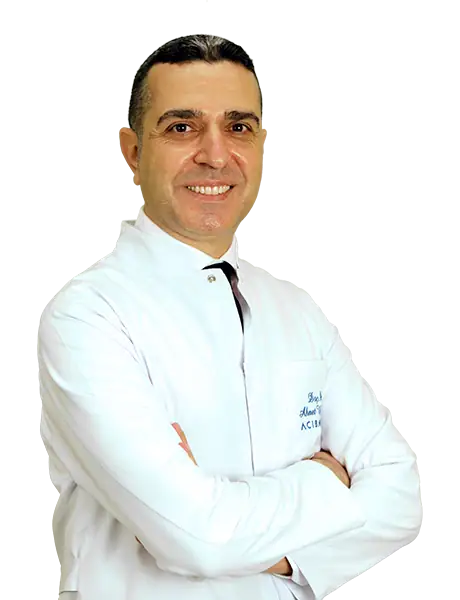

Available at these Hospitals



Speak with our medical team
Share your case and our international patient team will guide you to the right specialist, free of charge.