

Colonoscopy in Turkey: Procedure Day and Recovery Guide

A colonoscopy in Turkey usually takes a few hours of your day: arrival and registration, the procedure itself, then monitored recovery. The bigger planning task sits around it, bowel preparation the day before, a companion if sedation is used, and a flexible return flight, because your doctor confirms flying timing after the procedure, not before.
The procedure takes less of your trip than most people expect. The preparation takes more. If you are planning a colonoscopy in Turkey, the hospital visit itself is usually measured in hours, while the parts that need real planning, bowel preparation, sedation rules, and the timing of your flight home, sit on either side of it. This guide walks through the day in order, from the evening before to the morning after, and is honest about which decisions belong to your doctor rather than your travel schedule.
At a glance
- Best for: International patients planning colonoscopy day, short recovery, and the return flight
- Typical setting: Hospital endoscopy unit with a specialist, endoscopy nurses and, where sedation is used, anaesthesia support
- Time at hospital: Usually a few hours in total, registration, the procedure, and monitored recovery
- Companion: Strongly advised after sedation; some units require one before discharge
- Same-day flying: Generally not advised after sedation; your doctor confirms timing based on what was done
- Support available: Interpreters, appointment coordination, transfers, and hotel guidance for international patients
What a colonoscopy in Turkey involves
A colonoscopy is an examination of the large bowel using a thin, flexible camera. Doctors use it to investigate symptoms, to screen for bowel conditions, to follow up earlier findings, or as part of a broader check-up. In Turkey, the procedure is performed in hospital endoscopy units: you can read more about the clinical service itself on our endoscopy and colonoscopy page. What this guide covers is the part that clinical pages usually skip: how the day runs when you have flown in for it.
For an international patient, a colonoscopy in Turkey is really three tasks, not one. First, getting your medical background to the hospital before you travel. Second, managing bowel preparation in a hotel rather than at home. Third, planning a recovery window that respects sedation and any findings, so your return flight is not booked against a decision your doctor has not yet made.
Before you travel, ask which documents should be shared in advance. Useful items include previous colonoscopy or endoscopy reports, biopsy results, imaging, recent blood tests, a full medication list, allergy information, and any referral notes from your home doctor. If your documents are not in English or Turkish, ask whether translation is needed before arrival, sorting this out at home is far easier than doing it at a registration desk.
International patient departments at large Turkish hospitals coordinate the practical layer: appointment scheduling, hospital location, interpreter availability, and transfers. A well-planned day is a predictable one: you know when to arrive, where to check in, who will meet you, and how long to keep your calendar clear.
Before procedure day: preparation, medicines, and travel timing
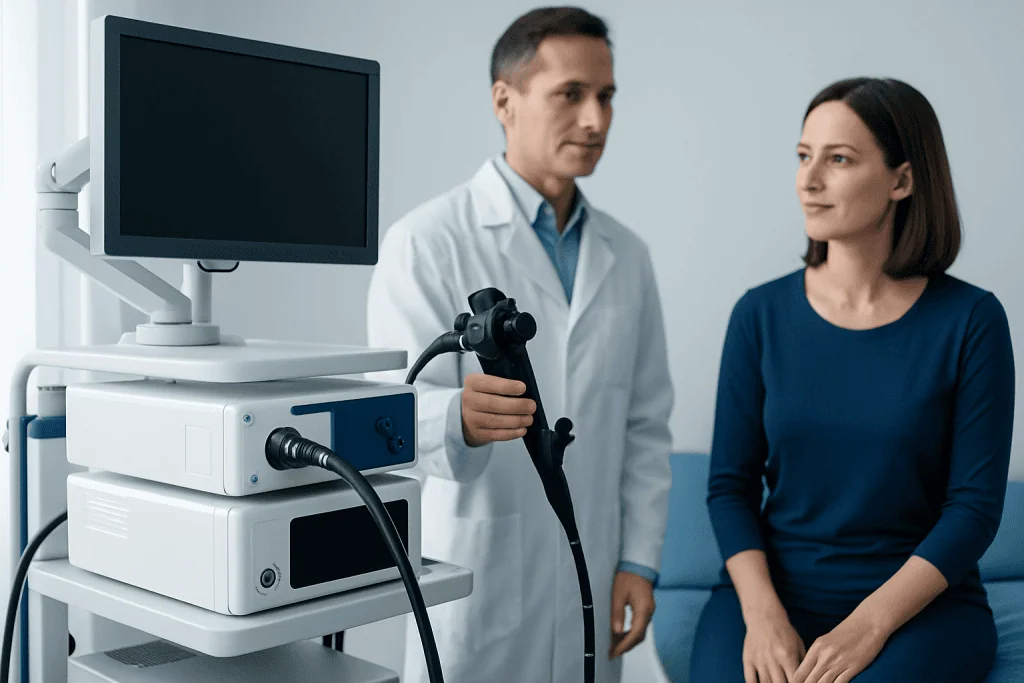
Your preparation instructions must come from your medical team, not from this guide. Colonoscopy normally requires dietary changes and a bowel preparation, a strong laxative regimen, in the day or so before the test, but the exact schedule varies with your health, your medicines, and the reason for the procedure. Do not adjust the timing or dose of the preparation on your own; if your flight or hotel check-in clashes with the schedule you were given, raise it with the team before changing anything.
What to declare before you arrive
Tell the hospital in advance if you take blood thinners, diabetes medicines, heart or blood pressure medication, iron supplements, or regular pain medicines. Decisions about pausing or continuing any of these belong to your treating doctor, never make them yourself. Also mention pregnancy, kidney disease, sleep apnoea, previous anaesthesia problems, allergies, implanted devices, and any recent illness. Every item on that list can change how the team plans your sedation or preparation, and declaring it early avoids a delayed or cancelled slot. If you live with diabetes, the planning around fasting and preparation needs extra care: our guide to medical travel to Turkey with diabetes covers that in detail.
Timing your flight around the preparation
The evening of bowel preparation is not one to spend in transit. You will be drinking preparation fluids on a set schedule and staying close to a bathroom. Plan to land in Turkey with at least a clear day before the procedure, so you can rest, hydrate according to your instructions, and start the preparation settled in your hotel rather than jet-lagged. A room with its own bathroom is not optional on preparation night. If your itinerary looks tight, question it before you book, moving a flight is cheaper than repeating a preparation.
What happens when you arrive at the hospital
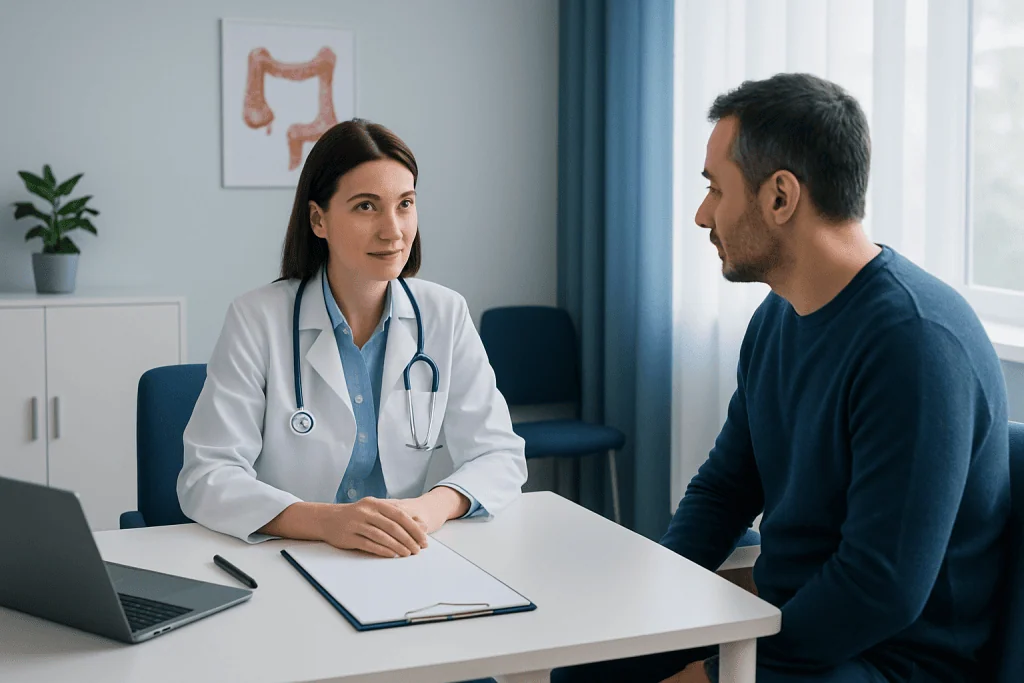
You will usually be asked to arrive before your appointment time to complete registration, confirm your identity, review consent forms, and meet the nursing team. Bring your passport or ID, appointment confirmation, medical documents, medication list, and any insurance or payment paperwork you were asked to carry. For the full list of what belongs in your bag, see what to bring for a day procedure in Turkey.
An interpreter can be arranged for international patients, and this matters most at three moments: consent, pre-procedure questions, and discharge instructions. Ask for interpreter support at those points if you are not fully comfortable in the language being used: a half-understood discharge instruction is worse than a delayed one.
The team will ask when you last ate or drank, whether the bowel preparation was completed, and whether anything has changed in your health since booking. Answer precisely; these questions determine whether the procedure can go ahead safely. You will then be taken to the endoscopy area, where you may change into a gown and have your vital signs checked. If sedation is planned, a nurse will usually place an IV line and confirm that a responsible adult will accompany you afterwards. That check is a safety step, not a formality: sedation affects alertness and coordination for the rest of the day, even when you feel fine.
During the procedure: sedation, comfort, and communication
The colonoscopy is performed by a specialist with endoscopy nurses in a controlled setting. Before starting, the team explains the plan, including whether sedation will be used and how deep it will be, practice varies, from light sedation where you remain drowsy but responsive, to deeper sedation where you sleep through the examination. If you are anxious, say so; knowing who will be in the room and how the team will communicate with you usually helps.
Your privacy is respected throughout. Staff keep you covered as much as possible and tell you before repositioning you or adjusting equipment. During the examination, air or gas is used to gently open the bowel so the camera can see clearly: this is why bloating and wind afterwards are normal and expected.
If the doctor sees a polyp or an area that needs closer examination, tissue samples may be taken or small polyps removed during the same procedure, where medically appropriate. This is routine, but it changes two things for a travelling patient: your activity and flying advice may be adjusted, and laboratory results will take additional days. Our guide on preparing for a biopsy in Turkey explains how pathology timelines typically work. Avoid interpreting findings yourself; wait until your specialist has reviewed the report with you.
Recovery in the hospital and the first 24 hours
After the procedure you rest in a recovery area while nurses monitor you. Drowsiness after sedation is normal, and so are bloating, mild cramping, and passing wind as gas leaves the bowel: these generally ease over hours. Your nurse tells you when it is safe to sit up, drink, dress, and leave. If you want a fuller picture of this stage, read what happens in the recovery room after a procedure in Turkey.
After sedation, the standard rules apply for the rest of the day: no driving, no operating machinery, no alcohol, no signing important documents or making major decisions, and no travelling alone unless your doctor specifically says otherwise. Arrange your companion or transfer before procedure day, not after it. Keep the remainder of the day quiet and flexible: a hotel afternoon, light food when permitted, early night.
Before discharge, you receive instructions covering when to eat, which of your regular medicines to restart and when, a decision that always comes from the treating doctor, what deserves attention during recovery, and how and when your results will reach you. The paperwork also includes the hospital’s contact numbers for daytime and after-hours use. Save them in your phone, give a copy to your companion, and follow the instructions even if you feel completely well.
How much does a colonoscopy in Turkey cost?
You will find pages online quoting fixed prices for a colonoscopy in Turkey. Treat them cautiously, because the honest answer is structural: the cost depends on decisions that are partly made during the procedure itself. A meaningful quote reflects at least these variables:
- Sedation typelight sedation and deeper sedation involve different staffing and monitoring.
- What is done during the examinationa purely diagnostic colonoscopy differs from one where polyps are removed or biopsies taken, and the doctor often cannot know this in advance.
- Pathologylaboratory analysis of any tissue is usually a separate line item.
- Consultation and pre-assessmentspecialist review before the procedure, plus any blood tests required for sedation planning.
- Services around the careinterpreter support, transfers, and reporting in English may be included or listed separately, depending on the hospital.
In practice, hospitals issue a written quotation after reviewing your records, and the useful questions to put to any provider are the same everywhere: what exactly is included, what happens to the bill if a polyp is removed or a biopsy taken, whether pathology is covered, and whether the report will be provided in English. A quote that answers those four questions is worth more than a headline price that answers none of them.
One related point catches travellers out. Tourists are not covered by Turkey’s public health insurance system, which serves residents enrolled in it. Planned procedures for visitors are paid privately or through insurance that explicitly covers treatment abroad, and standard travel insurance policies generally exclude planned medical treatment, as opposed to emergencies. Check your policy wording before assuming anything is covered.
Staying in Turkey afterwards and flying home
Many patients feel ready for light activity the day after a colonoscopy, but your personal plan depends on the sedation used, the findings, any intervention performed, and your general health. If a polyp was removed or biopsies were taken, your doctor may give specific advice about activity and about when it is reasonable to fly. This is the single strongest argument against booking a tight return flight: the flying decision is made after the procedure, based on what was actually done. Our guide on when to book extra recovery days in Turkey before flying home explains how to build that flexibility in without wasting hotel nights.
The endoscopy report itself is often available quickly, sometimes the same day. Pathology results from any tissue samples take longer, typically a matter of days, and the team will explain how they will reach you: in person before you leave, or securely after you are home, with a follow-up consultation arranged if needed. Confirm the arrangement before discharge rather than assuming it.
While you are staying on, keep your discharge papers, hospital contact numbers, and medication list within easy reach at your hotel. Eat simply at first if your doctor allows normal food, drink fluids as instructed, and let the first day stay unhurried. International patient services at Turkish hospitals typically cover follow-up scheduling, interpreter support, airport transfers, and communication with the clinical team, support that matters most if you are travelling without family or if your results lead to a further consultation.
Step by step
- Share your medical background before you travel. Hospitals ask for previous reports, medication lists, allergies, and relevant diagnoses in advance, translated where needed, so the team can plan the procedure and flag medication questions early.
- Confirm your bowel preparation instructions. Follow only what your medical team gives you, diet, fluids, and timing. If your flight or hotel schedule conflicts with the preparation, ask before changing anything.
- Land with margin. Arrive at least a clear day before the procedure, so preparation night happens in a settled hotel room with its own bathroom, not in transit.
- Arrange a companion or safe transport. If sedation is planned, you should not leave alone or drive afterwards. Organise a companion, private transfer, or hospital-supported transport before procedure day.
- Bring the right documents. Passport or ID, appointment details, medical reports, medication list, and any payment or insurance paperwork, with digital copies on your phone as backup.
- Use interpreter support at the key moments. Consent, pre-procedure questions, and discharge instructions are where full understanding matters most.
- Confirm results and follow-up before leaving Turkey. Ask when the report and any pathology results will be ready, in which language, and how they will reach you once you are home.
Your checklist
- Passport or national ID
- Appointment confirmation and hospital contact details
- Previous colonoscopy reports, biopsy results, imaging, or lab tests
- Current medication list with doses and timing
- Allergy information and relevant medical history
- Bowel preparation instructions from your care team
- Comfortable clothing and easy-to-remove shoes
- Companion or confirmed transport after discharge
- Hotel address and local phone number
- Hospital daytime and after-hours numbers saved in your phone
Key takeaways
- The colonoscopy itself takes hours at the hospital; the real planning sits around preparation, sedation, and the return flight.
- Never adjust bowel preparation, fasting, or medication plans yourself: those decisions belong to your treating doctor.
- After sedation: no driving, no alcohol, no travelling alone, and a companion or arranged transfer for the rest of the day.
- Cost quotes are only meaningful when they state what happens if polyps are removed or biopsies taken, and whether pathology is included.
- Book a flexible return flight; flying advice is confirmed after the procedure, based on what was actually done.
Frequently asked questions
Can I fly home the same day after a colonoscopy?
Usually not if you received sedation, and possibly not if a polyp was removed or biopsies were taken. Your doctor confirms when flying is reasonable based on what was done during the procedure and how you are recovering. The practical approach is a flexible or refundable return booking, decided only after the procedure.
Will I still be pooping during the colonoscopy?
No: the point of bowel preparation is to empty the bowel completely before the examination. By procedure time, what you pass should be clear or nearly clear liquid rather than stool. The team checks whether the preparation worked; if the bowel is not clean enough to examine safely, the procedure may need to be rescheduled or repeated, which is why following the preparation instructions exactly matters so much for a travelling patient.
How much does a colonoscopy cost in Turkey?
There is no single honest figure, because the total depends on the sedation used, whether polyps are removed or biopsies taken during the examination, and whether pathology analysis follows. Hospitals provide a written quotation after reviewing your records. Ask what is included, how additions made during the procedure are billed, and whether the report comes in English: those answers matter more than any headline price.
Do tourists get free healthcare in Turkey?
No. Turkey’s public health insurance covers residents enrolled in the system, not visitors. Tourists pay for planned care privately or through insurance that explicitly covers treatment abroad. Standard travel insurance generally covers emergencies, not planned procedures such as a scheduled colonoscopy, so check your policy wording rather than assuming.
Which country performs the most colonoscopies?
There is no reliable single international ranking. Colonoscopy volumes largely follow national screening programmes and healthcare systems, and countries count and report procedures differently. For a patient, the more useful question is not national volume but the quality and experience of the specific unit and specialist performing the examination.
Will I need someone with me after the procedure?
If sedation is used, you will usually need a responsible adult with you after discharge, and some units require this before releasing you. Sedation affects judgement, balance, and reaction time even when you feel alert. Patients travelling alone can usually arrange safe transfer options through the hospital’s international patient services, set this up before procedure day.
How long should I stay in Turkey after my colonoscopy?
It varies. A diagnostic colonoscopy under sedation may only need a quiet remainder of the day and a normal following day. If polyps were removed or biopsies taken, your doctor may advise extra time before flying, and pathology results take additional days. Confirm the realistic window with your care team before finalising flights and hotel dates rather than after.
What if I do not speak Turkish?
Interpreter support can be arranged for international patients at major Turkish hospitals, covering registration, consent, pre-procedure questions, discharge instructions, and follow-up coordination. Give your preferred language when booking so it can be planned. Clear communication matters most around preparation instructions and medication questions, where a misunderstanding can delay the procedure.
Add us as a Preferred Source to see more of our trusted health content across Google Search, AI Overviews and Discover.

Update history
- PublishedJune 16, 2026
- Medical review approvedSeptember 13, 2026
- Last content updateSeptember 12, 2026
References3
- NHS: Colonoscopy nhs.uk
- MedlinePlus: Colonoscopy medlineplus.gov
- Cleveland Clinic: Colonoscopy my.clevelandclinic.org
More Patient Guides
Sleep Apnea Testing in Turkey: What Happens During Your Evaluation
Sleep apnea testing in Turkey may include a consultation, overnight sleep study or home test, and a clear review of your results…

How to Organize Your Test Results Before Traveling to Turkey
Organize your test results before traveling to Turkey by sorting records, images, medicines and timelines so your Istanbul care team can review…
When Extra Tests Are Needed Before Treatment in Turkey
Extra tests before treatment in Turkey may be needed to confirm diagnosis, timing, and safety. Here is what you can expect in…

At Acibadem, How to Prepare for Blood Tests, Scans, and Pre-Op Checks
Blood tests, scans, and pre-op checks at Acibadem in Turkey help confirm you are ready for treatment and avoid delays on the…