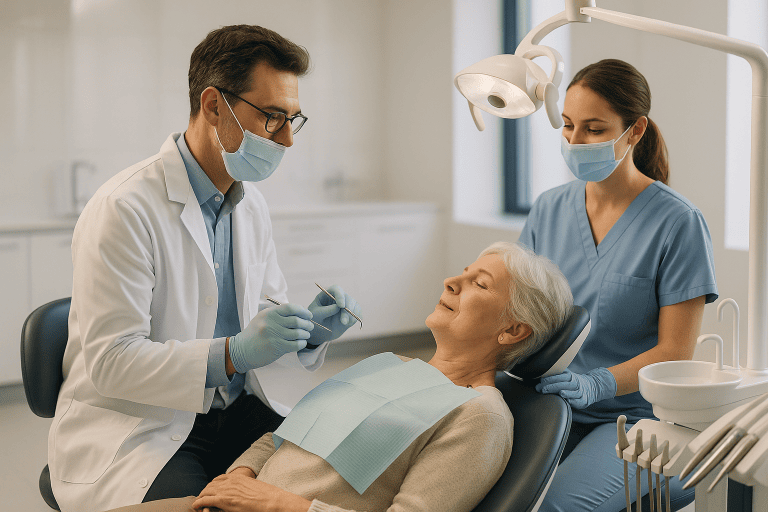
Dental Emergency And Trauma
Dental emergency and trauma care provides urgent assessment and treatment for toothache, broken or knocked-out teeth, oral injuries, infections, and bleeding to relieve pain and protect oral function.
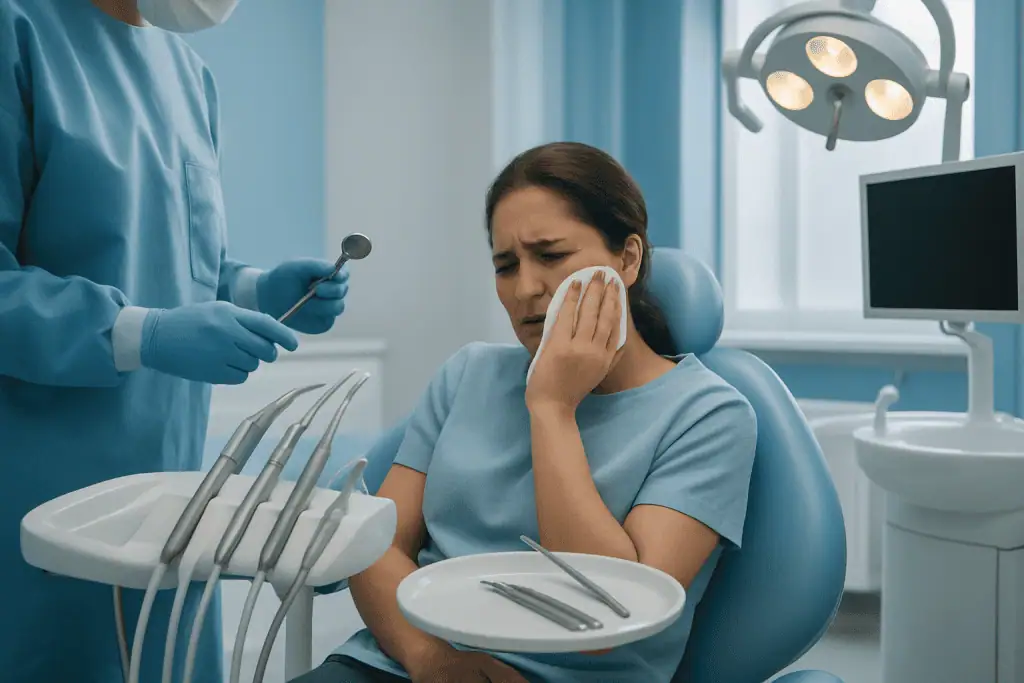
Quick answer
Dental emergency and trauma care is the urgent assessment and treatment of severe toothache, broken or knocked-out teeth, oral infections, bleeding and injuries to the mouth and jaws. Treatment targets the cause: draining infection, starting emergency root canal treatment, repositioning and splinting injured teeth, repairing soft tissue wounds, or extracting teeth that cannot be saved, followed by structured review while healing continues.
Dental Emergency and Trauma: What Urgent Dental Care Covers
Dental emergency and trauma care is the urgent evaluation and treatment of painful, infected, injured or bleeding conditions involving the teeth, gums, jaws and oral soft tissues. Its purpose is straightforward: relieve severe pain, control infection, stop bleeding, protect oral function, and preserve teeth and surrounding structures whenever preservation is realistic. It is for anyone whose dental problem cannot reasonably wait for a routine appointment: a knocked-out tooth, a spreading abscess, a fracture that exposes the nerve, bleeding that will not settle.
These situations tend to arrive without warning. A severe toothache can make sleeping and eating impossible. A broken front tooth changes speech and appearance in a second. A facial injury raises immediate questions: can the tooth be saved, is the infection dangerous, what needs to happen first? Some problems stay limited to a single tooth. Others involve the gums, jawbone, lips, tongue, facial soft tissues or the deeper spaces of the head and neck. The first task is always the same, understand what is happening, stabilise the situation, and treat the cause rather than only the symptom.
Depending on severity, care may come from general dentists, endodontists, oral and maxillofacial surgeons, periodontists, paediatric dentists, prosthodontists or emergency physicians. The clinical discipline that studies tooth injuries specifically is dental traumatology, and its evidence shapes much of what happens in the first hours after an injury. A hospital-based setting becomes valuable when dental trauma is part of a wider facial injury, when infection may spread beyond the mouth, when bleeding is difficult to control, or when a patient’s medical conditions make dental care more complex.
Timing carries real weight here. In tooth injuries, minutes and hours can influence whether a knocked-out tooth can be replanted and whether the nerve and root can be preserved. In dental infection, early drainage and definitive treatment can prevent spread towards the jaw, face, bloodstream or airway. In severe toothache, prompt diagnosis relieves pain and limits further damage. The aim is not only to fix today’s problem but to protect chewing, speech, appearance and long-term oral health.
What situations qualify as a dental emergency?
A dental emergency is any oral problem that threatens a tooth, the surrounding tissues or your general health if treatment is delayed. That includes severe or worsening toothache, a dental abscess, a knocked-out or displaced tooth, a fracture that exposes sensitive inner tooth structure, bleeding that does not stop with pressure, rapidly increasing swelling of the face or jaw, and injuries to the mouth after a fall, sports impact or traffic accident. Not every urgent-feeling problem is dangerous, a lost crown or a broken denture is disruptive rather than threatening, but some conditions that begin quietly can escalate quickly, particularly infections. Clinicians treat certain combinations as hospital-level problems rather than clinic-level ones: fever with spreading facial swelling, swelling under the jaw or around the eye, difficulty swallowing or breathing, an inability to open the mouth normally, or significant infection in a medically vulnerable patient. These situations involve medical teams as well as dentists, because the risk extends beyond the tooth itself.
What qualifies as dental trauma?
Dental trauma is physical injury to the teeth or the structures that hold them: the gums, the periodontal ligament, and the alveolar bone of the tooth socket. It covers a spectrum. At the mild end are small enamel chips and teeth that are loosened but not moved (called concussion or subluxation). In the middle are crown fractures with or without exposure of the tooth’s nerve, and luxation injuries in which a tooth is pushed sideways, partially pulled out of the socket (extrusion) or driven into the bone (intrusion). At the severe end are root fractures, avulsion, a tooth knocked out completely, and fractures of the alveolar bone itself, sometimes accompanied by cuts to the lips, tongue or cheeks. Typical causes include falls, contact sports, cycling and traffic accidents, physical assault, and biting unexpectedly hard objects. The distinction between a child’s primary tooth and a permanent tooth matters enormously, because the two are managed differently: an injured baby tooth is usually not replanted, since doing so risks damaging the developing permanent tooth beneath it.
Who May Need Urgent Dental Assessment
Urgent dental assessment exists for people with severe dental pain, swelling, a broken or displaced tooth, a knocked-out tooth, oral bleeding, injury to the lips or gums, or signs of spreading infection. Some of these are obvious emergencies. Others look mild at first and worsen over hours or days, deep cracks, early infections, and injuries affecting tooth roots or jawbone are the usual culprits. The sections below describe the most common presentations and what each one typically means.
Severe toothache
Severe toothache is one of the most common reasons people need urgent dental care. The pattern of the pain carries diagnostic information. It may be constant and throbbing, sharp and fleeting, triggered by hot or cold, or worse when you bite down. Possible causes include deep decay, an infected or dying tooth nerve, a cracked tooth, advanced gum disease, a failed or leaking restoration, sinus pressure referred to the upper back teeth, or trauma. Pain that lingers for minutes after a hot or cold trigger, pain that wakes you at night, or pain accompanied by swelling, fever, difficulty opening the mouth, difficulty swallowing or a bad taste from drainage points towards infection rather than simple sensitivity, and infection is exactly the kind of problem that urgent dentistry is built to intercept before it spreads.
A broken, cracked or chipped tooth
A broken tooth needs prompt assessment because the depth of the fracture determines everything. A small enamel chip may need nothing more than smoothing or a bonded repair. A deeper fracture that exposes dentine causes sensitivity; one that exposes the nerve causes pain and opens a direct route for bacteria into the tooth. A fracture running beneath the gum or vertically through the root usually cannot be stabilised long term, and extraction becomes the realistic option. Early assessment limits bacterial contamination, stops cracks propagating under chewing forces, and preserves tooth structure that would otherwise be lost, which in turn keeps simpler options open, such as dental fillings for smaller defects or dental crowns where more coverage and protection are needed.
A knocked-out (avulsed) tooth
A knocked-out permanent tooth is the most time-sensitive injury in dentistry. The cells on the root surface begin to deteriorate quickly once the tooth is dry, and how the tooth is handled in the first minutes strongly influences whether replantation can succeed. Internationally accepted handling for an avulsed permanent tooth follows a consistent sequence:
- The tooth is picked up by the crown, the white biting part, never by the root, so the delicate root surface is not damaged.
- If visibly dirty, it is rinsed briefly with clean water. It is not scrubbed, wiped or disinfected.
- Where possible, it is placed straight back into its socket and held gently in place by biting on a clean cloth.
- If replacing it is not possible, it is stored in milk, saline or a dedicated tooth preservation solution, not in plain water and not dry, while the injured person travels to a dentist as quickly as possible.
Primary baby teeth are the exception: they are generally not replanted, because forcing them back can injure the permanent tooth developing underneath. A child with a dental injury still needs prompt professional assessment, since damage to the socket, lips or developing teeth is easy to miss.
Injuries to the lips, tongue, gums and jaw
Oral injuries extend beyond the teeth. Cuts to the lip, tongue, cheek or gums; tooth fragments embedded in soft tissue; bruising; jaw pain; a bite that suddenly feels different; and teeth loosened by impact all fall within trauma care. A change in how your teeth meet after an injury is a particularly important sign, because it can indicate a displaced tooth, a fractured socket or a jaw fracture. Injuries involving loss of consciousness, severe facial swelling, suspected jaw fracture, uncontrolled bleeding, vomiting, confusion or breathing difficulty sit outside dentistry alone; they are managed as medical emergencies, sometimes alongside assessment for traumatic brain injury when the head has taken a significant blow.
How is a dental emergency diagnosed?
Diagnosis begins with listening: when the pain started, how the injury happened, what has changed since, which medications have been taken, and whether conditions exist that alter dental care, diabetes, heart disease, immune suppression, bleeding disorders, pregnancy, prosthetic heart valves or blood-thinning treatment. The clinical examination checks tooth mobility, bite alignment, gum swelling, response to temperature and tapping, nerve sensitivity, soft tissue injury and signs of deep infection. Imaging usually follows. Small intraoral X-rays show decay, root infection, bone loss and fractures around individual teeth. Panoramic imaging surveys the jaws more broadly. Three-dimensional imaging is reserved for questions that flat images cannot answer, root fractures, complex trauma, impacted teeth, implant complications, or surgical planning where dental structures sit close to nerves and sinuses. The findings decide whether the path forward is restorative, endodontic, periodontal, surgical or medical.
Conditions and Indications Treated
Urgent dental care covers a wide range of problems, from painful but localised issues such as a lost filling or fractured crown to potentially serious ones such as spreading infection or jaw fracture. The urgency of any single case depends on symptoms, anatomy, medical risk factors and the likelihood of permanent damage if treatment waits.
- Acute toothache from decay or infection of the tooth’s nerve (the pulp)
- Dental abscess and gum abscess
- Pericoronitis, infection of the gum flap around a partially erupted wisdom tooth
- Cracked, fractured or chipped teeth, including fractures involving the root
- Displaced, intruded, extruded or loosened teeth after trauma
- Knocked-out (avulsed) permanent teeth
- Fractured restorations, lost crowns and lost fillings
- Oral lacerations and soft tissue injuries
- Bleeding that continues after dental treatment or injury
- Injuries affecting the jaw, the bite or the tooth socket
Infections deserve particular attention. A dental abscess may begin as a small, localised swelling near a tooth root or gum pocket, yet the tissue planes of the face give infection room to travel. Clinicians treat fever, rapidly increasing swelling, swelling below the jaw or around the eye, difficulty swallowing or breathing, marked weakness, and restricted mouth opening as signs of spread. In those circumstances, care escalates to hospital-level evaluation, imaging, intravenous medication, surgical drainage, and coordination between dental and medical specialists.
Dental trauma is the other major indication, spanning enamel fractures, crown fractures with or without nerve exposure, root fractures, intrusion, extrusion, lateral displacement, avulsion and alveolar bone fractures. The right treatment depends on the injury type, whether the root is fully formed, the time elapsed since the trauma, and whether the tooth’s blood and nerve supply has a realistic chance of recovering.
Emergency care also supports people whose existing dental work fails at an inconvenient moment. A fractured implant crown, a loose bridge, a broken denture or a painful orthodontic appliance can interfere with eating, speech or soft tissue comfort. Not every prosthetic problem is a medical emergency, but these problems become urgent when they injure tissue, prevent proper nutrition or stop a patient functioning during travel or a period of medical treatment. Where a damaged prosthesis cannot be salvaged, later planning may involve dental implants or a dental bridge, decided calmly once the acute problem is controlled.
How Dental Emergency and Trauma Treatment Is Performed
Urgent dental treatment follows a logical order: triage, pain control, cause-directed intervention, then planning for definitive care. What that looks like in practice depends entirely on the diagnosis, so the steps below cover the main scenarios.
Triage and preparation
The care team first decides whether the problem is primarily dental, whether there are signs of a medical emergency, and how quickly treatment is needed. Severe infection, uncontrolled bleeding, major facial trauma, airway symptoms or a suspected jaw fracture pull the case towards immediate hospital evaluation; localised dental pain or injury proceeds to dental examination and imaging. Preparation is focused and practical. You will be asked about allergies, current medications, blood thinners, recent surgery, chronic illness, pregnancy, prior dental work and the exact timing of symptoms or injury. If a tooth has been knocked out or a fragment has broken away, it helps the treating team when the tooth or fragment arrives with the patient. Photographs taken shortly after an injury are genuinely useful too: they show the team how the trauma looked before swelling changed the picture.
Pain control, anaesthesia and sedation
Pain control comes early. Depending on the situation, this may involve local anaesthesia, anti-inflammatory medication, analgesics, drainage of infection or simply removing the irritant causing pain: a sharp fragment, a high restoration, trapped debris. For complex oral surgery, severe anxiety, extensive infection or patients with significant medical needs, care may move into a sedation or operating-room setting; the discipline of dental anaesthesiology covers exactly these decisions, and sedation for children follows its own age-appropriate protocols. Medication choices are individualised, particularly for patients with kidney disease, liver disease, stomach ulcers, anticoagulant therapy, allergies or pregnancy, which is why the medication history taken at triage matters so much.
Emergency root canal treatment for an infected nerve
When the nerve inside a tooth is irreversibly inflamed or infected, emergency root canal treatment removes the infected tissue from inside the tooth, relieves the pressure that causes much of the pain, disinfects the canal system, and seals the space with a temporary or definitive filling. Root canal therapy is sometimes completed over more than one visit: an important practical point if you are travelling, because the first appointment controls the emergency and the completion can be scheduled. If a tooth cannot be predictably restored, extraction is the safer option, with replacement discussed later once healing allows.
Draining a dental abscess
Treatment of an abscess focuses on eliminating the source, not merely suppressing it. Depending on where the infection sits, that may mean incision and drainage, root canal therapy, periodontal treatment or extraction. Antibiotics have a defined role, fever, spreading swelling, immune risk or systemic involvement, but they are not a substitute for removing the source of infection, which is why an abscess that “settled” on antibiotics alone so often returns. Severe swelling or involvement of deep tissue spaces shifts the case to hospital-based management with imaging and specialist input.
Repairing broken teeth
Clinicians grade a fracture by depth. Minor chips are smoothed or restored with tooth-coloured material in a single visit. Larger fractures may need temporary coverage, bonding, a crown or root canal therapy, sequenced according to whether the nerve is involved. An exposed nerve is treated promptly to reduce pain and contamination. A fracture running vertically through the root is usually the end of the road for that tooth, because no restoration can reliably hold a split root together under chewing forces; extraction and later replacement planning follow.
Reimplantation, repositioning and splinting
Knocked-out and displaced permanent teeth are treated by returning them to position and holding them there. A flexible splint, typically a thin wire or fibre bonded to the neighbouring teeth, stabilises the injured tooth while the periodontal ligament and surrounding tissues begin to heal, without locking the tooth rigidly in place. Root canal treatment may be needed later, depending on the stage of root development and how the tooth responds. Follow-up is not optional after these injuries: complications such as root resorption, infection, discolouration or ankylosis (fusion of the root to the bone) can develop weeks or months after the tooth looks outwardly fine.
Repairing soft tissue injuries
For cuts and wounds inside the mouth, the team cleans the wound, checks for embedded tooth fragments or debris, a fragment hidden in a lip is a classic finding after a fall, controls bleeding, and closes lacerations where needed. Certain injuries call for specialist repair: wounds crossing the border of the lip, deep tongue wounds, contaminated wounds, and injuries involving salivary ducts or facial structures. Tetanus status is reviewed when wounds are contaminated or the trauma happened outdoors.
Imaging and technology used in urgent care
Technology is chosen to answer the specific question at hand. Digital dental radiography identifies decay, infection, fractures and bone changes quickly. Panoramic imaging gives the broad view of both jaws. Three-dimensional imaging clarifies complex root anatomy, fractures, impacted teeth, bone loss and surgical risk zones. Intraoral cameras and magnification document cracks, soft tissue injuries and restoration margins. Where root canal treatment is needed, electronic apex measurement, rotary instruments, irrigation systems and magnification support precise work inside the tooth. In hospital settings, this imaging can be coordinated with wider trauma assessment when a dental injury is part of a larger facial or head injury.
How long does emergency dental treatment take?
A focused emergency examination with a pain-relieving intervention often takes less than an hour. Reimplantation, splinting, abscess drainage, starting a root canal or repairing a laceration takes longer. Complex trauma, facial fractures or deep infection can require imaging, specialist consultation, hospital admission or treatment in an operating room. If you are travelling, it is worth planning for at least one review visit where circumstances allow, because trauma and infection frequently need reassessment after the first intervention: a splint check, suture removal, or a test of how an injured tooth’s nerve is responding.
Nerve Injury After Dental Trauma and Dental Procedures
Patients ask about “nerve damage” in two different senses, and separating them helps. The first is the nerve inside a tooth, the pulp, which can be injured by trauma, deep decay or fracture. The second is the sensory nerves of the jaw, lip, chin and tongue, which can occasionally be bruised or injured during extractions, implant placement, root canal treatment or injections, or by facial trauma itself. The anatomy involved is mapped in detail in dental anatomy, and the distinction matters because the two problems behave, and heal, differently.
How to tell if a nerve was damaged in a dental procedure?
The clearest early sign is numbness, tingling or altered sensation in the lip, chin, tongue or gum that persists well beyond the time a local anaesthetic would normally wear off, hours stretching into the next day rather than the usual few hours. Other signs include a burning or electric quality to the sensation, altered taste when the tongue’s nerve is affected, or an area that feels persistently “different” to touch. For the nerve inside a tooth, the signals are different: lingering pain after hot or cold, spontaneous throbbing, darkening of the tooth over weeks, or no sensation at all on testing. Clinicians assess suspected sensory nerve injury by mapping the affected area with light touch, documenting its size and quality, and repeating the assessment over time, because the pattern of change is what distinguishes a temporary irritation from a more significant injury. Ordinary post-operative soreness, swelling-related tightness and bruising are not nerve damage, and they follow a different course, improving steadily over days.
How long does mouth nerve damage take to heal?
It varies with the type and severity of the injury, and honest answers here are ranges rather than promises. A nerve that has been stretched or bruised but remains structurally intact typically recovers over weeks to months, often announced by tingling or odd sensations as function returns: a good sign, however strange it feels. More significant injuries can take many months, and severe injuries may leave some degree of permanently altered sensation. The pulp inside a tooth follows different rules: once pulp tissue has died, it does not regenerate, which is why a traumatised tooth is monitored with nerve testing over months and treated with root canal therapy if the pulp is lost. In young patients with immature roots, the pulp has a better capacity to survive injury, which is one reason age and root development feature so heavily in trauma decisions. Throughout recovery, monitoring belongs with the treating clinician, who compares findings visit by visit rather than relying on any single test.
Why Acting Early Matters
Dental emergencies progress because teeth and oral tissues have limited ways to recover once infection, fracture or displacement has occurred. A severely inflamed tooth nerve does not usually heal on its own. An abscess may drain temporarily, feel better, then return or spread. A crack deepens under biting forces. A displaced tooth loses blood supply or root support the longer it stays unstabilised. Urgent dental care rewards speed precisely because these processes run in one direction.
Early treatment improves the chance of saving natural tooth structure, limits infection, reduces pain and often avoids more complex procedures altogether. In trauma the effect is most dramatic: a knocked-out permanent tooth has its best chance of favourable healing when handled correctly and treated quickly, and even a successfully replanted tooth needs careful monitoring, since healing varies with age, root development, injury severity and how the tooth was stored.
Delay narrows options as well as raising risks. A tooth that could have been restored with a simple filling early on may later need root canal treatment, a crown, or extraction. An infection that could have been drained in a dental chair may need hospital care once it reaches deeper tissues, bringing risks of swelling, bone loss, tooth loss, facial cellulitis, sinus involvement, jaw infection or systemic illness.
There are practical reasons too, especially for anyone travelling. Dental pain disrupts flights, work, nutrition and sleep. Untreated dental infection can complicate other medical care: a consideration that matters for patients undergoing cancer treatment, cardiac care, transplant evaluation, orthopaedic surgery or any therapy affecting immunity, where a prompt dental assessment establishes whether the mouth needs attention before other plans proceed.
Benefits of Prompt Dental Emergency and Trauma Care
What early treatment achieves depends on the diagnosis, but the pattern is consistent: urgent dental care resolves pain at its source and protects long-term oral function rather than papering over symptoms.
| Benefit | What It Means for You |
|---|---|
| Pain relief | Treatment addresses the source of pain, infection, exposed nerve tissue, trauma or pressure, rather than relying only on temporary medication. |
| Better chance of saving teeth | Early treatment may preserve tooth structure, support reimplantation or stabilisation after trauma, and reduce the likelihood of avoidable extraction. |
| Infection control | Drainage, root canal treatment, periodontal care, extraction or medication can stop a localised infection spreading into surrounding tissues. |
| Protection of chewing and speech | Stabilising injured or painful teeth maintains bite comfort, nutrition, pronunciation and everyday function. |
| Improved cosmetic outcome | Prompt repair of fractured front teeth and soft tissue injuries supports more favourable appearance and tissue healing. |
| A clear treatment plan | Imaging and specialist evaluation establish whether you need temporary care now, definitive treatment, or staged follow-up after returning home. |
Recovery Timeline After Dental Emergency Treatment
Recovery varies by condition and procedure, but most patients notice meaningful improvement soon after the source of pain, infection or instability has been dealt with. The timeline below describes the typical course.
| Time Period | What You Can Expect |
|---|---|
| Day 1 | Numbness from local anaesthesia wears off gradually. Pain usually begins to ease after drainage, stabilisation, root canal initiation or extraction, though soreness and swelling may continue. Soft foods and careful oral hygiene are the usual advice. |
| First week | Swelling, bruising and tenderness generally improve. Review visits check sutures, splints, temporary restorations, bite comfort and infection control. Prescribed medication instructions are followed closely. |
| First month | Definitive treatment is often completed, final root canal restoration, crown planning, splint removal, or replacement planning after an extraction. Traumatised teeth are tested for nerve response and root health. |
| Longer term | Teeth affected by trauma or severe infection may need periodic monitoring. Follow-up imaging tracks healing, root changes and bone recovery, and identifies any need for further restorative or surgical care. |
Aftercare in the first days is unglamorous but genuinely influential. Eating soft foods, avoiding chewing on the treated side, using cold compresses after trauma, keeping oral hygiene gentle but consistent, taking prescribed medications as directed and attending review appointments all reduce the chance of setbacks. Temporary restorations, splints and sutures each need a little respect: a splinted tooth is not ready for a crusty baguette, and a temporary filling is not a permanent one. Definitive treatment is scheduled once swelling, pain and acute inflammation have settled, and good daily dental hygiene supports every stage of that healing.
Factors That Influence Outcomes
A good result depends on more than the procedure performed on the day. The type and severity of the problem, the timing of care, the condition of the tooth and surrounding bone, your general health and the quality of follow-up all shape how healing unfolds.
Timing dominates in trauma. Teeth repositioned, replanted or stabilised quickly have more favourable healing potential than teeth left dry, displaced or contaminated. Handling matters alongside speed: damage to the root surface of a knocked-out tooth reduces its ability to reattach to the socket, which is why the “hold by the crown, never scrub” rule is repeated so insistently.
The extent of infection matters just as much. A small localised abscess usually responds well to drainage and definitive dental treatment. A deep or spreading infection is a different problem requiring broader medical involvement. Patients with diabetes, immune suppression, certain heart conditions or a history of radiation to the jaw need additional precautions and closer monitoring, since their tissues respond differently to both infection and treatment.
Restorability is the quiet decider in many cases. A tooth can generally be treated when enough healthy structure remains to support a filling or crown. When decay or fracture extends deep under the gum or through the root, extraction becomes the sounder choice, and attention shifts to controlling infection, preserving bone where possible, sometimes with dental bone grafts when the socket needs support for future work, and planning replacement in a way that protects long-term function.
Occlusion, the way your teeth meet, affects recovery more than most people expect. A high filling, a cracked tooth under heavy bite pressure or a traumatic bite after injury can prolong pain and compromise healing, so careful bite adjustment and temporary protection are often part of emergency management rather than an afterthought.
Adherence closes the loop. Taking medication correctly, avoiding hard foods during healing, keeping the mouth clean, attending follow-up and reporting worsening symptoms all reduce complications. For anyone treated away from home, clear written instructions, and, where appropriate, copies of records and imaging that a dentist at home can read, turn a one-off intervention into continuous care.
Dental Emergency and Trauma Care at Acibadem
Acibadem hospitals provide urgent dental care within a broader healthcare system, through the dental and oral health units. That setting matters most when oral problems intersect with facial trauma, systemic infection, chronic illness, planned surgery or complex medical treatment, situations where a stand-alone dental clinic reaches its limits.
Care is organised around the diagnosis rather than around a single procedure. Depending on the case, evaluation may involve dentists, oral and maxillofacial surgeons, endodontists, periodontists, prosthodontists, paediatric specialists, emergency medicine physicians, radiologists, infectious disease specialists or anaesthesiology teams. In complex cases, multidisciplinary discussion aligns urgent treatment with longer-term dental and medical needs, so that what happens today does not close doors tomorrow.
Diagnostic pathways support that decision-making. Digital dental radiography, panoramic imaging and three-dimensional imaging are used to evaluate tooth roots, jawbone, abscesses, fractures, impacted teeth and surgical anatomy. These tools help clinicians separate conditions that feel identical to the patient, nerve inflammation, periodontal abscess, cracked tooth syndrome, sinus-related pain or pain referred from elsewhere, because the treatment for each is different, and treating the wrong one wastes the time an emergency does not have. Magnification, modern endodontic instruments, contemporary restorative materials and careful soft tissue repair techniques support the treatment itself; hospital resources add operating rooms, anaesthesia care and medical specialist input when a case cannot be safely managed in a routine clinic setting.
For patients arriving from abroad, Acibadem International coordinates the practical layer around clinical care: appointment coordination, medical record transfer, interpretation in more than 20 languages, travel-related planning and communication between departments. For urgent dental conditions, that coordination reduces delays and clarifies what happens next, what follow-up is needed, and how records can travel home with the patient.
Treatment planning in emergency dentistry has to bend around real lives, which is why it is personalised. Some patients need pain controlled before a flight. Some are in the middle of another medical treatment and need infection cleared first. Some have suffered trauma and need urgent stabilisation now with cosmetic reconstruction later. Others simply want an honest answer about whether a tooth can be saved. In every case the useful distinction is the same one clinicians draw daily: what is genuinely urgent today, what is temporary stabilisation, and what can be planned properly once the emergency has passed.
Moving Forward After a Dental Emergency
A dental emergency feels overwhelming in the moment, but the situation almost always becomes clearer once the problem has a name and a plan. Whether the issue is severe toothache, a broken tooth, a knocked-out tooth, swelling, bleeding or an oral injury, prompt assessment establishes what is actually happening, and early care reduces pain, protects natural teeth, controls infection and keeps future treatment options open.
Emergency dental care works best when it is timely, accurate and coordinated: the right diagnosis, cause-directed treatment, and structured follow-up while healing continues. With those three in place, most urgent dental problems can be stabilised, treated and monitored in a way that supports both immediate comfort and long-term oral health, including the teeth around the injured one, which have a stake in the outcome too.
Preparation
- Contact the clinic as soon as possible and describe the injury, pain, swelling, bleeding, or lost tooth. Bring any recent dental X-rays, medication lists, and allergy information. If a tooth is knocked out, handle it by the crown and keep it moist in milk or saline until you arrive.
Aftercare
- Follow the dentist’s instructions for pain control, antibiotics if prescribed, oral hygiene, and diet. Avoid chewing on the treated area and attend follow-up visits to monitor healing, splints, fillings, or root canal needs. Seek urgent help again if swelling, fever, bleeding, or severe pain increases.
Frequently Asked Questions
What affects the cost of dental emergency and trauma care?
Cost depends on the diagnosis, the urgency of care, imaging, the type of procedure, materials used, need for specialist support, medication, sedation, and follow-up. A personalised quote can be prepared after a free consultation and clinical review.
Can I get a quote before travelling to Turkey?
Yes. You can share symptoms, photos, previous dental records, and imaging if available. The care team can provide an initial estimate, but the final plan may change after in-person examination.
Is emergency dental care usually included in a treatment package?
Packages may include consultation, imaging, urgent treatment planning, procedure coordination, and follow-up guidance. The exact inclusions depend on the case and should be confirmed before treatment.
Will I need a dentist or an oral surgeon?
Minor dental emergencies may be managed by a dentist, while complex fractures, facial injuries, severe infections, or impacted teeth may require an oral surgeon or maxillofacial specialist. Suitability is decided after assessment.
Is this information a medical or financial recommendation?
No. This is general educational information and not a substitute for professional medical or financial advice. For an accurate treatment plan and quote, request a free personalised consultation.
Medically reviewed by the Acıbadem International Medical Board September 13, 2026
See our medical review board →
Update history
- PublishedJune 8, 2026
- Medical review approvedSeptember 13, 2026
- Last content updateSeptember 12, 2026
Trusted care for international patients
From the Acibadem Blog
After Dental Trauma Care: Splints, Follow-Up Visits and How the Tooth Is Monitored
Dental trauma recovery usually involves a flexible splint worn for about two to four weeks depending on the injury, a soft diet, careful hygiene…
Which Problems Count as a Dental Emergency? Abscess, Broken Teeth and Bleeding Explained
A dental emergency is any mouth problem that threatens your airway, your life, or a tooth you could otherwise keep: facial swelling with fever…