Facial Correction
Facial correction improves facial symmetry, contours, or age-related changes using personalized surgical or minimally invasive techniques tailored to each patient’s anatomy and goals.
Quick answer
Facial correction covers surgical and minimally invasive procedures that improve facial symmetry, proportion and contour: an approach often called facial balancing. It ranges from injectable volume restoration and skin treatments to facelift, rhinoplasty, eyelid, chin or jaw surgery, and reconstructive work after trauma. There is no standard procedure: treatment is planned around your anatomy after detailed facial analysis, and results depend on matching the technique to the underlying cause.
Facial Balancing and Facial Correction: What They Mean
Facial correction is a personalised group of surgical and minimally invasive treatments designed to improve facial symmetry, contour, proportion, definition or age-related change. Facial balancing describes the way modern teams plan that work: instead of treating one feature in isolation, the face is assessed as a whole, and treatment aims to bring the eyes, nose, cheeks, lips, chin, jawline and neck into better proportion with one another. It is considered by people whose reflection no longer matches how they feel, and by people whose concern is functional or reconstructive, after trauma, previous surgery, facial paralysis, congenital conditions or significant weight change.
For some, the concern is subtle: a jawline that has lost definition, eyelids that look tired, cheeks that have flattened over time, or a nose and chin that feel out of proportion. For others, the problem is structural: a fracture that healed out of alignment, a scar that pulls, an implant that sits wrongly, or asymmetry that affects expression. Both kinds of patient tend to arrive with the same questions. What can be changed safely? Will the result look natural? How long does recovery take? Which procedure actually fits my face? These are reasonable questions, because the face is central to identity, communication and emotional expression, and because the honest answers vary from person to person.
One point is worth stating early. Good facial correction is not about producing a standardised appearance. It is about analysis, proportion, safety and restraint. The aim is to improve harmony while preserving the features that make you recognisable, and in many cases the best result comes from a tailored combination of smaller techniques rather than a single dramatic procedure. A plan that respects your anatomy, skin quality, bone structure, soft-tissue volume, age, gender, ethnicity and personal preference will always outperform a plan built around a trend.
What is face balancing?
Face balancing is the assessment-led version of facial correction: the practitioner studies the relationships between facial regions before recommending any treatment, because changing one feature changes how the others are perceived. Augmenting a recessed chin can make a nose look smaller without touching the nose. Restoring cheek volume can soften the appearance of the lower eyelids. Reducing heaviness in the jowls can make the neck look longer. Facial balancing takes advantage of these relationships deliberately, which is why a thorough consultation sometimes leads to a different, and often more conservative, plan than the one you arrived expecting.
The term is used loosely online, often to mean filler-only treatment across several areas. In a hospital setting it means something broader: the same balancing logic applied across the full range of options, from injectables and energy-based skin treatments to surgery on soft tissue or bone. The right tool depends on what is actually causing the imbalance, not on which tool is fashionable.
Where facial plastic surgery fits
Facial plastic surgery is the surgical arm of this field, carried out within plastic, reconstructive and aesthetic surgery. It includes aesthetic procedures, facelift, neck lift, eyelid surgery, rhinoplasty, brow lift, otoplasty, chin and jaw contouring, fat grafting, facial implants, and reconstructive procedures that restore appearance and function after trauma, burns, tumour surgery, facial nerve problems or earlier operations. In practice the two overlap constantly. A patient having reconstruction still wants a natural aesthetic outcome; a patient having cosmetic work still needs a medically sound, anatomy-based plan. Depending on the problem, care may also involve dermatology, maxillofacial or ear, nose and throat specialists, ophthalmology teams, anaesthesiology and rehabilitation professionals. That multidisciplinary perspective matters most when correction relates to trauma, congenital differences, functional problems or revision of previous surgery.
Who May Need Facial Correction?
People pursue facial correction for many reasons, and the reason shapes the plan. Some are concerned about natural asymmetry that has become more noticeable with age. Others are troubled by age-related changes: sagging skin, loss of cheek volume, deep folds, jowls, loose neck skin or tired-looking eyes. These changes come from a combination of skin laxity, fat redistribution, muscle activity, bone remodelling and genetics, which is why two people with the same complaint can need very different treatments.
Facial correction may also be appropriate after facial trauma, burns or surgery. Injuries can affect bone alignment, soft-tissue contour, scarring, eyelid position, nasal breathing, dental occlusion or facial expression. Patients who have had previous cosmetic procedures sometimes seek revision correction when a result looks unnatural, incomplete, overcorrected or causes functional problems. Revision work demands particular expertise, because the anatomy has already been altered by scar tissue, implants, prior incisions or changes in blood supply, and the margin for error is smaller the second time.
Some patients are born with facial differences that affect appearance, breathing, eyelid function, bite, speech or social confidence, craniofacial asymmetry, prominent ears, jaw imbalance, cleft-related changes, congenital eyelid conditions or developmental differences in facial bones and soft tissue. In children and adolescents, this work sits within pediatric plastic surgery and is often staged across several years, coordinated across specialties, and timed around growth.
Whatever the starting point, diagnosis comes first. The physician reviews your medical history, previous procedures, medications, allergies, smoking status, healing history and expectations. A facial examination evaluates symmetry, skin quality, bone support, soft-tissue volume, muscle movement, scars, eyelid function, nasal airflow, bite and overall proportions. Standardised photographs are usually taken for analysis and planning. Where deeper structures need assessment, imaging such as ultrasound, CT or MRI may be recommended, and complex cases can require input from dental, ophthalmological, neurological, dermatological or anaesthesia specialists.
You may be a candidate if your expectations are realistic, you are medically fit for the proposed treatment, you understand the recovery process, and you want an individualised plan rather than a dramatic or artificial change. Some people are better served by nonsurgical treatment; others need surgery to achieve meaningful improvement. And sometimes the most responsible recommendation is to wait, to optimise a medical condition, stop smoking, stabilise weight or revisit expectations before proceeding. A team that is willing to tell you this is worth more than one that promises everything.
Facial Asymmetry: What Can and Cannot Be Changed
Facial asymmetry is one of the most common reasons people research facial correction, and it deserves an honest explanation before any discussion of treatment. Almost no face is symmetrical. Small differences between the left and right side, in eyebrow height, eye shape, cheek fullness, nostril size, lip line or jaw contour, are normal, present in nearly everyone, and rarely noticed by others. Photographs, and especially front-facing phone cameras, exaggerate asymmetry, because they show a mirror-flipped or lens-distorted version of a face you are not used to seeing.
Can facial asymmetry be corrected?
Facial asymmetry can usually be improved, but rarely eliminated, and the honest goal of treatment is improvement rather than perfect symmetry. What is achievable depends on the cause. Asymmetry driven by soft-tissue volume differences often responds well to fat grafting or injectable volume on the smaller side. Asymmetry driven by skin laxity or tissue descent may need surgical repositioning. Asymmetry rooted in the facial skeleton, jaw, cheekbone or orbital differences, may require bone-level surgery, sometimes in collaboration with oral and maxillofacial surgery when the bite is involved. Asymmetry caused by nerve injury or facial paralysis is a separate category again, with its own techniques and its own limits. Chasing perfect symmetry is one of the fastest routes to an unnatural result, because both sides of the face move, age and heal independently.
How can you fix an asymmetrical face?
How to fix an asymmetrical face depends entirely on what is driving the asymmetry, which is why diagnosis, not procedure choice, is the real first step. A structured pathway looks like this:
- Identify the level of the problem. Skin, fat, muscle, bone or nerve, each produces asymmetry in a different pattern, and each is treated differently.
- Assess the face in motion, not just at rest. Some asymmetries only appear when smiling or speaking; treating a static photograph can worsen the dynamic result.
- Rule out functional causes. Bite problems, one-sided chewing, previous fractures, eyelid malposition or nasal obstruction can all create or exaggerate asymmetry and may need treating first.
- Match the tool to the cause. Volume differences suit grafting or fillers; laxity differences suit lifting; skeletal differences suit bone surgery or implants; scar tethering suits scar revision.
- Plan for staged refinement. Meaningful asymmetry correction is often achieved in steps, allowing tissues to settle before the next adjustment.
Can facial asymmetry be corrected naturally?
Mild facial asymmetry sometimes improves with non-procedural measures, but the effect is limited and the evidence for most “natural” methods is weak. Addressing habits that load one side of the face, chronic one-sided chewing, habitual sleeping posture pressing on one cheek, untreated dental problems that shift the bite, is sensible and occasionally makes a visible difference over time, particularly in younger patients. Facial exercises, massage tools and similar approaches are widely promoted online but do not change bone structure, fat distribution or skin laxity in any reliable way. Progressive asymmetry, asymmetry that appears suddenly, or asymmetry accompanied by changes in facial movement is a different matter from a stable, lifelong difference between the two sides: it can have underlying causes that matter more than appearance, and it falls outside what self-directed measures can address.
Conditions and Indications Facial Correction Can Address
Facial correction covers a wide range of aesthetic, functional and reconstructive indications. The most common are age-related change, facial asymmetry, contour imbalance, congenital differences, post-traumatic deformity, scar-related irregularity and problems after prior surgery.
Age-related indications include drooping eyelids, under-eye bags, sagging cheeks, deep nasolabial folds, jowls, neck laxity, thinning lips, loss of jawline definition and changes in skin texture. Depending on severity and preference, these can be treated with surgery, minimally invasive procedures, or a staged combination of both.
Structural indications include a weak chin, prominent jaw angles, facial hollowness, cheek flattening, nasal imbalance, prominent ears or disproportion between the upper, middle and lower face. Correction may involve reshaping, repositioning, volume restoration or implant-based support. In some patients, dental bite, jaw alignment or airway considerations shape the plan, features that appearance-focused planning alone would miss.
Reconstructive indications include facial fractures, soft-tissue defects, nerve-related facial imbalance, post-burn scarring, tumour-related reconstruction, cleft-related changes and complications from previous procedures. These patients usually need a more detailed diagnostic pathway and sometimes more than one stage of treatment. Functional goals can matter as much as appearance: improved eyelid closure, better nasal airflow, improved oral competence, scar mobility or more balanced facial movement. Where tissue or structures cannot be rebuilt surgically, maxillofacial prosthetics can form part of the solution. Eyelid-related problems, malposition, incomplete closure, functional heaviness, sit within oculoplastic surgery, where appearance and eye protection are planned together.
Revision correction is an indication in its own right. Patients seek help after fillers, implants, rhinoplasty, eyelid surgery, facelift, fat grafting or other procedures performed elsewhere. Revision must account for the original anatomy, the changes created by prior treatment and your current goals. It may involve removing or replacing implants, dissolving or adjusting fillers, releasing scar tethering, correcting contour irregularities or refining an earlier surgical result. Expect revision consultations to be slower and more cautious than first-time consultations; that caution is a good sign, not a bad one.
How Facial Correction Is Performed
1. Consultation and facial analysis
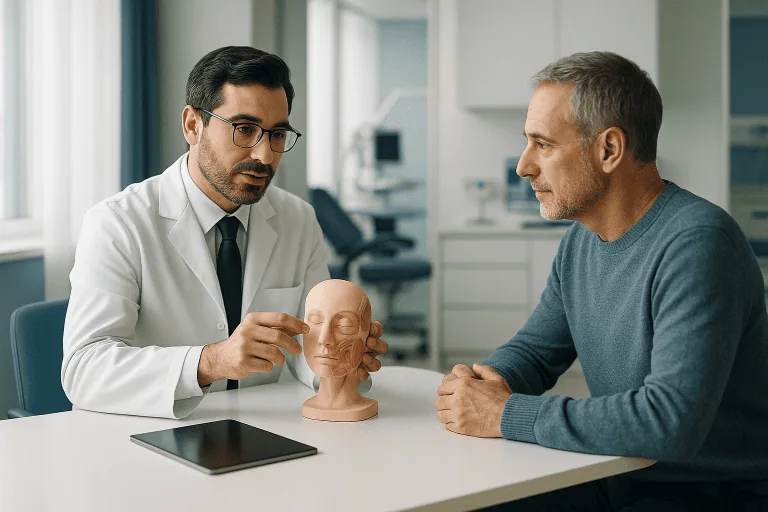
Everything starts with a consultation that defines the concern, the cause and the safest path forward. The team evaluates your face at rest and in motion, because correction must preserve expression, not just improve still photographs. The physician assesses bone structure, skin elasticity, fat distribution, muscle activity, scars, asymmetry, eyelid position, nasal function and the relationships between facial regions. A final plan is normally confirmed only after in-person examination, especially for surgery, revision work and anything involving facial function, because photographs alone cannot capture tissue quality, movement or the feel of previously operated tissue.
2. Personalised treatment planning
After diagnosis, the physician sets out the suitable options: surgical correction, nonsurgical treatment or a combined approach. A good plan explains what each procedure can and cannot accomplish, where incisions would sit, what anaesthesia is needed, how long recovery is expected to take, and whether maintenance treatment may be useful later. Modern planning uses digital photography, facial measurement tools and imaging where needed. In bone-related or post-traumatic cases, three-dimensional imaging shows the underlying skeletal relationships. In soft-tissue and skin-focused care, photographic analysis helps document volume loss, skin quality and asymmetry: a baseline you can compare against later.
3. Preparation before treatment
Preparation depends on the type and extent of correction. You may be asked to stop smoking and avoid nicotine, because both impair blood flow and healing: this is one of the few preparation steps that is almost universal. Your treating doctor will review your regular medicines and supplements and decide whether anything needs adjusting before treatment; that decision belongs to the medical team, not to a checklist. Chronic conditions such as diabetes, hypertension, thyroid disease, autoimmune disease or clotting disorders may need additional evaluation. Before surgery, laboratory tests, anaesthesia assessment and imaging are arranged, and the team walks through the plan, consent, incision sites, expected swelling and aftercare. If you are travelling for treatment, the schedule also has to accommodate arrival time, preoperative appointments, any hospital stay, early follow-up and safe timing for the journey home.
4. The procedure itself
The procedure varies enormously with the goal. Minimally invasive correction is usually outpatient work under local anaesthesia, topical numbing or light sedation: injectables, laser treatment, energy-based skin tightening, thread-based lifting in selected patients, or minor scar revision. These treatments take less time and carry shorter recovery. They can improve contour, skin texture, fine lines and mild laxity, but they cannot substitute for surgery when deeper tissue needs repositioning or structure needs correcting, and pretending otherwise leads to overfilled, unnatural faces.
Face surgery is performed under local anaesthesia with sedation or under general anaesthesia, depending on complexity. A facelift or neck lift repositions the deeper facial tissues and removes excess skin, with incisions placed in natural creases and hairline areas wherever possible. Eyelid surgery removes or repositions excess skin and fat to relieve heaviness or puffiness. Rhinoplasty reshapes the nasal framework and can improve breathing at the same time. Chin or jaw correction may involve implants, bone reshaping or orthognathic procedures in selected patients. Fat grafting transfers carefully processed fat from elsewhere in the body to restore facial volume. Scar revision releases, repositions or refines scar tissue to improve its texture, direction or contour. In reconstructive correction, techniques extend to tissue rearrangement, grafts, flaps, nerve-related procedures, bone fixation, implant removal or replacement, and staged soft-tissue refinement: a plan adapted to the medical problem rather than an aesthetic template.
5. Duration, hospital stay and the first days
Procedure time ranges from a short outpatient appointment to several hours for combined or reconstructive surgery. Some minor treatments let you return to normal routines quickly; more extensive surgery may mean overnight observation or longer, depending on anaesthesia, complexity and your medical status. Afterwards, expect swelling, bruising, tightness, tenderness or temporary numbness, particularly after surgery. These effects improve gradually. You will be given instructions on wound care, sleeping position, cold compresses where appropriate, medication use, activity restrictions and follow-up visits. Be prepared for the early period to feel emotionally uneven: swelling can temporarily distort your appearance before the actual result begins to show, and knowing this in advance makes it much easier to sit through.
6. The recovery process
Minimally invasive procedures may involve little downtime, though bruising and swelling can occur. Surgical correction requires longer. Many patients manage light activities within the first week, while visible swelling and bruising take longer to settle. Exercise, heavy lifting, swimming, alcohol, smoking and sun exposure are typically restricted for a period your physician defines. Facial tissues keep refining for weeks to months; scars mature gradually, often looking pink, firm or slightly raised before they soften. Final contour and symmetry become clear only as swelling resolves and tissues adapt. If you are travelling internationally, build enough time into your stay for early follow-up before flying home, particularly after larger procedures.
How Long Does Facial Balancing Last?
Face balancing results last anywhere from months to many years, depending entirely on which techniques were used. Injectable treatments are temporary by design: the material is gradually metabolised, and how quickly depends on the product, the area treated, how much the area moves, and your own metabolism. That temporariness is not purely a drawback: it allows adjustment, and in many cases reversal, which is valuable when treating a moving, ageing structure. Surgical facial balancing is far more durable. A facelift, rhinoplasty, chin correction or bone-level procedure produces structural change that does not wear off, though it does not stop time either: the corrected face continues to age at its natural rate. Fat grafting sits between the two: a portion of transferred fat establishes a lasting blood supply and remains, while some volume is resorbed in the early months, which is why grafting is sometimes staged. No honest practitioner will give you a single expiry date for facial balancing; the durable answer is that maintenance needs should be discussed procedure by procedure before you commit to anything.
What Are the Cons of Facial Balancing?
The cons of facial balancing deserve as much attention as the benefits, because most disappointing outcomes trace back to one of them.
- It can escalate. Because balancing treats relationships between features, there is a temptation, for patient and practitioner alike, to keep adding “one more area”. Overfilled, overtreated faces are the visible result. Restraint is a core part of competent planning, and a plan that includes the option of doing less is a healthy sign.
- Nonsurgical results are temporary and cumulative costs add up. Injectable-based balancing needs maintenance, and repeated treatment over years is a genuine commitment of time and money.
- All procedures carry risk. Surgery carries the risks of anaesthesia, bleeding, infection, delayed healing, visible scarring, temporary or occasionally persistent numbness, asymmetry and the possibility of revision. Injectables carry risks including bruising, swelling, irregularity, and, rarely but seriously, vascular complications. These risks are managed, not eliminated, and they belong in every consent discussion.
- Wrongly diagnosed problems get wrongly treated. Filler placed over a skeletal imbalance, or skin treatment offered where tissue repositioning is needed, produces poor value and sometimes makes later correction harder.
- Perfect symmetry is not achievable. Improvement is realistic; mirror-image symmetry is not, and pursuing it is how natural faces become strange ones.
What procedure takes 10 years off your face?
No single procedure reliably “takes 10 years off” every face, and you should be sceptical of any clinic that names one. The procedures most associated with substantial visible rejuvenation are the surgical ones, facelift and neck lift for the lower face and jawline, eyelid surgery for tired-looking eyes, because they reposition tissue rather than disguise its descent. But the honest answer is diagnostic: the procedure that makes the biggest difference to your face is the one that addresses whatever is ageing your face most. For one person that is eyelid heaviness; for another, jowls and neck laxity; for another, volume loss or sun-damaged skin. This is precisely why facial balancing begins with analysis rather than a menu.
Why Acting Early Matters, and the Risks of Delay
Not every facial concern needs immediate treatment. Some can safely be observed, managed conservatively, or deferred until the timing suits your life. Early medical evaluation is still valuable, because it distinguishes aesthetic preference from functional or progressive problems, two categories with very different clocks.
For age-related change, earlier assessment can allow a more conservative plan: mild to moderate laxity, volume loss or skin change may be treatable with less extensive procedures than advanced sagging or severe sun damage. That is not an argument for treating early in every case: it is an argument for understanding your options early, so decisions are never rushed later.
For trauma, facial nerve problems, eyelid malposition, breathing difficulty, bite changes or scar contracture, delay can genuinely cost function as well as appearance. Fractures can heal in poor alignment. Scars can tighten and become harder to revise. Eyelid malposition can irritate the eye or affect vision. Nasal obstruction can degrade sleep and quality of life. Facial imbalance after nerve injury can become more complex as muscles weaken or compensate over time.
Revision timing cuts both ways. Delaying revision after a previous procedure is often correct, because tissues need time to heal before a second operation. In other situations, infection, implant exposure, vascular compromise, severe asymmetry or functional impairment, earlier intervention is needed. Specialist evaluation is what determines which situation you are in.
Benefits of Facial Correction
The realistic benefits depend on the indication, the procedure and your individual anatomy, but they fall into a few consistent categories.
| Benefit | What It Means for You |
|---|---|
| Improved facial balance | Correction can help bring the eyes, nose, cheeks, jawline, chin or neck into better proportion, creating a more harmonious overall appearance. |
| More natural contour and definition | Well-planned treatment can restore lost volume, refine structural features or improve sagging without aiming for an overdone look. |
| Functional improvement in selected cases | Patients with nasal obstruction, eyelid problems, facial trauma, scarring or jaw-related issues may gain improvements beyond appearance. |
| Personalised treatment choices | Some concerns suit minimally invasive methods; others benefit from surgery or staged care tailored to your goals and recovery tolerance. |
| Support after trauma or previous surgery | Reconstructive and revision approaches can address contour irregularities, scars, asymmetry or complications from earlier procedures. |
Recovery Timeline After Facial Correction
Recovery varies by procedure, but the pattern after surgical or combined facial correction is broadly consistent. Treat this as orientation, not a schedule: your team’s instructions take precedence.
| Time Period | What Patients Can Expect |
|---|---|
| Day 1 | Swelling, bruising, tightness and mild to moderate discomfort are common. You receive instructions for wound care, medications, head elevation and activity limits. |
| First Week | Bruising and swelling are usually at their most noticeable. Follow-up appointments take place; some sutures or dressings may be removed depending on the procedure. |
| First Month | Visible improvement emerges as swelling decreases. Light daily activities become easier, though strenuous exercise may still be restricted. |
| Three to Six Months | Contours continue to refine, scars soften and tissues settle. Numbness or firmness gradually improves. |
| Longer Term | Results stabilise, though natural ageing continues. Skin care, sun protection, healthy habits and follow-up treatments help maintain the outcome. |
What Influences a Good Result?
A good result in facial correction depends on far more than what happens during the procedure. It begins with accurate diagnosis: the physician must establish whether your concern is driven by skin laxity, soft-tissue descent, fat loss, muscle imbalance, bone structure, scarring, prior procedures or a functional problem. Treating the wrong cause produces undercorrection, overcorrection or an unnatural appearance, and it produces them expensively.
Patient selection matters just as much. Surgery may not be appropriate with uncontrolled medical conditions, active infection, elevated healing risk or expectations that cannot safely be met. Smoking, nicotine use, major weight fluctuation and poor nutrition all affect healing. Patients with prior facial procedures need more cautious planning, because tissue planes, blood supply and support structures may have been altered.
The quality of the plan itself strongly influences the outcome. Facial regions are connected: a chin correction changes the apparent size of the nose; restored cheek volume improves the look of the lower eyelids. A thoughtful plan considers the whole face rather than isolated features: the balancing principle again, applied at the planning stage.
Technique matters, but restraint matters equally. Successful correction improves balance while preserving expression, movement and individuality. Overly aggressive tissue removal, excessive volume, poorly placed incisions, or failure to respect your natural baseline asymmetry can create results that are genuinely difficult to revise. Detailed facial analysis, careful execution and realistic goals are not marketing language here; they are the mechanism by which good results happen.
Your own behaviour during recovery counts too. Following postoperative instructions, attending follow-up visits, avoiding smoking, protecting healing skin from sun and reporting concerns to your team early all reduce complications. Remember that swelling makes faces look uneven at first, early appearance is not the final result, and patience is part of the treatment.
For minimally invasive correction, outcomes depend on product selection, injection technique, skin quality, metabolism, facial movement and maintenance schedule. These treatments work well for selected concerns, but only when used carefully: excessive or poorly placed filler distorts natural anatomy. A medically supervised approach prioritises safety, proportion and, wherever possible, reversibility.
What Affects the Cost of Facial Balancing?
Facial balancing has no single price, because it is not a single procedure: the honest answer to “how much does it cost” is “it depends on what your face actually needs”, and any figure quoted before an examination is a guess. The main cost drivers are consistent, though. The type of treatment matters most: a targeted injectable session, a single surgical procedure and a staged reconstructive plan sit in entirely different ranges. The setting matters: outpatient treatment under local anaesthesia costs less to deliver than hospital surgery under general anaesthesia with an overnight stay. Complexity matters: revision surgery, bone-level correction and multi-specialty cases involve more planning, more theatre time and more follow-up than first-time soft-tissue work. And for nonsurgical balancing, maintenance matters: temporary treatments recur, so the meaningful figure is the cost over years, not the cost per session. When you compare quotes, anywhere in the world, check what each one actually includes: preoperative tests, anaesthesia, hospital stay, follow-up visits and management of any complications. A lower headline figure that excludes these is not a lower price.
How Facial Correction Is Organised at Acibadem
At Acibadem, facial correction is treated as a medical decision first and an aesthetic one second, which shapes how care is organised. Assessment, planning and treatment take place within a hospital system, so the related services a case may need, imaging, laboratory testing, anaesthesia evaluation, dermatology, ophthalmology, ENT, dental and maxillofacial assessment, rehabilitation and postoperative nursing, sit within one coordinated structure rather than across separate providers.
The clinical approach is multidisciplinary where the case requires it. A patient seeking aesthetic contour refinement is cared for primarily by a plastic, reconstructive and aesthetic surgeon; a patient with facial trauma, nasal breathing problems, jaw imbalance, eye-related concerns or facial nerve issues draws in additional specialists. In complex cases, coordinated consultations align the surgical plan with functional needs and long-term safety. Planning tools include detailed photography, facial measurement, three-dimensional imaging where bone is involved, endoscopic approaches where appropriate, microsurgical techniques in selected reconstructive cases, and laser and energy-based systems, used to improve planning and precision, not to replace clinical judgement.
For patients travelling from abroad, Acibadem International provides multilingual support with appointment coordination, medical record transfer, hospital admission and follow-up planning, including clarity on which evaluations should be completed before arrival and how long a given procedure typically requires you to stay near the hospital before travelling home. Cultural context is taken seriously in planning, because preferences vary widely: some patients want subtle rejuvenation nobody will notice, some want a long-standing asymmetry addressed, others need reconstruction after a difficult medical event. The consultation exists to clarify those priorities before anything is scheduled.
Making an Informed Decision
Facial correction can improve symmetry, contour, age-related change and, in selected cases, facial function. The right plan depends on the cause of the concern, your anatomy, medical history, expectations and tolerance for recovery, which means the right plan cannot be chosen from a price list or a social media trend. Some people are best served by one focused, minimally invasive treatment; others need surgery or staged reconstructive care; a few are best served by waiting.
Wherever you seek treatment, the questions worth asking are the same. What is causing the feature I dislike? What are my options at each level of invasiveness, and what does each realistically achieve? Where would incisions sit, and what will scars look like as they mature? What anaesthesia is involved? How long is recovery, and when is it safe to fly? What are the specific risks for my case, and how are complications handled? What would revision involve if I am unhappy? And, tellingly: is there a good reason to do less than I am asking for, or nothing at all? A team that answers these questions plainly, including the limits and the alternatives, is showing you how it will treat you throughout. The face you bring to a consultation is the only one you have; the standard of honesty you should expect in return is absolute.
Preparation
- A plastic surgery consultation assesses facial structure, skin quality, medical history, and expectations. Preoperative photos, blood tests, and anesthesia evaluation may be required. Patients are usually advised to stop smoking and avoid blood-thinning medicines or supplements before the procedure.
Aftercare
- Swelling, bruising, and tightness are common in the first days and are managed with prescribed medication and cold compresses when appropriate. Patients should keep the head elevated, avoid strenuous activity, and attend follow-up visits. Final results become clearer as swelling gradually resolves.
Frequently Asked Questions
What affects the cost of facial correction?
Cost depends on the procedure type, complexity, surgeon expertise, hospital setting, anaesthesia, tests, materials, recovery care, and whether treatments are combined. Travel, accommodation, interpreter support, and follow-up arrangements can also affect the overall budget.
How can I get a personalised quote?
You can request a free consultation by sharing photos, medical history, previous procedure details if relevant, and your goals. A specialist team can then advise what assessment is needed and provide a personalised estimate based on your treatment plan.
Are packages always all-inclusive?
Not always. Package contents vary by hospital and treatment. It is important to confirm whether the quote includes consultations, hospital services, surgeon and anaesthesia fees, tests, medication, garments, transfers, translation, and follow-up visits.
Can facial correction procedures be combined to reduce overall cost?
Some procedures may be combined when medically appropriate, which can reduce repeated hospital or anaesthesia arrangements. However, combined treatment is only suitable when the specialist considers it safe and beneficial for the patient.
Will minimally invasive facial correction cost less than surgery?
Minimally invasive treatments may require less facility time and recovery support, but they may need maintenance and repeat sessions. Surgery may involve a higher upfront commitment but can address structural concerns more comprehensively in suitable patients.
Is this information medical or financial advice?
No. This information is general and educational. A personalised medical evaluation and a detailed written quote are needed to understand your safest options, expected recovery, and likely total cost.
Medically reviewed by the Acıbadem International Medical Board September 13, 2026
See our medical review board →
Update history
- PublishedJune 8, 2026
- Medical review approvedSeptember 13, 2026
- Last content updateSeptember 12, 2026
Trusted care for international patients
From the Acibadem Blog

Facial Asymmetry Explained: Why Faces Are Uneven and How Facial Correction Is Planned
Facial asymmetry treatment depends on the cause. Nearly every face is slightly uneven, and mild differences need no treatment at all. When the asymmetry…
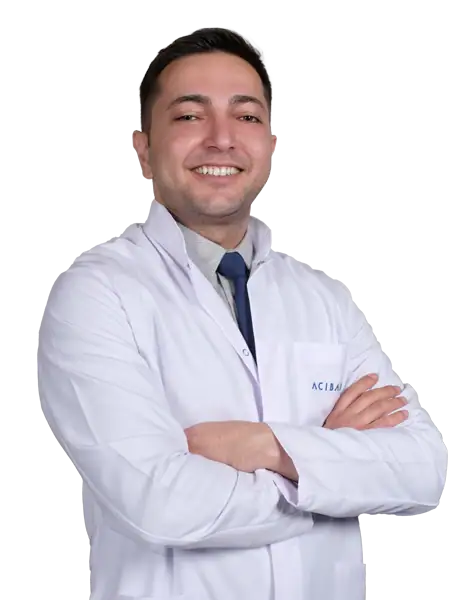
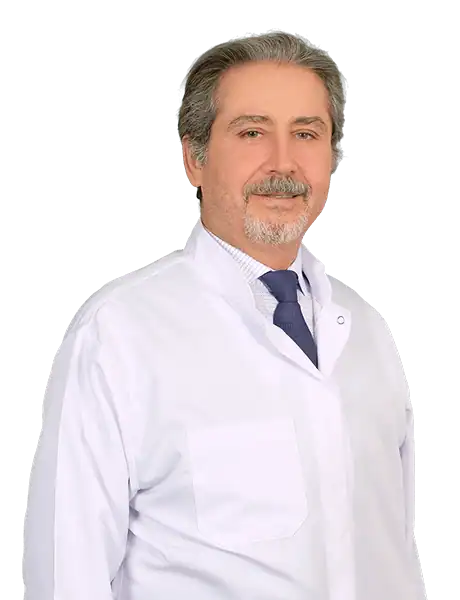
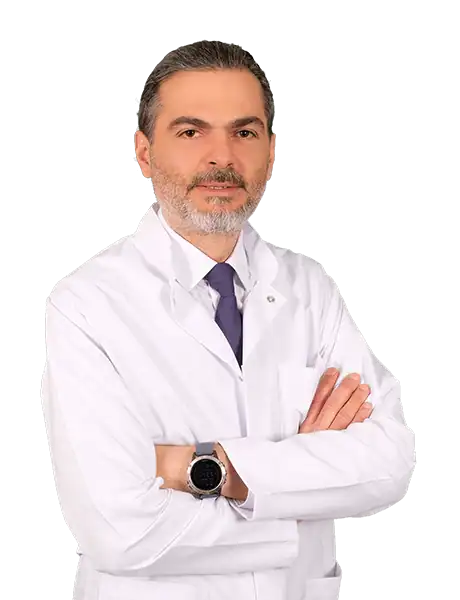
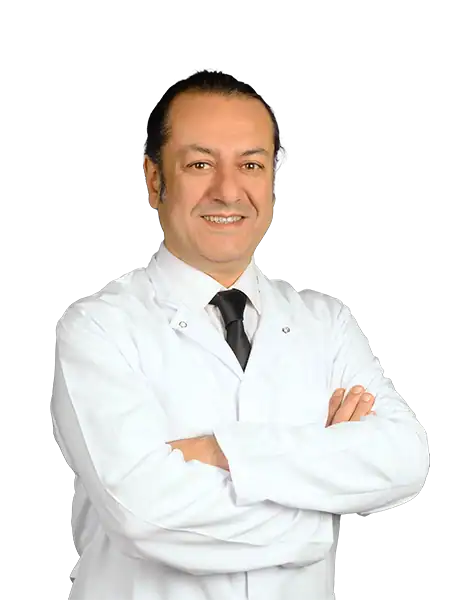
Doctors Performing This Treatment


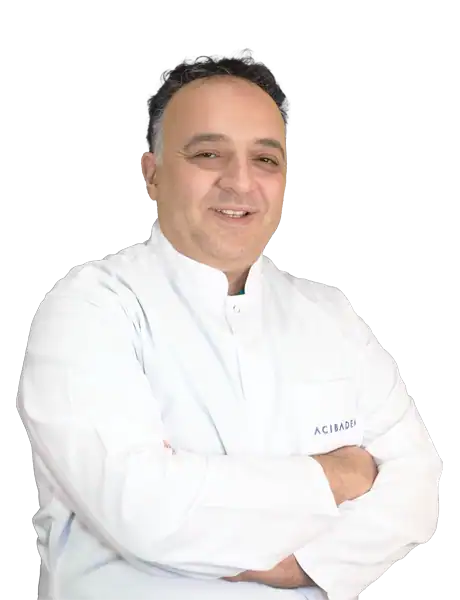
Aesthetic Plastic & Reconstructive Surgery
Prof. Mehmet Veli Karaaltın, MD

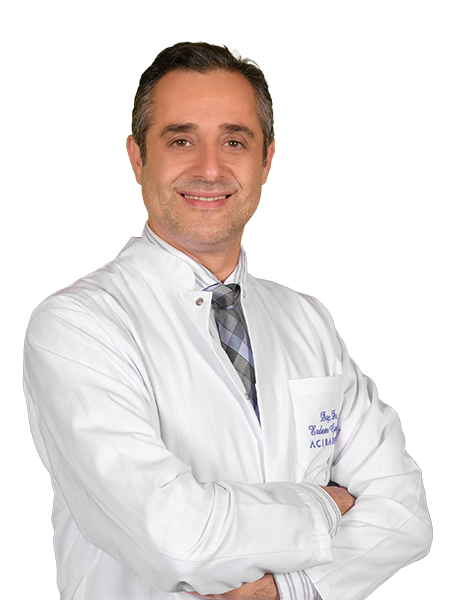
Aesthetic Plastic & Reconstructive Surgery
Assoc. Prof. Erdem Güven, MD

Aesthetic Plastic & Reconstructive Surgery
Assoc. Prof. Ahmet Küçükçelebi, MD
Aesthetic Plastic & Reconstructive Surgery
Assoc. Prof. Mehmet Altıparmak, MD

Aesthetic Plastic & Reconstructive Surgery