Lip Reconstruction
Lip reconstruction restores lip shape, symmetry and function after trauma, tumor removal, burns or congenital deformities, using tailored plastic surgery techniques to improve speech, eating and appearance.

Quick answer
Lip reconstruction is plastic surgery that restores the shape, symmetry, and function of the lips after injury, tumor removal, burns, or congenital differences. At Acibadem in Turkey, treatment is planned individually and may use local tissue rearrangement, flaps, grafts, or staged repair to support speech, eating, lip closure, and appearance.
When Lip Reconstruction Becomes an Important Decision
The lips are central to everyday life in ways many people do not fully appreciate until an injury, tumor removal, burn, or congenital condition changes how they look or function. The lips help you speak clearly, keep saliva inside the mouth, eat and drink comfortably, express emotion, and recognize yourself in the mirror. When lip tissue is damaged or removed, even a small change can affect confidence, social interaction, and practical daily activities.
For many patients, the decision to pursue lip reconstruction is both medical and personal. You may be worried about whether your smile will look natural, whether speech or eating will improve, whether scars will be visible, or whether another operation will be needed. If cancer treatment is involved, you may also be balancing concerns about complete tumor removal, pathology results, and the safest timing for reconstruction. International patients often have additional questions about travel, communication, recovery away from home, and how care will be coordinated before and after surgery.
Lip reconstruction is designed to restore the form and function of the lip as carefully as possible. It is not simply a cosmetic procedure. It is a reconstructive surgery that requires detailed knowledge of facial anatomy, tissue movement, wound healing, oral competence, and facial aesthetics. The goal is to rebuild the lip in a way that supports speech, eating, drinking, facial expression, and appearance, while respecting the medical reason that created the defect.
At Acibadem, lip reconstruction is approached through individualized planning. Depending on the cause and complexity, care may involve plastic and reconstructive surgeons, head and neck surgeons, dermatologists, oncologists, radiation oncologists, dentists, speech and swallowing specialists, and rehabilitation professionals. This multidisciplinary approach is especially important when reconstruction follows tumor removal, major trauma, burns, or prior surgery.
What Is Lip Reconstruction?
Lip reconstruction is a group of surgical techniques used to repair or rebuild the upper lip, lower lip, corners of the mouth, or surrounding tissue. It may involve closing a small defect directly, rearranging nearby tissue, using local flaps, transferring tissue from another part of the body, revising scars, restoring the vermilion border, or improving lip symmetry after previous treatment.
The lip is more complex than it may appear. It includes skin, muscle, mucosa, the red portion of the lip known as the vermilion, the white roll, the cupid’s bow, the corners of the mouth, and the orbicularis oris muscle that helps close and shape the mouth. Good reconstruction must consider all of these layers. A technically sound reconstruction aims not only to cover a defect, but also to restore the circular muscle function that helps the mouth close and move normally.
Reconstruction may be performed immediately after tissue is removed, such as after cancer excision, or at a later stage after an injury has healed, a burn scar has matured, or previous surgery has left functional or cosmetic concerns. In some patients, one procedure is sufficient. In others, reconstruction is staged, meaning more than one operation is planned over time to refine shape, improve function, or address scar contracture.
The specific method depends on the size and location of the defect, the amount of healthy surrounding tissue, the patient’s medical condition, previous treatments such as radiation therapy, and the desired functional goals. A small defect may be closed with careful suturing. A larger defect may require tissue to be rotated, advanced, or transferred to recreate lip continuity. Reconstruction of the mouth corner, known as the oral commissure, can be particularly delicate because this area influences both lip competence and facial expression.
Who May Need Lip Reconstruction?
Patients may need lip reconstruction for many reasons. Some seek care after an accident or injury. Others are referred after a skin cancer, oral cancer, or other tumor has been removed. Some patients have burns, scars, congenital differences, or problems related to previous surgery. The common thread is that the lip’s normal structure has been altered in a way that affects appearance, function, or both.
Symptoms and concerns that may lead a patient to consider lip reconstruction include difficulty closing the mouth, drooling, speech changes, trouble drinking without leakage, problems chewing, tightness around the mouth, visible asymmetry, scar pulling, missing lip tissue, altered smile, or discomfort from scar tissue. Some patients may also experience emotional distress, especially if the lip change is visible during conversation or social situations.
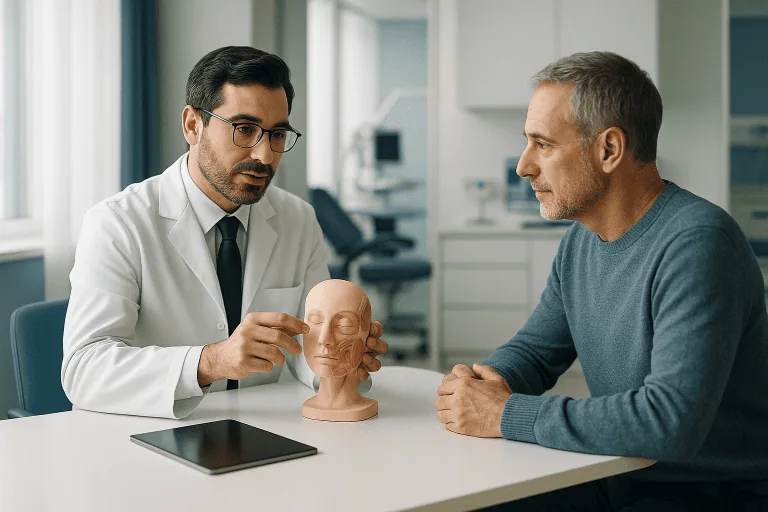
Diagnosis begins with a detailed consultation and physical examination. The surgeon evaluates the upper and lower lip, the vermilion border, the mouth corners, the quality of the skin and mucosa, the movement of the lip muscles, bite alignment, dental status, and the relationship between the lips and surrounding facial structures. Photographs may be taken for planning and documentation. If the reconstruction is related to a tumor, pathology reports, imaging studies, and prior operative records are reviewed carefully.
In tumor-related cases, the most important first step is to ensure that cancer treatment is planned appropriately. Reconstruction should support oncologic safety, not interfere with it. When needed, cases may be reviewed by a multidisciplinary tumor board to coordinate surgery, pathology, radiation therapy, medical oncology, and reconstructive planning. This is particularly relevant for patients with lip cancer, oral cavity cancer, recurrent tumors, or tumors involving adjacent facial structures.
International patients may begin the evaluation remotely by sharing medical records, photographs, imaging, pathology reports, and previous surgical notes. While a definitive surgical plan requires in-person examination, preliminary review can help clarify likely options, expected hospital stay, recovery needs, and whether additional consultations are advisable before travel.
Conditions and Indications Treated With Lip Reconstruction
Lip reconstruction may be recommended for a wide range of medical and reconstructive needs. The procedure can address defects caused by disease, injury, congenital conditions, or previous treatments. The aim is to restore the lip as a functional part of the mouth and as a visible part of the face.
- Lip cancer and skin cancer defects: Reconstruction may follow removal of squamous cell carcinoma, basal cell carcinoma, melanoma, or other tumors affecting the lip or surrounding skin.
- Oral cavity and head and neck tumors: Some tumors involving the lip, mouth corner, cheek, or lower face require reconstructive planning after excision.
- Traumatic injuries: Dog bites, road traffic accidents, falls, sharp injuries, and crush injuries can damage lip tissue, muscle, and the vermilion border.
- Burns and scar contractures: Thermal, chemical, or electrical burns may cause tightening, distortion, or restriction of mouth opening.
- Congenital deformities: Some patients seek reconstruction or revision related to cleft lip, congenital asymmetry, or developmental differences.
- Complications or deformity after previous surgery: Scar revision, secondary reconstruction, or functional correction may be needed after earlier procedures.
- Loss of oral competence: Inability to close the mouth fully can lead to drooling, speech problems, irritation, and social discomfort.
- Aesthetic and functional asymmetry: Reconstruction may improve the balance of the lip, cupid’s bow, vermilion border, and smile when tissue has been altered by disease or injury.
Not every lip concern requires major surgery. Some patients may benefit from minor scar revision, local tissue adjustment, laser-assisted scar management, injectable treatments, or nonsurgical rehabilitation. A careful assessment helps determine whether surgical reconstruction is needed and, if so, how extensive it should be.
How Lip Reconstruction Is Performed
Lip reconstruction is tailored to the patient, the defect, and the medical context. Although the surgical plan varies, the process generally includes preoperative assessment, individualized design, precise reconstruction of tissue layers, and structured follow-up to guide healing and rehabilitation.
Preparation Before Surgery
Preparation begins with understanding why reconstruction is needed and what the operation should accomplish. The surgical team reviews the patient’s medical history, medications, allergies, smoking status, previous surgeries, prior radiation therapy, and any conditions that may affect healing, such as diabetes or vascular disease. If cancer is involved, pathology and imaging are reviewed to confirm that reconstructive planning aligns with oncologic treatment.
The surgeon examines lip movement, mouth closure, speech, swallowing, dental alignment, and scar quality. Measurements and clinical photographs help plan symmetry. The location of key landmarks, such as the vermilion border and cupid’s bow, is assessed carefully because even small misalignments can be noticeable.
Patients may be asked to stop smoking before surgery because nicotine can reduce blood flow and increase the risk of wound complications. Certain medications or supplements that increase bleeding risk may need adjustment under medical guidance. If general anesthesia or sedation is planned, preoperative tests may include blood work, electrocardiography, imaging, or anesthesia assessment depending on age, health status, and procedure complexity.
For international patients, preparation also includes travel coordination, translation support when needed, review of medical documents, and planning for the expected length of stay. Patients are advised to allow enough time after surgery for early follow-up before returning home, especially if the reconstruction is complex or staged.
The Surgical Plan
The choice of technique depends largely on defect size, location, and tissue quality. Small lip defects may be closed directly if doing so does not distort the lip or create tension. When more tissue is missing, the surgeon may use local flaps, which move nearby tissue into the defect while preserving blood supply. These techniques are often chosen because adjacent tissue usually offers the best match in color, texture, thickness, and movement.
For defects involving part of the lip width, the surgeon may reconstruct the lip using tissue from the remaining lip or nearby cheek. Larger defects may require more complex flaps that borrow tissue from the opposite lip, cheek, chin, or neck. In selected major reconstructions, tissue transfer from another body area may be considered, particularly when local tissue is unavailable due to previous surgery, radiation, burns, or extensive trauma.
Reconstruction may involve one or more of the following goals: restoring the muscle ring around the mouth, aligning the vermilion border, recreating the red lip surface, preserving mouth opening, rebuilding the oral commissure, and minimizing visible scarring. The surgeon must balance tissue movement with function. A reconstruction that closes the defect but makes the mouth too tight can create long-term difficulties with eating, dental care, or speech.
During the Procedure
Lip reconstruction may be performed under local anesthesia, sedation, or general anesthesia depending on complexity, patient preference, and medical considerations. Minor reconstructions may be outpatient procedures. More extensive reconstructions, especially those related to cancer surgery or trauma, may require hospital admission.
The surgical area is prepared carefully. If tumor removal is part of the same operation, the tumor is excised with appropriate margins, and tissue may be sent for pathology assessment according to the clinical plan. Once the defect is defined, the reconstructive surgeon designs incisions to use available tissue efficiently and to place scars along natural lines where possible.
The lip is reconstructed in layers. Muscle repair is important when the orbicularis oris has been interrupted because this muscle helps maintain oral competence. The mucosal lining inside the mouth, the skin, and the vermilion are then repaired or recreated with attention to alignment. Fine suturing techniques are used to bring tissue edges together precisely. In some cases, temporary drains, protective dressings, or special wound care measures may be used.
Modern reconstructive planning may include high-resolution imaging, digital photography, magnification, microsurgical instruments when needed, and careful intraoperative assessment of tissue blood supply. In complex cancer or trauma cases, imaging can help define the extent of tissue loss and guide surgical strategy. When microsurgery is required, specialized instruments and operating microscopes may assist with delicate vessel and tissue work. The purpose of these technologies is practical: to improve planning, support precision, and help the surgeon preserve as much function as possible.
How Long the Procedure Takes
The duration of lip reconstruction varies widely. A small scar revision or local repair may take less than an hour. A more involved local flap reconstruction may take several hours. Complex reconstruction after tumor removal, major trauma, or prior radiation may take longer, particularly if multiple surgical teams are involved. Your surgeon can provide a more specific estimate after examining the defect and reviewing your records.
Immediately After Surgery
After surgery, patients are monitored for comfort, bleeding, swelling, and airway safety when appropriate. The lips commonly feel swollen, tight, or numb in the early period. Mild oozing, bruising, and tenderness may occur. Pain is usually managed with prescribed medication, and antibiotics may be used in selected cases depending on the wound type and contamination risk.
Diet instructions depend on the reconstruction. Some patients can begin with soft foods and cool liquids. Others may need a liquid or modified diet for a period to protect the repair. Good oral hygiene is important, but patients must follow specific instructions about rinsing, brushing, and avoiding trauma to the surgical site.
Speech may feel different at first because swelling and sutures affect lip movement. This often improves as swelling decreases, although more complex reconstructions may require speech or swallowing therapy. Patients are usually advised to avoid stretching the mouth widely, smoking, strenuous activity, and pressure on the lip during early healing.
Recovery and Follow-Up
Recovery is gradual. Early swelling typically improves during the first days and weeks, while scar maturation continues for months. Sutures may dissolve or be removed depending on the technique used. The surgeon evaluates wound healing, lip movement, oral competence, scar quality, and symmetry at follow-up visits.
Some patients may need additional procedures. This does not necessarily mean the first surgery was unsuccessful. Lip reconstruction can be staged deliberately, especially when the initial priority is safe wound closure or cancer treatment. Later refinements may address scar thickness, asymmetry, lip contour, mouth corner position, or functional tightness.
Long-term scar care may include massage, sun protection, silicone-based treatments, laser-assisted scar management, or targeted revision if needed. In burn or trauma cases, rehabilitation may include stretching exercises to maintain mouth opening. In patients treated for cancer, surveillance continues according to the tumor type and oncologic plan.
Why Acting Early Matters
Timely evaluation can make a meaningful difference in lip reconstruction. When tissue loss, scarring, or functional impairment is addressed early, surgeons may have more options to preserve healthy tissue, align important lip landmarks, and prevent secondary problems. This is especially true after trauma, where proper early repair can reduce the risk of distorted healing.
In tumor-related cases, delaying medical assessment can allow a lesion to grow, potentially requiring a larger excision and more complex reconstruction. Any persistent lip ulcer, non-healing crusted area, bleeding lesion, changing pigmented spot, or firm mass should be evaluated promptly. Early diagnosis can reduce the extent of treatment needed and improve the likelihood of preserving lip function.
After burns or previous surgery, timing must be individualized. Some scar problems benefit from waiting until tissue matures, while others require earlier intervention to prevent tightening, restricted mouth opening, or progressive distortion. A reconstructive consultation helps determine the safest and most effective timing.
Delay may increase the risk of chronic drooling, speech adaptation problems, dental hygiene difficulty, nutritional challenges, worsening scar contracture, and emotional distress. Early specialist input does not always mean immediate surgery, but it allows patients to understand their options before the problem becomes more difficult to correct.
Benefits of Lip Reconstruction
The potential benefits of lip reconstruction are both functional and aesthetic, and they depend on the cause of the defect, the quality of remaining tissue, and the complexity of surgery.
| Benefit | What It Means for You |
|---|---|
| Improved oral competence | Better ability to close the mouth may reduce drooling, liquid leakage, irritation, and social discomfort. |
| Clearer speech support | Restoring lip movement and shape can help pronunciation, especially for sounds that require lip contact. |
| More comfortable eating and drinking | A stable lip structure can improve control of food and liquids and support a more normal diet over time. |
| Restored facial balance | Careful alignment of lip landmarks can improve symmetry, smile appearance, and confidence in social settings. |
| Scar and deformity correction | Reconstruction can release tight scars, revise distorted tissue, and improve the texture or position of the lip. |
| Integrated cancer or trauma care | When reconstruction follows tumor removal or injury, planning can be coordinated with the broader medical treatment pathway. |
Recovery Timeline After Lip Reconstruction
Recovery varies by procedure, but the following timeline gives a general sense of what many patients can expect after lip reconstruction.
| Time Period | What Patients Can Expect |
|---|---|
| Day 1 | Swelling, tightness, mild bleeding or oozing, and tenderness are common. Patients receive instructions for diet, wound care, oral hygiene, medications, and activity limits. |
| First Week | Swelling and bruising usually begin to improve. A soft or modified diet may be recommended. Follow-up is important to assess healing and remove non-dissolving sutures if needed. |
| First Month | Lip movement gradually becomes easier as swelling decreases. Speech and eating often improve, though stiffness and scar firmness may remain. Scar care may begin when the incision is ready. |
| Three to Six Months | Scars continue to soften and fade. Function and symmetry can be assessed more accurately. Some patients may be considered for minor refinement or rehabilitation if needed. |
| Longer Term | Final scar maturation may take many months. Patients treated for cancer continue surveillance, while trauma or burn patients may need longer rehabilitation or staged correction. |
Factors That Influence Outcomes
The results of lip reconstruction depend on several medical and surgical factors. The size and location of the defect are central. Small defects with healthy surrounding tissue are often easier to reconstruct with fewer visible changes. Larger defects, defects involving the mouth corner, and defects affecting both skin and mucosa require more complex planning.
Tissue quality also matters. Previous radiation therapy, burns, infection, scarring, diabetes, vascular disease, and smoking can affect blood supply and wound healing. Patients who stop smoking and follow preoperative instructions usually reduce avoidable healing risks. Nutrition is also important, particularly for patients recovering from cancer treatment, trauma, or burns.
The cause of the defect influences the surgical strategy. Cancer reconstruction must be coordinated with tumor clearance, pathology, and any additional treatment such as radiation therapy. Trauma reconstruction may need to address contamination, tissue loss, nerve injury, dental injury, or fractures. Burn reconstruction often requires attention to scar contracture and mouth opening.
Technical precision is particularly important in lip surgery because the lip contains visible landmarks. Alignment of the vermilion border is one of the most important details. Even a small mismatch can draw attention. Reconstructing the muscle layer helps support movement and oral competence. Managing tension on the wound helps reduce distortion and scar widening.
Patient expectations also influence satisfaction. Lip reconstruction can produce meaningful improvements in function and appearance, but it cannot always recreate the exact original lip, particularly after major tissue loss, radiation, or severe trauma. A careful consultation should include a realistic discussion of likely outcomes, visible scars, possible asymmetry, numbness, stiffness, and the potential need for staged refinement.
Follow-up care plays a major role. Wounds around the mouth are exposed to movement, moisture, and bacteria, so proper hygiene and protection are essential. Scar management, rehabilitation, sun protection, and adherence to dietary restrictions can all affect the final result. For international patients, planning follow-up both at Acibadem and with physicians at home helps maintain continuity after travel.
Why International Patients Choose Acibadem for Lip Reconstruction
Patients traveling for lip reconstruction often look for more than surgical skill alone. They need a medical team that can evaluate the underlying condition, plan reconstruction with functional and aesthetic detail, communicate clearly in their language, and coordinate care across borders. Acibadem’s model is well suited to these needs because reconstructive care is delivered within a broad hospital system, not as an isolated procedure.
Acibadem hospitals are JCI-accredited, reflecting internationally recognized standards for patient safety, quality systems, and clinical processes. For patients considering care outside their home country, this structure can help them understand how diagnosis, surgery, anesthesia, infection prevention, and follow-up are managed within a hospital environment.
Lip reconstruction may involve several specialties depending on the diagnosis. At Acibadem, patients may be evaluated by plastic and reconstructive surgeons, head and neck surgeons, dermatologists, medical oncologists, radiation oncologists, radiologists, pathologists, dentists, speech and swallowing therapists, and rehabilitation specialists when appropriate. For cancer-related defects, multidisciplinary tumor boards can help align reconstructive planning with evidence-based oncology protocols. This is important because a successful reconstruction should not compromise cancer care, surveillance, or future treatment options.
Advanced diagnostic and surgical resources support planning and treatment. Imaging systems can help define tumor extent, trauma patterns, or associated facial injuries. Pathology services help guide tumor-related decisions. Modern operating rooms, microsurgical capability when indicated, magnification, refined instruments, and careful anesthesia support allow surgeons to perform delicate reconstruction in a controlled setting. The value of technology lies not in the equipment itself, but in how it supports thoughtful decision-making, precision, and patient safety.
International patient services are also part of the care experience. Acibadem International assists patients from abroad with appointment scheduling, medical record coordination, interpreter support in more than 20 languages, hospital admission processes, and practical arrangements related to travel and stay. For patients who are anxious about receiving care in another country, clear communication is not a luxury; it is part of safe and respectful care.
Personalized treatment planning is especially important in lip reconstruction. Two patients with similar-sized defects may need different operations because their tissue quality, facial anatomy, speech needs, dental status, cancer history, and personal priorities differ. Some patients prioritize the fastest safe recovery after tumor removal. Others need secondary refinement after older trauma or burn scars. Some require a staged plan that begins with restoring closure and later improves contour. The treatment plan should reflect the person, not just the defect.
Patients from the United States and other countries may also seek a second opinion when they have been told that a lip defect requires a complex operation, when they are uncertain about reconstruction after cancer removal, or when a previous repair has left persistent problems. A structured second opinion can help clarify the diagnosis, review available options, and identify the timing that best supports both function and appearance.
A Thoughtful Path Toward Restoring Function and Appearance
Lip reconstruction is a highly individualized procedure that sits at the intersection of reconstructive surgery, facial aesthetics, speech, swallowing, cancer care, trauma care, and emotional recovery. Whether the need arises after tumor removal, an accident, a burn, a congenital condition, or previous surgery, the purpose is to help the lip work better and look more balanced while respecting the medical realities of each case.
The best next step is a detailed evaluation. By reviewing your history, photographs, imaging, pathology reports, and treatment goals, the medical team can explain what type of reconstruction may be appropriate, whether surgery should be immediate or staged, what recovery may involve, and what results are realistic. For international patients, this conversation can often begin before travel, allowing you to make a more informed decision.
If you are considering lip reconstruction, you may request a consultation or second opinion with Acibadem to understand your options and the most appropriate treatment pathway for your condition.
This information is general and is not a substitute for professional medical advice. Diagnosis and treatment decisions should be made after consultation with a qualified physician who can evaluate your individual condition.
Preparation
- Before lip reconstruction, the surgeon assesses the defect, medical history, medications and expectations. Photos and imaging or pathology reports may be reviewed when reconstruction follows trauma or tumor removal. Patients may need to stop smoking and pause blood-thinning medicines as advised.
Aftercare
- Swelling, bruising and tightness are common during the first days and are managed with prescribed medication and wound care. Patients should keep the area clean, eat soft foods if advised and avoid smoking or strenuous activity. Follow-up visits monitor healing, scar maturation and lip function.
Frequently Asked Questions
What affects the cost of lip reconstruction?
The main factors are the size and depth of the defect, the tissues involved, the reconstructive method, anesthesia needs, hospital stay, surgeon experience and whether additional procedures or staged treatment are required.
How can I get a personalised quote from Acibadem?
You can request a complimentary consultation by sharing medical reports, clear photos, previous operation notes and any pathology or imaging results if available. A specialist review helps estimate the surgical plan and the package components.
Does the quote usually include travel and interpreter support?
International patient packages may include interpreter assistance, appointment coordination and help with travel logistics. The exact inclusions should be confirmed in writing before treatment.
Will I need more than one procedure?
Some lip reconstructions can be completed in a single planned operation, while complex trauma, burns, cancer-related defects or scar problems may need staged refinement. The specialist will explain the expected pathway after assessment.
Is lip reconstruction covered by insurance?
Coverage depends on the insurer, policy terms, medical indication and treatment location. Patients should confirm coverage directly with their insurer; hospital teams can usually provide medical documentation for review.
Is the information here medical or financial advice?
No. This is general educational information only. A plastic and reconstructive surgery consultation is needed to determine suitability, risks, expected recovery and a personalised cost estimate.
Medically reviewed by the Acıbadem International Medical Board June 20, 2026
See our medical review board →
Update history
- PublishedJune 8, 2026
- Medical review approvedJune 20, 2026
- Last content updateJune 8, 2026
Trusted care for international patients
From the Acibadem Blog

What Recovery After Lip Reconstruction Involves: Soft Foods, Swelling and Suture Care
Lip reconstruction recovery usually unfolds in stages: swelling and numbness are most noticeable in the first few days, a soft or liquid diet protects…
Doctors Performing This Treatment



Aesthetic Plastic & Reconstructive Surgery
Prof. Mehmet Veli Karaaltın, MD


Aesthetic Plastic & Reconstructive Surgery
Assoc. Prof. Erdem Güven, MD

Aesthetic Plastic & Reconstructive Surgery
Assoc. Prof. Ahmet Küçükçelebi, MD

Aesthetic Plastic & Reconstructive Surgery
Assoc. Prof. Mehmet Altıparmak, MD

Aesthetic Plastic & Reconstructive Surgery