Oral Health Education
Oral health education teaches patients practical habits to prevent tooth decay, gum disease and bad breath through proper brushing, flossing, diet guidance and routine dental check-ups.
Quick answer
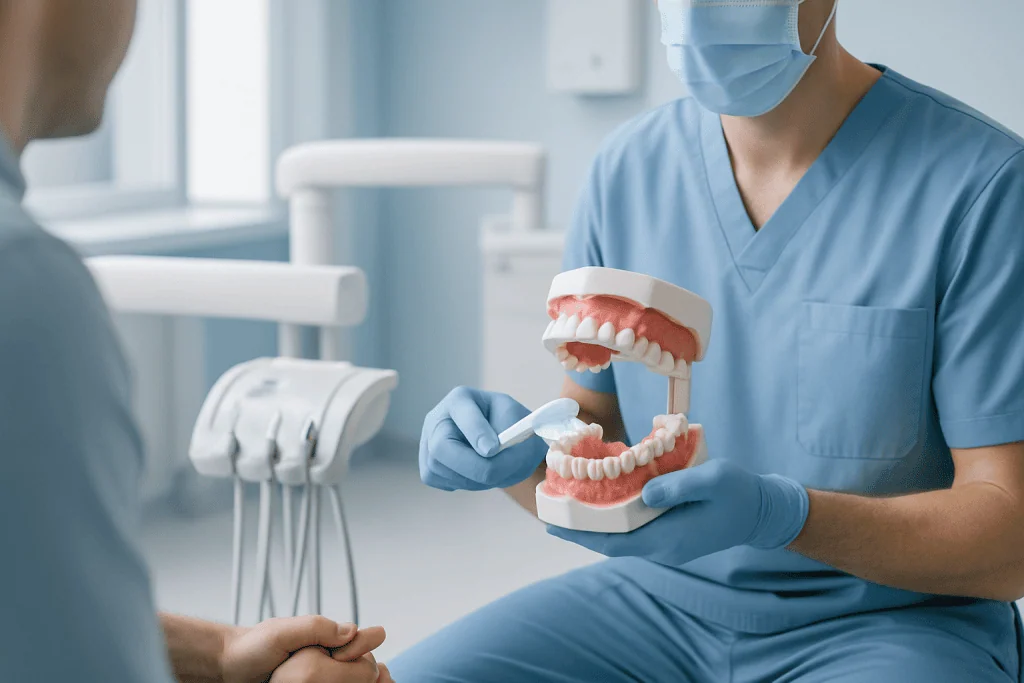
Oral health education is a preventive dental service in which a dentist, hygienist or trained team member examines your mouth, explains what they find, and teaches you how to brush, clean between your teeth, use fluoride and manage diet to lower your risk of decay and gum disease. Sessions are non-invasive, personalised to your mouth, and often combined with a professional cleaning or check-up.
Oral Health Education: A Practical Guide
Oral health education is a preventive dental service that teaches you how to look after your teeth, gums, tongue and any dental work you carry. It combines a clinical examination of your mouth with hands-on instruction: how to brush effectively, how to clean between your teeth, how to use fluoride sensibly, and how your diet affects your risk of decay and gum disease. It suits almost anyone — children learning their first routine, adults with braces or implants, and older patients managing dry mouth or complex restorations.
It may sound simple. For many patients it is the difference between repeated dental problems and a stable, comfortable mouth. Tooth decay, gum inflammation, bleeding when brushing, persistent bad breath, tooth sensitivity and recurring dental work can often be traced back to habits that were never clearly explained, techniques that do not match your mouth, or risk factors that have quietly changed over time.
Many people brush every day and still develop cavities or gum disease. Others are unsure whether they should use floss, interdental brushes, mouthwash, an electric toothbrush or a specific toothpaste. Parents worry about how to protect a child’s teeth. Adults with braces, implants, crowns, diabetes, dry mouth or a history of periodontal disease often need guidance that is more personalised than the general advice found online. And if you have received different recommendations over the years, you may simply want one clear, evidence-based plan you can follow at home.
Oral health education answers these concerns in a practical, individualised way. It helps you understand what is happening in your own mouth, why certain problems occur, and which daily habits reduce the risk of decay, gum disease and bad breath. Done well, it is not a lecture or a generic checklist. It is a structured clinical conversation, supported by examination findings, prevention science and realistic coaching that fits your life rather than an ideal one.
It matters because oral health is closely connected with comfort, nutrition, confidence and long-term dental function. Gum inflammation can progress silently. Small areas of decay can become painful infections. Poor plaque control around crowns, bridges, implants or orthodontic appliances can compromise treatment you have already paid for. Education gives you a way to participate actively in your own care, with techniques you can use every day and adjust as your oral health changes.
What does “oral” mean in medicine?
In medicine, “oral” means relating to the mouth. Oral health covers the teeth, gums, tongue, palate, cheeks, lips, saliva and the tissues that support them. When a medicine is described as oral, it means the medicine is taken by mouth rather than injected or applied to the skin — so yes, in that context oral does mean “by mouth”. The word is often confused with “aural”, which relates to the ear, and “verbal”, which relates to words in general. On this page, oral always refers to the mouth: oral health education is education about caring for your mouth, and everything in it.
Why is oral health education important?
Oral health education is important because most common dental diseases — tooth decay and gum disease — are driven largely by daily habits, and habits can be changed. Professional treatment repairs damage; education addresses the causes. Without it, patients can move through a cycle of fillings, cleanings and repeat problems without ever learning why the problems keep returning. With it, you understand your own risk factors, you know which tools suit your mouth, and you can recognise early warning signs such as bleeding gums or new sensitivity before they become larger problems. Education also protects the results of other dentistry: implants, crowns, bridges and orthodontic treatment all last longer in a mouth that is cleaned correctly every day.
Who May Need Oral Health Education?
Almost every patient can benefit, but oral health education is especially useful if you have recurring problems despite trying to maintain good hygiene. Typical triggers include bleeding gums, swollen or tender gums, visible plaque buildup, tartar accumulation, repeated cavities, tooth sensitivity, food trapping between teeth, bad breath, staining, dry mouth, or difficulty cleaning around dental work.
Many patients seek guidance after being told they have gingivitis, periodontal disease, early enamel demineralisation, multiple fillings, or decay in hard-to-reach areas. Others come because they are beginning orthodontic treatment, planning dental implants, receiving dental crowns or bridges, or recovering from periodontal therapy. Each of these situations creates new cleaning challenges, and clear instruction protects the investment already made in treatment.
Children and adolescents are a core group. Young patients need to learn correct brushing habits early, and parents need guidance on fluoride toothpaste, diet, bottle and dummy habits, first dental visits and cavity prevention — the focus of paediatric oral health services. Teenagers with braces or clear aligners often need additional coaching, because plaque collects readily around brackets, wires and attachments, and white marks can form on enamel during treatment if cleaning falls behind.
Older adults face a different set of challenges. Gum recession, exposed root surfaces, medications that reduce saliva, limited hand dexterity and a lifetime of existing restorations can all make daily cleaning harder. Gerontological oral health care adapts the advice — tool choice, grip aids, denture hygiene, dry-mouth strategies — to what an older patient can realistically manage.
Assessment begins with a dental examination and a conversation. The dentist evaluates your teeth, gums, bite, restorations, tongue and oral tissues. The team may record plaque levels, bleeding points, gum pocket depths, tartar deposits, enamel changes, signs of acid erosion and areas that are difficult to clean. Digital dental X-rays may be used when clinically indicated to detect decay between teeth or bone changes that cannot be seen directly. Intraoral images sometimes help you see specific areas of concern on a screen, which makes the recommendations easier to accept and remember.
Medical history matters as much as the mouth itself. Diabetes, pregnancy, immune conditions, reflux, eating disorders, cancer treatment, medications that cause dry mouth and tobacco use can all shift your oral health risk. Your daily routine is reviewed too: how often you brush, which tools you use, whether you clean between your teeth, how frequently you consume sugary or acidic drinks, and how regularly you attend check-ups. The purpose is not to judge you. It is to identify what is contributing to the problem and what can realistically be changed.
Conditions and Indications Addressed by Oral Health Education
Oral health education supports prevention and management across a wide range of dental and gum conditions. It is not a replacement for treatment where treatment is needed — it works alongside it.
Tooth decay and early enamel changes
Tooth decay is the most common reason education is recommended. Patients with frequent cavities, early white-spot lesions, exposed roots, dry mouth, high sugar intake or limited fluoride exposure benefit from understanding how decay actually develops: bacteria in plaque convert sugars into acid, the acid softens enamel, and repeated exposure eventually creates a cavity that needs dental fillings. Education shows you where that process can be interrupted — plaque removal, fluoride, and above all reducing how often teeth are exposed to sugar and acid. Very early enamel changes can sometimes be stabilised before a filling is ever needed; established cavities cannot, which is one reason timing matters.
Gingivitis and bleeding gums
Gingivitis is the early, reversible stage of gum disease, and it responds well to consistent plaque control. It often causes bleeding, redness or swelling at the gumline. Many patients instinctively brush more gently or avoid the bleeding area, which allows plaque to remain and the inflammation to persist. Education corrects this: you learn how to brush at the gumline, how to clean between teeth without injuring the tissue, and how to identify the areas your current routine is missing.
Periodontitis
For patients with periodontitis, oral health education becomes part of long-term disease control rather than a one-off lesson. Periodontitis involves deeper inflammation and loss of the bone that supports teeth. Professional periodontal care removes deposits below the gumline, but daily plaque control determines whether the result holds. Education helps you use interdental brushes, floss, water irrigation devices or other aids correctly, matched to the specific spaces between your teeth and the recommendations of your clinician. Be clear about the limits here: education and home care cannot rebuild bone that has already been lost. They can help stop further loss.
Bad breath (halitosis)
Bad breath, also called halitosis, may be related to plaque, tongue coating, gum disease, dry mouth, diet, smoking or medical factors outside the mouth. Education helps you distinguish common oral causes from concerns that may need broader medical evaluation. Practical guidance may include tongue cleaning, hydration, periodontal assessment, caries control, denture hygiene and a review of the oral products you already use — some mouthwashes mask odour briefly without addressing the cause.
Other indications
Other common indications include orthodontic care, implant maintenance, crown and bridge care, denture hygiene, pregnancy-related gum changes, oral care during cancer therapy, sports-related dental prevention, and support for patients with special healthcare needs. Because oral inflammation and general health influence one another — the connection explored in oral health and systemic diseases — patients managing conditions such as diabetes often receive education as part of their wider medical care. In every case, the teaching is adjusted to your age, dental anatomy, manual dexterity, cultural habits, diet, medical history and treatment goals.
How Oral Health Education Is Performed
A good session follows a logical sequence. It starts with your concerns, not with instructions. Some patients are worried about bleeding gums. Others want to stop the cycle of repeated fillings, protect new implants, improve their breath, prepare a child for a lifetime of healthy habits, or understand why their oral health changed suddenly. The clinician listens first, then examines, then teaches.
A typical visit moves through these steps:
- A conversation about your concerns, symptoms, home routine, diet and medical history.
- A clinical examination of teeth, gums, restorations and soft tissues, with X-rays only when indicated.
- A clear explanation of the findings, ideally supported by images you can see yourself.
- Hands-on instruction in brushing and interdental cleaning, practised during the appointment.
- Diet, fluoride and product recommendations matched to your individual risk.
- A follow-up plan so technique and results can be checked and adjusted.
What happens during the assessment?
The assessment gathers the evidence the teaching will be built on. It may include a comprehensive dental examination, periodontal charting, plaque assessment and a review of dental X-rays when clinically indicated. Periodontal charting measures the spaces between teeth and gums and identifies areas of inflammation or reduced bone support. Digital radiography can reveal decay between teeth or bone changes that cannot be seen directly. Intraoral cameras or photographs may be used to show plaque, gum recession, cracks, worn fillings or awkward-to-clean areas. Some clinics use plaque-disclosing materials that temporarily colour bacterial plaque, so you can see exactly where your brushing or flossing is missing — often the single most persuasive moment of the visit.
Explaining the findings
After the assessment, the clinician explains what they found in plain language. This step is not decoration; it is where motivation comes from. Patients change their habits more readily when they can connect symptoms with causes — bleeding because plaque remains near the gumline, cavities between teeth because interdental cleaning is not consistent, sensitivity because gum recession has exposed root surfaces. The explanation should be specific to your mouth, not a script.
Brushing teeth: getting the technique right
Brushing teeth correctly is usually the first skill reviewed, because it is the one most patients believe they have already mastered. You may be shown how to angle the toothbrush towards the gumline, use gentle pressure, cover every surface systematically and spend enough time in each area rather than rushing familiar spots. For some patients a manual toothbrush is entirely adequate; for others, an electric toothbrush helps compensate for technique problems or limited dexterity. The clinician may also discuss brush-head size, bristle softness, how often to replace the brush, and how to avoid aggressive scrubbing — brushing too hard can wear enamel and drive gum recession, which then causes the sensitivity patients were trying to prevent.
Cleaning between teeth
Interdental cleaning is the next essential skill, because many cavities and most gum problems begin between teeth, where a toothbrush cannot reach effectively. The clinician may demonstrate floss, interdental brushes, soft picks, water irrigation devices or specialised aids for bridges, implants and orthodontic appliances. There is no single correct tool. The right choice depends on your gum condition, the spacing between your teeth, your restorations and — crucially — your ability to use the device consistently. A tool you will actually use every day beats a theoretically better one that stays in the drawer. You are usually encouraged to practise during the appointment so technique can be corrected on the spot, and interdental brushes are sized to your gaps: too small cleans poorly, too large injures tissue.
Diet, sugar frequency and lifestyle
Diet guidance focuses on frequency as much as quantity. Your mouth can usually recover from occasional sugar or acid exposure; what damages enamel is repeated attack through the day. Frequent sipping of sweetened drinks, grazing between meals, acidic beverages and bedtime feeding habits in children all raise risk even when total sugar intake looks modest. Practical advice may cover timing strategies, water intake, tooth-friendly snacks, limiting acidic exposures, and avoiding brushing immediately after strong acid exposure, when enamel may be temporarily softened. Tobacco use and vaping are discussed honestly, because they affect gum health, healing, oral cancer risk and breath.
Fluoride and preventive products
Product recommendations follow your risk level, not marketing. Depending on the findings, you may receive guidance on fluoride toothpaste, fluoride varnish, prescription-strength fluoride, mouth rinses, desensitising toothpaste, dry-mouth products or antimicrobial rinses. Professional direction matters here: overusing or misusing products can be ineffective or irritating, and a shelf full of the wrong items is not prevention. Any questions about the medicines you take — including those that cause dry mouth — belong with your treating doctor, who can weigh the whole picture.
Do dental assistants educate patients about oral health?
Yes — in many countries, oral health education is delivered not only by dentists but also by dental hygienists, dental therapists and trained dental assistants, working within their scope of practice and under a dentist’s supervision. The exact division of roles varies by country and by clinic. What matters for you is not the job title but the structure: an assessment of your mouth, teaching tailored to what was found, and a dentist responsible for the overall plan. Services such as oral health therapy exist precisely because prevention benefits from dedicated time that a busy treatment appointment rarely allows.
How do dental clinics support oral health education?
Clinics support education through systems, not just individual conversations. Recall programmes bring you back at intervals matched to your risk. Records and periodontal charts allow the team to compare plaque levels and gum measurements across visits, so you can see whether the routine is working. Visual tools — intraoral images, disclosing agents, models — turn abstract advice into something you can see. Combining education with dental hygiene appointments means professional cleaning removes what home care cannot, while the education keeps new deposits from rebuilding as quickly.
The session itself is non-invasive — nothing is drilled, injected or extracted. A focused visit takes roughly the length of a routine dental appointment, though timing varies if it is combined with cleaning, periodontal treatment, paediatric care or a broader treatment plan. There is no physical recovery period in the usual sense; instead there is a learning phase. Gums may bleed slightly when proper interdental cleaning begins, particularly where inflammation is present. With correct, gentle technique and professional care, that bleeding typically settles as gum health improves. Expect a few days of awkwardness with a new flossing method or brush size — that is normal, and follow-up visits exist to refine it.
Why Acting Early Matters
Oral health problems usually begin quietly. Early tooth decay may not hurt at all. Gingivitis may cause only mild, intermittent bleeding. Bad breath may come and go. Because the symptoms are subtle, many patients postpone dental advice until discomfort becomes impossible to ignore — and by then, treatment is often more complex than it would have been earlier.
Acting early lets the care team identify risk before permanent damage occurs. Early enamel demineralisation may be stabilised in some cases with fluoride, diet changes and improved plaque control. Gingivitis often improves with professional cleaning and consistent home care. Early education can stop small problems from progressing to deep cavities, dental abscesses, advanced periodontal disease or tooth loss.
Delay also threatens existing dental work. Plaque around crowns, bridges, veneers, implants or orthodontic appliances can lead to decay at restoration margins, inflammation around implants, or white-spot lesions during braces. These complications are harder and costlier to manage than the prevention that would have avoided them. If you have invested in dentistry, learning to maintain it is part of the treatment, not an optional extra.
For children, early guidance shapes lifelong habits. Preventing early childhood cavities protects nutrition, speech development, comfort and confidence. For adults with conditions such as diabetes, maintaining gum health may also support broader health goals, since oral inflammation and systemic health influence one another. Seen this way, oral health education is not only a dental conversation — it is part of responsible preventive healthcare.
Benefits of Oral Health Education
The benefits are practical, long-term and tied directly to what you do at home every day.
| Benefit | What It Means for You |
|---|---|
| Lower risk of tooth decay | You learn how to reduce plaque, use fluoride appropriately and limit frequent sugar or acid exposure that can weaken enamel. |
| Healthier gums | Correct brushing at the gumline and interdental cleaning can reduce inflammation, bleeding and plaque buildup. |
| Better breath control | Education can identify common oral causes of bad breath, including tongue coating, gum disease, dry mouth and inadequate cleaning. |
| Protection of dental work | Specific techniques help you clean around crowns, bridges, implants, dentures, braces or aligners more effectively. |
| More confident self-care | You leave with a personalised routine and a clearer understanding of which tools and habits are right for your mouth. |
Recovery and Habit-Building Timeline
Because the session is non-invasive, “recovery” here really means the timeline for learning new habits and noticing early changes.
| Time Period | What Patients Can Expect |
|---|---|
| Day 1 | You receive an individualised explanation of your oral health findings, practise the recommended techniques and begin using the selected tools at home. |
| First Week | New brushing or interdental cleaning methods may feel unfamiliar. Mild gum bleeding can occur where inflammation is present, but technique should stay gentle. |
| First Month | Most routines start to feel natural. Gum tenderness or bleeding may improve when plaque control is consistent and professional care is completed as advised. |
| Next Dental Visit | The dental team checks whether plaque levels, gum inflammation, cavity risk or cleaning challenges have improved and adjusts the plan if needed. |
| Longer Term | Ongoing check-ups and reinforcement help maintain results, especially for patients with implants, orthodontics, dry mouth, periodontal disease or high cavity risk. |
Factors That Influence a Good Result
Success depends on more than receiving information. The most important factor is whether the plan fits your real life. A technique that is too complicated, a tool that feels uncomfortable, or a routine that demands unrealistic time will not survive contact with a normal week. Effective education is practical, individualised and adjusted when something is not working — which is why follow-up matters as much as the first session.
Consistency comes next. Brushing correctly once does not control plaque; plaque rebuilds continuously, so control has to be daily. Most patients need a routine that includes brushing and cleaning between teeth, supported by regular professional care. The details vary: a patient with tight contacts between teeth may use floss, while a patient with gum recession or periodontal spaces may do better with interdental brushes. Braces, bridges and implants each call for their own aids. Good dental care and a realistic daily routine reinforce each other — neither works well alone.
Your risk level shapes the plan. A patient with low cavity risk and healthy gums may need only routine preventive guidance and standard recall intervals. A patient with dry mouth, frequent snacking, multiple restorations, a history of periodontal disease or difficulty using their hands may need more intensive support and closer follow-up. Medical conditions and medications can change oral health risk even when hygiene habits stay exactly the same, so the plan should be revisited when your health changes.
Technique determines whether effort translates into results. Brushing too hard causes gum recession and enamel wear; brushing too lightly or skipping the gumline leaves plaque exactly where it does damage. Flossing with a sawing motion can be ineffective or uncomfortable, while a wrapped, gentle sweep along each tooth surface works. This is why demonstration and supervised practice during the appointment are worth more than any leaflet.
Diet timing has a strong, underestimated impact. Teeth exposed to sugar or acid many times a day are under near-constant attack, regardless of how well you brush. Patients who sip sweetened coffee, juice, energy drinks or carbonated beverages over long periods can develop enamel weakening despite good hygiene. Diet, oral hygiene and dental care habits all interact — improving one without the others limits the result.
Regular follow-up keeps the plan current. Oral health changes with age, pregnancy, orthodontic treatment, new restorations, new diagnoses, new medications and lifestyle shifts. A routine that worked five years ago may no longer be enough. Periodic reassessment lets the dental team update advice, monitor gum health, catch early decay and reinforce the habits that are working.
Finally, comfort and trust matter. Some patients feel embarrassed about the state of their mouth or expect to be judged. A constructive educational approach recognises that oral health is shaped by many factors — access to care, previous instruction, anxiety, culture, diet, time, dexterity and medical history. The goal is improvement, not blame, and patients who feel respected ask better questions and keep better routines.
How does occupation and education affect oral health?
Occupation and education influence oral health mainly through habits, access and health literacy rather than through anything biological. Shift work can disrupt brushing routines and push people towards frequent sugary snacks or energy drinks to stay alert. Jobs with long hours or physical strain can make evening routines the first thing dropped. People with less exposure to health education may never have been shown correct technique, may attend the dentist only when something hurts, or may find dental information hard to interpret. None of this is fixed. Personalised oral health education exists precisely to close that gap: it meets you where your routine actually is — desk, night shift, travel schedule — and builds a plan around it rather than around an ideal patient who does not exist.
Oral Health Education at Acibadem
At Acibadem, oral health education is usually part of a broader dental or medical journey rather than an isolated appointment. Some patients come for restorative dentistry, implant treatment, orthodontics, periodontal care, paediatric dental services or comprehensive health check-ups within the Dental & Oral Health unit. Others ask for a second opinion because they have received conflicting recommendations and want a clear explanation of their oral health risks and options before deciding anything.
When dental concerns intersect with other medical conditions, the care team can coordinate with the relevant specialists. This matters for patients taking anticoagulant medications, those with immune suppression, patients preparing for major surgery, and individuals undergoing oncology treatment, where oral care is best planned alongside — not separately from — the wider medical picture. Decisions about any medication always remain with the treating doctor; the dental team’s role is to align preventive care with those decisions.
Technology is used to make diagnosis and teaching clearer. Digital dental imaging, intraoral visualisation, periodontal measurements and electronic records help clinicians identify risk and explain findings in a way patients can actually see. Visual documentation is doubly useful: it supports communication across appointments, and it gives any dentist who cares for you later a concrete record to continue from.
The planning itself is personalised. You are not told to “brush better”. Recommendations follow your gum condition, cavity risk, existing restorations, oral anatomy, diet, medical history and daily routine, and may cover brushing technique, interdental tools, fluoride guidance, nutrition, recall intervals and maintenance advice for implants, orthodontic appliances, dentures or restorations. Clear communication matters more for education than for almost any other visit — you need to understand not just the diagnosis, but the exact movements, tools and habits you will use at home, and to be able to ask questions until every step is genuinely clear.
Continuity is the final piece. A preventive plan should still be useful long after the appointment ends. The recommendations are designed to be practical in everyday life and easy to discuss with any dentist who cares for you in the future. When more advanced dental treatment is planned, education prepares the mouth beforehand and protects the result afterwards — supporting both the immediate care and its long-term maintenance.
Building a Routine You Can Keep
Oral health education is one of the most practical investments you can make in long-term dental wellness. It turns uncertainty into a clear daily routine: how to brush, how to clean between your teeth, what to eat or limit, which products to use, when to schedule check-ups, and which signs deserve a dental visit rather than a wait-and-see approach. For patients with a history of dental problems, it can help break the cycle of repeated treatment. For patients beginning implants, orthodontics or restorative care, it protects that treatment from preventable complications.
Be realistic about what it can and cannot do. Education cannot remove hardened tartar — that requires professional cleaning. It cannot repair an established cavity or rebuild lost bone. What it can do is change the conditions that created those problems, so that the dentistry you receive lasts and the problems stop repeating. That is a modest-sounding promise, and it is the honest one.
The routine that results does not need to be complicated. Brushing thoroughly at the gumline, cleaning between teeth once a day with a tool sized to your gaps, keeping sugar and acid exposures to mealtimes rather than spreading them across the day, using fluoride as advised, and attending check-ups at the interval your risk requires — for most people, that is the whole architecture of a healthy mouth. The value of a personalised session is that it tells you which version of that architecture fits your mouth, your restorations and your life, and then checks, over time, that it is actually working.
Preparation
- No special medical preparation is usually needed for oral health education. Patients may be asked to bring current dental records, a list of medications and questions about brushing, flossing or diet. A dental examination may be recommended if symptoms such as bleeding gums, tooth sensitivity or persistent bad breath are present.
Aftercare
- Patients should follow the personalized brushing, flossing and mouth care plan explained by the dental team. Regular dental check-ups and professional cleaning are recommended to maintain oral health. If gum bleeding, pain or sensitivity continues, a follow-up dental appointment should be scheduled.
Turkey vs UK, Germany & USA
Oral health education is a preventive dental service focused on helping patients build daily habits that reduce the risk of tooth decay, gum disease and bad breath. Costs and patient experience vary by clinic setting, professional involvement, assessment needs and whether it is part of a broader dental care package.
The comparison below highlights practical factors that may influence the cost and experience of receiving oral health education in different countries.
| Factor | Turkey | UK | Germany | USA |
|---|---|---|---|---|
| Price drivers | Often influenced by whether education is combined with examination, cleaning, periodontal assessment or treatment planning. | May vary between public access routes and private dental clinics, especially if hygiene care is included. | Cost may depend on clinic type, preventive programme structure and whether additional diagnostic services are needed. | Often strongly affected by provider type, location, insurance coverage and whether preventive counselling is bundled with other services. |
| Hospital and dentist factors | International hospital groups may offer coordinated dental assessments, specialist input and package-style planning. | Private clinics may offer flexible preventive visits; public access may depend on local availability. | Care is commonly structured through dental practices with preventive and periodontal protocols. | Large variation between community dental settings, private practices and specialist centres. |
| Accreditation and quality | Patients may choose internationally oriented hospitals, including JCI-accredited settings, for standardised processes and multilingual coordination. | Quality oversight depends on national professional regulation and clinic standards. | Care is supported by regulated dental training, documentation and clinic quality systems. | Quality systems vary by clinic, network and accreditation status. |
| Typical waiting times | International patient teams may help arrange appointments around travel plans. | Private appointments may be more flexible, while public pathways can involve waiting depending on local demand. | Availability depends on clinic location and preventive care scheduling. | Private appointment timing varies widely by provider, region and insurance arrangements. |
| Travel and language logistics | International patient services may assist with scheduling, translation, travel planning and follow-up communication. | Usually straightforward for English-speaking patients; travel support is clinic-dependent. | Language support may vary, with larger centres more likely to assist international patients. | English communication is standard, but travel distances and insurance administration may affect convenience. |
| What a package may include | May include oral examination, personalised brushing and flossing instruction, diet advice, hygiene planning and referral if treatment is needed. | May include preventive advice, hygiene instruction and recommendations for further dental care. | May include risk assessment, home-care coaching and periodontal prevention guidance. | May include counselling, hygiene education, preventive planning and coordination with dental or periodontal treatment. |
What affects your final cost
- Whether oral health education is provided alone or with examination, cleaning, imaging or treatment planning.
- The level of professional involvement, such as dentist, hygienist, periodontist or paediatric dental specialist.
- The complexity of oral health needs, including gum disease risk, dental restorations, orthodontic appliances or implants.
- Clinic location, hospital setting, accreditation status and international patient support services.
- Need for translation, written care plans, remote follow-up or coordination with other dental treatments.
Compare your options
Oral health education can be delivered in different formats depending on age, oral health status, risk factors and treatment history. Suitability is decided by a dental specialist after assessment.
| Option | What it is | Typical use | Key considerations |
|---|---|---|---|
| Individual oral hygiene instruction | Personal coaching on brushing technique, interdental cleaning and plaque control. | Patients with tooth decay risk, plaque build-up, bad breath or difficulty maintaining home care. | Advice should be adapted to the patient’s mouth, dexterity, restorations and gum condition. |
| Hygienist-led preventive education | Education provided alongside professional cleaning or preventive maintenance. | Patients needing practical habit correction and routine preventive support. | May be most useful when reinforced during follow-up dental visits. |
| Periodontal-focused education | Guidance for patients with gum inflammation, gum disease risk or previous periodontal treatment. | People who need careful gum care, interdental cleaning and maintenance planning. | May require specialist periodontal assessment and ongoing monitoring. |
| Diet and lifestyle counselling | Education on sugar frequency, acidic drinks, hydration, tobacco effects and breath-related habits. | Patients with recurrent cavities, enamel wear, dry mouth or bad breath concerns. | Recommendations should consider medical history, medication use and daily routine. |
| Paediatric and family education | Age-appropriate guidance for children and caregivers on brushing, diet and routine check-ups. | Families aiming to prevent early tooth decay and build long-term habits. | Requires child-friendly communication and caregiver involvement. |
| Post-treatment maintenance education | Home-care guidance after fillings, crowns, implants, orthodontic treatment or cosmetic dentistry. | Patients who want to protect dental treatment outcomes and reduce future problems. | Instructions should match the type of dental work and the patient’s risk profile. |
General information only — not medical or financial advice. Final costs depend on the factors above and your individual case; request a free, personalised quote.
Frequently Asked Questions
What affects the cost of oral health education?
The cost is influenced by whether education is provided as a standalone visit or combined with dental examination, professional cleaning, gum assessment, imaging or treatment planning. The experience level of the dentist or hygienist, clinic setting and need for international patient services can also affect the final quote.
How can I get a personalised quote?
A personalised quote is usually prepared after reviewing your dental concerns, oral health history and any recent dental records. Acibadem International can arrange a free consultation to help determine what type of preventive guidance or dental assessment may be appropriate.
Is oral health education included in a dental check-up package?
It may be included, but package content differs by clinic and by patient need. Some packages include examination and personalised home-care instruction, while others may also include cleaning, gum evaluation or a written care plan.
Do I need a dentist or a hygienist for oral health education?
Both may be involved. A dentist can assess diagnosis, risk factors and treatment needs, while a hygienist may provide detailed practical coaching on brushing, flossing and plaque control. The right approach is decided after specialist assessment.
Can international patients receive oral health education during a short visit to Turkey?
In many cases, preventive dental guidance can be coordinated within a planned dental visit, especially when combined with examination or hygiene care. Scheduling depends on availability, oral health needs and whether additional treatment is required.
Is this medical or financial advice?
No. This information is general and educational. A dental professional should assess your oral health before recommending care, and a personalised quote is needed to understand the expected cost.
Medically reviewed by the Acıbadem International Medical Board — August 30, 2026
See our medical review board →
Update history
- PublishedJune 8, 2026
- Medical review approvedAugust 30, 2026
- Last content updateAugust 30, 2026
References3
- Take Care of Your Teeth and Gums — nhs.uk
- Oral Health Tips — cdc.gov
- Oral Health — who.int
Trusted care for international patients
Doctors Performing This Treatment

Assoc. Prof. Dr. Ferit Bayram
Oral & Dental Health
Dr. Ezgi Gülüm
Oral Dental & Maxillofacial Surgery
Dr. Emre Çengelli
Oral Dental & Maxillofacial Surgery
Dr. Arzu Morçiçek
Oral & Dental HealthDr. Deniz Turgut
Oral & Dental Health
Dr. Ceyda Sabancı
Oral & Dental Health
Dr. Çağla Su Doğangün Ayduk
Oral & Dental Health
Dr. Begüm Öykü Kesim
Oral & Dental Health
Dr. Eylül Türsen
Oral & Dental Health
Dr. Metin Kınacı
Oral & Dental Health
Dr. Duygu Yavuzer Karadeniz
PeriodontolgyDr. Ali Riza Özdurmuş
Oral & Dental Health
Dr. Bedii Ender Topçu
Oral & Dental Health
Dr. Sebiha Nihal Yılmaz
Oral Dental & Maxillofacial SurgeryDr. Seda Saygılı Özaydın
Oral & Dental Health
Dr. Zeynep Ekin Kılınç
Oral & Dental Health
Dr. Uğur Önder
Oral & Dental Health
Dr. Helin Kuşsever Topçu
Oral & Dental Health
Dr. Pelin Açık
Oral & Dental Health
Dr. İpek Saygılı
Oral & Dental Health
Dr. Halime Bayram
Oral & Dental Health
Dr. Havva Gölalan
Oral & Dental Health
Dr. Merve Ağartıoğlu
Oral & Dental Health
Dr. Mücahit Güner
Oral & Dental HealthMedical Units
Available at These Hospitals