Robotic Hair Surgery
Robotic hair surgery uses computer-assisted FUE methods to map follicles and help harvest grafts precisely for hair restoration. It aims for natural density with minimal scarring.
Quick answer
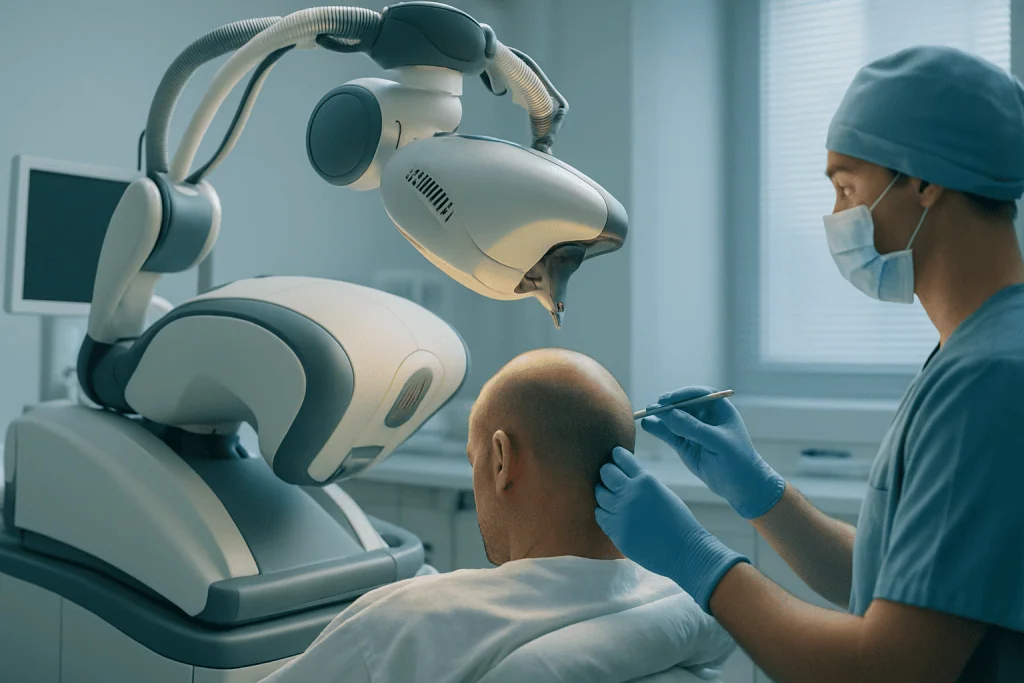
Robotic hair surgery is a hair transplant technique in which a computer-guided system assists with follicular unit extraction (FUE). Digital imaging maps the donor area, and the robotic mechanism helps harvest individual follicles with consistent precision. The physician designs the hairline, plans graft distribution and oversees the whole procedure. It suits adults with permanent, stable hair loss and sufficient donor hair, performed under local anaesthesia over several hours.
What Is Robotic Hair Surgery?
Robotic hair surgery is a hair transplant technique in which a computer-guided system assists the surgical team with follicular unit extraction, commonly known as FUE. Individual follicular units, natural groupings of one to several hairs, are removed one by one from the donor area, usually the back and sides of the scalp, then prepared and implanted into thinning or bald areas. It is intended for adults with permanent, stable hair loss who have enough healthy donor hair to support transplantation. If you are researching a robotic hair transplant, the most useful thing to understand first is what the robot actually does, and what it does not.
The robotic component assists with specific parts of the FUE process. Using digital imaging, magnification and mapping software, the system evaluates the angle, direction, density and spacing of hair follicles in the donor region. That analysis helps the medical team select appropriate grafts and harvest them with a consistent level of precision, extraction after extraction, across a session that may last several hours. The physician remains responsible for everything that determines whether the result looks right: diagnosis, candidacy assessment, hairline design, graft distribution, surgical oversight and every clinical decision made during the procedure. Robotic hair surgery is a tool in the physician’s hands, not a substitute for the physician.
Donor management is where robotic assistance earns its keep. The donor area is a finite resource. Once a follicle is removed, it does not regrow in that location, so careless or clustered harvesting can leave visible thinning at the back of the head and exhaust reserves that might be needed for future sessions. Computer-assisted mapping helps distribute extraction more evenly across the donor zone, reduce unnecessary trauma to surrounding tissue and keep the harvesting pattern consistent even late in a long session, when human fatigue would otherwise become a factor.
Unlike older strip-harvesting methods, robotic FUE does not require removing a long strip of scalp from the donor area, so there is no long linear scar. Instead, the donor area heals through many tiny extraction points, which usually become difficult to see once the scalp has healed and the surrounding hair has grown. This matters most if you prefer to wear your hair short, because a strip scar can show through a close crop while healed FUE extraction points generally do not draw the eye.
What robotic assistance does not replace is artistry. Natural hair restoration depends on medical planning and aesthetic judgement. The direction, angle, spacing and distribution of implanted follicles must match the natural behaviour of hair in each part of the scalp. A soft, slightly irregular hairline, sensible density transitions and careful placement of single-hair grafts at the front all contribute to a result that reads as hair rather than as a procedure. A robot can harvest a graft precisely; only a well-planned design can make the result look as though nothing was ever done.
What is robotic surgery for hair restoration?
Robotic surgery for hair restoration means using an image-guided robotic mechanism to perform or assist the harvesting stage of an FUE hair transplant, under the direction of a physician. In practice, the system photographs and analyses the donor area in real time, identifies follicular units that meet the parameters set by the surgical team, and then scores or extracts those units with controlled, repeatable movements. The objective is to remove each graft while minimising damage to the follicle itself and to the tissue around it, because a damaged graft is a graft that may not survive transplantation.
The term can cause confusion because “robotic surgery” is used across many medical fields, from cardiac to prostate procedures, where large console-operated systems perform complex internal operations. Robotic hair restoration is a different, far more contained application: the robot works on the surface of the scalp, on one narrowly defined task, while the diagnosis, the design and the implantation plan remain entirely human work. Understanding that boundary helps you ask the right questions, about the surgeon’s planning and experience, not just the machine.
What is an ARTAS hair transplant?
An ARTAS hair transplant is an FUE procedure performed with the ARTAS system, the most widely recognised robotic hair transplant platform and the reason many people first encounter the phrase “robotic hair surgery” at all. An ARTAS robotic hair transplant uses stereoscopic cameras and algorithms to map follicles in the donor area, calculate the angle and depth of each extraction, and harvest grafts through a robotic arm supervised by the clinical team. Later versions of the platform can also assist with creating recipient sites according to a digitally designed plan.
It is worth keeping the brand and the principle separate. An ARTAS transplant is one implementation of computer-assisted FUE; the underlying clinical logic, image-guided mapping, precise extraction, donor preservation, is shared across robotic and highly refined manual approaches. Whatever platform a clinic uses, the questions that matter are the same: who designs the hairline, who assesses your candidacy, how grafts are handled between extraction and implantation, and how the plan protects your donor area for the decades ahead. Technology is an input to the result, not the result itself.
Hair Loss and the Decision to Seek Treatment
Hair loss is rarely just a cosmetic concern. It changes how you see yourself in the mirror, how you present yourself professionally, and how comfortable you feel in photographs and social settings. Most people begin researching treatment after noticing a widening parting, a receding hairline, thinning at the crown, or a loss of density that no longer responds to topical products or medical therapy. By the time you are reading about surgery, you may already have tried shampoos, supplements, medication, cosmetic camouflage or platelet-based treatments, and you are entitled to a clear-eyed account of what surgery can and cannot add.
It is also normal to feel cautious. The questions patients ask most often are practical ones: will the result look natural, will the donor area be visibly affected, how uncomfortable is the procedure, and how much time will I need away from work? Others centre on trust, choosing a clinic, communicating clearly with the medical team, and understanding what is realistically possible for a specific pattern of hair loss. None of these concerns is trivial, and a good consultation should answer all of them before any date is set.
Robotic hair surgery was developed to address several of the recurring weak points in hair restoration: inconsistent extraction quality, uneven donor harvesting, visible linear scarring from older methods, and the difficulty of maintaining precision across a long session. It does not remove the need for judgement. A sound plan respects your age, hair characteristics, donor capacity, facial proportions, hair-loss pattern and long-term expectations, and it should look appropriate not only in the first year after treatment, but as you continue to age.
Who May Be a Candidate?
Candidates for robotic hair surgery are adults with permanent hair loss and enough healthy donor hair to support transplantation. The most common diagnosis is androgenetic alopecia, male or female pattern hair loss. In men, this typically appears as recession at the temples, thinning at the crown, or more advanced loss across the top of the scalp. In women, it more often presents as diffuse thinning over the central scalp while the frontal hairline is relatively preserved, a pattern that needs particularly careful assessment before surgery is considered; the dedicated page on hair transplant for women explains why.
You might also consider transplantation after hair loss from previous cosmetic procedures, scarring, trauma, burns or certain stable medical conditions. In selected cases, transplanted follicles can restore eyebrows or beard areas, or camouflage scars, although whether robotic harvesting is the right tool depends on the donor site, the hair characteristics and the treatment goal, and some of these indications are better served by manual techniques.
The signs that usually prompt an evaluation are familiar: a receding hairline, a thinning crown, visible scalp under bright light, reduced overall volume, an expanding part line, or hair that no longer styles the way it used to. Shedding on its own is a different matter. Sudden or widespread shedding can be caused by stress, thyroid disease, nutritional deficiency, medication effects, hormonal changes or autoimmune conditions, causes that need a diagnosis, and often medical treatment, before any surgical plan makes sense.
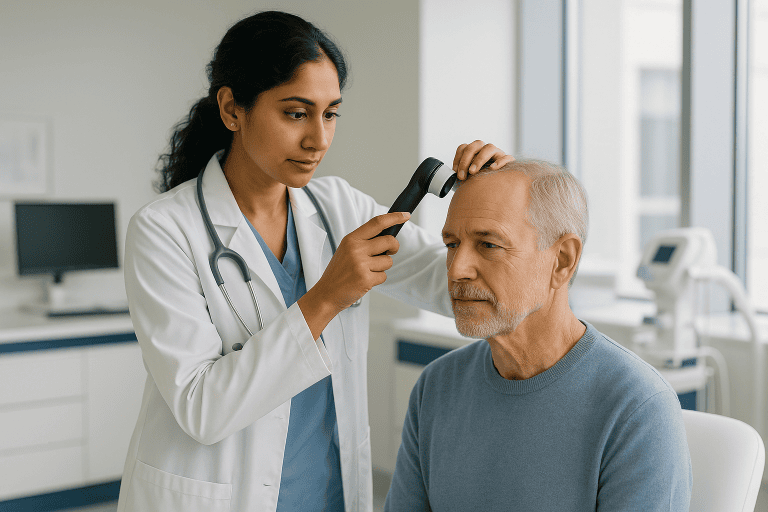
A responsible evaluation starts with a detailed medical history and a scalp examination. The physician assesses the pattern and stability of your hair loss, donor density, hair shaft thickness, scalp condition, family history, previous treatments and expectations. Digital scalp analysis or magnified imaging may be used to measure follicle density and miniaturisation. Blood tests may be recommended if there are signs of diffuse shedding, anaemia, thyroid imbalance, vitamin deficiency, hormonal disturbance or inflammatory scalp disease. This groundwork is not bureaucracy; it is what separates a plan built on your diagnosis from a plan built on a graft count.
Not everyone with hair loss is an immediate candidate. Very limited donor hair, active scalp disease, uncontrolled medical conditions, unrealistic expectations or rapidly progressing loss may all point towards medical stabilisation first, or towards a different plan altogether. Younger patients with early hairline recession need especially conservative planning, because their eventual pattern of loss is not yet clear. A hairline placed too low or built too dense in your twenties can look distinctly unnatural in your forties if the surrounding native hair keeps thinning.
Good candidates share a few traits: stable or predictable hair loss, sufficient donor reserves, realistic expectations, and a willingness to follow post-operative care instructions. They also understand the central truth of the field: a hair transplant redistributes existing permanent hair; it does not create new follicles. Medical therapy may still be recommended to protect non-transplanted hair and slow future thinning where appropriate, as part of a plan rather than instead of one.
Conditions and Indications the Procedure Can Address
Robotic hair surgery is most useful for permanent forms of hair loss where healthy donor follicles can be moved into areas of reduced density. The leading indication is androgenetic alopecia. In this condition, genetically sensitive follicles gradually miniaturise under hormonal influence, producing finer, shorter hairs until density visibly falls. Follicles in the donor region, especially the back and sides of the scalp, are typically more resistant to this process, which is precisely why they are the source for transplantation and why they usually keep growing after being moved.
In men, the surgical plan may target frontal recession, temple recession, crown thinning, or more extensive loss across the top of the scalp. Depending on donor capacity and the severity of loss, treatment may focus on restoring the frontal frame of the face, improving crown coverage, increasing density in selected zones, or combining these goals across one or more sessions. The frontal frame usually delivers the greatest cosmetic return per graft, which is why crown work is often staged for later.
In women, robotic transplantation can be appropriate when the loss follows a transplantable pattern and donor density is adequate. Female pattern loss is frequently diffuse, so the evaluation has to establish whether the donor area itself is affected by miniaturisation; if it is, transplantation may not deliver the density you are hoping for. When a woman is a good candidate, treatment can improve the visible part line, central scalp density or frontal density while preserving a natural appearance.
Robotic FUE may also be considered for selected patients with scarring alopecia, but only once the disease is inactive and stable. Transplanting into scar tissue demands careful assessment, because the blood supply and tissue quality differ from normal scalp and graft survival is harder to predict. Patients with scars from previous surgery, injury, burns or older transplant techniques can benefit from targeted graft placement that softens or camouflages the visible area.
Some patients arrive not with untreated hair loss but with the legacy of an earlier transplant they are unhappy with. Revision planning is complex: the physician must evaluate the existing graft direction, density, scarring, how much donor has already been used, and how your native loss has progressed since. A conservative, staged approach is often recommended, and the principles are covered in more depth on the hair transplant repair page. Robotic harvesting can help in these cases by making the most of a depleted donor area, but it cannot recreate donor hair that is already gone.
Robotic FUE is not suitable for temporary shedding, untreated inflammatory scalp disease, active or unstable alopecia areata, or hair loss caused by a correctable medical condition. In those situations, identifying and treating the underlying cause comes first, and any discussion of surgery waits until the picture is stable.
How Robotic Hair Surgery Is Performed
The process begins well before the procedure day. At consultation, the physician reviews your medical history, hair-loss timeline, previous treatments, current medications, allergies and any health conditions that could affect surgery or healing. Photographs and scalp measurements document baseline density and define the treatment zones. Part of this initial evaluation is sometimes carried out remotely with medical photographs and health information, but an in-person assessment before the procedure confirms, or revises, the preliminary plan.
Planning is the stage that most determines the outcome. The physician decides whether robotic FUE is appropriate for you, estimates the number and type of grafts required, evaluates the donor area, and explains what coverage is realistic. Hairline design accounts for facial proportions, age, ethnic characteristics, hair direction and, crucially, future loss. A natural hairline is not a straight line: it carries subtle irregularities, softer density at the leading edge, and single-hair grafts at the front. A hairline drawn for the face you have at sixty, not just the face you have today, is the mark of careful work.
On the day itself, a typical robotic session moves through a defined sequence:
- Preparation. The scalp is cleaned and prepared. Depending on the robotic system and the plan, the donor area is usually trimmed or shaved so the imaging cameras can accurately read follicle angles and spacing. If keeping your hair unshaved matters to you, this preference affects which technique is suitable and should shape the plan from the start.
- Anaesthesia. The procedure is usually performed under local anaesthesia, with the donor and recipient areas numbed. Sedation may be considered in selected cases, depending on your medical condition and the clinical setting. The team monitors you throughout the session.
- Robotic harvesting. Computer-assisted imaging maps the donor region and identifies follicular units suitable for extraction, analysing hair angle, direction, density and spacing. Guided by the physician’s parameters, the robotic mechanism assists in scoring or extracting each unit with precise, repeatable movements, aiming to remove the graft intact while sparing the surrounding tissue.
- Graft handling. Harvested grafts are inspected, sorted, counted and kept in controlled conditions to protect their viability. Units containing one, two, three or more hairs are separated, because they serve different aesthetic purposes: single-hair grafts create softness at the hairline, while multi-hair grafts build density behind it.
- Recipient site creation. The physician creates tiny sites in the thinning or bald region at the planned angle, direction, depth and density. This step has the largest impact on naturalness. Hair grows in different directions across the scalp: the hairline, temples, mid-scalp and crown each demand a different pattern, and the crown often follows a spiral that graft direction must respect.
- Implantation. Grafts are placed into the recipient sites using fine instruments or implanter-based techniques, matching graft size and hair count to each location. Density is set to balance cosmetic improvement against graft survival and donor preservation; packing grafts too tightly can compromise the local blood supply, which is why restraint here is a feature, not a shortcoming.
Session length varies with the size of the plan. The procedure may take several hours, particularly when a large number of grafts is needed, and some patients are better served by staged sessions, either to cover larger areas or to protect donor reserves. You can usually return to your accommodation the same day with written instructions and a follow-up schedule.
Technology supports precision at several points along this pathway: digital imaging and magnification for assessing follicular direction and density, computer-assisted mapping for distributing extraction evenly, planning tools for documenting treatment zones and estimating graft needs, and refined instruments for tiny incisions and gentle graft handling. None of it replaces physician expertise. What it can do is improve consistency and support controlled, well-documented decision-making across a long procedure.
Is robotic hair surgery better?
Robotic hair surgery is not automatically better than expert manual FUE: it is a different way of achieving the same clinical goals, with specific strengths and specific limits. Its strengths are consistency and donor mapping: the system does not tire, and its extraction pattern stays even across a long session. Its limits are equally real: robotic platforms work best on straight or gently waved hair with good colour contrast against the scalp, and they cannot design a hairline, judge candidacy or decide how densely to place grafts. Very curly hair, some revision cases and certain body-hair harvests are often handled better manually.
The honest answer, then, is that the surgeon matters more than the machine. An experienced team with a robotic system can produce excellent, consistent harvesting; an experienced team without one can too. What no technology rescues is a poor plan: a hairline set too low, a donor area over-harvested, or a candidate operated on before their hair loss was understood. Judge a clinic by its planning and its honesty about your individual case, and treat the robot as one factor among several.
How does robotic FUE compare with manual FUE and DHI?
Robotic FUE, manual FUE hair transplant techniques and DHI hair transplant all move individual follicular units rather than a strip of scalp; the differences lie in who or what performs the extraction and how grafts are implanted. In robotic FUE, the machine assists harvesting under supervision. In manual FUE, the surgeon or technician performs each extraction by hand with a fine punch. In DHI, grafts are loaded into an implanter pen and placed directly, combining site creation and implantation into one motion. Each method can produce natural results in the right hands and the right candidate; the choice depends on your hair characteristics, the size of the plan, whether shaving is acceptable to you, and the team’s experience with each technique.
Key Benefits
The benefits you can realistically expect depend on your candidacy, donor quality, the surgical plan and how well you follow post-operative care. With that caveat stated plainly, the main advantages of robotic hair surgery are these:
| Benefit | What It Means for You |
|---|---|
| Computer-assisted follicle mapping | The donor area is evaluated with digital imaging to identify follicle direction, density and spacing before and during extraction. |
| Precise FUE harvesting | Individual follicular units are removed without a long linear incision, which may reduce visible scarring compared with strip harvesting. |
| Donor-area preservation | Even, mapped extraction patterns help protect the remaining donor hair, important if you ever need further treatment. |
| Consistency across long sessions | The system’s extraction quality does not drift with fatigue, supporting uniform harvesting from the first graft to the last. |
| Natural design possibilities | Grafts can be placed according to hairline shape, facial proportions, hair direction and density goals, so the result blends with your existing hair. |
| Shorter initial downtime for many patients | Most patients return to light daily activities within a few days, although visible growth and cosmetic maturation take months. |
| Useful for selected revision cases | Robotic FUE can help harvest grafts efficiently from a partially depleted donor area after previous hair restoration, where reserves allow. |
Recovery Timeline: What to Expect
Recovery is gradual and follows a predictable rhythm: the scalp heals first, then the transplanted follicles enter a resting phase before new growth becomes visible. Knowing this in advance spares you unnecessary worry in the early weeks, when the mirror can be discouraging even though everything is proceeding normally.
| Time Period | What You Can Expect |
|---|---|
| Day 1 | Mild soreness, redness, swelling or tightness may occur. You receive instructions covering sleeping position, medications and protecting the grafts. |
| First week | Tiny scabs are visible around grafts and donor sites. Gentle washing begins as instructed. Most patients resume light activities while avoiding strenuous exercise. |
| Weeks 2 to 4 | Many transplanted hairs shed: a normal part of the hair cycle, not a sign the grafts have failed. Redness fades and the donor area settles. |
| First month | The scalp usually looks well healed, but visible new growth is limited. Continue protecting the scalp from sun exposure and trauma. |
| Months 3 to 6 | New hairs begin to appear and thicken gradually. Early changes are often subtle, with improvement becoming more noticeable over time. |
| Longer term | Density and texture continue to mature. The final cosmetic assessment is made only after the hair has had time to grow and complete its cycle. |
After the procedure the scalp may feel tight, tender or mildly swollen, and tiny scabs form around the transplanted grafts and extraction points. You will be given specific guidance on sleeping position, washing technique, activity limits, sun protection and medication use. The shedding of transplanted hairs in the weeks after surgery deserves repeating, because it alarms patients more than anything else in the recovery period: it is expected, it is temporary, and it does not mean the follicles have been lost. New growth typically begins gradually over the following months.
How Much Does Robotic Hair Surgery Cost?
There is no single honest number for the cost of robotic hair surgery, because pricing depends on variables that differ for every patient: the number of grafts your plan requires, whether one session or staged sessions are recommended, the complexity of the case (a first-time frontal restoration prices differently from a revision of previous work), the technology used, the experience of the surgical team, and the clinical setting in which the procedure takes place. Any clinic quoting a fixed price before evaluating your scalp is quoting a product, not a treatment.
Whatever quotation you receive, the sensible way to read it is to ask what it covers: the medical evaluation, the procedure itself, medications, aftercare products, follow-up reviews, and whether a revision policy exists if growth disappoints. A quotation that itemises these elements tells you far more about a clinic’s approach than a headline figure ever can, and it makes genuine comparison between offers possible: you are comparing the same care, not just different numbers attached to different levels of service.
Two cautions serve you well. First, cost per graft is a crude metric: a smaller number of well-planned, well-placed grafts often produces a better and longer-lasting result than a larger number placed without regard to your future hair loss. Second, the cheapest quotation can become expensive if it leads to over-harvesting of your donor area, since donor hair cannot be replaced and corrective work is harder than getting it right the first time. Weigh planning quality and clinical governance at least as heavily as the figure on the quote.
Why Acting Early Matters and the Risks of Delay
Hair restoration does not need to be rushed, but timely evaluation makes planning considerably more effective. If you wait until hair loss is advanced, the area needing coverage may be larger than your donor supply can fully address. Because donor follicles are finite, earlier assessment lets the physician discuss medical therapy, stabilisation and a long-term plan before donor resources come under strain, which often means better options, not just earlier surgery.
Delay can also allow treatable causes of hair loss to progress unrecognised. Not all hair loss is genetic. Iron deficiency, thyroid disease, inflammatory scalp disorders, hormonal changes, medication effects and autoimmune conditions may all require medical treatment in their own right. If these causes are not identified, surgery may be ineffective or simply mistimed, and the underlying condition continues untreated.
For androgenetic alopecia specifically, early medical management may help preserve the hair you still have. Transplanted hair improves coverage, but it does not stop native hair around it from thinning. Someone who delays evaluation may lose more surrounding hair in the meantime, requiring a more complex surgical plan later, sometimes multiple staged sessions simply to maintain a balanced appearance as native loss progresses around earlier work.
There are quieter reasons too. Hair loss erodes self-image gradually, over years, and many patients report that the uncertainty was worse than the diagnosis. An evaluation does not commit you to surgery; it gives you clarity about the cause, your candidacy, sensible timing and realistic options, including the option of doing nothing surgical for now. Early planning also leaves comfortable time to organise recovery days and follow-up rather than compressing them.
Factors That Influence Outcomes and a Good Result
The outcome of robotic hair surgery rests on several medical and aesthetic factors, and it is worth understanding them before you commit. The first is diagnosis. Surgery works best when hair loss is permanent, stable or predictable, and genuinely appropriate for transplantation. If your shedding stems from a temporary or untreated medical condition, moving follicles around will not address the underlying problem.
Donor quality is the second major factor. Dense donor hair, thicker hair shafts, favourable curl and good contrast between hair and scalp colour all improve the visual impression of coverage. If your hair is very fine or your donor density limited, you may still benefit, but expectations have to be calibrated. Transplantation creates the impression of improved density; it does not restore the absolute number of hairs you had in youth, and no reputable clinic will tell you otherwise.
The pattern and extent of loss matter just as much. A modest frontal recession needs far fewer grafts than advanced thinning across the front, mid-scalp and crown. The crown is notoriously demanding: its circular growth pattern and large visual surface consume grafts quickly. For many patients, restoring the frontal frame of the face delivers the greatest cosmetic value, with crown work planned for a later stage once the first result has matured and donor reserves have been reassessed.
Hairline design is central to whether the result convinces. A hairline that is too low, too straight or too dense at the front tends to look manufactured, and looks more so as you age around it. A mature, individualised design generally improves with time rather than against it. The physician must also plan for the loss you have not yet had, holding back enough donor hair for future needs rather than spending it all on today’s photograph.
Graft handling and placement influence both survival and appearance. Follicles are living tissue: they must be protected from drying, trauma and prolonged time outside the body. Recipient sites must be created at the correct depth and angle, and grafts distributed strategically, single-hair units at the hairline, larger units where density is needed. These are craft skills, exercised graft by graft, thousands of times per session.
Your own health and habits complete the picture. Smoking, uncontrolled diabetes, poor nutrition, certain medications and casual aftercare can all interfere with healing. Follow the washing instructions, resist scratching or picking scabs, protect the scalp from sun, and attend the follow-up reviews. Long-term management is often part of a good result too: many patients continue losing non-transplanted hair over time, and medical treatment may be recommended to stabilise it, depending on diagnosis and suitability. A responsible plan looks past the surgical session to your future pattern of loss.
Will hair cloning be available in 2026?
No, hair cloning and follicle multiplication remain experimental, and no regulated, clinically proven cloning treatment is expected to be generally available in 2026. Research into culturing or multiplying follicle cells has been running for years and continues to make headlines, but turning laboratory results into a safe, consistent clinical therapy is a long path involving trials and regulatory approval. For now, the practical options remain transplantation of your existing permanent follicles and medical or non-surgical hair restoration approaches to protect the hair you have. Planning your treatment around a technology that does not yet exist would be a mistake; planning it so that future advances can still help you, chiefly by preserving your donor area, is simply good sense.
Robotic Hair Restoration at Acibadem
At Acibadem, robotic hair restoration sits within a hospital-based hair transplant practice rather than a standalone cosmetic shop, and that context shapes how cases are handled. The physician evaluates your pattern of hair loss, donor capacity, scalp health, hair characteristics, age, expectations and previous treatments before any technique is proposed. The resulting plan may include robotic FUE, medical therapy, staged surgery, or a recommendation to wait, if the timing is not right. That level of judgement matters most for younger patients, women with diffuse thinning, and anyone seeking revision after a previous procedure.
The hospital setting supports the parts of hair restoration that patients rarely see advertised: careful pre-operative evaluation, sterile procedural conditions, appropriate anaesthesia protocols, and access to broader medical expertise when a case needs it. Some patients have dermatologic, endocrine, nutritional or surgical considerations that a hair clinic working in isolation cannot fully assess; within a large healthcare group, coordination with the relevant specialists is part of normal practice rather than an exception.
Technology is used to support precision, not to headline it. Computer-assisted imaging and follicle mapping guide donor assessment and extraction; magnification, digital planning, refined instruments and controlled graft handling support the technical stages. The purpose of these tools is specific: protect donor resources, reduce unnecessary tissue trauma, and place grafts according to a carefully designed aesthetic plan. They serve the design; they do not replace it.
The practical pathway is structured around clarity. The in-person consultation confirms candidacy before any procedure goes ahead, and you are told in advance about preparation, the likely length of the session, aftercare, recovery restrictions and follow-up expectations. Hairline preferences, expectations and aftercare instructions are worked through precisely, not approximately, because in hair restoration a misunderstanding at the planning stage becomes visible on your head. If you are not a suitable candidate, the medical team explains why and discusses alternatives.
The underlying approach is deliberately unglamorous: realistic recommendations and individualised planning rather than a standard graft number or a template hairline. Robotic assistance improves aspects of FUE harvesting, but the quality of care still depends on candidacy assessment, surgical planning, hairline design, graft handling and follow-up: the same fundamentals that have always separated good hair restoration from disappointing hair restoration.
Making Your Decision
Robotic hair surgery can be an effective option if you want natural-looking hair restoration with computer-assisted FUE harvesting and no linear donor scar, provided you are a genuine candidate. The most important step is not choosing a machine, a graft count or even a country; it is a careful evaluation that establishes the cause of your hair loss, measures your donor capacity, reviews your medical background, and explains honestly what level of coverage is achievable for your hair type and pattern of thinning.
Take your time with the decision. Compare how different clinics plan, not just what they charge or which platform they advertise. A team that tells you what surgery cannot do for you, and when waiting or medical therapy would serve you better, is demonstrating exactly the judgement you want standing behind a procedure whose results you will wear, visibly, for the rest of your life.
Preparation
- Before robotic hair surgery, the scalp and hair loss pattern are evaluated, and donor area suitability is assessed. Patients may be asked to stop blood-thinning medicines or supplements if medically appropriate. Alcohol and smoking should be avoided before the procedure to support healing.
Aftercare
- Mild swelling, redness, or tenderness can occur for a few days after the procedure. Patients should protect the scalp, avoid strenuous exercise, and follow washing and medication instructions carefully. Transplanted hair may shed initially before gradual regrowth begins over the following months.
Frequently Asked Questions
What affects the cost of robotic hair surgery?
Cost is influenced by the size of the area to be restored, donor hair quality, the recommended technique, surgeon and team involvement, technology use, facility standards and what is included in the patient package. A personalised quote requires medical photos or an in person assessment.
How can I get a personalised quote from Acibadem?
You can request a free consultation with the international patient team. A specialist will review your hair loss pattern, donor area, medical background and goals before advising whether robotic hair surgery is suitable and what the package may include.
Is robotic hair surgery always more suitable than manual FUE?
Not always. Robotic assisted FUE can support precise mapping and harvesting in suitable candidates, but manual FUE or another approach may be recommended depending on hair type, donor area, treatment area and surgeon assessment.
What is usually included in an international patient package?
Packages may include consultation, scalp assessment, procedure planning, local anaesthesia, post procedure medications, follow up guidance, interpreter support, airport transfers and hotel coordination. Inclusions should always be confirmed before travel.
Can the final cost change after consultation?
Yes. The plan may change if the specialist finds that the donor area, hair density, scalp condition or expected graft requirement differs from the initial information. This is why a clinical assessment is important before confirming treatment details.
Is this information medical or financial advice?
No. This is general information for comparison purposes only. Treatment suitability, expected outcomes and package details should be discussed during a free consultation with a qualified specialist and patient services team.
Medically reviewed by the Acıbadem International Medical Board August 31, 2026
See our medical review board →
Update history
- PublishedJune 8, 2026
- Medical review approvedAugust 31, 2026
- Last content updateAugust 31, 2026
References1
- Hair Loss medlineplus.gov
Trusted care for international patients
From the Acibadem Blog
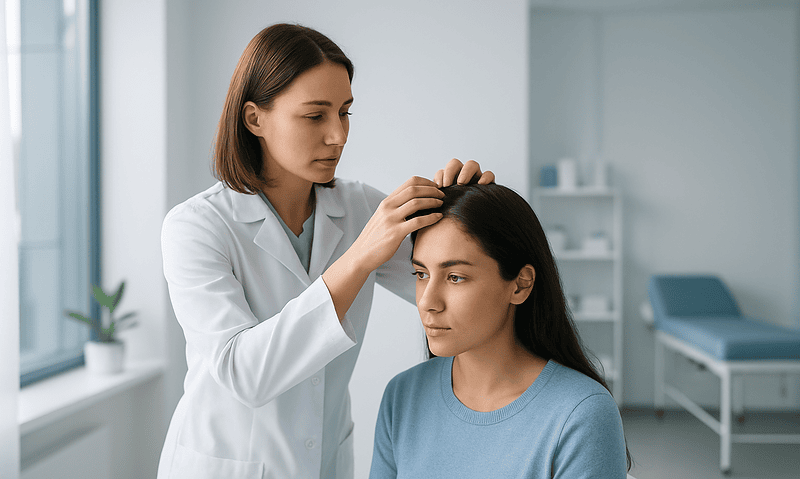
Who Is a Candidate for Robotic Hair Surgery? Why Hair Color, Curl and Contrast Matter
A typical robotic hair surgery candidate has stable, pattern-type hair loss, a dense donor area at the back and sides of the scalp, and…
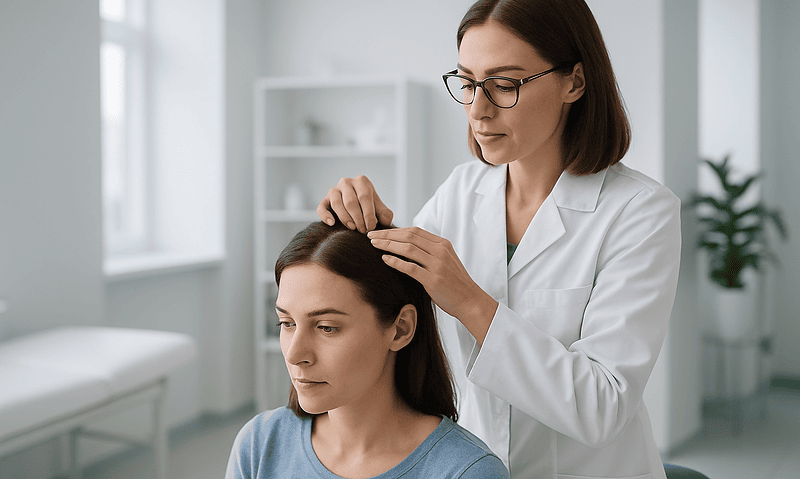
What Happens in Robotic Hair Surgery: Follicle Mapping, Harvesting and the Surgeon’s Role
In a robotic hair surgery procedure, a surgeon-supervised robotic arm uses cameras and software to map follicular units on the back of the scalp,…