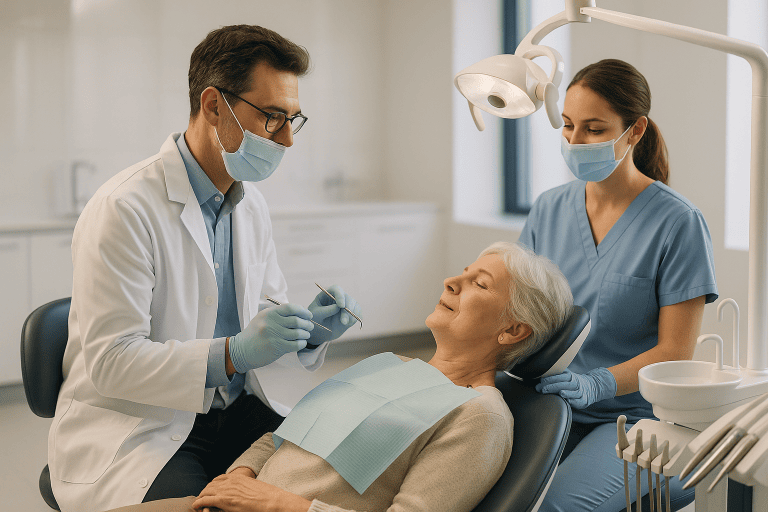
Sinus Lift
A sinus lift, or sinus augmentation, is an oral surgery that raises the floor of the maxillary sinus and fills the space with bone graft material, creating enough bone height in the…
Quick answer
A sinus lift is a bone-grafting surgery that adds bone to the upper back jaw beneath the maxillary sinus so that dental implants can be placed securely. It is typically done under local anesthesia as an outpatient procedure. Early recovery takes about a week, while the graft usually needs four to nine months to mature.
What is a sinus lift?
A sinus lift, also called sinus augmentation or sinus floor elevation, is a type of oral surgery that adds bone to the upper jaw in the area of the back teeth (the molars and premolars). The goal is to create enough bone height so that a dental implant, a small screw-shaped post placed in the jaw to support an artificial tooth, can be anchored securely.
Above the upper back teeth sit the maxillary sinuses, which are air-filled spaces in the cheekbones on either side of the nose. When upper back teeth are lost, the bone that once held them tends to shrink over time, and the sinus may gradually expand downward into the space. The result is a thin layer of bone between the mouth and the sinus. During a sinus lift procedure, the surgeon gently lifts the thin membrane that lines the sinus and places bone graft material into the space underneath it. Over the following months, the graft is gradually replaced by the patient’s own new bone.
A sinus lift is not a treatment for sinus disease. It is a bone-building step carried out before, or sometimes at the same time as, dental implant placement. It is used mainly in these situations:
- Long-standing tooth loss in the upper jaw that has led to bone shrinkage
- Gum disease (periodontitis) that has destroyed supporting bone around the upper back teeth
- Naturally large maxillary sinuses that sit close to the roots of the teeth
- Bone loss after trauma, infection, or removal of a cyst or tumor in the upper jaw
In hospital settings, this procedure is usually managed by the oral and maxillofacial surgery or dental and oral health department, often in close coordination with the dentist who will later fit the implant crown.
Who is a candidate
Understanding who needs a sinus lift starts with a simple measurement: how much bone is left between the top of the jaw ridge and the floor of the sinus. Dental implants generally need a certain minimum height of solid bone to be stable. If imaging shows that this height is insufficient, a sinus lift may be recommended. Your surgeon may suggest it if you:
- Are missing one or more upper back teeth and want implants rather than a removable denture or a bridge
- Have had upper back teeth removed many years ago, allowing the bone to thin
- Have a sinus floor that sits unusually low, even without major bone loss
- Have generally healthy gums and are able to keep the mouth clean during healing
A sinus lift is not suitable for everyone. Your surgeon may advise against it, or may recommend delaying it, in the following circumstances:
- Active sinus infection (sinusitis) or chronic sinus disease that has not been treated
- Untreated gum disease or active dental infection near the planned site
- Heavy smoking, which slows healing and raises the chance that the graft will fail
- Uncontrolled diabetes or other conditions that impair wound healing
- Certain medicines, such as some drugs used for osteoporosis or cancer that affect bone turnover, which can increase the risk of jawbone problems after surgery
- Previous radiation therapy to the head and neck, which changes how bone heals
- Blood-clotting disorders or blood-thinning medication that cannot be safely adjusted
In some of these cases, treating the underlying problem first, for example clearing a sinus infection or stopping smoking, may make the procedure possible later. In others, an alternative such as shorter implants, angled implants, or a fixed bridge may be discussed. Only a specialist who has examined you and reviewed your scans can advise which option is appropriate.
How the procedure works
The sinus lift procedure is usually performed in a dental surgery suite or outpatient operating room. Most people go home the same day. The exact technique depends on how much bone needs to be added, but the overall sequence is similar.
Before surgery. You will have a detailed oral examination and imaging. A cone-beam computed tomography (CBCT) scan, a type of three-dimensional dental X-ray, is commonly used to measure bone height, check the shape of the sinus, and look for signs of sinus disease. The surgeon will review your medical history and medications and explain the type of graft material that will be used. Graft material may come from your own body (for example, from another part of the jaw), from processed donor bone, from animal-derived bone mineral, or from synthetic materials. Combinations are also common.
Anesthesia. A sinus lift is usually done under local anesthesia, meaning the area is numbed with injections while you stay awake. Many clinics also offer sedation, medicine given by mouth or through a vein that makes you relaxed and drowsy. General anesthesia, in which you are fully asleep, is less common but may be used for larger or combined procedures.
During surgery. There are two main approaches:
- Lateral window technique. The surgeon makes an incision in the gum on the side of the upper jaw and creates a small opening in the outer bone wall of the sinus. The sinus membrane is carefully lifted upward, and graft material is packed into the space created beneath it. A thin protective membrane may be placed over the window before the gum is stitched closed. This approach is often chosen when a larger amount of bone is needed.
- Crestal (transalveolar) technique. The surgeon works through the top of the jaw ridge, where the implant will eventually go. The sinus floor is gently pushed upward through the implant site using specialized instruments, and graft material is added. This approach involves a smaller incision and is typically used when only a modest increase in bone height is required.
In some cases, the implant is placed at the same time as the graft. In others, the surgeon waits several months for the graft to mature before placing the implant. The choice depends largely on how much natural bone is present to hold the implant stable from the start.
After surgery. You will rest briefly while the numbness or sedation wears off. Written instructions are usually provided covering medication, diet, oral hygiene, and activities to avoid. A follow-up visit is generally scheduled within one to two weeks to check healing and remove any stitches that do not dissolve on their own.
Preparation for a sinus lift
Good preparation helps reduce complications and supports healing of the graft. Your surgical team will give personalized instructions, but the following points apply in many cases:
- Share your full medical history. Mention any sinus problems, allergies, bleeding tendencies, diabetes, heart conditions, and all medicines and supplements you take, including blood thinners and bone-related drugs.
- Treat dental and sinus problems first. Gum disease, decayed teeth, or a current sinus infection may need to be addressed before surgery.
- Stop smoking. Surgeons commonly ask patients to stop smoking for a period before and after the procedure because tobacco use is strongly linked to graft failure and poor wound healing.
- Follow fasting instructions if sedation or general anesthesia is planned. You will usually be told not to eat or drink for a set number of hours beforehand.
- Arrange transportation. If you receive sedation, you will not be allowed to drive afterward and should have someone accompany you home.
- Plan your schedule. Many people take a few days off work or school to rest and manage swelling.
- Stock up on soft foods and any prescribed medication so that you can rest once you are home.
Recovery and aftercare
Sinus lift recovery time has two parts: the early recovery from the surgery itself, which is relatively short, and the longer period during which the graft turns into solid bone.
The first few days. Swelling of the cheek and some bruising are common and usually peak around the second or third day before gradually settling. Mild to moderate discomfort is expected and is typically managed with the pain relievers your surgeon recommends. A small amount of bleeding from the nose or the surgical site during the first day or two is not unusual. Many patients feel able to return to desk work and light daily activities within a few days to a week.
Protecting the sinus. Because the sinus membrane is delicate after surgery, you will typically be asked for about two to four weeks to:
- Avoid blowing your nose; if you need to sneeze, do so with your mouth open
- Avoid drinking through a straw, sucking on candies, or spitting forcefully
- Avoid flying, scuba diving, or other activities that involve pressure changes, unless your surgeon says otherwise
- Avoid heavy lifting and strenuous exercise, which can increase blood pressure and bleeding
Diet and hygiene. Soft, cool foods are generally advised at first, progressing to a normal diet as comfort allows. Chewing on the operated side should be avoided until your surgeon confirms healing. Gentle rinsing with a saltwater solution or a prescribed mouth rinse is often recommended, along with careful brushing that avoids the surgical site.
Medication. Antibiotics, anti-inflammatory drugs, and sometimes a nasal decongestant spray may be prescribed. It is important to complete any prescribed course as directed.
The longer timeline. The bone graft typically needs about four to nine months to mature before an implant can be placed or, if the implant was placed at the same time, before it can be loaded with a crown. Your surgeon will confirm readiness with follow-up imaging. The full treatment from sinus lift to a finished tooth can therefore take the better part of a year in many cases.
Risks and side effects
Weighing sinus lift risks and benefits is an important part of deciding whether to proceed. Most sinus lifts are completed without serious problems, but as with any surgery, complications can occur.
Common, usually temporary effects include swelling, bruising, mild pain, a feeling of pressure or congestion in the sinus, minor nosebleeds, and some stiffness when opening the mouth.
Less common complications include:
- Tearing (perforation) of the sinus membrane. This is the most frequent surgical complication. Small tears can often be repaired during the operation; larger tears may mean the graft has to be postponed.
- Infection of the surgical site, the graft, or the sinus itself. Signs include worsening pain, swelling, fever, and foul-smelling discharge.
- Graft failure, where the new bone does not form as expected. Smoking, infection, and membrane tears increase this risk.
- Sinusitis (inflammation of the sinus lining), which may cause congestion, facial pain, and postnasal drip after surgery.
- Displacement of graft material or an implant into the sinus cavity, which may require further surgery.
- Bleeding that is heavier than expected, particularly in people taking blood-thinning medication.
- Numbness or altered sensation in the cheek, gum, or teeth, which is usually temporary but can occasionally persist.
- An abnormal opening (fistula) between the mouth and the sinus, which is rare but can need additional treatment.
The main benefits are that a sinus lift can make dental implants possible where they would otherwise not be an option, and it can help preserve the shape of the upper jaw. Your surgeon should discuss how these benefits and risks apply to your particular situation, including how alternatives such as shorter implants or bridges compare.
Results and outlook
Clinical experience over several decades has shown that a sinus lift is a well-established and generally reliable way to build bone in the upper jaw, and implants placed into grafted sinus bone perform, in the long term, in a broadly similar way to implants placed into natural bone. Outcomes tend to be best when the patient does not smoke, has good general health, keeps the mouth clean, and follows aftercare instructions closely.
The graft itself is gradually remodeled into the patient’s own bone. Some loss of graft height over time is normal and is taken into account when the surgeon plans the amount of material to place. Once an implant is stable and a crown is fitted, most people can chew normally on that side. Long-term success also depends on ongoing care of the implant, including regular professional cleaning and daily hygiene, because implants can develop gum inflammation and bone loss in a similar way to natural teeth.
If a graft fails, it is often possible to repeat the procedure after the area has healed, although this extends the total treatment time. Your surgeon can explain what is realistic for your individual case.
Cost considerations
The cost of a sinus lift varies widely, and it is usually quoted as part of an overall implant treatment plan rather than on its own. Factors that commonly influence the price include:
- The surgical technique used and the amount of bone that must be added
- The type and quantity of graft material, and whether a protective membrane is needed
- Whether one side or both sides of the upper jaw are treated
- The type of anesthesia, particularly if sedation or general anesthesia is chosen
- Imaging, including three-dimensional scans before and after surgery
- The number and type of implants and crowns placed later
- Follow-up visits over the months of healing and any additional procedures needed if complications arise
- Whether the treatment is done in a hospital or an outpatient clinic
Insurance coverage differs greatly between plans and countries; many plans treat sinus lifts and implants as elective dental procedures, so patients should check what is included before starting treatment. A written, itemized treatment plan can help clarify which stages are included in a quotation.
Frequently asked questions
How painful is a sinus lift procedure?
During the procedure itself, local anesthesia means you should not feel pain, although you may feel pressure or vibration. Afterward, most people describe soreness and pressure rather than severe pain, and this is usually controlled with the pain relievers your surgeon recommends. Discomfort typically eases over the first week. Pain that becomes worse instead of better should be reported to your surgical team.
How long is sinus lift recovery time?
Many patients return to light daily activities within a few days to a week, once swelling and tenderness settle. However, the bone graft usually needs about four to nine months to mature before an implant can be placed or loaded. Your surgeon will confirm the timing with follow-up imaging, so the exact recovery time varies from person to person.
Who needs a sinus lift before dental implants?
A sinus lift is typically recommended for people who want implants in the upper back jaw but do not have enough bone height between the jaw ridge and the sinus floor to hold an implant securely. This is common after long-standing tooth loss, gum disease, or when the sinus naturally sits low. A three-dimensional scan is usually needed to make this assessment.
What are the main sinus lift risks and benefits?
The main benefit is that it can make dental implants possible when there would otherwise be too little bone. The main risks include tearing of the sinus membrane, infection, sinus inflammation, and failure of the graft to form solid bone. Most complications are uncommon and manageable, but your surgeon should discuss how these apply to you and what alternatives exist.
Can a sinus lift and dental implant be done at the same time?
In some cases, yes. If there is enough existing bone to hold the implant firmly while the graft heals, the surgeon may place both in a single operation. When the remaining bone is very thin, a staged approach is often preferred, with the implant placed several months after the graft has matured. Your surgeon will recommend the approach based on your scan.
Is a sinus lift a hospital procedure or an outpatient procedure?
It is most often performed as an outpatient procedure under local anesthesia, sometimes with sedation, and patients typically go home the same day. A hospital setting with general anesthesia may be considered for larger or combined procedures, or for patients with medical conditions that need closer monitoring.
Will a sinus lift affect my breathing or cause sinus problems?
A properly healed sinus lift does not usually affect breathing, because the sinus still has ample space for air. Temporary congestion and pressure are common in the first weeks. Persistent sinus symptoms after healing are uncommon but can occur, particularly if the membrane was torn or if infection develops, and should be assessed by your surgeon.
When to see a doctor
You may wish to be assessed by an oral surgeon or implant dentist if you are missing upper back teeth and are considering implants, if a previous dentist has told you that you have insufficient bone, or if you have worn a removable denture for many years and are exploring fixed alternatives. A specialist assessment with three-dimensional imaging is the only way to determine whether a sinus lift is needed and suitable for you.
After a sinus lift, contact your surgical team promptly if you notice:
- Pain or swelling that worsens after the third day instead of improving
- Fever, chills, or a general feeling of being unwell
- Pus or a foul taste or smell coming from the surgical site or the nose
- Small granules of graft material appearing in your nose or mouth
- Bleeding that does not stop with gentle pressure, or repeated nosebleeds
- Stitches that come loose early or a wound that opens
- Persistent nasal congestion, facial pain, or discharge on the operated side
- Air passing between your mouth and nose when you drink or breathe
Seek urgent medical care if you have difficulty breathing, severe swelling that spreads toward the eye or neck, sudden vision changes, or heavy bleeding that will not stop. These situations are rare but require immediate evaluation.
Preparation
- Share your full medical history and all medications, including blood thinners and bone-related drugs, with your surgeon. Any gum disease, dental infection, or sinus infection is usually treated first. Stop smoking for the period your surgeon advises, follow fasting instructions if sedation is planned, and arrange for someone to drive you home.
Aftercare
- Expect swelling and mild discomfort for several days, managed with recommended pain relievers and cold compresses. For about two to four weeks, avoid blowing your nose, using straws, spitting forcefully, flying, and strenuous exercise. Eat soft foods, keep the mouth clean as instructed, complete any prescribed antibiotics, and attend all follow-up visits.
Medically reviewed by the Acıbadem International Medical Board September 13, 2026
See our medical review board →
Update history
- PublishedSeptember 13, 2026
- Medical review approvedSeptember 13, 2026
- Last content updateSeptember 13, 2026
References2
From the Acibadem Blog
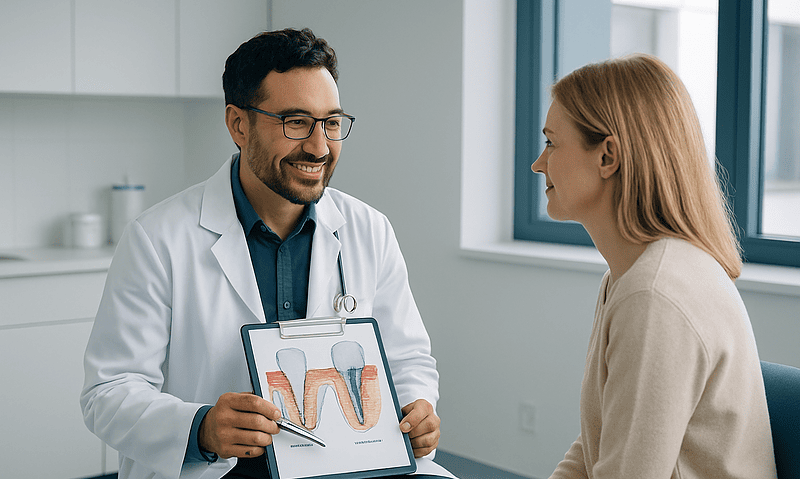
Lateral Window vs Crestal Sinus Lift: How Bone Height Decides Which Technique Is Used
A lateral window sinus lift opens a small side window in the upper jaw to lift the sinus lining and add bone, while a…

Sinus Lift Complications Explained: Membrane Tears, Sinus Infection and Signs That Need a Call
Sinus lift complications are uncommon but real. The most frequently reported problem during surgery is a tear in the thin sinus membrane, which the…