Red Eye: An Evidence-Based Guide for Patients

Red eye can result from minor irritation or from eye conditions that need prompt treatment. Pain, blurred vision, sensitivity to light, injury, or one-sided severe redness are warning signs.
Key Takeaways
- Red eye can result from minor irritation or from eye conditions that need prompt treatment.
- Pain, blurred vision, sensitivity to light, injury, or one-sided severe redness are warning signs.
- Common causes include dry eye, allergies, conjunctivitis, contact lens irritation, and broken surface blood vessels.
- A medical evaluation may include vision testing, slit-lamp examination, and fluorescein staining.
- Treatment depends on the cause and may range from lubricating drops to prescription medicines or urgent eye care.
Red eye is a common symptom rather than a diagnosis. It is often linked to irritation, dryness, allergy, or infection, but some causes need urgent medical care, especially when redness comes with pain, light sensitivity, or changes in vision.
Overview: What Red Eye Means
Red eye describes visible redness of the white part of the eye or the inner eyelid. It happens when tiny blood vessels on the surface of the eye become enlarged or irritated. In many cases, this is due to a short-term problem such as dryness, allergies, lack of sleep, smoke exposure, or a mild infection. Even so, red eye should be assessed in context, because the same outward sign can also appear with more serious eye disease.
What matters most is not the redness alone, but the symptoms that come with it. Red eye without pain and without changes in vision is often less urgent. Red eye with moderate to severe pain, light sensitivity, blurred vision, discharge that is heavy, or a recent eye injury needs faster assessment. If contact lenses are involved, doctors are especially careful because infection of the cornea can develop quickly.
Rather than treating all red eyes the same way, clinicians look for patterns: whether one eye or both eyes are affected, whether itching is present, whether discharge is watery or thick, and whether vision is normal. This helps separate common causes from conditions that may threaten sight. A careful exam can often identify the cause and guide safe treatment.
Common Symptoms and Patterns
Red eye may appear on its own or with other symptoms. Some people notice a gritty, burning, or dry feeling. Others have itching, tearing, swelling of the eyelids, crusting on waking, or a sensation that something is in the eye. Mild discomfort is common with irritation and dryness, while more significant pain may suggest inflammation deeper in the eye or a problem on the cornea.
The pattern of symptoms can be very helpful. Itching strongly suggests allergy. Thick yellow or green discharge is more consistent with certain infections. Watery discharge often appears with viral conjunctivitis or irritation. A bright red patch on the white of the eye with no pain is often a subconjunctival hemorrhage, which looks dramatic but is usually harmless.
Doctors also pay attention to whether redness affects one eye or both. Both eyes may be involved in allergies, viral infections, or environmental irritation. One-sided redness can occur with a scratched cornea, a contact lens problem, a foreign body, or inflammation inside the eye. When redness is paired with halos around lights, nausea, or sudden blurred vision, urgent eye assessment is important.
- Itching: often linked to allergy
- Burning or grittiness: common in dry eye or irritation
- Thick discharge: can suggest bacterial infection
- Watery tearing: common in viral infection, allergy, or irritation
- Pain or light sensitivity: may point to a more serious cause
- Blurred vision: always needs medical attention if new or persistent
Causes and Risk Factors

The causes of red eye range from very common and self-limited to conditions that require urgent care. Frequent causes include dry eye, allergic conjunctivitis, viral or bacterial conjunctivitis, contact lens irritation, and exposure to smoke, dust, chlorine, or cosmetics. A broken blood vessel on the eye surface, called a subconjunctival hemorrhage, can happen after coughing, sneezing, straining, or minor rubbing.
Inflammatory and structural eye problems can also cause redness. These include blepharitis, corneal abrasion, keratitis, uveitis, episcleritis, scleritis, and glaucoma. Some of these conditions may affect vision or threaten eye health if treatment is delayed. Infections involving the cornea are particularly important to recognize early, especially in people who wear contact lenses or sleep in them.
Risk factors can help narrow the cause. Contact lens use raises the risk of corneal irritation and infection. Seasonal allergies increase the chance of itchy, watery redness. Autoimmune conditions may be associated with deeper inflammatory causes such as scleritis or uveitis. Certain medications, prolonged screen use, older age, and dry environments can contribute to dry eye. If redness follows trauma, chemical exposure, or eye surgery, prompt examination is essential.
How Red Eye Is Diagnosed
Diagnosis starts with a careful history. A clinician usually asks when the redness began, whether one eye or both eyes are involved, and whether there is pain, discharge, itching, trauma, contact lens use, or change in vision. Past eye disease, recent colds, allergies, and use of new eye products can also provide important clues.
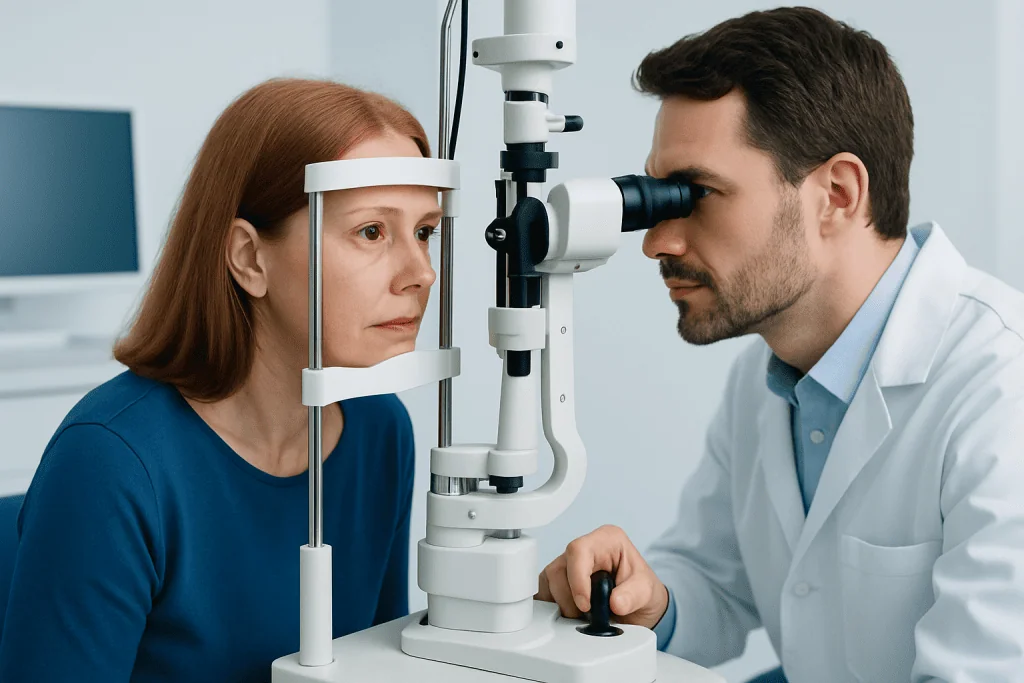
The physical examination often includes checking visual acuity first. This is an important step because any reduction in vision may point toward a more significant problem. The eye is then examined for the pattern of redness, eyelid swelling, discharge, corneal clarity, pupil shape, and response to light. A slit-lamp microscope allows a detailed view of the front of the eye.
In some cases, fluorescein dye is used to look for scratches, ulcers, or other surface defects on the cornea. Eye pressure may be measured if glaucoma is a concern. Additional testing is not always needed, but urgent referral to an eye specialist may be recommended if there is severe pain, trauma, suspected corneal infection, or inflammation inside the eye. If surgery or procedural care is needed for a specific underlying problem, options may include advanced corneal treatment or glaucoma surgery in selected cases.
Treatment Options for Red Eye
Treatment depends entirely on the cause. Lubricating eye drops may help when dryness or irritation is the main issue. Avoiding smoke, dust, and eye rubbing can reduce surface irritation. Cool compresses are often soothing for allergy-related redness, while temporary adjustment of screen time and indoor humidity may improve dry eye symptoms.
If conjunctivitis is suspected, treatment varies by type. Viral conjunctivitis often improves with supportive care, while bacterial infection may need prescription antibiotic drops when a clinician confirms this is appropriate. Allergic conjunctivitis may respond to antihistamine or mast cell stabilizing drops. Contact lenses should usually be stopped until the eye has fully recovered and a clinician says it is safe to restart them.
Some causes require more targeted therapy. Inflammation of deeper eye tissues may need prescription anti-inflammatory treatment and specialist monitoring. Corneal ulcers, severe keratitis, acute glaucoma, and eye injuries need urgent ophthalmic care. People with recurrent or persistent symptoms may need assessment for conditions such as glaucoma or structural eyelid problems. For patients who need specialized ophthalmic evaluation, Acibadem International’s multidisciplinary specialists in JCI-accredited hospitals diagnose and treat eye conditions for international patients, including services such as comprehensive eye examination and laser-based vision care when clinically relevant.
It is best to avoid using leftover prescription drops or over-the-counter “redness-relief” drops for long periods without medical advice. Some vasoconstrictor drops can lead to rebound redness, making the eye look red again when the effect wears off. Steroid eye drops should only be used under direct medical supervision because they can worsen some infections and mask important signs of disease.
Self-Care and Prevention
Many cases of uncomplicated red eye can be reduced or prevented with simple habits. Good hand hygiene helps limit the spread of infectious conjunctivitis. People should avoid touching or rubbing their eyes, especially during allergy season or when an eye feels irritated. Makeup, contact lens cases, and towels should not be shared.
Contact lens care is one of the most important preventive steps. Lenses should be cleaned and stored exactly as directed, replaced on schedule, and never worn longer than recommended. Swimming or sleeping in contact lenses can increase the risk of infection in some situations. If the eye becomes red while wearing lenses, the safest step is usually to remove them and seek guidance if symptoms do not quickly improve.
For dryness and environmental irritation, regular breaks from screens, blinking more often, staying hydrated, and using preservative-free artificial tears when appropriate may help. Protective eyewear is useful during sports, yard work, and chemical exposure. People with known allergies can also reduce symptoms by limiting triggers and following their clinician’s management plan.
When to Seek Medical Care
Medical care should be sought promptly if red eye is accompanied by moderate or severe pain, sensitivity to light, blurred or reduced vision, a recent eye injury, chemical exposure, or the feeling that something is stuck in the eye. Contact lens wearers with a red, painful eye should be assessed quickly because corneal infection can become serious in a short time.
Urgent evaluation is also important for one-sided severe redness, a cloudy-looking cornea, nausea with eye pain, or symptoms that are worsening rather than improving. Persistent discharge, swelling around the eye, fever, or redness after eye surgery should also be checked. Children, older adults, and people with reduced immunity may need earlier assessment depending on symptoms.
If symptoms are mild, self-care may be reasonable for a short time, but persistent redness still deserves attention. As a general rule, if red eye lasts more than a few days, keeps coming back, or is affecting daily activities, a qualified doctor or eye specialist can help identify the cause and recommend the right treatment safely.
Frequently asked questions
Is red eye usually serious?
Not always. Red eye is often caused by minor problems such as dryness, allergy, or a mild infection, but it can also signal a more serious eye condition. Pain, vision changes, light sensitivity, trauma, or contact lens use make medical assessment more important.
Can allergies cause red eye?
Yes. Allergic conjunctivitis is a common cause of red, itchy, watery eyes, especially during pollen seasons or after exposure to pets, dust, or other triggers. Itching is one of the strongest clues that allergy may be involved.
Should contact lenses be worn if the eye is red?
Usually no. Contact lenses should be removed when the eye becomes red, painful, or unusually watery. They should not be restarted until the cause is known and a clinician confirms that it is safe.
What is the difference between pink eye and red eye?
Red eye is a general symptom, while pink eye usually refers to conjunctivitis, which is inflammation of the conjunctiva. Conjunctivitis is one possible cause of red eye, but dryness, allergy, injury, corneal disease, and glaucoma can also cause redness.
Are over-the-counter redness drops safe?
They may provide temporary cosmetic improvement, but they are not the right choice for every cause of red eye. Some products can lead to rebound redness if used repeatedly. If redness continues or other symptoms are present, it is better to seek medical advice.
How long should red eye last before seeing a doctor?
If symptoms are mild and clearly related to short-term irritation, brief observation may be reasonable. However, redness that lasts more than a few days, keeps returning, or comes with pain, discharge, or vision changes should be checked by a doctor.
This article is for general information only and is not a substitute for professional medical advice. Please consult a qualified doctor about your individual situation.
Explore treatments in Turkey — costs, top hospitals & a free quote
JCI-accredited · board-certified surgeons · reply within 24h
Add us as a Preferred Source to see more of our trusted health content across Google Search, AI Overviews and Discover.

More from the Health Library

Hearing Test: A Complete Medical Overview

Infant Tylenol: An Evidence-Based Guide for Patients

Zucchini: What Patients Need to Know

Operant Conditioning: An Evidence-Based Guide for Patients

Proximal Phalanx — Explained by Medical Evidence, Not Myths