Meninges: What Patients Need to Know

The meninges are the dura mater, arachnoid mater, and pia mater around the brain and spinal cord. They protect nervous tissue, support blood vessels, and help contain cerebrospinal fluid.
Key Takeaways
- The meninges are the dura mater, arachnoid mater, and pia mater around the brain and spinal cord.
- They protect nervous tissue, support blood vessels, and help contain cerebrospinal fluid.
- Problems affecting the meninges include infection, inflammation, bleeding, and tumors.
- Symptoms depend on the cause but may include headache, fever, neck stiffness, light sensitivity, or confusion.
- Diagnosis may involve neurological examination, imaging, blood tests, and sometimes lumbar puncture.
- Urgent medical evaluation is important for severe headache, fever with stiff neck, seizures, or sudden changes in consciousness.
The meninges are three thin protective layers that cover the brain and spinal cord, helping cushion the central nervous system and support blood vessels and cerebrospinal fluid. Knowing what the meninges do can help patients understand why symptoms such as severe headache, fever, neck stiffness, or sudden neurological changes need prompt medical attention.
Overview: what the meninges are and why they matter
The meninges are three protective membranes that surround the brain and spinal cord. They act like a layered covering for the central nervous system, helping protect delicate nerve tissue from injury while also supporting blood vessels and containing cerebrospinal fluid, the clear fluid that cushions the brain and spinal cord.
Although the meninges are thin, they play an important role in everyday neurological health. When these layers become irritated, infected, inflamed, or affected by bleeding or growths, symptoms can develop quickly and may become serious. This is why doctors pay close attention to symptoms such as sudden severe headache, fever, neck stiffness, vomiting, confusion, and new neurological problems.
For many patients, the word “meninges” comes up during discussions about conditions like meningitis, subarachnoid bleeding, or tumors arising from the membrane layers. Understanding the meninges can make test results, scans, and treatment recommendations easier to follow and less overwhelming.
The three layers of the meninges
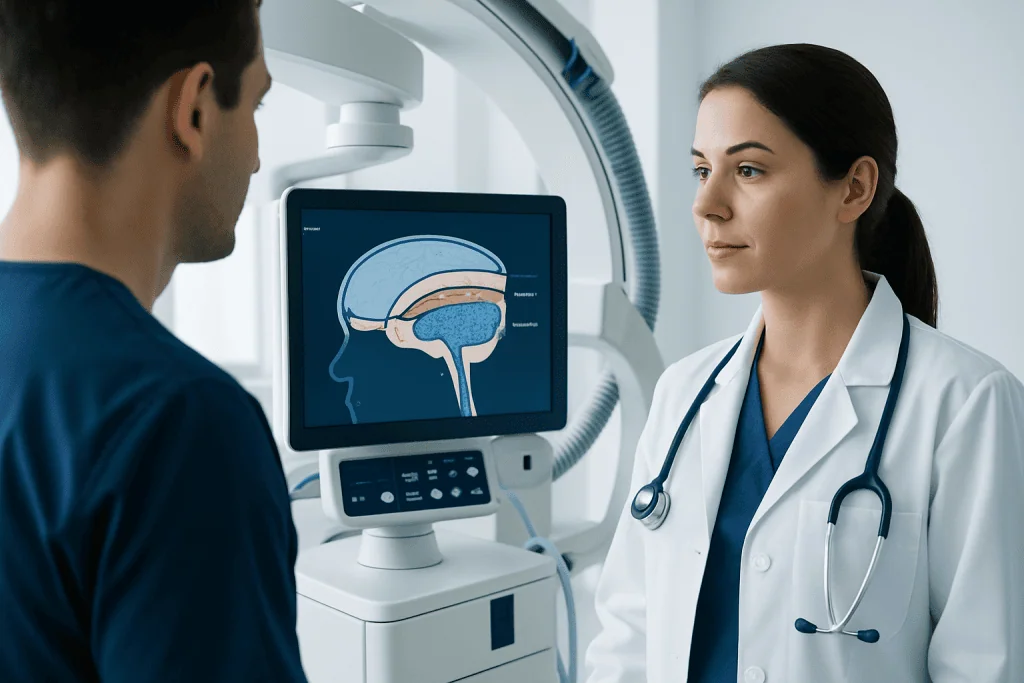
The meninges are made up of three layers. The outermost layer is the dura mater, a strong, fibrous covering that helps shield the brain and spinal cord. The middle layer is the arachnoid mater, a delicate membrane with a web-like appearance. The innermost layer is the pia mater, a very thin layer that closely follows the surface of the brain and spinal cord.
Between the arachnoid and pia mater is the subarachnoid space. This space contains cerebrospinal fluid, which acts as a shock absorber and helps transport nutrients and waste products. Blood vessels also travel through this area, which is one reason bleeding in this space can cause sudden, intense symptoms.
These layers work together rather than separately. The dura provides strength, the arachnoid helps form a barrier around the cerebrospinal fluid space, and the pia gently covers nervous tissue. This layered design gives both protection and flexibility to the central nervous system.
What the meninges do in the body

The meninges do more than simply wrap the brain and spinal cord. They help stabilize and protect the central nervous system, reducing movement inside the skull and spine during daily activity. They also create compartments and spaces that support normal brain structure and circulation.
Another important job of the meninges is their relationship with blood flow and cerebrospinal fluid. Large veins and arteries pass through or near these layers, and the subarachnoid space helps hold cerebrospinal fluid around the brain and spinal cord. This fluid cushions the nervous system and contributes to a stable environment for nerve cells.
Because the meninges contain pain-sensitive structures, irritation in these layers can trigger headache and neck pain. Brain tissue itself is less sensitive to pain than the surrounding coverings, which helps explain why many meningeal conditions first present with headache, stiffness, or sensitivity to light.
Conditions that can affect the meninges
Several different conditions can involve the meninges. One of the best-known is meningitis, which means inflammation of the meninges. Meningitis can be caused by bacteria, viruses, fungi, or, less commonly, noninfectious conditions such as autoimmune disease, certain medications, or cancer-related irritation. Symptoms often include fever, headache, neck stiffness, nausea, and light sensitivity.
The meninges can also be affected by bleeding. A subarachnoid hemorrhage is bleeding into the space between the arachnoid and pia mater, often causing a sudden, severe headache that needs urgent evaluation. Blood may also collect outside the dura or beneath it after trauma, leading to conditions such as epidural or subdural hematoma.
Tumors may arise from meningeal tissue as well. A common example is a meningioma, a tumor that develops from the membranes surrounding the brain or spinal cord. Many meningiomas grow slowly, but some can press on nearby structures and cause symptoms such as headaches, vision changes, seizures, or weakness. Patients may also hear about related evaluation and care for brain tumors if imaging shows a mass near these protective layers.
- Infection or inflammation of the meninges
- Bleeding around the brain or spinal cord
- Traumatic injury affecting meningeal spaces
- Tumors such as meningioma
- Spread of cancer or inflammatory disease to the meningeal lining
Symptoms that may suggest a meningeal problem
Symptoms vary depending on the cause, the speed at which it develops, and which part of the meninges is involved. A gradual process, such as a slowly growing tumor, may cause subtle symptoms over time. An acute process, such as infection or bleeding, often causes symptoms that appear suddenly and need prompt medical care.
Common warning signs include a severe or unusual headache, neck stiffness, fever, nausea, vomiting, light sensitivity, and confusion. Some people may also have drowsiness, irritability, seizures, weakness, speech difficulty, balance problems, or changes in vision. In infants and young children, symptoms may be less specific and can include poor feeding, unusual sleepiness, or irritability.
Not every headache or stiff neck is related to the meninges, and many mild symptoms have non-serious causes. However, a new severe headache, fever with neck stiffness, or any sudden neurological symptom should not be ignored. These signs deserve assessment by a qualified clinician, especially when they appear together.
How doctors diagnose meningeal conditions
Diagnosis starts with a careful medical history and neurological examination. Doctors ask about the timing of symptoms, recent infections, head injury, immune system problems, medications, and any history of cancer or neurological disease. The examination may assess alertness, neck movement, strength, sensation, reflexes, speech, balance, and eye findings.
Imaging tests are often important. A CT scan may be used urgently to look for bleeding, swelling, or a mass. MRI gives more detailed images of the brain, spinal cord, and surrounding membranes and can help detect inflammation, tumors, or spread of disease along the meninges. In selected cases, evaluation may include MRI scanning or CT scanning as part of a broader neurological workup.
When infection or inflammation is suspected, doctors may recommend blood tests and sometimes a lumbar puncture, also called a spinal tap. This test collects cerebrospinal fluid for analysis and can help identify infection, bleeding, inflammation, or abnormal cells. The right test depends on the clinical situation, so doctors weigh urgency, safety, and the patient’s symptoms before proceeding.
Treatment options and what recovery may involve
Treatment depends entirely on the cause. Bacterial meningitis requires urgent antibiotic treatment and close medical monitoring. Viral meningitis often improves with supportive care, though some viral infections need specific antiviral treatment. Noninfectious inflammation may be managed by treating the underlying condition and, in some cases, using anti-inflammatory medicines under medical supervision.
Bleeding around the meninges may require emergency care, blood pressure management, intensive monitoring, and sometimes procedures or surgery. Tumors such as meningiomas may be monitored with scans if they are small and not causing symptoms, while others may need neurosurgery or other therapies depending on size, location, and growth pattern. Some patients may also benefit from coordinated evaluation by specialists experienced in neurology and neurosurgical care.
Recovery can range from quick improvement to a longer rehabilitation process. The outcome depends on how severe the condition is, how early it is treated, the patient’s age and general health, and whether there was pressure on the brain or spinal cord. Follow-up may include repeat imaging, neurological exams, hearing or vision checks, and rehabilitation support if needed.
Prevention, self-care, and when to seek medical care
Not every meningeal condition can be prevented, but some risks can be reduced. Vaccination helps protect against several infections that can cause meningitis. General steps such as hand hygiene, avoiding close exposure to serious contagious illness, managing chronic conditions, and using seat belts and head protection can also lower the chance of infection or injury-related complications.
At home, self-care should never replace medical assessment when significant symptoms are present. Rest, fluids, and symptom monitoring may be reasonable for mild viral illnesses, but severe headache, high fever, neck stiffness, confusion, fainting, seizures, weakness, or persistent vomiting should be assessed urgently. Rapid evaluation is especially important in infants, older adults, and people with weakened immune systems.
Patients should seek immediate medical care for a sudden “worst headache,” fever with stiff neck, new seizure, loss of consciousness, or sudden trouble speaking, seeing, walking, or moving part of the body. Near the end of the care pathway, some international patients may choose centers such as Acibadem International, where multidisciplinary specialists in JCI-accredited hospitals diagnose and treat neurological and meningeal conditions in a coordinated setting.
Frequently asked questions
What are the meninges in simple terms?
The meninges are the thin layers that cover and protect the brain and spinal cord. They help cushion the nervous system, support blood vessels, and hold cerebrospinal fluid around these structures.
What are the three layers of the meninges?
The three layers are the dura mater, arachnoid mater, and pia mater. The dura is the tough outer layer, the arachnoid is the middle web-like layer, and the pia is the delicate inner layer that closely covers the brain and spinal cord.
Can meninges problems cause headache?
Yes, many meningeal conditions can cause headache because these coverings contain pain-sensitive structures. A headache related to the meninges may occur with neck stiffness, fever, vomiting, light sensitivity, or neurological changes depending on the cause.
Is meningitis the same as the meninges?
No. The meninges are the protective membranes themselves, while meningitis means inflammation of those membranes. Meningitis is one condition that can affect the meninges, but not the only one.
How do doctors check if the meninges are affected?
Doctors use symptoms, a neurological examination, and tests such as blood work, CT, MRI, and sometimes lumbar puncture. The exact tests depend on whether infection, bleeding, inflammation, injury, or a tumor is suspected.
When should someone worry about symptoms related to the meninges?
Urgent medical care is important for a sudden severe headache, fever with neck stiffness, confusion, seizures, fainting, or new weakness or speech problems. These symptoms do not always mean a meningeal disorder, but they should be evaluated quickly to rule out serious causes.
References
- World Health Organization
- Centers for Disease Control and Prevention
- National Institute of Neurological Disorders and Stroke
- National Health Service
- Merck Manual Consumer Version
This article is for general information only and is not a substitute for professional medical advice. Please consult a qualified doctor about your individual situation.
Joint and spine care in Turkey — expert assessment & treatment
JCI-accredited · board-certified surgeons · reply within 24h
Add us as a Preferred Source to see more of our trusted health content across Google Search, AI Overviews and Discover.

More from the Health Library



Related Specialists

Prof. Dr. Mustafa Seyhan
Orthopedic Surgery & Traumatology
Assoc. Prof. Dr. Selim Aydın
Cardiovascular Surgery
Prof. Dr. Hale Göksever Çelik
Gynecology & Obstetrics
Prof. Dr. Ayşen Timurağaoğlu
Hematology