

Hip Impingement: A Complete Medical Overview
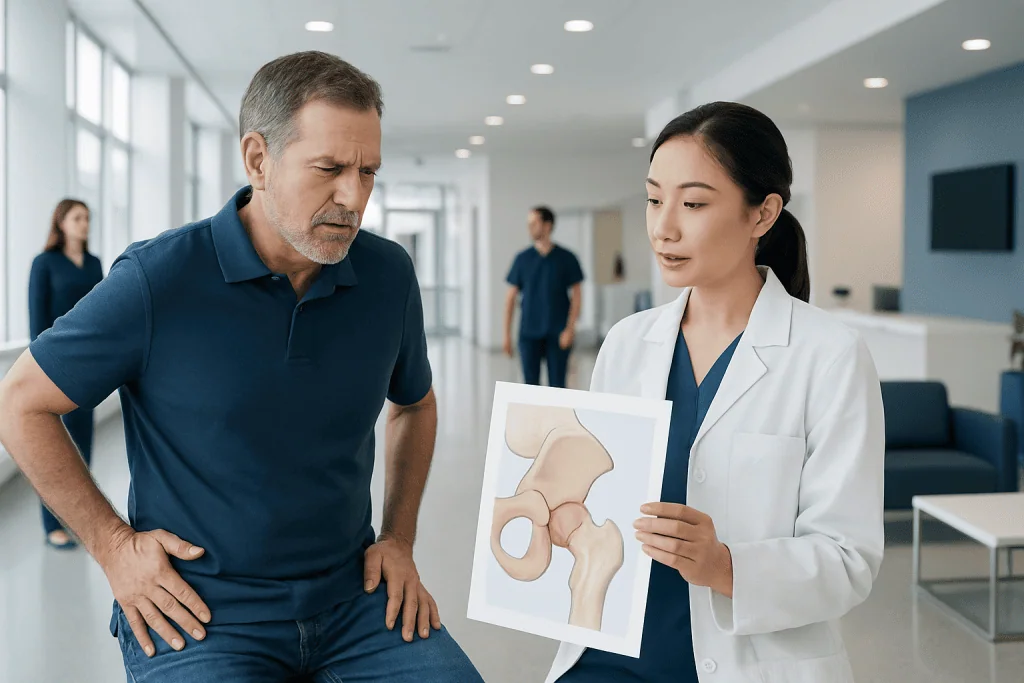
Hip impingement usually causes groin pain, stiffness, and discomfort with bending, twisting, or sitting for long periods. The condition is also called femoroacetabular impingement, or FAI, and often involves extra bone on the femoral head, the socket, or both.
Key Takeaways
- Hip impingement usually causes groin pain, stiffness, and discomfort with bending, twisting, or sitting for long periods.
- The condition is also called femoroacetabular impingement, or FAI, and often involves extra bone on the femoral head, the socket, or both.
- Diagnosis is based on symptoms, physical examination, and imaging such as X-rays and sometimes MRI.
- Treatment often begins with activity changes, pain relief, and physical therapy; some patients may need surgery.
- Early evaluation may help prevent ongoing joint damage and lower the risk of future hip arthritis.
Hip impingement is a condition in which the ball and socket of the hip do not move smoothly, causing friction, pain, and reduced range of motion. With timely diagnosis and the right treatment plan, many people can reduce symptoms, protect the joint, and return to daily activities safely.
Overview: what hip impingement means
Hip impingement is a joint problem in which the bones of the hip fit together in a way that causes abnormal contact during movement. Doctors often call it femoroacetabular impingement, or FAI. Instead of the ball of the thigh bone and the hip socket gliding smoothly, they rub against each other, especially during bending, turning, or deep flexion of the hip.
This repeated friction can irritate the soft tissues inside the joint, including the labrum and the cartilage that cushions the bones. Over time, that irritation may lead to pain, stiffness, or a feeling that the hip catches or pinches. Some people have structural changes in the hip for years before symptoms begin, while others notice discomfort during sports or routine daily activities.
Hip impingement is not the same as all other causes of hip pain. It is a mechanical problem related to joint shape and movement, which is why symptoms often appear with specific positions such as squatting, climbing stairs, getting in and out of a car, or sitting for long periods. Understanding this movement-related pattern can help guide a more accurate diagnosis.
Common symptoms and how they may feel
The most common symptom of hip impingement is pain in the groin area. Some people also feel pain on the outside of the hip, in the buttock, or down the front of the thigh. The discomfort may start gradually and be mild at first, then become more noticeable with repeated activity or after prolonged sitting.
Many people describe a sharp pinch when the hip bends deeply, along with stiffness or reduced flexibility. Athletic movements such as pivoting, kicking, sprinting, skating, or squatting can trigger symptoms, but everyday activities may also become uncomfortable. It can be harder to put on shoes, cross the legs, or step into a bathtub.
Other symptoms may include clicking, locking, catching, or a sense that the joint is not moving freely. Some people notice reduced range of motion, especially when rotating the hip inward. If labral irritation or cartilage injury is also present, symptoms may become more persistent and interfere with exercise, work, or sleep.
- Groin pain that worsens with bending or twisting
- Stiffness or reduced hip flexibility
- Pain after sitting for a long time
- Clicking, catching, or locking sensations
- Discomfort during sports or repeated hip motion
Why hip impingement happens
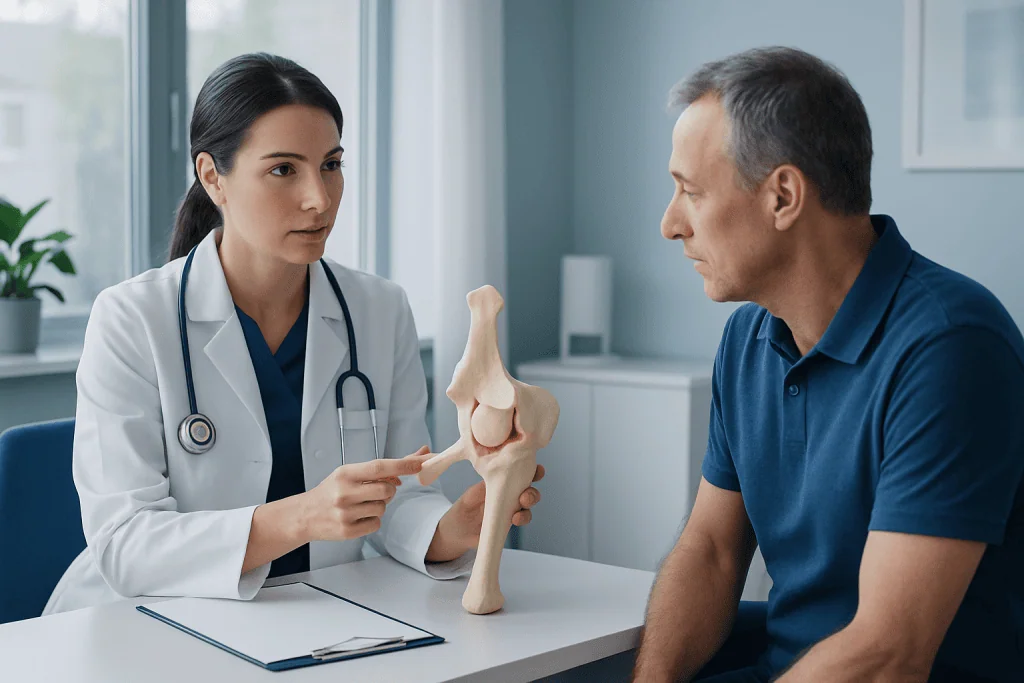
Hip impingement usually develops because of the shape of the bones in the hip joint. In one common pattern, called cam impingement, the ball at the top of the thigh bone is not perfectly round. In another pattern, called pincer impingement, the socket covers too much of the ball. Some people have both patterns at the same time, which is known as mixed impingement.
These structural differences can be present during the years when the skeleton is developing and may be influenced by growth, activity level, and individual anatomy. Not everyone with these bone shapes has pain. Symptoms are more likely when repeated motion places stress on the joint and the soft tissues inside it.
Risk factors can include sports that involve frequent hip flexion and rotation, such as football, hockey, soccer, dance, martial arts, and gymnastics. A previous hip injury may also contribute. In some cases, hip impingement exists alongside other hip conditions, including a hip labral tear or early osteoarthritis, because ongoing friction can affect joint structures over time.
How doctors diagnose hip impingement
Diagnosis begins with a careful medical history and physical examination. A doctor will ask where the pain is felt, what movements make it worse, how long symptoms have been present, and whether clicking, locking, or instability occurs. The exam often includes testing range of motion and gently placing the hip in positions that may reproduce the characteristic pinching pain.
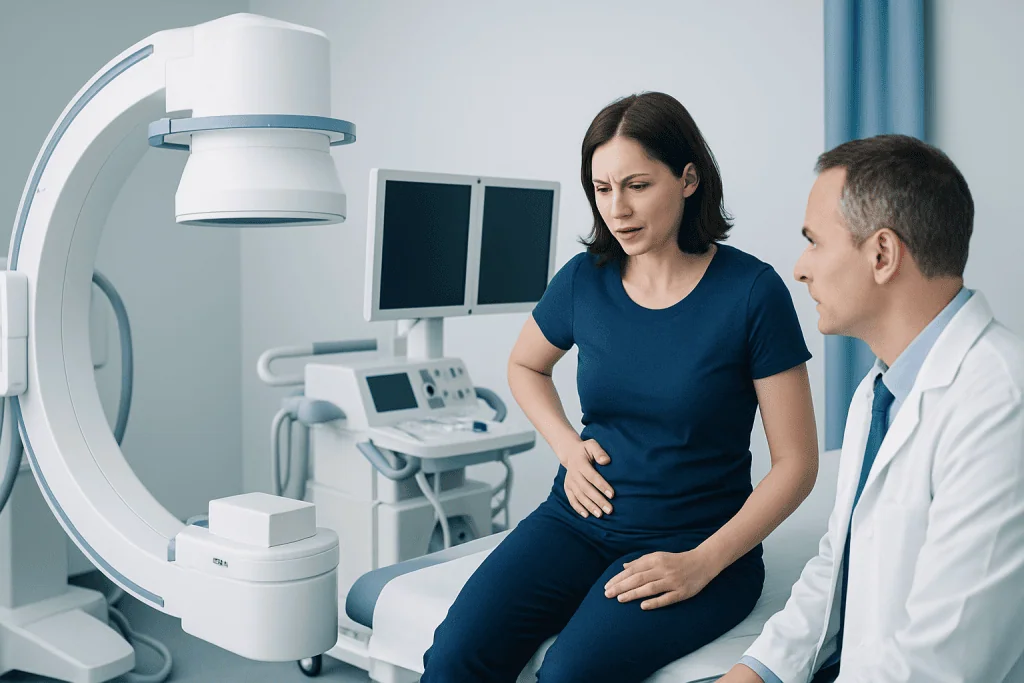
Imaging helps confirm the diagnosis and assess joint damage. X-rays are usually the first step because they can show the shape of the femoral head and acetabulum, as well as signs of arthritis or other structural problems. If a labral injury or cartilage damage is suspected, an MRI may be recommended to provide a clearer view of the soft tissues.
Sometimes doctors also consider other causes of hip or groin pain, such as muscle strain, bursitis, lower back problems, sports hernia, or inflammatory joint disease. This broader evaluation matters because treatment works best when it is matched to the true source of symptoms. If needed, specialists may use advanced imaging and orthopedic assessment to distinguish hip impingement from related disorders.
Treatment options: from conservative care to surgery
Treatment depends on symptom severity, activity goals, physical examination findings, and whether there is labral or cartilage damage. For many people, the first approach is conservative care. This may include temporarily reducing activities that provoke pain, improving movement patterns, and using medicines recommended by a doctor to ease pain and inflammation.
Physical therapy is often an important part of treatment. A tailored program can help strengthen the muscles around the hip and pelvis, improve core control, support posture, and reduce stress on the joint. Therapy does not change the shape of the bones, but it can improve how the hip moves and help some patients return to activity with fewer symptoms. When helpful, a doctor may suggest a structured physical therapy and rehabilitation plan.
If symptoms continue despite appropriate non-surgical treatment, surgery may be considered. The most common procedure is hip arthroscopy, a minimally invasive technique that allows surgeons to reshape the bone, repair the labrum when possible, and address damaged tissue. In more advanced cases, especially when significant arthritis is already present, other procedures may be discussed, including hip replacement for carefully selected patients.
The decision about surgery is individualized. Doctors consider pain level, loss of function, age, joint condition, and response to previous treatment. The goal is not only to reduce pain but also to improve movement and protect the hip joint as much as possible over the long term.
Daily management, prevention, and self-care
Self-care focuses on reducing stress on the hip while maintaining healthy movement. Many people benefit from avoiding repeated deep squats, extreme twisting, or high-impact activities that sharply increase pain. Short-term activity modification is often more helpful than complete rest, because gentle movement can prevent stiffness and support muscle function.
Exercises should be guided by a qualified clinician when possible, especially if pain is ongoing. Stretching that forces the hip into a pinching position may worsen symptoms, so a balanced approach is important. Strengthening the gluteal muscles, trunk, and hip stabilizers can improve joint mechanics and support safer return to sport or exercise.
Maintaining a healthy body weight may reduce load on the joint. Good posture, regular movement breaks during long sitting periods, and gradual progression in sports training may also help. These steps cannot always prevent hip impingement, especially when bone shape is the main factor, but they can lower irritation and support better day-to-day comfort.
When to seek medical care
Medical assessment is recommended if hip or groin pain lasts more than a few weeks, keeps returning, or limits walking, exercise, work, or sleep. Evaluation is also important when the hip feels stuck, locks, clicks painfully, or loses range of motion. Early review can help clarify whether symptoms are due to hip impingement or another condition that needs different care.
Prompt medical attention is especially important after a fall or injury, if pain is severe, or if the person cannot bear weight on the leg. Fever, significant swelling, redness, or sudden intense pain should also be assessed urgently because these signs can point to problems other than routine mechanical impingement.
For international patients who need further assessment, Acibadem International’s multidisciplinary specialists and JCI-accredited hospitals diagnose and treat hip conditions with orthopedic, imaging, and rehabilitation support. A specialist can explain the likely cause of symptoms and whether non-surgical care, orthopedic evaluation, or another treatment path is the most appropriate next step.
Frequently asked questions
Is hip impingement the same as arthritis?
No. Hip impingement is a mechanical problem caused by abnormal contact between the ball and socket of the hip. Over time, it can contribute to cartilage damage and may increase the risk of arthritis, but the two conditions are not the same.
Can hip impingement go away on its own?
Symptoms may improve with rest, activity changes, and targeted rehabilitation, especially in mild cases. However, the underlying bone shape usually does not change on its own, so recurring symptoms should be evaluated by a doctor.
What activities make hip impingement worse?
Deep bending, squatting, twisting, pivoting, and long periods of sitting commonly aggravate symptoms. Sports that require repetitive hip flexion and rotation may also trigger pain.
Do all people with hip impingement need surgery?
No. Many people improve with conservative treatment such as physical therapy, movement modification, and pain management. Surgery is usually considered when symptoms persist, function is limited, or imaging shows treatable structural problems.
How is hip impingement diagnosed?
Doctors diagnose hip impingement by combining a symptom history, physical examination, and imaging tests. X-rays often show the bony shape of the hip, and MRI may be used to look for labral or cartilage damage.
Can younger athletes get hip impingement?
Yes. Hip impingement can affect adolescents and young adults, especially those involved in sports with repeated hip flexion and rotation. Early assessment is helpful if pain starts to affect performance or daily function.
This article is for general information only and is not a substitute for professional medical advice. Please consult a qualified doctor about your individual situation.
Joint and spine care in Turkey — expert assessment & treatment
JCI-accredited · board-certified surgeons · reply within 24h
Add us as a Preferred Source to see more of our trusted health content across Google Search, AI Overviews and Discover.

More from the Health Library

Tegretol: What Patients Need to Know

Hairstyles for Thin Fine Hair — Explained by Medical Evidence, Not Myths

Ceramides: A Complete Medical Overview

Raisins: An Evidence-Based Guide for Patients

Apple Skin Peel: An Evidence-Based Guide for Patients

Baby Tick: A Complete Medical Overview
Orthopedic Surgery & Traumatology Specialists at Acibadem

Prof. Dr. Barış Kocaoğlu
Orthopedic Surgery & Traumatology
Dr. Bengü Kasım
Physical Medicine & Rehabilitation
Dr. Berhan Bayram
Orthopedic Surgery & Traumatology
Assoc. Prof. Dr. Berkin Toker
Orthopedic Surgery & Traumatology