Allergic Conjunctivitis: Symptoms, Causes, and Treatment Options

Allergic conjunctivitis is inflammation of the conjunctiva caused by an allergic reaction, not an infection. Itching is a hallmark symptom and often helps distinguish eye allergy from other causes of red eyes.
Key Takeaways
- Allergic conjunctivitis is inflammation of the conjunctiva caused by an allergic reaction, not an infection.
- Itching is a hallmark symptom and often helps distinguish eye allergy from other causes of red eyes.
- Common triggers include pollen, pet dander, dust mites, mold, and some cosmetics or contact lens solutions.
- Treatment may include avoiding triggers, using artificial tears, and doctor-recommended antihistamine or anti-inflammatory eye drops.
- Medical evaluation is important if there is eye pain, light sensitivity, reduced vision, or symptoms in only one eye.
<a href="https://acibademinternational.com/diseases/allergic-conjunctivitis/”>Allergic conjunctivitis is an eye allergy that causes itching, redness, watering, and swelling when the eyes react to triggers such as pollen, dust mites, mold, or pet dander. It is usually not contagious, and symptoms often improve with allergen avoidance, lubricating eye drops, and doctor-recommended allergy treatment.
Overview: What allergic conjunctivitis is
Allergic conjunctivitis is inflammation of the thin, clear membrane that covers the white part of the eye and lines the inside of the eyelids. This membrane, called the conjunctiva, reacts when it comes into contact with allergens such as pollen, dust, pet dander, or mold. The result is an eye allergy that commonly causes itching, redness, tearing, and puffiness.
Unlike bacterial or viral conjunctivitis, allergic conjunctivitis is not caused by germs and is generally not contagious. It often affects both eyes at the same time and may appear seasonally, especially during pollen peaks, or continue year-round if triggers are present indoors. Many people also have nasal allergy symptoms such as sneezing or congestion at the same time.
Although symptoms can be uncomfortable, allergic conjunctivitis is usually manageable and does not cause lasting damage when it is properly recognized and treated. The main goals of care are to reduce exposure to triggers, soothe the eyes, and control the allergic response. A careful eye assessment can also help rule out other causes of red eyes, including infection or other forms of conjunctivitis.
How symptoms typically appear
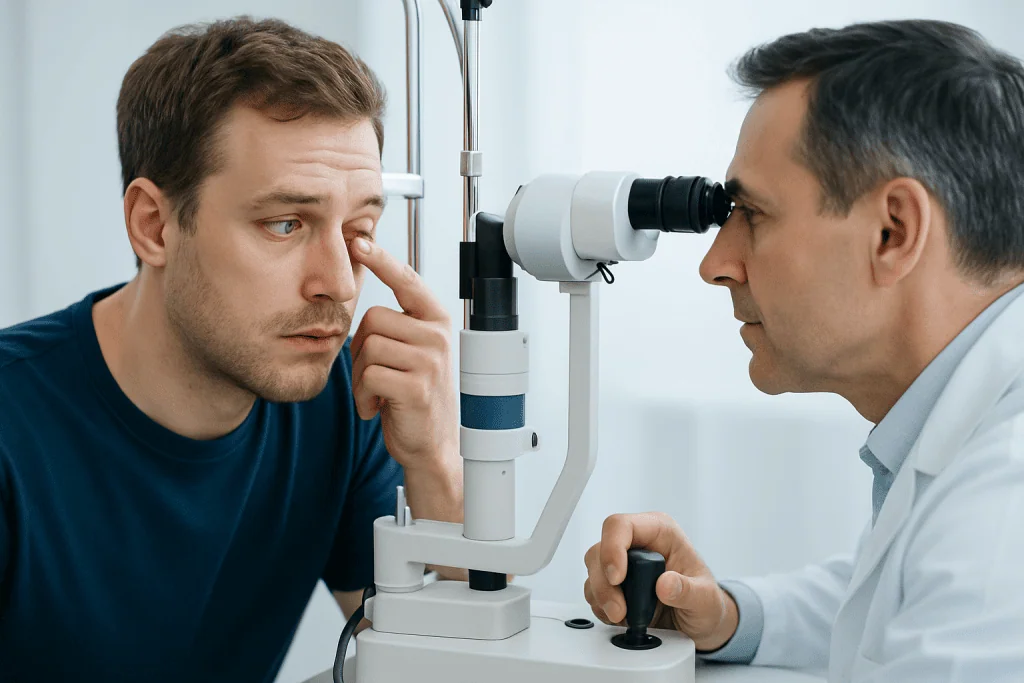
The most common symptom of allergic conjunctivitis is itching. Many patients describe a strong urge to rub the eyes, often along with burning, tearing, and a sensation of irritation. The eyes may look pink or red, and the eyelids can become mildly swollen, especially after outdoor exposure or contact with a known trigger.
Symptoms usually affect both eyes and may begin quickly after exposure to an allergen. Clear, watery discharge is common, while thick yellow or green discharge is more suggestive of infection than allergy. Some people also notice stringy mucus, blurred vision from excessive tearing, or temporary discomfort when wearing contact lenses.
Associated allergy features can provide helpful clues. These may include:
- Sneezing, runny nose, or nasal congestion
- Itchy nose, throat, or ears
- Symptoms that worsen outdoors, during cleaning, or around animals
- Seasonal flare-ups in spring, summer, or fall
Symptoms can range from mild and occasional to persistent and disruptive. When inflammation is more severe, the eyes may become more swollen and sensitive, making routine activities such as reading, screen use, or being outdoors less comfortable.
Causes and risk factors

Allergic conjunctivitis happens when the immune system overreacts to a substance that is usually harmless. When an allergen reaches the surface of the eye, immune cells release chemicals such as histamine. This causes blood vessels to widen and the conjunctiva to become irritated, itchy, and watery.
Common triggers include outdoor allergens such as tree, grass, and weed pollen, as well as indoor allergens like dust mites, mold spores, and pet dander. Some people react to smoke, perfumes, cosmetics, or contact lens solutions, which may irritate the eyes directly or worsen an allergic tendency. Contact lenses themselves can also make symptoms more noticeable by trapping allergens on the eye surface.
Certain factors make allergic conjunctivitis more likely. People with a personal or family history of allergy, asthma, or eczema are more prone to develop it. Existing allergic rhinitis often occurs alongside eye symptoms, and some individuals have more persistent disease because of ongoing exposure to indoor allergens at home or work.
Several patterns are recognized. Seasonal allergic conjunctivitis is linked to pollen and tends to come and go with the time of year. Perennial allergic conjunctivitis can occur at any time and is more often related to dust mites, pets, or mold. Less common but more severe allergic eye conditions may need specialist assessment and longer-term management.
How doctors diagnose it
Diagnosis usually begins with a discussion of symptoms, timing, and possible triggers. A doctor will ask whether both eyes are affected, whether itching is prominent, and whether nasal allergy symptoms are present. The pattern of symptoms often provides strong clues, especially if episodes happen seasonally or after exposure to animals, dust, or outdoor pollen.
An eye examination helps confirm the diagnosis and exclude other conditions. The doctor may look at the conjunctiva and eyelids for redness, swelling, watery discharge, or other signs of inflammation. They also assess vision, the cornea, and the overall surface of the eye to make sure more serious problems are not being missed.
Testing is not always necessary, but it can be helpful when symptoms are persistent, severe, or difficult to control. Allergy evaluation may be considered if a specific trigger needs to be identified. If symptoms are unusual, one-sided, painful, or associated with significant light sensitivity, doctors may investigate for other eye conditions rather than simple allergy.
Because many disorders can cause red eyes, accurate diagnosis matters. Dry eye, blepharitis, infection, contact lens-related irritation, and some inflammatory eye diseases can overlap with allergy symptoms. In selected cases, an ophthalmology evaluation and comprehensive eye examination may be the best next step.
Treatment options and symptom relief
Treatment depends on symptom severity, trigger exposure, and whether other eye conditions are present. The first step is usually to reduce contact with allergens. This may include keeping windows closed during high pollen periods, showering after outdoor activity, using air filters, washing bedding regularly, and limiting direct exposure to pets if pet dander is a trigger.
Simple supportive measures can bring meaningful relief. Preservative-free artificial tears can help rinse allergens from the eye surface and soothe irritation. Cool compresses placed over closed eyelids may lessen itching and swelling. People who wear contact lenses are often advised to reduce lens wear during flare-ups and follow careful lens hygiene.
Doctors may recommend medicated eye drops when symptoms are more bothersome. These may include antihistamine drops, mast cell stabilizers, or combination drops that both relieve symptoms and help prevent future reactions. In some cases, short-term anti-inflammatory treatment is considered under medical supervision, especially when symptoms are more intense or persistent. If nasal allergies are also significant, overall allergy care may improve eye symptoms as well, including allergy treatment tailored to the individual.
Self-treating a red eye is not always appropriate. Overuse of certain over-the-counter drops can worsen redness over time, and steroid eye drops should only be used when prescribed and monitored by an eye specialist because of potential side effects. If allergic conjunctivitis is recurrent or severe, care may involve both an eye specialist and an allergy specialist to improve long-term control.
Prevention and daily self-care
Preventing allergic conjunctivitis often means managing exposure before symptoms start. For pollen allergy, it can help to check daily pollen counts, stay indoors when levels are high, and wear sunglasses outside to reduce direct contact with airborne allergens. After spending time outdoors, washing the face and hair may remove particles that would otherwise remain near the eyes.
Indoor measures are equally important for people with year-round symptoms. Regular vacuuming, reducing dust accumulation, washing linens in hot water, and controlling indoor humidity may lower exposure to dust mites and mold. If pet dander is a trigger, keeping animals out of the bedroom and cleaning upholstered surfaces may help decrease symptoms.
Eye care habits also matter. Rubbing the eyes can worsen inflammation and may further irritate the eye surface, so patients are usually encouraged to use cool compresses or lubricating drops instead. Cosmetics should be replaced regularly, and products that seem to trigger irritation should be avoided. Contact lens users may benefit from discussing alternative lens types or cleaning systems with their eye doctor.
For people with frequent or severe symptoms, a preventive treatment plan before allergy season may reduce flare-ups. This is especially useful when symptoms follow a predictable pattern each year. In complex cases, broader evaluation of coexisting conditions such as dry eye may also improve comfort and treatment success.
When to seek medical care
Many cases of allergic conjunctivitis can be managed with avoidance measures and doctor-recommended allergy care, but some symptoms should prompt timely medical review. Red eyes are not always caused by allergy, and an accurate diagnosis is important if the picture is unclear or symptoms are not improving as expected.
Medical care is especially important if there is eye pain, marked light sensitivity, reduced vision, severe swelling, or symptoms in only one eye. Thick discharge, fever, a recent eye injury, or symptoms after contact lens wear can also suggest other problems that need prompt attention. Infants, very young children, and anyone with existing eye disease should also be assessed carefully.
If symptoms keep returning, disturb sleep or daily activities, or require frequent medication use, a doctor may suggest a more structured treatment plan. At Acibadem International, multidisciplinary specialists in JCI-accredited hospitals evaluate eye allergy and related conditions for international patients, including specialist assessment when symptoms are persistent or difficult to distinguish from other causes of red eye.
Frequently asked questions
Is allergic conjunctivitis contagious?
No. Allergic conjunctivitis is caused by an immune reaction to allergens, not by a virus or bacteria. It does not spread from person to person the way infectious conjunctivitis can.
How can someone tell allergic conjunctivitis from pink eye caused by infection?
Itching, watery eyes, and symptoms in both eyes at the same time often suggest allergy. Thick discharge, crusting, or a recent infection exposure may point more toward an infectious cause, but an eye doctor may be needed if the diagnosis is uncertain.
Can allergic conjunctivitis affect vision?
It may temporarily blur vision because of tearing, mucus, or irritation on the eye surface. Lasting or significant vision changes are not typical and should be assessed by a doctor promptly.
Are contact lenses safe during a flare-up?
Many people are advised to limit or stop contact lens wear while symptoms are active. Lenses can trap allergens and worsen irritation, so it is best to restart them only when the eyes are comfortable and a doctor says it is appropriate.
What is the best treatment for allergic conjunctivitis?
The best treatment depends on the trigger and severity. Common approaches include avoiding allergens, using lubricating eye drops, cool compresses, and doctor-recommended antihistamine or anti-inflammatory drops when needed.
When should someone see a doctor for red, itchy eyes?
A doctor should evaluate symptoms if there is pain, light sensitivity, reduced vision, one-sided redness, or no improvement with basic care. Medical advice is also important for recurrent symptoms, contact lens-related problems, or uncertainty about the cause.
References
- American Academy of Ophthalmology
- American College of Allergy, Asthma & Immunology
- National Eye Institute
- American Academy of Allergy, Asthma & Immunology
- MedlinePlus
This article is for general information only and is not a substitute for professional medical advice. Please consult a qualified doctor about your individual situation.
Conjunctivitis in Turkey — costs, top hospitals & a free quote
JCI-accredited · board-certified surgeons · reply within 24h
Add us as a Preferred Source to see more of our trusted health content across Google Search, AI Overviews and Discover.

Ophthalmology
Comprehensive eye care from laser vision correction to retina, cornea and cataract surgery.
75 specialists in this unit