Knee Hurts After Bending: A Complete Medical Overview

Knee pain after bending can come from muscles, tendons, cartilage, ligaments, or the kneecap joint. Pain location, swelling, clicking, stiffness, and whether the knee locks or gives way can help identify the cause.
Key Takeaways
- Knee pain after bending can come from muscles, tendons, cartilage, ligaments, or the kneecap joint.
- Pain location, swelling, clicking, stiffness, and whether the knee locks or gives way can help identify the cause.
- Many cases improve with rest, ice, gradual exercise, and avoiding repeated deep bending for a time.
- Persistent pain, significant swelling, injury, fever, or inability to bear weight needs medical evaluation.
- Diagnosis may include a physical exam and imaging such as X-rays or MRI, depending on the suspected problem.
If a knee hurts after bending, the cause is often irritation of the joint, tendon strain, overuse, or a cartilage problem such as a meniscus injury. Mild cases may improve with rest and activity changes, but swelling, locking, instability, or ongoing pain should be assessed by a doctor.
Overview: why a knee may hurt after bending
When a knee hurts after bending, the discomfort often comes from structures that are stressed as the joint folds and straightens. These include the kneecap and the groove it moves in, the meniscus cartilage that cushions the joint, the tendons that attach muscles to bone, and the surrounding ligaments and soft tissues. Pain may be mild and temporary after unusual activity, or it may signal an injury or an ongoing joint condition.
Bending the knee increases pressure inside the joint, especially during squatting, kneeling, stair climbing, or standing up from a chair. If a tissue is inflamed, worn, strained, or torn, that pressure can trigger pain. Some people feel discomfort only at the deepest bend, while others notice stiffness at first movement after sitting, pain when straightening up, or aching later in the day.
The pattern of pain matters. Pain at the front of the knee may suggest irritation around the kneecap, while pain on the inner or outer side may point to a meniscus, ligament, or tendon problem. Sudden pain after a twist is different from gradual pain that appears over weeks of exercise or repetitive work. Understanding these differences helps guide the next steps.
Common symptoms that can happen with knee pain after bending
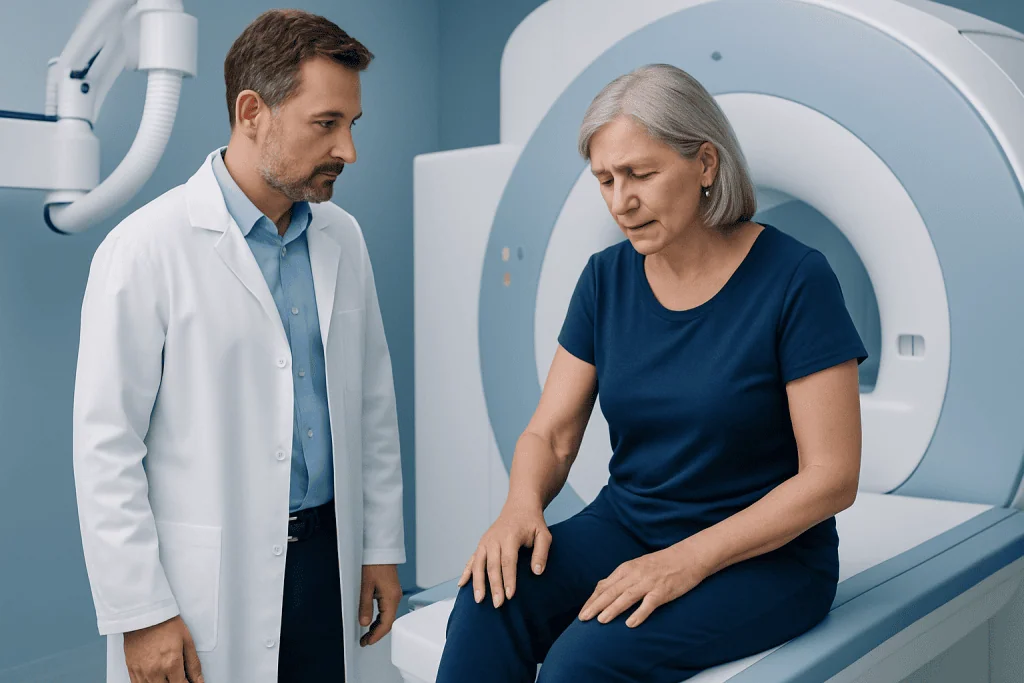
Knee pain after bending is not one single condition. It may come with other symptoms that give clues about the source. The pain can feel sharp, dull, aching, catching, or burning. It may happen during movement, immediately after standing up, or later as stiffness and soreness.
Associated symptoms can include swelling, warmth, tenderness to touch, reduced range of motion, clicking, popping, or a feeling that the knee is not moving smoothly. Some people notice that the knee feels weak or unstable, especially on stairs or uneven ground. Others feel a brief catch, as if something is blocking the movement.
- Front-of-knee pain may be worse with stairs, squatting, kneeling, or sitting with the knee bent for a long time.
- Inner or outer knee pain may suggest a meniscus problem, ligament strain, or tendon irritation.
- Sudden swelling after an injury may point to internal joint damage.
- Locking or inability to fully straighten the knee can happen with certain cartilage injuries.
- Morning stiffness or pain in both knees can be seen with inflammatory or degenerative joint conditions.
If the symptoms began after a fall, twist, direct blow, or sports injury, the doctor will also ask whether there was a popping sensation, immediate swelling, or difficulty walking afterward. These details are important because they may suggest damage that needs targeted treatment.
Possible causes and risk factors
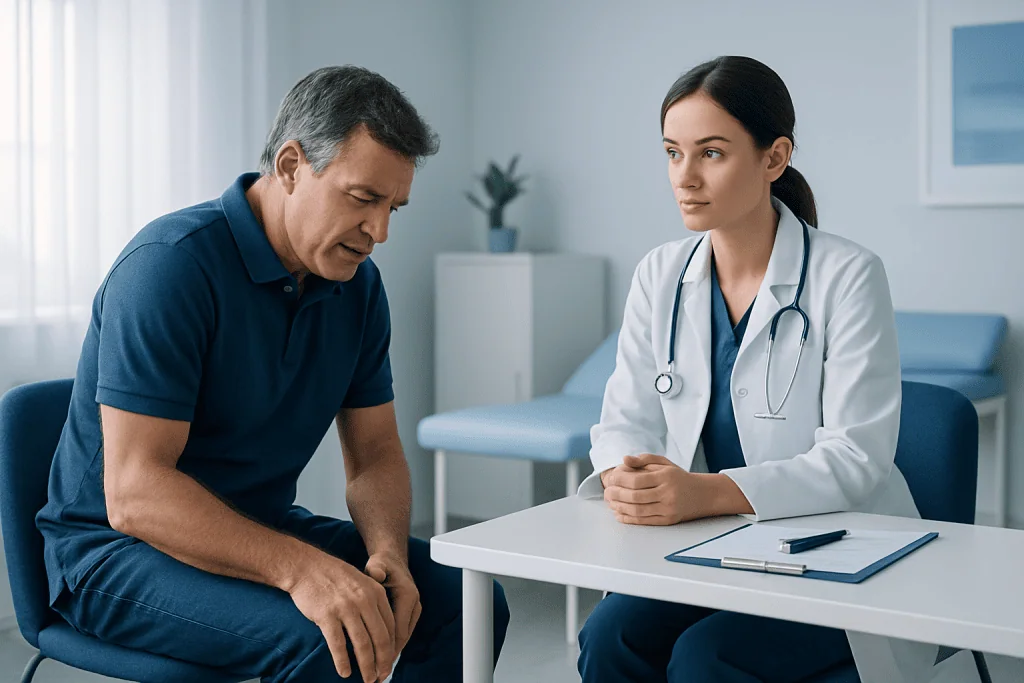
One frequent reason a knee hurts after bending is patellofemoral pain, sometimes called runner’s knee. This occurs when the tissues around the kneecap become irritated, often due to overuse, muscle imbalance, poor movement mechanics, or a sudden increase in training. Pain is usually felt in the front of the knee and may worsen with squatting, stair use, or rising from a seated position.
Another common cause is a meniscus injury. The meniscus is a cushion of cartilage inside the knee that can be damaged by twisting, especially when the foot is planted. Meniscus problems may cause pain along the joint line, swelling, clicking, and a catching or locking sensation. In some cases, the symptoms develop gradually due to wear and age-related changes rather than a single injury. Readers interested in this type of cartilage damage may find meniscus tear helpful.
Tendon-related pain is also common. Patellar tendinitis can cause pain below the kneecap, while quadriceps tendon irritation causes pain above it. These problems are often linked to jumping sports, repeated deep bending, or repetitive strain. Bursitis, which is inflammation of a small fluid-filled sac near the joint, can also make kneeling or bending painful.
Other possible causes include ligament sprains, early or established osteoarthritis of the knee, inflamed plica tissue, cartilage wear behind the kneecap, gout, inflammatory arthritis, and less commonly infection. Risk factors include age, previous knee injury, excess body weight, weak hip or thigh muscles, repetitive kneeling or squatting at work, sports with cutting or jumping, and rapid changes in physical activity.
How doctors evaluate the problem
Diagnosis starts with a careful history. The doctor will usually ask when the pain began, whether it followed an injury, exactly where it hurts, and what movements trigger it. They may also ask about swelling, locking, instability, fever, morning stiffness, recent infections, or pain in other joints. This conversation helps separate overuse pain from internal knee injury or inflammatory disease.
The physical examination often includes checking for swelling, warmth, tenderness, range of motion, muscle strength, knee alignment, and walking pattern. Specific maneuvers may help assess the meniscus, ligaments, kneecap tracking, and tendon involvement. Comparing both knees can reveal whether the problem is localized or part of a broader issue.
Imaging is not always needed right away for mild symptoms without injury. X-rays may be used when fracture, arthritis, or joint alignment problems are suspected. MRI is more useful for soft tissues such as the meniscus, ligaments, cartilage, and tendons. In selected cases, ultrasound or blood tests may help if bursitis, tendon disease, crystal arthritis, or inflammatory conditions are being considered.
If symptoms persist despite initial care, a specialist assessment may be appropriate. In many centers, evaluation and treatment are coordinated through orthopedics and traumatology services, especially when there is concern for structural knee damage.
Treatment options and what usually helps
Treatment depends on the cause, severity, and how much the pain limits daily activities. For many mild overuse problems, the first steps are relative rest, avoiding activities that provoke pain, applying ice for short periods, and using simple pain relief if a doctor says it is appropriate. Reducing repeated deep bending, squatting, kneeling, or high-impact exercise for a time can allow irritated tissues to settle.
Exercise-based rehabilitation is often central to recovery. A tailored program may focus on strengthening the quadriceps, hips, and core, improving flexibility, and correcting movement patterns that overload the knee. Physical therapy can be especially useful for patellofemoral pain, tendon irritation, and recovery after minor injuries. In some cases, bracing, taping, shoe advice, or temporary activity modification can also help.
When swelling or ongoing symptoms suggest internal knee damage, more targeted treatment may be needed. Some patients benefit from guided rehabilitation, injections in selected cases, or specialist follow-up. If there is a significant tear, persistent locking, major instability, or severe structural damage, surgical treatment may be discussed. Depending on the condition, this may include knee arthroscopy or, for advanced joint degeneration in carefully selected patients, knee replacement.
The goal is not only pain relief but also restoring safe, confident movement. Returning to sport or heavy activity too quickly can prolong symptoms, so progression is usually gradual and based on pain, strength, and function rather than on a fixed timeline.
Self-care, prevention, and everyday knee protection
Self-care is most effective when it addresses the reason the knee hurts after bending. For overuse-related pain, reducing the trigger and rebuilding strength are usually more helpful than complete inactivity. Gentle range-of-motion exercises, gradual walking, and low-impact options such as cycling or swimming may be appropriate if they do not worsen symptoms.
Prevention often centers on avoiding sudden spikes in training or workload. Warming up before exercise, strengthening the hips and thighs, maintaining flexibility, and using proper footwear can reduce stress on the knee. People whose work involves frequent kneeling may benefit from protective pads and regular breaks.
- Increase exercise intensity gradually rather than all at once.
- Use good technique during squats, lunges, and sports drills.
- Maintain a healthy body weight to reduce pressure on the knee joint.
- Address recurring weakness, stiffness, or balance issues early.
- Seek guidance if pain keeps returning with the same activities.
If the pain has been recurring for weeks, self-treatment alone may not be enough. Identifying the exact source matters, because treatment for a tendon problem differs from treatment for a meniscus injury or arthritis. Near the end of the care pathway, patients needing specialist support may be evaluated by multidisciplinary teams; Acibadem International’s JCI-accredited hospitals care for international patients with knee conditions through coordinated orthopedic assessment and treatment.
When to seek medical care
Medical care is advisable if the knee pain is severe, does not improve after several days of rest and activity changes, or keeps returning. A doctor should also assess the knee if there is visible swelling, a limited ability to bend or straighten it, or pain that interferes with walking, work, sleep, or exercise.
Prompt evaluation is particularly important after an injury with a twist, fall, direct impact, or sudden pop. Inability to bear weight, the knee giving way, or a sensation that the joint is locking can suggest structural damage that may need imaging or urgent management.
Urgent care is also needed if the knee is red, hot, very swollen, or painful with fever or general illness, because infection or inflammatory conditions are possible. Anyone with calf swelling, shortness of breath, or chest symptoms should seek immediate medical attention, as these are not typical features of simple knee strain.
Frequently asked questions
Why does my knee hurt only when I bend it?
Pain only during bending often means a structure is being compressed or stretched in that position. Common examples include irritation around the kneecap, tendon strain, or a meniscus problem inside the joint. The exact cause depends on where the pain is felt and whether there is swelling, clicking, or stiffness.
Is knee pain after bending usually serious?
Not always. Many cases are related to temporary overuse, minor strain, or muscle imbalance and improve with rest, activity changes, and exercise-based rehabilitation. It is more concerning if there is major swelling, locking, instability, inability to bear weight, or persistent symptoms.
Can arthritis cause a knee to hurt after bending?
Yes. Osteoarthritis and other joint conditions can make bending painful because the joint surfaces and surrounding tissues become irritated or worn. Arthritis-related pain is often accompanied by stiffness, especially after rest, and may become more noticeable with repeated activity.
Should I keep exercising if my knee hurts after squatting or kneeling?
It is usually best to reduce or modify the activities that clearly worsen the pain, especially deep bending, squatting, or impact exercise. Complete rest is not always necessary, and gentle low-impact activity may still be appropriate. A doctor or physical therapist can help decide which exercises are safe during recovery.
How long should knee pain after bending last before seeing a doctor?
If the pain is mild, some people improve within days to a couple of weeks with simple self-care. Medical advice is recommended sooner if the pain is strong, follows an injury, causes limping, or comes with swelling or reduced motion. Ongoing or recurring pain should be evaluated rather than repeatedly ignored.
What tests might be needed for knee pain after bending?
A doctor usually starts with a history and physical examination. X-rays may be used to assess bones and arthritis, while MRI can show soft tissue injuries such as meniscus, cartilage, or ligament problems. Not everyone needs imaging, especially if symptoms are mild and improving.
This article is for general information only and is not a substitute for professional medical advice. Please consult a qualified doctor about your individual situation.
Joint and spine care in Turkey — expert assessment & treatment
JCI-accredited · board-certified surgeons · reply within 24h
Add us as a Preferred Source to see more of our trusted health content across Google Search, AI Overviews and Discover.

More from the Health Library
Spirometer: What Patients Need to Know
Rhinophyma: A Complete Medical Overview

Laser Dentistry: An Evidence-Based Guide for Patients

Sodium: An Evidence-Based Guide for Patients

Antiviral — Explained by Medical Evidence, Not Myths
Weight Loss Injections: What Patients Need to Know
Orthopedic Surgery & Traumatology Specialists at Acibadem

Assoc. Prof. Dr. Ali Şahin
Orthopedic Surgery & Traumatology
Dr. Alp Er Tunga Bölükbaşı
Orthopedic Surgery & Traumatology
Dr. Alper Gölpınar
Orthopedic Surgery & Traumatology
Prof. Dr. Alper Kaya
Orthopedic Surgery & Traumatology