

Endodontics
Endodontics is dental care focused on diagnosing and treating problems inside the tooth, most commonly with root canal treatment to remove infection, relieve pain, and preserve the natural tooth.
Quick answer
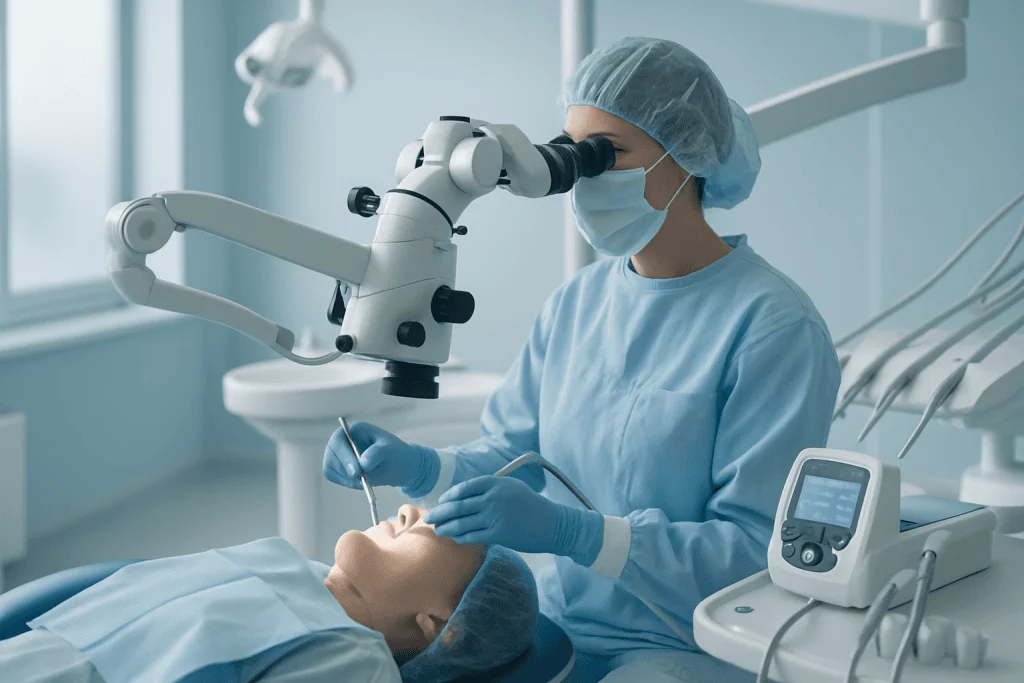
Endodontics treats disease and injury inside the tooth, most often by root canal treatment to remove infected or inflamed pulp, relieve pain, and preserve the natural tooth. At Acibadem in Turkey, endodontic care includes diagnosis with dental imaging, cleaning and sealing the root canals, and follow-up restoration planning to protect the treated tooth.
When Tooth Pain Becomes a Decision About Saving Your Natural Tooth
Tooth pain can be difficult to ignore, especially when it is sharp, persistent, or wakes you at night. For many patients, the concern is not only the discomfort itself, but what it may mean: Is the tooth infected? Will it need to be removed? Can the pain be treated quickly and safely while traveling abroad? These are practical and emotional questions, particularly for international patients who may be comparing treatment options, timing, quality standards, and continuity of care.
Endodontics is the area of dentistry focused on problems inside the tooth, where the dental pulp, nerves, blood vessels, and delicate internal tissues are located. When this space becomes inflamed or infected, pain can be intense and the infection may spread if left untreated. Root canal treatment, the most common endodontic procedure, is designed to remove infected or damaged tissue, clean and seal the inside of the tooth, relieve pain, and preserve the natural tooth whenever possible.
The goal is not simply to stop pain for a few days. Proper endodontic care aims to address the source of the problem, protect surrounding bone and gum tissues, and allow the tooth to function comfortably again. For many patients, saving a natural tooth can help maintain chewing ability, bite balance, speech, facial support, and future dental treatment options.
At Acibadem, endodontic care is approached with the same attention to diagnosis, planning, safety, and patient communication that international patients expect from a major healthcare group. Treatment is individualized according to the condition of the tooth, the complexity of the root canals, the presence of infection, previous dental work, and the patient’s overall health and travel schedule.
What Is Endodontics?
Endodontics is a specialized field of dentistry that diagnoses and treats diseases or injuries affecting the inside of the tooth. The term comes from words meaning “inside” and “tooth.” While general dental care often focuses on the visible tooth surface, gums, fillings, crowns, and bite, endodontics looks deeper, at the root canal system within the tooth roots.
Inside each tooth is a chamber that contains dental pulp. In a healthy developing tooth, the pulp provides blood supply and sensation. Once the tooth is fully formed, it can often remain functional without the pulp, provided the internal space is cleaned, sealed, and the tooth is properly restored. This is the principle behind root canal treatment.
Root canal treatment involves removing inflamed or infected pulp tissue, disinfecting the root canal system, shaping the internal canals, and filling them with a biocompatible material. The tooth is then restored with a filling or, commonly for back teeth, a crown or other protective restoration. The final restoration is important because it protects the tooth from fracture and reinfection.
Endodontics also includes other procedures, such as root canal retreatment when a previous root canal has not healed as expected, treatment of dental trauma, management of cracked teeth, internal bleaching for certain discolored teeth, and endodontic surgery such as apical surgery when infection persists near the root tip. The recommended option depends on careful clinical evaluation and imaging.
For patients who are anxious about the term “root canal,” it may help to know that modern endodontic treatment is usually performed with local anesthesia and precise instruments. The experience is often similar to having a longer dental filling, although complex cases may require additional appointments. In most cases, the purpose of treatment is to relieve pain, not cause it.
Who May Need Endodontic Treatment?
You may need endodontic treatment if the pulp inside a tooth becomes inflamed, infected, injured, or non-vital. This can happen because of deep tooth decay, a leaking or broken filling, a crack in the tooth, repeated dental procedures, gum-related exposure of the root surface, or trauma from an accident or sports injury. Sometimes the tooth has no obvious cavity or visible damage, yet the nerve tissue inside has been affected.
Typical symptoms include spontaneous toothache, pain that lingers after hot or cold drinks, sensitivity when biting or chewing, swelling of the gum or face, tenderness around the tooth, a pimple-like swelling on the gum, bad taste from drainage, or discoloration of a tooth after trauma. Pain may be constant or intermittent. It may feel localized to one tooth, or it may radiate to the jaw, ear, temple, or neighboring teeth, making diagnosis more complex.
Some patients have no pain at all. A chronic infection can sometimes be discovered on a dental X-ray during a routine visit or before planned restorative work. This is one reason imaging and vitality testing are important. A tooth can appear normal from the outside while an infection is present around the root.
Diagnosis begins with a detailed discussion of your symptoms, dental history, medical conditions, medications, allergies, and previous dental treatments. The dentist or endodontic specialist examines the tooth, gums, bite, restorations, and surrounding tissues. Tests may include tapping on the tooth, checking response to cold or heat, evaluating biting sensitivity, probing gum pockets, and assessing mobility. Digital dental radiographs are commonly used to examine the root structure, bone around the root tip, and the depth of decay or restorations.
In more complex cases, three-dimensional dental imaging may be used to better understand root anatomy, hidden canals, fractures, resorption, or the relationship of infection to nearby anatomical structures. This can be particularly useful for molars, teeth with previous root canal treatment, teeth with unusual canal shapes, or cases where symptoms and standard X-rays do not fully explain the problem.
International patients often seek endodontic care when they want to avoid tooth extraction, manage an emergency infection before it worsens, complete dental treatment within a limited travel window, or obtain a second opinion about whether a tooth can be saved. The decision is based not only on the root canal itself, but also on whether the remaining tooth structure can support a durable restoration.
Conditions and Indications Treated With Endodontics
Endodontic treatment may be recommended for a range of dental conditions affecting the pulp and root canal system. The most common indication is irreversible pulpitis, a condition in which the pulp is inflamed beyond its ability to heal. This often causes lingering pain with temperature changes, spontaneous pain, or night pain. Root canal treatment removes the inflamed pulp and resolves the source of nerve-related pain.
Another common indication is pulp necrosis, where the pulp tissue has died. This may occur after untreated decay, trauma, cracks, or long-standing irritation. A non-vital tooth may become infected, leading to inflammation in the bone around the root tip. This is often described as apical periodontitis or a dental abscess, depending on the clinical findings.
Endodontics is also used to treat dental abscesses. An abscess is a collection of pus caused by infection. It may cause swelling, tenderness, fever, difficulty opening the mouth, or drainage through the gum. Some abscesses require urgent attention, drainage, antibiotics when clinically appropriate, and definitive treatment of the tooth through root canal therapy or extraction. Antibiotics alone do not usually eliminate the source of infection inside the root canal system.
Cracked teeth may also require endodontic assessment. A crack can allow bacteria to enter the pulp, leading to inflammation or infection. The prognosis depends on the location and depth of the crack. Some cracked teeth can be saved with root canal treatment and protective restoration; others may not be restorable if the crack extends deeply into the root.
Teeth affected by trauma are another important area of endodontics. A blow to the mouth can damage the pulp, displace a tooth, fracture the crown or root, or interrupt blood supply. In children and young adults, treatment planning must consider whether the root is fully developed. Early evaluation after dental trauma can improve the chance of preserving the tooth and surrounding tissues.
Endodontic retreatment may be needed when a previous root canal treatment does not heal adequately, symptoms return, a restoration leaks, or a new infection develops. Retreatment involves reopening the tooth, removing previous filling material, identifying missed canals or areas of leakage, disinfecting the system again, and resealing the canals. In selected cases, endodontic surgery may be considered when conventional retreatment is not sufficient or not feasible.
How Endodontic Treatment Is Performed
Endodontic care begins with planning. Before treatment, your dentist reviews your symptoms, imaging, medical history, and the restorability of the tooth. If you are traveling from abroad, it is helpful to share recent dental X-rays, photographs, medical information, and details about any medications, especially blood thinners, immune-suppressing medications, bisphosphonates, or drugs used for osteoporosis or cancer-related bone conditions. This helps the clinical team plan appropriately before your visit.
The first step at the appointment is usually confirmation of the diagnosis. Not every toothache requires a root canal, and not every damaged tooth can be saved predictably. The dentist evaluates whether the tooth has enough remaining structure, whether there is periodontal disease, whether a crack is present, and whether a final restoration can protect the tooth after endodontic treatment.
For root canal treatment, local anesthesia is used to numb the tooth and surrounding area. Many patients are relieved to find that treatment is comfortable once the tooth is anesthetized. If there is acute infection or severe inflammation, additional anesthetic techniques may be used to achieve adequate numbness. For anxious patients, the dental team can discuss options to make the experience more manageable, depending on clinical suitability.
A small protective sheet called a dental dam is commonly placed around the tooth. This isolates the tooth from saliva, improves visibility, and helps prevent contamination of the root canal system during treatment. The dentist then creates a small opening through the top of the tooth or existing restoration to reach the pulp chamber.
The inflamed or infected pulp tissue is removed. The root canals are carefully located, measured, cleaned, and shaped using fine instruments. Modern endodontic care may use magnification, digital imaging, electronic working-length measurement, flexible rotary or reciprocating instruments, ultrasonic tools, and irrigating solutions that help disinfect areas instruments cannot fully touch. The purpose of these technologies is not to make treatment more complicated, but to improve precision, conserve healthy tooth structure, identify hidden anatomy, and reduce the risk of untreated infection remaining inside the tooth.
Once the canals are cleaned and shaped, they are filled with a biocompatible sealing material. In some cases, the dentist may place a medication inside the canals and complete the filling at a second appointment, especially if there is significant infection, drainage, swelling, or complex anatomy. In many routine cases, root canal treatment can be completed in one visit, although molars, retreatments, and infected teeth may take longer or require more than one session.
The length of the appointment varies. A straightforward front tooth may take less time than a molar with multiple canals. Retreatment, calcified canals, curved roots, posts, crowns, or previous dental materials can increase complexity. Your dentist will explain the expected schedule based on your tooth and travel plans.
After the canals are sealed, the tooth needs a final restoration. This may be a filling for some front teeth or a crown, onlay, or other protective restoration for teeth that bear heavy chewing forces. Back teeth are especially vulnerable to fracture after significant decay or root canal access, so the restorative phase is a critical part of long-term success. In some cases, a post may be placed inside the root to help retain a core buildup, but this is only used when needed and does not strengthen the root itself.
Endodontic retreatment follows similar principles but includes additional steps. The dentist removes existing restoration material, old root canal filling material, and any posts if necessary and safely possible. The canals are then re-cleaned and sealed. If infection persists near the root tip despite appropriate treatment, endodontic surgery may be discussed. During apical surgery, the gum is gently opened near the root tip, infected tissue is removed, and the end of the root is sealed from the surgical side. This is reserved for selected cases.
Recovery after root canal treatment is usually manageable. Mild tenderness when biting or chewing is common for several days, especially if the tooth was painful before treatment. Over-the-counter pain relief may be recommended if medically appropriate. Patients are usually advised to avoid chewing hard foods on the treated tooth until the final restoration is placed. If swelling, fever, increasing pain, or difficulty swallowing occurs, urgent dental or medical review is needed.
Why Acting Early Matters
Dental infections rarely resolve permanently on their own when the source is inside the tooth. Pain may come and go, and swelling may drain temporarily, but bacteria can remain within the root canal system. Delaying treatment can allow infection to spread into the jawbone, surrounding soft tissues, or, in uncommon but serious cases, deeper facial and neck spaces. For patients with diabetes, immune compromise, heart conditions, or complex medical histories, timely evaluation is especially important.
Early treatment may also improve the chance of preserving the tooth. A small area of decay can become a deep cavity. A manageable crack can progress. Bone loss around the root may increase over time. The longer a tooth remains infected or structurally weakened, the more likely it is that extraction may become the more appropriate option.
There are also practical reasons to act early. Pain can disrupt sleep, nutrition, work, and travel. Emergency dental treatment during an overseas trip can be stressful if it has not been planned. If you are considering care in Turkey, early communication allows the team to review records, estimate appointment needs, coordinate imaging, and plan any necessary restorative care within a realistic timeline.
Benefits of Endodontic Treatment
When a tooth is suitable for saving, endodontic treatment can provide several meaningful benefits for comfort, function, and long-term oral health.
| Benefit | What It Means for You |
|---|---|
| Relief from infection-related pain | By removing inflamed or infected pulp tissue, treatment addresses the source of many severe toothaches and biting discomfort. |
| Preservation of the natural tooth | Keeping your own tooth can help maintain chewing function, bite balance, jawbone stimulation, and natural appearance. |
| Avoidance of immediate extraction | For restorable teeth, root canal treatment may reduce the need for tooth removal and the additional planning required for implants, bridges, or dentures. |
| Protection of surrounding tissues | Cleaning and sealing the root canal system helps control infection and supports healing of inflamed bone around the root. |
| Compatibility with aesthetic restoration | After endodontic treatment, the tooth can often be restored with a filling, crown, or other restoration designed to match function and appearance. |
| Efficient treatment planning | Many cases can be coordinated with restorative dentistry, allowing international patients to plan care within an organized visit schedule. |
Recovery Timeline After Root Canal Treatment
Recovery varies according to the severity of infection, tooth location, procedure complexity, and whether a final restoration is completed at the same visit or later.
| Time Period | What Patients Can Expect |
|---|---|
| Day 1 | Numbness wears off over several hours. Mild soreness is common. Avoid chewing until sensation returns, and follow instructions about pain relief and eating. |
| First Week | Tenderness when biting usually improves. The tooth may feel slightly different as the tissues around the root heal. Contact your dentist if pain worsens or swelling appears. |
| First Month | Most patients return to normal chewing after the tooth is properly restored. If a crown or final restoration is planned, it should not be delayed unnecessarily. |
| Longer Term | Healing of bone around a previously infected root may take months and is monitored with follow-up examination and imaging when indicated. |
What Influences the Outcome of Endodontic Treatment?
Endodontic treatment is generally successful when the tooth is carefully diagnosed, thoroughly cleaned and sealed, and properly restored. However, outcomes depend on several biological and technical factors. A good result begins with selecting the right treatment for the right tooth.
The condition of the tooth is central. Teeth with limited decay, intact roots, and enough remaining structure for restoration tend to have a more favorable outlook. Teeth with vertical root fractures, severe periodontal disease, extensive decay below the gumline, or major loss of supporting bone may not be good candidates for root canal treatment. In such cases, extraction and replacement options may be more appropriate.
Root canal anatomy also matters. Some teeth have narrow, curved, calcified, or branching canals that are difficult to clean completely. Molars often have multiple canals, and occasionally an extra canal may be hidden. Magnification, advanced imaging when needed, and meticulous technique help the dentist identify and manage these complexities.
The presence and duration of infection can influence healing. Teeth with large abscesses or long-standing bone changes can still heal, but recovery may take longer and follow-up is important. Some cases require staged treatment with medication inside the tooth before final sealing.
The final restoration is one of the most important factors. Even a well-treated root canal can fail if the tooth is not sealed properly afterward or if a restoration leaks. A crown or protective restoration may be recommended to prevent fracture and reinfection, especially for premolars and molars. Good oral hygiene, regular dental care, and management of gum disease also support long-term success.
Patient health and habits play a role. Smoking, uncontrolled diabetes, immune suppression, teeth grinding, and poor oral hygiene can affect healing and durability. If you clench or grind your teeth, a night guard may be recommended after restoration to protect both the treated tooth and the rest of your dentition.
For international patients, timing is another important factor. A root canal may be completed quickly, but the tooth should not be left with a temporary filling for longer than advised. If a crown is needed, it should be planned as part of the same treatment journey or coordinated with your dentist at home. Clear documentation, post-treatment X-rays, and written instructions are valuable for continuity of care after travel.
Why International Patients Choose Acibadem for Endodontic Care
International patients often look for more than a dental appointment. They need accurate diagnosis, safe treatment, clear communication, efficient scheduling, and confidence that their care is coordinated within a reliable medical environment. Acibadem offers endodontic care within JCI-accredited hospitals and dental units where patient safety, infection control, documentation, and clinical governance are part of the wider healthcare culture.
Endodontic cases may appear simple at first but can involve complex decision-making. Tooth pain can mimic sinus problems, jaw joint disorders, neuralgia, gum disease, or pain from another tooth. At Acibadem, evaluation is based on clinical examination, modern dental imaging, and evidence-based treatment protocols. When a case overlaps with other areas of care, such as oral surgery, periodontology, prosthodontics, radiology, or medical specialties, multidisciplinary consultation can support a more complete treatment plan.
This is particularly valuable for patients with complex medical histories. Individuals with heart conditions, diabetes, cancer history, immune suppression, bleeding disorders, or medication-related bone concerns may require additional planning before invasive dental procedures. Access to a broad hospital-based healthcare network allows dental teams to consider medical safety alongside dental outcomes.
Technology supports precision in endodontics. Digital radiography helps reduce imaging time and provides detailed views of roots and surrounding bone. Three-dimensional imaging may be used selectively to evaluate complex anatomy or previous treatment. Magnification can help locate fine canals and cracks. Electronic apex measurement assists in determining canal length. Modern canal-shaping systems, irrigation methods, and sealing materials support thorough cleaning and durable obturation. These tools are used according to the needs of the case, not as a substitute for clinical judgment.
Experienced physicians and dental specialists at Acibadem develop personalized treatment plans based on the tooth’s prognosis, your oral health, your symptoms, and your priorities. For some patients, saving the tooth is the best option. For others, extraction and replacement may offer a more predictable long-term result. A careful consultation should explain both possibilities, including benefits, limitations, timing, and the need for final restoration.
Acibadem International supports patients traveling from abroad with services designed to make care more understandable and manageable. Depending on the patient’s needs, coordination may include appointment planning, medical record transfer, interpretation in more than 20 languages, assistance with hospital navigation, and communication between departments. This support is especially helpful when dental care is part of a broader medical visit or when multiple family members are traveling together.
For a US patient considering dental treatment abroad, transparency is essential. Before treatment, you should understand the diagnosis, the proposed procedure, possible alternatives, the expected number of visits, recovery instructions, and what type of restoration is needed after root canal therapy. You should also receive clear guidance on when it is safe to fly, how to manage discomfort, what warning signs require urgent attention, and how follow-up can be coordinated after returning home.
Choosing where to have endodontic treatment is ultimately a decision about trust. The tooth may be small, but the implications are significant: pain control, infection management, function, appearance, travel timing, and long-term dental health. A careful, evidence-informed approach helps ensure that treatment is not rushed, incomplete, or disconnected from the final restoration that protects the tooth.
Taking the Next Step
If you are experiencing tooth pain, swelling, lingering sensitivity, or have been told you may need a root canal, timely assessment can clarify your options. In many cases, endodontic treatment can relieve pain and preserve the natural tooth. In other cases, an honest evaluation may show that a different treatment would be more appropriate. The most important step is an accurate diagnosis and a plan that considers both immediate comfort and long-term function.
For international patients, Acibadem can review available dental records, arrange consultation, and help coordinate the appointments needed for diagnosis, root canal treatment, and restoration planning. If you have already received a recommendation for extraction or retreatment, a second opinion may help you understand whether the tooth is still restorable and what outcome can reasonably be expected.
Endodontic care is most effective when it is precise, well-timed, and connected to a complete restorative plan. If you would like to learn more or request a consultation, you can contact Acibadem International to begin the review process and receive guidance on the next appropriate step.
This information is general and is not a substitute for professional medical or dental advice. Diagnosis and treatment recommendations should be made by a qualified clinician after an individual examination.
Preparation
- A dental examination and X-rays are usually performed to assess the tooth roots and surrounding bone. Tell your dentist about medications, allergies, pregnancy, or medical conditions. Eat normally unless advised otherwise, and maintain good oral hygiene before the appointment.
Aftercare
- Mild tenderness is common for a few days and can usually be managed with prescribed or recommended pain relief. Avoid chewing hard foods on the treated tooth until the final restoration or crown is placed. Follow brushing, flossing, and follow-up instructions to support long-term tooth preservation.
Turkey vs UK, Germany & USA
Endodontics focuses on treating disease or injury inside the tooth, most often with root canal treatment to relieve pain and help preserve the natural tooth. Costs and patient experience vary by case complexity, clinic setting, technology used, and the level of international patient support required.
This comparison highlights common cost and experience factors for international patients considering endodontic care in different healthcare settings.
| Factor | Turkey | UK | Germany | USA |
|---|---|---|---|---|
| Price drivers | Often influenced by tooth complexity, specialist involvement, imaging, restoration needs, and whether care is bundled for international patients. | Costs may vary between public pathways and private dentistry, with private specialist care and restorations affecting the final quote. | Costs are shaped by specialist fees, diagnostic imaging, materials, and whether treatment is covered or privately billed. | Costs can vary widely by provider, insurance status, specialist referral, imaging, and restorative work after treatment. |
| Hospital and dentist factors | International hospital groups may offer coordinated dental, radiology, and interpreter services in one setting. | Care may be delivered in private dental practices, specialist clinics, or hospital-linked services depending on the case. | Specialist endodontic clinics and dental practices commonly use advanced diagnostics and structured treatment planning. | Care may involve a general dentist, endodontist, or referral network depending on complexity and insurance arrangements. |
| Accreditation and quality environment | Patients may choose JCI-accredited hospital environments and documented international patient pathways. | Quality frameworks depend on the provider type, professional registration, and local inspection standards. | Providers operate within regulated dental systems, with quality expectations linked to professional licensing and clinic standards. | Quality and accreditation vary by clinic, hospital affiliation, specialist credentials, and local regulatory requirements. |
| Typical waiting times | Private international scheduling may allow coordinated appointments, subject to specialist availability and dental urgency. | Waiting times may differ between public access routes and private dental appointments. | Private appointments may be scheduled directly, while specialist availability depends on location and demand. | Access depends on provider availability, insurance networks, and whether urgent pain management is needed. |
| Travel and language logistics | International patient teams may assist with appointment planning, translation, travel guidance, and follow-up coordination. | Travel logistics are usually arranged by the patient, with language support depending on the provider. | International patients may need to confirm language support, dental records transfer, and follow-up planning before travel. | Long-distance travel, insurance paperwork, and follow-up arrangements can add complexity for international patients. |
| Package inclusions | A package may include consultation, dental imaging, treatment planning, root canal treatment, temporary or definitive restoration planning, and care coordination. | Quotes are often itemised, with consultation, imaging, treatment, and restoration billed separately in private care. | Quotes may separate diagnostics, endodontic treatment, medication if needed, and final restorative dentistry. | Quotes may depend on insurance coverage and may separate specialist care, imaging, sedation if used, and crown or filling work. |
What affects your final cost
- Which tooth is treated, such as an incisor, premolar, or molar.
- The number and shape of root canals, calcification, infection, or previous treatment.
- Whether treatment is performed by a general dentist or an endodontic specialist.
- Need for dental imaging, microscope-assisted care, medication, or emergency pain relief.
- Whether a filling, post, crown, or other restoration is needed after root canal treatment.
- Travel, accommodation, interpreter support, and follow-up arrangements for international patients.
Compare your options
Endodontic treatment is planned after examination, dental imaging, and assessment of whether the tooth can be predictably restored. Suitability for each option is decided by a dental specialist based on clinical findings and patient needs.
| Option | What it is | Typical use | Key considerations |
|---|---|---|---|
| Root canal treatment | Removal of infected or inflamed pulp tissue, cleaning and shaping of the canals, and sealing of the tooth interior. | Used when pulp infection, deep decay, trauma, or irreversible inflammation is present and the tooth can be restored. | May require dental imaging, careful canal disinfection, and a final filling or crown to protect the tooth. |
| Root canal retreatment | Reopening a previously treated tooth to remove old filling material, clean the canals again, and reseal them. | Considered when symptoms persist, infection returns, or the previous root canal filling is inadequate. | Complexity can increase if there are posts, crowns, blocked canals, fractured instruments, or unusual anatomy. |
| Apical surgery | A minor surgical procedure to treat infection at the root tip when conventional retreatment is not suitable or has not resolved the problem. | Used for selected cases with persistent infection around the root end. | Requires specialist assessment, imaging, surgical planning, and evaluation of gum and bone health. |
| Vital pulp therapy | Treatment aimed at preserving living pulp tissue when damage is limited and the tooth remains suitable. | May be considered in selected cases of early pulp exposure, trauma, or deep decay without advanced infection. | Success depends on diagnosis, tooth maturity, symptoms, contamination level, and the final seal of the restoration. |
| Extraction and replacement planning | Removal of a tooth that cannot be predictably saved, followed by discussion of replacement options such as an implant, bridge, or denture. | Considered when the tooth has severe fracture, advanced structural loss, extensive decay, or poor long-term prognosis. | It may involve additional planning, healing time, bone assessment, and prosthetic costs beyond endodontic care. |
Trusted care for international patients
General information only — not medical or financial advice. Final costs depend on the factors above and your individual case; request a free, personalised quote.
Doctors Performing This Treatment

Assoc. Prof. Dr. Ferit Bayram
Oral & Dental HealthDr. Ali Riza Özdurmuş
Oral & Dental Health
Dr. Arzu Morçiçek
Oral & Dental Health
Dr. Bedii Ender Topçu
Oral & Dental HealthDr. Begüm Öykü Kesim
Oral & Dental Health
Dr. Ceyda Sabancı
Oral & Dental HealthDr. Deniz Turgut
Oral & Dental Health
Dr. Destina Suay Sarı
Oral & Dental Health
Dr. Emre Çengelli
Oral Dental & Maxillofacial Surgery
Dr. Eylül Türsen
Oral & Dental HealthDr. Ezgi Gülüm
Oral Dental & Maxillofacial Surgery
Dr. Halime Bayram
Oral & Dental Health
Dr. Havva Gölalan
Oral & Dental Health
Dr. Helin Kuşsever Topçu
Oral & Dental Health
Dr. Melike Zeynep Çapoğlu
Oral & Dental Health
Dr. Merve Ağartıoğlu
Oral & Dental Health
Dr. Metin Kınacı
Oral & Dental Health
Dr. Mücahit Güner
Oral & Dental Health
Dr. Pelin Açık
Oral & Dental Health
Dr. Sebiha Nihal Yılmaz
Oral Dental & Maxillofacial SurgeryDr. Seda Saygılı Özaydın
Oral & Dental Health
Dr. Uğur Önder
Oral & Dental Health
Dr. Zeynep Ekin Kılınç
Oral & Dental Health
Dr. Çağla Su Doğangün Ayduk
Oral & Dental HealthMedical Units
Available at These Hospitals












Frequently Asked Questions
What affects the cost of endodontic treatment?
The final cost depends on the tooth involved, canal complexity, infection level, whether the tooth has been treated before, imaging needs, specialist involvement, and the restoration required after treatment. A personalised quote can be prepared after a dental evaluation.
How can I get a personalised quote for root canal treatment in Turkey?
You can request a free consultation and share your dental records, recent imaging if available, symptoms, and any previous treatment details. The clinical team can then advise whether additional imaging or an in-person assessment is needed before confirming the treatment plan.
Is the crown or final filling included in the endodontic cost?
Not always. Root canal treatment and the final restoration are often planned as related but separate parts of care. The quote should clearly state whether a temporary filling, permanent filling, post, or crown is included.
Will I need to stay in Turkey after root canal treatment?
The required stay depends on the tooth condition, infection, treatment complexity, and whether a definitive restoration is completed during the same trip. International patient coordinators can help plan appointments and follow-up timing.
Does choosing an endodontic specialist change the cost?
Specialist care may affect the quote because complex cases can require advanced equipment, magnification, detailed imaging, and additional clinical time. A dentist or endodontist will recommend the most suitable pathway after assessment.