Pediatric Dental Sedation
Pediatric dental sedation helps anxious or very young children receive dental treatment comfortably while trained teams monitor breathing, heart rate, and safety throughout the visit.
Quick answer
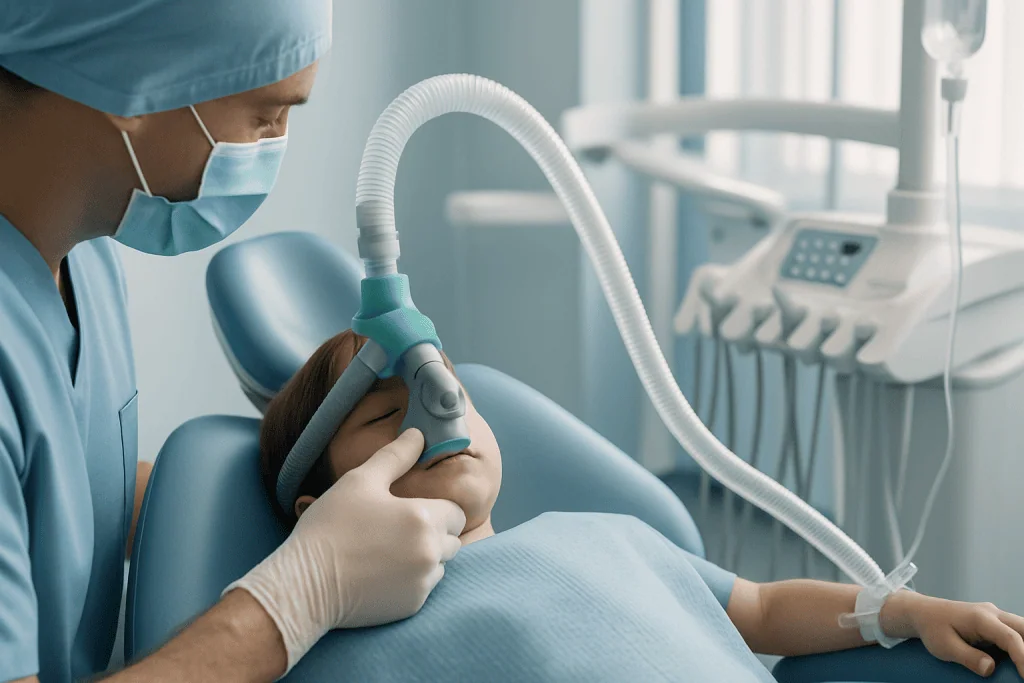
Pediatric dental sedation uses medication to help a child relax, stay comfortable and tolerate dental treatment. It ranges from mild anxiety relief with the child awake to general anaesthesia for extensive work. A pediatric dentist and anaesthesia team choose the level based on the child's age, weight, health and the procedure, then monitor breathing, heart rate and oxygen continuously until the child meets discharge criteria.
What Is Pediatric Dental Sedation?
Pediatric dental sedation is the use of medication to help a child relax, remain comfortable and tolerate dental treatment that could not be completed safely or humanely while the child is fully awake. It spans a spectrum, from mild relaxation with the child conscious and responsive through to general anaesthesia, where the child is completely asleep. It is used for procedures such as fillings, extractions, pulp therapy, crowns, preventive treatment, treatment of dental trauma, and comprehensive dental rehabilitation when several teeth need care in one visit.
Sedation for children sits within anaesthetic dentistry — the branch of dental medicine concerned with managing pain, anxiety and consciousness during treatment. In adults, anaesthetic dentistry is often a matter of comfort and convenience. In children, it is frequently the difference between receiving necessary care and going without it. A toddler with multiple painful cavities cannot be reasoned into holding still for an hour. A child with sensory sensitivities may find the sounds, lights and sensations of a dental surgery genuinely intolerable. Sedation gives the clinical team a controlled, monitored way to complete the work these children need.
Parents usually arrive at this subject carrying two worries at once: whether untreated dental problems will harm their child, and whether sedation itself is safe. Both concerns are legitimate. Dental infection, pain, difficulty eating, disrupted sleep and progressing decay can affect a child’s health, growth and development. At the same time, sedating a child is a medical intervention and deserves to be treated as one. It requires careful patient selection, weight-based medication choices, appropriate fasting instructions, continuous monitoring, emergency readiness and a team experienced specifically in caring for children — not simply a dental team that occasionally sedates.
At Acibadem, pediatric dental sedation is organised as a coordinated medical and dental service. Pediatric dentists, anaesthesiology teams, nurses and, where needed, other specialists evaluate the child before treatment begins, so that the sedation plan reflects both the dental diagnosis and the child’s overall health.
How does pediatric sedation work for dental procedures?
Pediatric sedation works by using carefully dosed medication to reduce a child’s awareness, anxiety and movement to the level the planned dental treatment requires — no more, no less. The medication may be swallowed, absorbed through the nose, inhaled as a gas, or given through a small intravenous line, depending on the depth of sedation needed and the child’s ability to cooperate with each route.
The medication does two things at once. It calms the child’s response to the environment — the sounds, the instruments, the sensation of someone working in the mouth — and it reduces movement so the dentist can work precisely and safely. Local anaesthetic is usually still placed in the gum to numb the teeth being treated, because blocking pain signals at the source keeps the child comfortable during the procedure and in the first hours afterwards. Throughout, the clinical team watches breathing, oxygen levels, heart rate and level of consciousness, adjusting the plan if the child’s response changes.
What are the levels of sedation?
Sedation is not a single technique; it is a spectrum with recognised levels, and the appropriate level depends on the child’s age, weight, medical history, anxiety, ability to cooperate, and the length and complexity of the dental work.
Minimal or mild sedation helps a child feel less anxious while remaining awake and responsive — able to follow instructions, breathe normally and answer questions. Moderate sedation produces a deeper level of relaxation; the child is drowsy but still responds to verbal or gentle physical stimulation. This is sometimes called conscious sedation. Deep sedation reduces responsiveness substantially, and close airway monitoring becomes essential because the child may not maintain protective reflexes reliably. General anaesthesia places the child completely asleep, with the anaesthesiology team managing the airway and vital functions throughout. It is usually reserved for complex or extensive dental care, very young children, severe anxiety, or medical and developmental factors that make office-based treatment impractical.
These levels form a continuum rather than fixed compartments. A child intended to be moderately sedated may drift deeper, which is precisely why guidelines require the team to be trained and equipped to manage a level deeper than the one planned. You can read more about how sedation is used across age groups on our sedation dentistry page.
What are the three types of dental anesthesia?
The three types of dental anesthesia are local anaesthesia, sedation and general anaesthesia. Local anaesthesia numbs a specific area — a tooth and the surrounding gum — while the patient stays fully awake. Sedation changes the patient’s level of consciousness and anxiety, at any of the depths described above, and is usually combined with local anaesthesia. General anaesthesia produces complete unconsciousness with the airway and vital signs managed by an anaesthesiology team. In pediatric dentistry, these three are not rivals but tools; most sedated children receive local anaesthetic as well, and the question is which combination matches the child and the procedure.
Anaesthetic Dentistry for Children: Why It Is Different
Anaesthetic dentistry for children differs from adult practice because children are not small adults — their airway anatomy, drug metabolism, emotional responses and ability to describe symptoms are all different. A child’s airway is narrower and more easily obstructed. Medication doses must be calculated by weight and documented precisely, because the margin between an effective dose and an excessive one is smaller than in adults. Children also cannot always tell you when something feels wrong, which is why objective monitoring — oxygen saturation, heart rate, respiratory pattern — carries more of the safety burden than it does with a communicative adult.
You may see dental anaesthesia shortened to “anest dent” in clinical shorthand and search listings; whatever it is called, the underlying discipline is the same. It combines pharmacology, airway management and behavioural understanding, and in hospital settings it is delivered in partnership with dental anesthesiology teams who plan, administer and monitor sedation and anaesthesia for dental procedures.
For children, this partnership matters in a practical way. The pediatric dentist knows the teeth; the anaesthesiology team knows the child’s physiology under medication. When both assess the child before the procedure, the plan reflects the whole picture — the number of teeth needing work, the estimated chair time, the child’s medical history, and any airway or breathing concerns such as snoring, sleep apnoea symptoms or recent respiratory infection.
General sedation vs general anesthesia: what is the difference?
The difference between general sedation and general anaesthesia is the depth of unconsciousness and who manages the airway. Under deep sedation — what many parents mean when they search for “general sedation” — the child is largely unresponsive but may still breathe independently, with the team watching the airway closely and ready to support it. Under general anaesthesia, the child is fully unconscious, does not respond to stimulation, and the anaesthesiology team actively manages breathing, often with an airway device, from start to finish.
Parents weighing sedation anesthesia vs general anaesthesia should know that neither is automatically the better choice. Deeper is not safer, and lighter is not gentler if the child fights through it. The right depth is the shallowest level at which the planned treatment can be completed calmly and safely.
What is the safest anesthesia for dental work?
There is no single safest anaesthesia for dental work; the safest option is the one matched to the individual child, the procedure and the setting. Local anaesthetic alone carries the least physiological impact, and it is the right choice when a child can tolerate treatment awake. Nitrous oxide with local anaesthetic adds mild relaxation with rapid recovery. Deeper sedation and general anaesthesia carry more physiological responsibility, which is why they belong in settings with continuous monitoring, pediatric-sized emergency equipment and clinicians trained to manage children’s airways. Safety, in other words, comes less from the drug chosen than from the assessment, the team and the environment around it.
Who May Need Pediatric Dental Sedation?
A child may be considered for dental sedation when treatment is necessary but cannot be completed safely or humanely with standard behavioural techniques alone. The decision rests on two things together: the dental diagnosis, and the child’s realistic ability to cope with the treatment that diagnosis requires.
Common reasons include severe dental anxiety, a strong gag reflex, inability to sit still for the required time, very young age, previous traumatic dental experiences, extensive tooth decay, dental infection, or the need to complete multiple procedures in one appointment. Pediatric sedation dentistry is also an important route to care for children with special healthcare needs — where sensory sensitivities, communication differences, movement disorders, developmental delay or medical complexity make routine treatment in a standard dental chair unrealistic. This includes children with autism spectrum disorder, attention-deficit/hyperactivity disorder, intellectual disability, cerebral palsy, epilepsy, cardiac disease or genetic syndromes.
Parents often notice signs that dental care is becoming urgent before a formal diagnosis is made. A child may complain of tooth pain, avoid chewing on one side, wake at night in discomfort, cry during brushing, develop facial swelling, have persistent bad breath linked to infection, or show visible cavities and broken teeth. Younger children frequently cannot describe pain clearly; instead they become irritable, eat less, avoid cold or sweet foods, or touch their face repeatedly. None of these signs proves that sedation will be needed — but each is a reason for a proper pediatric dentistry examination.
Diagnosis begins with that examination. The dentist evaluates the teeth, gums, bite, oral hygiene and any signs of infection or trauma. Digital dental X-rays are used where needed to see decay between teeth, infection around roots, developing permanent teeth, or areas invisible to the naked eye. For children who cannot tolerate a full examination awake, the team may build an initial picture from parent history, photographs, a brief look and prior dental records, then complete the detailed evaluation under sedation once the child is comfortable.
The sedation assessment is a separate step from the dental diagnosis, and it should never be skipped. It covers the child’s age, weight, allergies, current medications, previous anaesthesia or sedation experiences, snoring, sleep apnoea symptoms, respiratory illnesses, asthma, heart conditions, neurological disorders, seizures, reflux, recent infections and fasting ability. Where a child has complex medical needs, the team may request additional review from pediatric medicine, anaesthesiology, cardiology, pulmonology, neurology or another relevant specialty before confirming the plan.
What percentage of children are sedated for pediatric dental procedures?
There is no single reliable percentage, because rates vary enormously between countries, healthcare systems, age groups and clinical settings, and this page deliberately quotes no statistics it cannot stand behind. What can be said honestly is this: most children receive routine dental care awake, with behavioural support and, where needed, local anaesthetic alone; sedation is the exception used when awake treatment would be unsafe or unkind; and the youngest children with the most extensive decay account for a disproportionate share of sedation and general anaesthesia cases. Parents researching the topic will encounter everything from professional guidelines to individual practice websites — Alabama Pediatric Dental Associates is one example that appears frequently in searches — and while local rules differ, the clinical principles of safe pediatric sedation are the same everywhere.
Conditions and Dental Problems Sedation Can Help Address
Pediatric dental sedation does not treat a disease by itself. It creates safer, calmer conditions in which the dental team can complete necessary care, and it is justified when the benefit of completing treatment under sedation outweighs the risk of delaying care or attempting it while the child is distressed and moving.
The most common context is early childhood caries — sometimes called baby bottle tooth decay — when multiple primary teeth are affected at once. These cavities progress quickly because baby teeth have thinner enamel and smaller structures than adult teeth, so decay reaches the pulp sooner. Under sedation, the dentist can restore teeth, treat infected pulp, place pediatric crowns, and remove teeth that genuinely cannot be saved, all in one planned session rather than a string of distressing short visits.
Sedation may also be appropriate for dental abscesses, facial swelling related to tooth infection, fractured teeth, dental trauma, impacted or problematic teeth, soft tissue procedures, and treatment of children with a severe gag reflex. In selected children it is used for preventive and restorative care where behavioural barriers are so strong that small problems would otherwise be left to grow into emergencies.
The treatment completed under sedation may include fillings, stainless steel or aesthetic crowns, pulpotomy or pulpectomy in primary teeth, extractions, space maintainers, fluoride treatment, sealants, professional cleaning, or management of oral infection. The dentist discusses which teeth can be restored, which may need removal, how the plan supports chewing and speech, and how to reduce the risk of new decay afterwards. Preserving primary teeth matters where it is possible — they hold space for permanent teeth and support jaw growth — but keeping a severely infected, unrestorable tooth is not in a child’s interest, and an honest plan says so.
How Pediatric Dental Sedation Is Performed
Pediatric dental sedation begins well before the treatment day. In practice, the pathway runs through a consistent sequence:
- Consultation and planning. The pediatric dentist reviews the child’s dental condition, behaviour, age and previous experiences. You are asked about symptoms, eating, sleep, pain, swelling, medications, allergies, medical conditions and any previous sedation or anaesthesia. X-rays and photographs, where available, help the team estimate the scope of treatment and the likely appointment length.
- Selecting the sedation or anaesthesia plan. Some children are treated with minimal or moderate sedation in a dental setting designed for pediatric monitoring. Others need deep sedation or general anaesthesia — particularly if treatment is extensive, the child is very young, or medical and behavioural factors demand tighter control. In more complex cases the anaesthesiology team examines the child beforehand and helps determine the safest depth and location.
- Fasting instructions. You receive written fasting instructions before sedation. Food or liquid in the stomach increases the risk of aspiration during deeper sedation or anaesthesia, so the exact fasting window depends on what the child eats or drinks and the planned sedation level. Follow the written instructions exactly, and tell the team honestly if the child ate or drank outside the window — postponing is an inconvenience; concealing it is a hazard.
- Check-in and reassessment on the day. The team confirms the treatment plan, medical history, allergies, last food and drink, current medications, and any recent fever, cough, wheezing, vomiting or change in health. A respiratory infection or other new risk factor may lead to the procedure being postponed. This is a safety decision, not an administrative one.
- Monitoring is established. Depending on the sedation level, this includes oxygen saturation monitoring, heart rate monitoring, blood pressure measurement, respiratory observation and — at deeper levels — additional monitoring of ventilation. The child’s consciousness, skin colour, airway position and comfort are assessed continuously. Pediatric-sized equipment, oxygen delivery systems, suction, airway support tools, emergency medications and recovery equipment are in the room, not down the corridor.
- Sedation and treatment. Medication is given by mouth, through the nose, by inhalation or intravenously according to the plan. Nitrous oxide may be used for mild anxiety in selected children, usually combined with local anaesthetic. Once the child is settled at the intended depth, the dental team begins work. A mouth prop may hold the mouth open safely without requiring active cooperation, and protective materials isolate the teeth and control moisture. The dentist then completes the planned care — removing decay, restoring teeth, treating infected pulp, placing crowns, extracting teeth, cleaning, applying fluoride, or taking final X-rays if needed.
- Recovery and discharge. Afterwards, the child moves to a recovery area and is observed until discharge criteria are met — stable breathing, appropriate alertness, controlled bleeding and manageable comfort. Some children wake calmly; others cry, feel disoriented or seem irritable for a short period. This is a common response to sedation and usually settles as the medication wears off. You receive instructions covering eating, drinking, pain control, oral hygiene, activity and the warning signs the team wants you to watch for at home.
Local anaesthetic deserves a specific mention because it surprises many parents: the teeth and gums are usually numbed even when the child is sedated or asleep. Blocking pain signals at the tooth reduces the amount of sedative or anaesthetic medication needed during the procedure and keeps the child more comfortable in the first hours afterwards.
The technology involved supports precision and safety rather than spectacle. Digital imaging identifies decay, infection and tooth development with lower radiation exposure than older film-based methods. Electronic monitoring systems track oxygen levels, pulse, blood pressure and breathing patterns continuously. Modern suction, airway support tools, pediatric instruments and magnification help the team work efficiently in a small oral space, and electronic records keep the dental, anaesthesia and nursing teams working from the same plan.
Duration depends on the number of teeth involved, the procedures performed and the sedation method. Some visits are short; full-mouth dental rehabilitation takes longer. Plan for additional time either side of the procedure itself — for assessment, preparation, recovery monitoring and discharge instructions.
Is anesthesia in teeth painful?
Dental anesthesia in the tooth itself is not painful once it has taken effect — the point of it is that the tooth stops sending pain signals. The honest part of the answer concerns the injection: placing local anaesthetic in the gum can cause a brief sting or pressure. Dentists reduce this with numbing gel on the gum first, slow injection technique and distraction. In a sedated child, the injection is typically given after the sedation has taken hold, so the child is relaxed or asleep before the needle is used at all. What no responsible clinician will promise is a completely sensation-free experience; what they can offer is a carefully managed one.
How long does dental anesthesia stay in your body?
Local dental anaesthetic typically wears off over a few hours, with the exact time depending on the drug used, the dose and whether it contained an agent that prolongs numbness. During that window a child can bite a numb lip or cheek without feeling it, so soft foods and supervision matter. Sedative medications follow their own timelines: inhaled nitrous oxide clears within minutes, while oral, intranasal or intravenous sedatives can leave a child drowsy, unsteady or emotional for the rest of the day. This is why discharge instructions insist on close adult supervision, quiet activity and no unsupervised stairs, cycling or climbing until the child is fully back to normal.
Is Pediatric Dental Sedation Safe?
Pediatric dental sedation is considered safe when it is performed on an appropriately assessed child, by a team trained in pediatric sedation and airway management, in a setting equipped for children — and it carries real risk when any of those conditions is missing. That sentence is the honest core of the answer, and it explains why so much of this page is about assessment, monitoring and environment rather than the drugs themselves.
The main risks relate to breathing and airway: sedation can drift deeper than intended, and a child’s airway is small and easily compromised. Guidelines therefore require weight-based dosing, continuous monitoring appropriate to the sedation depth, a team member whose job is to watch the child rather than the teeth, immediate access to oxygen, suction and pediatric emergency equipment, and clinicians trained to rescue a child from a deeper level of sedation than the one planned. Recovery criteria must be met before discharge — a sleepy child is not sent home simply because the dentistry is finished.
Risk is also managed through timing and selection. A child with an active respiratory infection, uncontrolled reflux or an unassessed heart condition may have the procedure postponed or moved to a hospital setting. Postponement can feel frustrating, but it reflects the priority order working correctly: the child’s safety first, the schedule second.
Can a dental assistant administer pediatric conscious oral sedation?
In general, no — the prescribing and administration of sedative medication to a child is the responsibility of an appropriately qualified and licensed clinician, typically a dentist holding the relevant sedation permit or an anaesthesiology professional, and the exact rules depend on the country and jurisdiction. Guidelines in most systems allow trained dental assistants to support the sedation process — preparing equipment, helping with monitoring under direct supervision, documenting vital signs — but not to select doses or administer sedatives independently. A recurring requirement across guidelines is that at least one trained person is dedicated to observing the sedated child throughout, separate from the person performing the dentistry. If you are evaluating any provider, anywhere in the world, asking exactly who will administer and who will monitor the sedation is a fair and important question.
Why Acting Early Matters
Dental problems in children worsen quickly. A small cavity in a primary tooth can become painful or infected in a relatively short time, because the tooth structure is small and the pulp sits close to the surface. Once infection reaches the nerve, a child may develop severe pain, swelling, fever, difficulty eating or disrupted sleep.
Delay also makes treatment heavier. A tooth that could have been restored with a simple filling may later need pulp therapy, a crown or extraction. When several teeth deteriorate together, the child faces a longer appointment and often a deeper level of sedation than earlier treatment would have required. Dental infection can also affect general health, particularly in children with heart conditions, immune concerns, diabetes or other medical vulnerabilities.
There is an emotional dimension too. Repeated painful dental experiences deepen fear and make every future visit harder. When care is delayed until a child is in severe pain, dentistry becomes associated with distress and emergency intervention — the opposite of what a child’s first relationship with dental care should be. Early assessment lets the team choose a calmer, planned approach and build in prevention that reduces the chance of the whole cycle repeating.
Acting early does not automatically mean sedation. Many children can be treated with behavioural support, local anaesthetic or staged appointments, and a good pediatric team tries those routes first where they are realistic. But when sedation is the appropriate tool, timely planning prevents avoidable pain, limits the extent of treatment, and lets you make decisions before the situation becomes urgent.
Benefits of Pediatric Dental Sedation
Used for the right child, by an appropriately trained team, in a properly equipped setting, the benefits of pediatric dental sedation are both medical and emotional.
| Benefit | What It Means for You |
|---|---|
| Improved comfort during treatment | Your child can receive dental care with less fear, distress and resistance, especially during longer or more complex procedures. |
| Ability to complete more care in one visit | Multiple cavities, crowns, extractions or preventive treatments may be addressed in a single planned session when clinically appropriate. |
| Safer conditions for precise dental work | Reduced movement helps the dentist work more accurately and lowers the risk of sudden movement during delicate procedures. |
| Continuous medical monitoring | Breathing, heart rate, oxygen levels and recovery are observed by trained professionals throughout the sedation process. |
| Support for children with special healthcare needs | Children who cannot tolerate routine dental care may receive necessary treatment in a more controlled and respectful environment. |
| Reduced risk of worsening dental disease | Treating cavities, infection or damaged teeth promptly can help prevent pain, swelling, emergency visits and more complex procedures later. |
One benefit deserves a caveat: sedation makes treatment possible, not permanent. Restored teeth are only as durable as the diet, brushing habits and follow-up care that come after the appointment, which is why the prevention plan handed over at discharge is part of the treatment, not an afterthought.
Recovery Timeline After Pediatric Dental Sedation
Recovery varies with the child’s age, the sedation type, the dental procedures performed and the child’s general health, but most families can expect a gradual return to normal routines with careful observation at home in the first day.
| Time Period | What Patients Can Expect |
|---|---|
| Day 1 | Your child may be sleepy, emotional, unsteady or mildly nauseated. Soft foods and clear fluids are usually introduced gradually, following the team’s instructions. Close adult supervision is important. |
| First Week | Mild soreness in the mouth, sensitivity or gum tenderness may occur, especially after extractions, crowns or pulp treatment. Brushing should continue gently, and prescribed or recommended medications should be used as directed by the treating team. |
| First Month | Most children adapt to restored teeth or crowns. Eating and brushing routines improve. A follow-up visit may be recommended to assess healing, review oral hygiene and strengthen the prevention plan. |
| Longer Term | Regular dental check-ups, fluoride use, healthy nutrition and home care help protect the treatment result and reduce the risk of new cavities. |
If a flight is planned soon after treatment, build its timing into the plan rather than treating it as an afterthought — the appropriate interval depends on the sedation depth, the procedures performed and the child’s condition at discharge. Our guide on flying after sedation or anaesthesia explains what clinical teams typically consider before confirming a child is ready to travel.
What Influences a Good Result?
A good result in pediatric dental sedation depends on careful preparation, appropriate patient selection, high-quality dental treatment, safe sedation management and consistent follow-up. The best plan is not the deepest sedation; it is the plan that matches the child’s medical needs, emotional tolerance, dental diagnosis and safety profile — a principle that holds across the whole of anaesthetic dentistry, not just its pediatric branch.
The child’s health is one of the most important factors. Children with airway concerns, heavy snoring, obstructive sleep apnoea symptoms, obesity, a history of prematurity, asthma, heart disease, neurological conditions or recent respiratory infections may need additional assessment. This rarely means sedation is off the table; more often it changes the sedation level, the setting, the monitoring needs or the timing.
The accuracy of the dental diagnosis affects outcomes just as much. Digital X-rays, clinical examination and a clear treatment plan help the dentist decide which teeth can be restored and which require extraction. Preserving primary teeth is valuable where possible — they support chewing, speech development, jaw growth and spacing for the permanent teeth behind them — but the dentist must balance function, comfort, infection control and long-term development, and sometimes removal is the better decision.
Behavioural preparation improves the experience measurably in practice, even though it costs nothing. Use simple, calm language before the visit. Avoid frightening words and detailed descriptions of needles, drilling or pain. Children respond well to hearing that the dental team will help their teeth feel better, and that a parent or caregiver will be nearby before and after treatment, within the clinic’s safety policies. What you project, your child absorbs.
Following fasting instructions is non-negotiable. A child who eats or drinks too close to the procedure may have sedation delayed or rescheduled — an outcome nobody wants, but a far better one than proceeding unsafely. Tell the team about every medication and supplement the child takes, including inhalers, seizure medications, allergy medications, antibiotics and over-the-counter cold remedies; the anaesthesia team will give specific instructions about each one, and those instructions belong to them, not to a webpage.
After treatment, home care carries most of the long-term result. Restorations and crowns repair existing damage, but they do not remove the underlying decay risk. Diet, brushing technique, fluoride exposure, night-time feeding habits, bottle use, snacking frequency and saliva quality all influence whether new cavities form. The pediatric dental team tailors prevention guidance to your child’s age, habits and risk level — treat it as part of the treatment plan, because it is.
Finally, the discharge instructions you receive set out the warning signs the team wants recognised early — persistent vomiting, breathing difficulty, unusual sleepiness that does not lift, fever, increasing facial swelling, uncontrolled bleeding, pain that recommended medication does not relieve, or signs of dehydration. These problems are uncommon, and the instruction sheet exists precisely so that the rare case is noticed quickly rather than discovered late.
How Acibadem Approaches Pediatric Dental Sedation
Acibadem provides pediatric dental sedation within a hospital group, as part of its broader dental and oral health services. That hospital context matters for sedation specifically: structured quality and safety processes cover patient identification, infection control, medication safety, anaesthesia practice and emergency readiness, and hospital-based resources are available when a child needs a higher level of support than an office setting can offer.
Multidisciplinary collaboration is especially valuable for children. Pediatric dentists work with anaesthesiology teams and nursing staff to assess sedation needs and monitor the child throughout the visit. Where a child has a medical condition, additional specialists — pediatricians, cardiologists, pulmonologists, neurologists or others, depending on the history — can be brought into the assessment, and complex cases can be reviewed jointly so the treatment plan reflects both dental priorities and medical safety. Evidence-based protocols guide the evaluation, the sedation plan, the monitoring, the discharge criteria and the follow-up, with weight-based dosing documented at every step.
Treatment planning stays individual. Some children do well with a short sedated appointment. Others need comprehensive rehabilitation under general anaesthesia. Some require staged treatment because of infection, age or medical considerations. The plan is shaped around the child’s condition rather than a template, and parents are informed about the proposed procedures, expected recovery, alternatives and prevention strategy before treatment proceeds. Where extractions or extensive work are performed, the schedule should leave room for a review visit, so healing can be confirmed and remaining questions answered.
Deciding Whether Sedation Is Right for Your Child
The decision to sedate a child for dental treatment should follow a detailed dental evaluation and medical review, with a clear explanation of the proposed sedation level, its benefits, its risks, the alternatives and the recovery expectations. If any of those elements is missing from the conversation, the conversation is not finished.
Whichever provider you are evaluating, a responsible programme should be able to answer, plainly and without defensiveness: who will administer the sedation and what their qualifications are; how the child will be monitored and by whom; what fasting instructions apply and why; what happens in the recovery period; how an emergency would be handled in that specific setting; and what follow-up is expected after you return home. These are not awkward questions. They are the questions safe teams expect and welcome, and the quality of the answers tells you a great deal about the quality of the care.
With thoughtful planning, careful monitoring and a prevention-focused follow-up plan, many children who could not tolerate treatment awake are able to receive the dental care they need in a calm, controlled setting — and, just as importantly, to grow up without dentistry meaning fear. The most useful thing a parent can do is not to wait until pain or infection forces the timetable. Early evaluation keeps the options open and lets the safest, lightest appropriate path be chosen deliberately rather than under pressure.
Preparation
- A pediatric dentist and anesthesiology team review the child’s medical history, allergies, medications, and previous anesthesia experiences. Parents receive fasting instructions before the appointment, especially for deeper sedation. The child should arrive with a responsible adult and avoid food or drinks as instructed.
Aftercare
- Children are monitored until they are awake, stable, and ready to go home. Mild sleepiness, nausea, or unsteadiness can occur for several hours, so quiet supervision is recommended. Parents should follow diet, activity, and dental care instructions and contact the clinic if breathing problems, persistent vomiting, or unusual drowsiness occur.
Turkey vs UK, Germany & USA
Pediatric dental sedation costs and experiences vary by country, facility setting, sedation method, and the child’s dental needs. The comparison below highlights practical factors families often consider when planning care abroad or locally.
Costs are influenced by the level of sedation, the professionals involved, hospital standards, and how much support is included before and after the dental visit.
| Factor | Turkey | UK | Germany | USA |
|---|---|---|---|---|
| Price drivers | Often package-based for international patients; cost depends on sedation type, dental treatment scope, and hospital setting. | Private care costs vary by clinic, sedation team, and whether treatment is hospital-based or clinic-based. | Costs depend on specialist involvement, anesthesia support, facility type, and the extent of dental procedures. | Costs can vary widely by state, provider, anesthesia team, and facility fees. |
| Hospital and surgeon factors | International hospitals may coordinate pediatric dentists, anesthesiologists, and interpreters in the same care pathway. | Specialist pediatric dental services may be available privately, with hospital referral needed for more complex sedation. | Care is often structured and specialist-led, especially when anesthesia or hospital facilities are required. | Many care models exist, from private dental offices to ambulatory surgery centers and hospitals. |
| Accreditation and quality | Families can choose internationally oriented hospitals, including JCI-accredited providers, with pediatric monitoring protocols. | Quality oversight depends on public or private setting, professional registration, and clinical governance standards. | Regulated medical and dental systems with emphasis on professional standards and facility compliance. | Quality oversight varies by facility type, accreditation, state regulations, and provider credentials. |
| Waiting times | International patient departments may help arrange appointments and treatment planning within a coordinated schedule. | Private access may be faster than public pathways, but availability depends on specialist demand. | Scheduling depends on specialist availability, anesthesia planning, and clinic or hospital capacity. | Waiting time varies by location, insurance pathway, provider demand, and operating facility availability. |
| Travel and language logistics | Hospitals serving international patients may provide multilingual coordination, airport support, and treatment scheduling assistance. | Travel is simpler for local families; international families may arrange interpretation and accommodation separately. | International families may need language support, travel planning, and coordination between dental and anesthesia teams. | Long-distance travel may require independent planning for accommodation, transport, and follow-up. |
| Typical package inclusions | Packages may include consultation coordination, sedation planning, dental treatment, monitoring, recovery, and interpreter support. | Private quotes may separate consultation, sedation, dental procedure, facility, and follow-up components. | Quotes may be itemized by consultation, anesthesia, dental work, facility use, and aftercare. | Billing may involve separate provider, anesthesia, facility, imaging, and medication components. |
What affects your final cost
- Type and depth of sedation recommended for the child.
- Length and complexity of the dental procedure.
- Whether a pediatric anesthesiologist or hospital operating setting is required.
- Pre-sedation assessment, imaging, laboratory review, and medical clearance needs.
- Monitoring, recovery care, medications, and follow-up arrangements.
- Travel, accommodation, interpreter services, and international patient coordination.
Compare your options
Pediatric dental sedation ranges from mild anxiety control to hospital-based anesthesia. Suitability is decided by a specialist after reviewing the child’s age, health history, anxiety level, airway risk, and dental treatment plan.
| Option | What it is | Typical use | Key considerations |
|---|---|---|---|
| Behavior guidance with local anesthetic | Dental treatment using communication techniques, comfort measures, and numbing medicine without sedation. | Children who can cooperate and need limited dental care. | May not be enough for very anxious children, very young children, or longer procedures. |
| Nitrous oxide sedation | A mild inhaled sedative often known as laughing gas, used with oxygen while the child remains responsive. | Mild to moderate anxiety and shorter dental procedures. | Requires cooperation with a mask and continuous monitoring during the visit. |
| Oral or intranasal sedation | Sedative medicine given by mouth or through the nose to reduce anxiety and improve comfort. | Selected children who need more support than mild inhaled sedation. | Response can vary; fasting instructions, monitoring, and recovery time are important. |
| Intravenous sedation | Sedative medicine given through a vein by trained professionals with close monitoring. | More complex dental care or children who require a deeper level of relaxation. | Usually needs specialist anesthesia involvement, careful assessment, and recovery supervision. |
| General anesthesia | The child is fully asleep under anesthesia while dental treatment is completed in a controlled clinical setting. | Extensive dental treatment, severe anxiety, special healthcare needs, or inability to cooperate safely. | Requires anesthesia assessment, fasting, continuous monitoring, and an appropriate hospital or surgical facility. |
General information only — not medical or financial advice. Final costs depend on the factors above and your individual case; request a free, personalised quote.
Frequently Asked Questions
What affects the cost of pediatric dental sedation?
The main factors are the sedation method, dental treatment complexity, the need for an anesthesiologist, facility setting, pre-sedation assessment, monitoring, recovery care, and follow-up. Travel and language support may also affect the overall budget for international families.
How can I get a personalised quote?
A personalised quote usually requires the child’s dental records, medical history, any recent imaging, and details about previous sedation or anesthesia. Acibadem International can arrange a free consultation to review the case and explain what may be included.
Is the cheapest sedation option always appropriate?
No. The safest and most suitable option depends on the child’s health, anxiety level, cooperation, airway considerations, and the amount of dental work needed. A pediatric dental and anesthesia team should decide the approach.
What is usually included in an international patient package?
Packages may include appointment coordination, specialist consultation, sedation planning, dental treatment, monitoring, recovery care, interpreter support, and follow-up guidance. Inclusions vary, so families should request a written breakdown.
Does hospital accreditation matter for pediatric dental sedation?
Accreditation can help families understand whether a facility follows defined quality and safety processes. For sedation, it is also important to ask about pediatric monitoring, emergency readiness, anesthesia credentials, and recovery protocols.
Medically reviewed by the Acıbadem International Medical Board — September 1, 2026
See our medical review board →
Update history
- PublishedJune 8, 2026
- Medical review approvedSeptember 1, 2026
- Last content updateAugust 31, 2026
Trusted care for international patients
Doctors Performing This Treatment

Assoc. Prof. Dr. Ferit Bayram
Oral & Dental Health
Dr. Ezgi Gülüm
Oral Dental & Maxillofacial Surgery
Dr. Emre Çengelli
Oral Dental & Maxillofacial Surgery
Dr. Arzu Morçiçek
Oral & Dental HealthDr. Deniz Turgut
Oral & Dental Health
Dr. Ceyda Sabancı
Oral & Dental Health
Dr. Çağla Su Doğangün Ayduk
Oral & Dental Health
Dr. Begüm Öykü Kesim
Oral & Dental Health
Dr. Eylül Türsen
Oral & Dental Health
Dr. Zeynep Ezgi Akan
Oral & Dental Health
Dr. Metin Kınacı
Oral & Dental Health
Dr. Duygu Yavuzer Karadeniz
PeriodontolgyDr. Ali Riza Özdurmuş
Oral & Dental Health
Dr. Bedii Ender Topçu
Oral & Dental Health
Dr. Sebiha Nihal Yılmaz
Oral Dental & Maxillofacial SurgeryDr. Seda Saygılı Özaydın
Oral & Dental Health
Dr. Zeynep Ekin Kılınç
Oral & Dental Health
Dr. Uğur Önder
Oral & Dental Health
Dr. Helin Kuşsever Topçu
Oral & Dental Health
Dr. Pelin Açık
Oral & Dental Health
Dr. İpek Saygılı
Oral & Dental Health
Dr. Halime Bayram
Oral & Dental Health
Dr. Havva Gölalan
Oral & Dental Health
Dr. Merve Ağartıoğlu
Oral & Dental HealthMedical Units
Available at These Hospitals