Sonogram of Thyroid Nodules: What Patients Need to Know

A sonogram of thyroid nodules does not diagnose cancer by itself, but it helps estimate risk. Most thyroid nodules are benign, and many only need monitoring over time.
Key Takeaways
- A sonogram of thyroid nodules does not diagnose cancer by itself, but it helps estimate risk.
- Most thyroid nodules are benign, and many only need monitoring over time.
- Ultrasound looks at size, composition, margins, calcifications, and blood flow.
- If a nodule appears suspicious or is large enough, a fine-needle aspiration biopsy may be recommended.
- New trouble swallowing, voice changes, rapid growth, or neck swelling should be medically assessed.
A sonogram of thyroid nodules is an ultrasound exam that helps doctors see whether a thyroid lump has features that look benign or whether it needs closer follow-up. For most patients, it is a painless first-line test that guides the next step, such as observation, repeat imaging, or a biopsy.
What a Sonogram of Thyroid Nodules Shows
A sonogram of thyroid nodules is a thyroid ultrasound, a scan that uses sound waves to create images of the thyroid gland and any lumps inside it. It is commonly ordered when a doctor feels a lump in the neck, when a nodule is found on another imaging test, or when symptoms suggest a thyroid problem. The scan helps show whether a nodule looks fluid-filled, solid, mixed, smooth, irregular, small, or large.
For patients, the most important point is that ultrasound is mainly a risk-assessment tool. It does not confirm whether a nodule is cancerous, but it helps doctors decide whether the nodule is likely harmless, whether it should be watched over time, or whether it needs sampling with a needle biopsy. This is why a thyroid ultrasound often shapes the entire care plan.
Many thyroid nodules are discovered incidentally and cause no symptoms. In fact, thyroid nodules are common, especially with increasing age, and most are benign. A careful sonogram of thyroid nodules allows the healthcare team to focus attention on the nodules that have more concerning imaging features while avoiding unnecessary procedures for nodules that appear low risk.
Why Doctors Recommend This Ultrasound
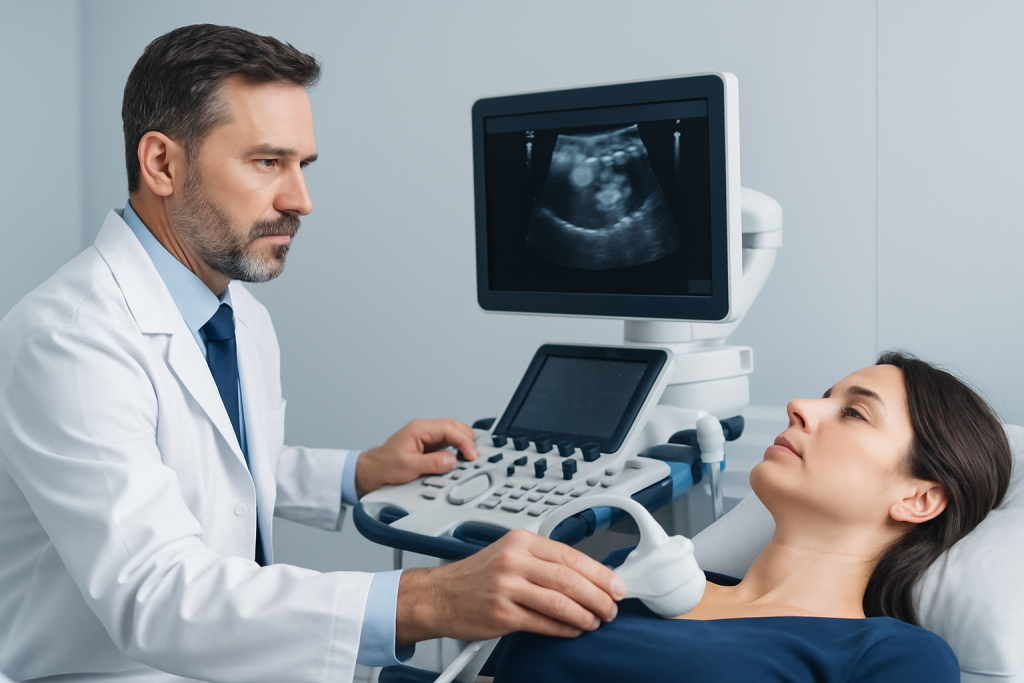
Doctors use a thyroid ultrasound because it gives detailed information that a physical exam alone cannot provide. A neck lump that feels like one nodule may actually be several nodules, and a small thyroid gland may contain abnormalities that are not easy to feel. Ultrasound can also assess nearby lymph nodes and show whether the thyroid tissue itself looks inflamed or enlarged.
This test is especially useful because it is noninvasive, does not use radiation, and is generally well tolerated. It may be recommended if blood tests suggest thyroid dysfunction, if there is a family history of thyroid disease, or if a nodule is found during imaging done for another reason. In patients with known thyroid cancer, ultrasound is also used to help stage the disease and monitor the neck over time.
Ultrasound findings are often combined with a medical history, examination, and thyroid function tests. If there are symptoms of overactive or underactive thyroid function, these are evaluated separately because the ultrasound focuses on structure, not hormone levels. A complete thyroid assessment may therefore include blood work and, in selected cases, further imaging or biopsy.
How the Test Is Done and What to Expect
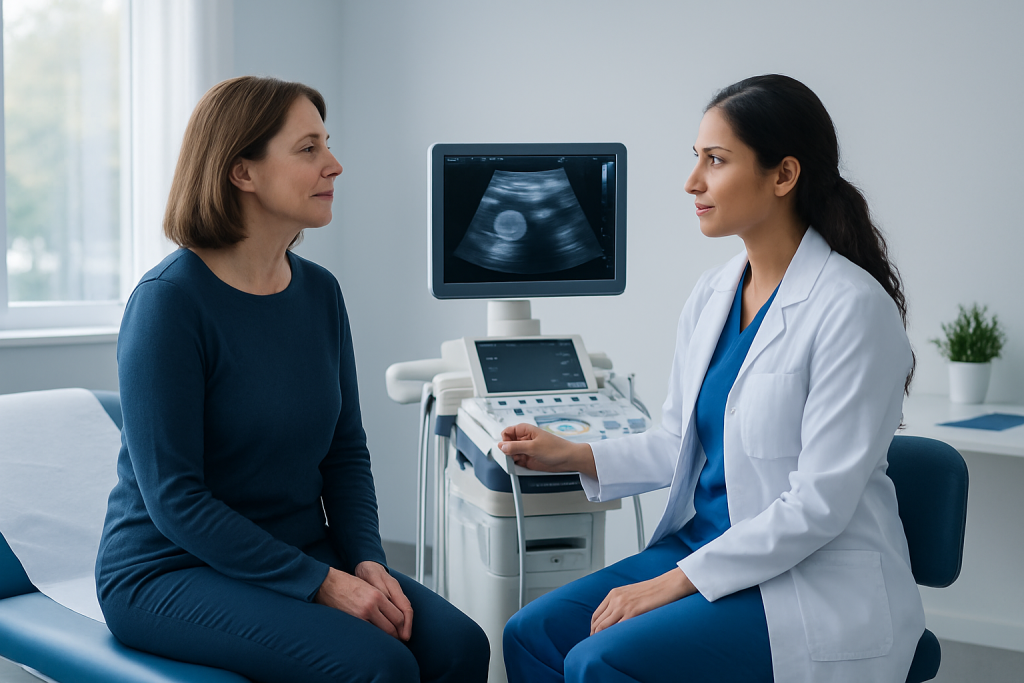
A sonogram of thyroid nodules is usually done in an outpatient imaging department or clinic. The patient lies on an examination couch with the neck slightly extended. A small amount of gel is placed on the skin, and a handheld probe is moved gently across the front of the neck to capture images of the thyroid gland.
The scan is painless for most people and usually takes less than 30 minutes. No needles, sedation, or special recovery time are typically needed. Patients can usually eat, drink, drive, and return to daily activities immediately after the exam unless another procedure is planned the same day.
Preparation is minimal. Patients may be asked to remove necklaces or clothing around the neck, and it can help to wear a top with an open collar. If a doctor later recommends a needle sample, that is a separate procedure called thyroid biopsy, and it may be arranged after the ultrasound results are reviewed.
How Ultrasound Results Are Interpreted
Radiologists and thyroid specialists look at several features on ultrasound to estimate how suspicious a nodule may be. These include the nodule’s size, whether it is solid or cystic, whether it is darker than the surrounding thyroid tissue, whether the edges are smooth or irregular, whether there are tiny calcifications, and whether it is taller than it is wide. The scan also checks whether there are enlarged or abnormal lymph nodes nearby.
Many hospitals use structured reporting systems, such as TI-RADS, to describe how concerning a nodule appears. A lower-risk nodule may simply need repeat ultrasound after a set interval, while a higher-risk nodule may need fine-needle aspiration. Size matters too: a mildly suspicious very small nodule may be monitored, while a larger nodule with similar features might be sampled.
It is important for patients to know that one ultrasound feature alone rarely tells the whole story. For example, a purely fluid-filled cyst is often benign, while a solid nodule with irregular margins may need more attention. Results are most useful when interpreted together with symptoms, exam findings, blood tests, and the patient’s personal and family history of thyroid disease.
If the report mentions a multinodular thyroid or diffuse thyroid changes, this may point to benign nodular thyroid disease or inflammation. Some patients may also be assessed for goiter if the thyroid gland is enlarged. The presence of nodules does not automatically mean cancer, and many patterns seen on ultrasound are reassuring.
What Can Cause Thyroid Nodules
Thyroid nodules can develop for several reasons, and many are not dangerous. Common causes include benign overgrowth of normal thyroid tissue, cysts filled with fluid, longstanding multinodular thyroid change, and inflammatory conditions such as thyroiditis. Some nodules produce thyroid hormone on their own, while others do not affect hormone levels at all.
A smaller number of nodules are associated with thyroid cancer. That is why imaging and, when needed, biopsy are important. A nodule may deserve closer evaluation if there is a history of childhood radiation exposure to the neck, a strong family history of thyroid cancer, rapid enlargement, or suspicious lymph nodes on examination or ultrasound.
Risk factors do not mean that a person will develop a serious condition, and many patients with no known risk factors still have entirely benign nodules. Likewise, symptoms can be absent even when a nodule is present. Some people only notice a sense of pressure in the neck, changes in swallowing, a visible lump, or symptoms related to an enlarged gland rather than the nodule itself.
- Benign colloid nodules
- Thyroid cysts
- Multinodular goiter
- Thyroiditis
- Autonomous or “hot” nodules
- Less commonly, thyroid cancer
Next Steps After the Scan
After a sonogram of thyroid nodules, the next step depends on the report. If the nodule has low-risk features and is small, the doctor may recommend repeat ultrasound after several months or longer to watch for changes in size or appearance. This approach is common and can be a safe option for many benign-looking nodules.
If the nodule is large enough or has suspicious features, a fine-needle aspiration biopsy may be advised. In this test, a thin needle removes a small sample of cells for laboratory examination. Some patients may also need thyroid blood tests, and in specific situations, thyroid scintigraphy can help evaluate whether a nodule is functioning independently.
Treatment is not always necessary. Benign nodules may simply be observed if they are not causing symptoms. When treatment is needed, options vary depending on whether the issue is cosmetic, compressive, overactive, or suspicious for cancer. Management may include medication for associated thyroid disease, image-guided biopsy, or surgery such as thyroidectomy when clearly indicated.
If a nodule causes pressure symptoms, repeated cyst fluid buildup, or concern for malignancy, referral to an endocrinologist, endocrine surgeon, or head and neck specialist may be appropriate. In complex cases, a broader workup for thyroid nodules can help clarify the safest and most appropriate plan.
Self-Care, Follow-Up, and Monitoring
Patients often want to know whether they can prevent thyroid nodules or make them shrink naturally. In many cases, nodules cannot be prevented because they arise from common structural changes within the gland. However, keeping regular medical follow-up is one of the most useful forms of self-care because it allows doctors to compare scans over time and catch meaningful changes early.
It can help to keep a copy of ultrasound reports and note when each scan was done. Asking the doctor about the nodule’s size, ultrasound category, and planned interval for follow-up can make results easier to understand. Patients should also report new symptoms promptly, especially neck fullness, persistent hoarseness, swallowing difficulty, or visible growth.
General thyroid health includes following medical advice for iodine intake, thyroid hormone disorders, and other endocrine conditions. Self-treatment with supplements or unproven remedies is not recommended, particularly because some products can affect thyroid function or interact with medications. If treatment becomes necessary, options may be discussed with specialists in endocrinology and metabolic diseases.
When to Seek Medical Care
Medical care should be sought if a person notices a new lump in the front of the neck, increasing swelling, a feeling of pressure, trouble swallowing, or unexplained hoarseness that does not improve. These symptoms do not necessarily mean a serious problem, but they deserve proper assessment. Prompt review is also important if a known thyroid nodule seems to grow quickly.
Urgent medical attention is appropriate if breathing becomes difficult or if neck swelling develops suddenly and is accompanied by pain, fever, or significant discomfort. Patients with a strong family history of thyroid cancer or prior radiation exposure should mention this clearly to their doctor because it can affect how the ultrasound findings are interpreted and how quickly follow-up is arranged.
For international patients who need evaluation, Acibadem International’s multidisciplinary specialists and JCI-accredited hospitals diagnose and treat thyroid conditions using imaging, endocrinology, biopsy, and surgical care when needed. Even so, the best timing and type of care should always be based on an individual medical assessment.
Frequently asked questions
Can a sonogram of thyroid nodules tell if the nodule is cancer?
Not by itself. Ultrasound can show features that make a nodule look low risk or more suspicious, but a biopsy is sometimes needed to confirm the diagnosis. Many nodules that look concerning on imaging still turn out to be benign.
Are most thyroid nodules dangerous?
No, most thyroid nodules are benign. Many are found by chance and never cause symptoms or serious problems. The purpose of ultrasound is to identify which nodules need closer follow-up.
Is a thyroid ultrasound painful?
A thyroid ultrasound is usually painless. The probe moves over gel placed on the neck, and there are no injections or incisions during the scan. Most patients can return to normal activities right away.
What happens if the ultrasound report says the nodule is suspicious?
The doctor may recommend a fine-needle aspiration biopsy, especially if the nodule reaches a certain size or has multiple concerning features. Additional blood tests or specialist review may also be advised. The exact plan depends on the imaging findings and the patient's history.
How often should thyroid nodules be checked?
There is no single schedule for everyone. Follow-up depends on the nodule's size, ultrasound pattern, previous results, and whether symptoms are present. A doctor may suggest repeat ultrasound after a defined interval to look for changes.
Do thyroid nodules affect thyroid hormone levels?
Sometimes, but not always. Many nodules do not change hormone production at all, while some can produce excess hormone or appear alongside other thyroid disorders. Blood tests are used to assess thyroid function because ultrasound does not measure hormone levels.
This article is for general information only and is not a substitute for professional medical advice. Please consult a qualified doctor about your individual situation.
Explore treatments in Turkey — costs, top hospitals & a free quote
JCI-accredited · board-certified surgeons · reply within 24h
Add us as a Preferred Source to see more of our trusted health content across Google Search, AI Overviews and Discover.

More from the Health Library

Red Spots on Penis: A Complete Medical Overview

Etanercept: An Evidence-Based Guide for Patients

Hep B Surface Antibody — Explained by Medical Evidence, Not Myths

Face Pulls: What Patients Need to Know
Anesthesiologist: An Evidence-Based Guide for Patients