

Teeth Whitening
Teeth whitening is a dentist-supervised cosmetic dental treatment that lightens tooth discoloration and improves smile brightness using professional bleaching agents tailored to enamel condition.
Quick answer
Teeth whitening is a dentist-supervised cosmetic treatment that lightens stained or discolored teeth using professional bleaching agents selected for the condition of the enamel and gums. At Acibadem in Turkey, whitening is planned after a dental assessment and may be performed in the clinic or with a customized take-home approach, depending on the cause of discoloration and the desired result.
Considering Teeth Whitening: A Personal Decision About Your Smile
Tooth color is one of the first details many people notice in a smile. When teeth appear yellow, dull, gray, or stained, it can affect how you feel in photographs, at work, during social occasions, or when meeting people for the first time. For international patients planning treatment abroad, the decision may also come with practical questions: Is teeth whitening safe? Will it look natural? How long will the result last? Can it be completed during a short trip? What if you have sensitivity, crowns, fillings, or previous dental work?
Teeth whitening is one of the most requested cosmetic dental treatments because it can create a visible improvement without changing the shape of the teeth. Unlike veneers or crowns, whitening does not remove tooth structure. It works by using professional bleaching agents to lighten stains within the enamel and dentin, helping the teeth look brighter while preserving their natural form.
The most important point is that whitening should be planned around your oral health, not only your desired shade. Tooth discoloration can come from coffee, tea, red wine, smoking, aging, medications, enamel thinning, or previous dental trauma. In some cases, a dark tooth may indicate an underlying dental problem that needs diagnosis before cosmetic treatment. A dentist-supervised approach allows the cause of discoloration to be assessed and the whitening method adjusted to your enamel condition, sensitivity level, restorations, and expectations.
At Acibadem, teeth whitening is approached as part of comprehensive dental care. The goal is not an artificial white appearance, but a clean, balanced, healthy-looking smile that suits your face, age, natural tooth structure, and personal preferences. For patients traveling from abroad, this planning can be especially valuable because the treatment timeline, oral health checks, and any additional dental needs can be coordinated before and during the visit.
What Is Professional Teeth Whitening?
Professional teeth whitening is a dentist-supervised cosmetic dental procedure that lightens natural tooth color using carefully selected bleaching agents. These agents typically contain hydrogen peroxide or carbamide peroxide in concentrations appropriate for clinical use. When applied to the tooth surface, the whitening agent releases oxygen molecules that penetrate the enamel and break down stain compounds. As these pigment molecules become smaller and less concentrated, the teeth appear brighter.
Teeth whitening works only on natural tooth structure. It does not change the color of porcelain crowns, ceramic veneers, composite bonding, dental implants, or tooth-colored fillings. This is why a dental examination is essential before treatment. If visible restorations are present, the dentist may discuss whether whitening should be completed first and whether any restorations need to be replaced afterward to match the new tooth shade.
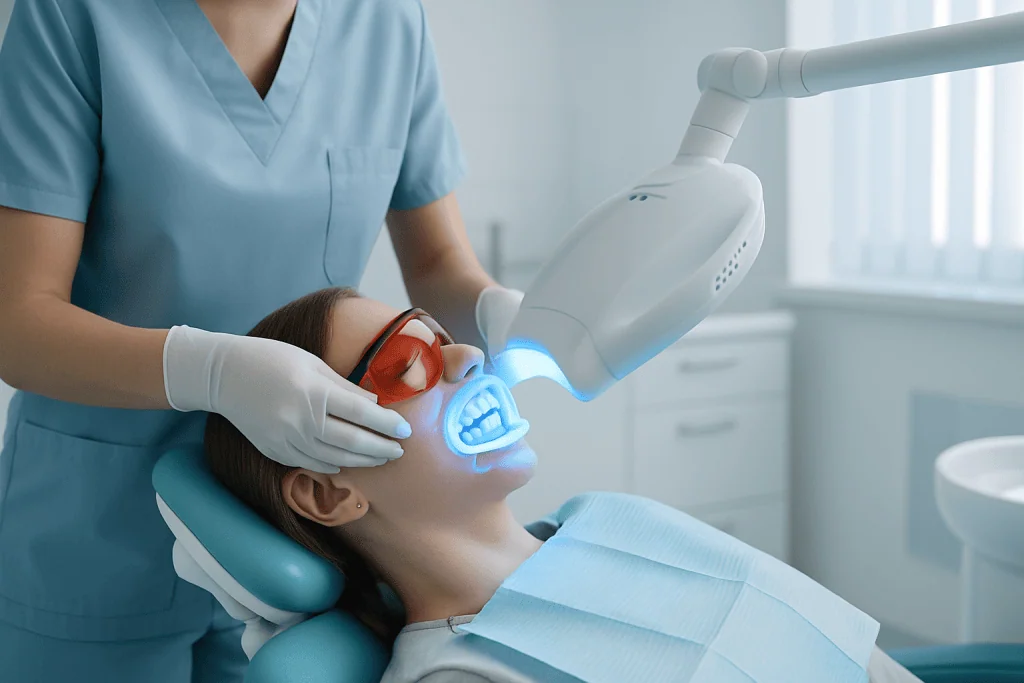
There are two main professional whitening approaches. In-office whitening is performed at the dental clinic and is designed to achieve noticeable whitening in a controlled setting. Protective barriers are placed over the gums, and the whitening gel is applied to the teeth for carefully timed intervals. In some cases, a specialized light may be used to support the whitening process, depending on the system and clinical judgment.
Take-home professional whitening uses custom trays made from impressions or digital scans of your teeth. Your dentist provides whitening gel at a suitable concentration and gives precise instructions on how long and how often to wear the trays. This method allows gradual whitening over several days or weeks and can be useful for patients who prefer a slower, more adjustable process.
Some patients benefit from a combined approach: in-office whitening for a faster initial result, followed by take-home trays for refinement or maintenance. The right plan depends on your starting tooth color, stain type, enamel condition, sensitivity risk, travel schedule, and desired outcome.
Professional whitening differs from over-the-counter strips, toothpastes, or online whitening kits because it begins with diagnosis and supervision. The bleaching agent is selected according to your needs, the gums and soft tissues are protected, and the dentist can manage sensitivity or uneven results. This helps improve safety, comfort, and predictability.
Who May Need Teeth Whitening?
Teeth whitening may be appropriate for adults whose teeth have become stained, yellowed, or dull and who want a brighter smile without changing the tooth shape. It is commonly considered before a wedding, graduation, business event, public appearance, or major life transition. Many patients also choose whitening simply because they feel their smile no longer reflects how healthy or energetic they feel.
Typical reasons patients seek whitening include surface stains from coffee, tea, cola, red wine, dark sauces, tobacco, or highly pigmented foods. These stains can accumulate gradually even with good brushing. Whitening may also help teeth that have darkened with age, as enamel becomes thinner and the underlying dentin becomes more visible. Some patients notice that their teeth appear less bright after orthodontic treatment, dental cleaning, or years of dietary staining.
However, not every form of discoloration responds in the same way. Yellow-toned teeth often respond well to whitening, while gray, brown, or banded discoloration can be more resistant. Staining caused by certain medications, developmental enamel conditions, fluorosis, or trauma may require a different cosmetic plan, such as bonding, microabrasion, veneers, or internal bleaching for a single non-vital tooth.
Diagnosis begins with a dental consultation. Your dentist examines the teeth and gums, checks for cavities, cracks, gum recession, enamel wear, exposed roots, and existing restorations. A shade assessment may be performed to document your starting color and discuss realistic expectations. If there is plaque, tartar, or surface staining, professional cleaning may be recommended before whitening. This allows the whitening gel to contact the tooth surface more evenly and helps the dentist distinguish removable stains from deeper discoloration.
Patients with tooth sensitivity, gum disease, untreated decay, leaking fillings, or cracked teeth may need treatment before whitening. Whitening gel can irritate inflamed gums or cause discomfort if it reaches exposed dentin. For this reason, dental health is the foundation of cosmetic dentistry. A brighter smile should also be a healthy smile.
Teeth whitening is generally not recommended for children and young adolescents unless there is a specific dental indication and specialist supervision. Pregnant or breastfeeding patients are usually advised to postpone elective whitening. People with significant enamel defects, severe gum recession, or extensive visible restorations may need alternatives or a more individualized plan.
Conditions and Indications Teeth Whitening Can Address
Professional teeth whitening is designed to improve discoloration of natural teeth. It is most effective when staining is within or on the enamel and when the tooth structure is otherwise healthy. Common indications include age-related yellowing, dietary stains, tobacco-related discoloration, and generalized dullness of the smile.
Whitening may also be part of a broader cosmetic dental plan. For example, patients considering composite bonding, veneers, or crowns may whiten their natural teeth first so that any new restorations can be matched to the brighter shade. This sequence is important because restorations will not whiten later. Planning the shade before restorative treatment can help create a more harmonious result.
Patients who have completed orthodontic treatment may choose whitening after braces or clear aligners to enhance the final appearance of straightened teeth. It may also be used after periodontal care or dental hygiene treatment once the gums are healthy and stable.
For a single tooth that has darkened after trauma or root canal treatment, standard external whitening may not be enough. In such cases, the dentist may evaluate whether internal bleaching is suitable. Internal bleaching is a different technique in which whitening material is placed inside a non-vital tooth under controlled conditions. This requires careful diagnosis and is not the same as routine smile whitening.
Teeth whitening does not correct tooth position, size, shape, chips, gaps, severe enamel defects, or the color of crowns and veneers. If these concerns are present, whitening may still be useful, but it may be one part of a more complete aesthetic dental plan. A thorough consultation helps clarify what whitening can achieve on its own and when other treatments may be more appropriate.
How Teeth Whitening Is Performed
Initial Consultation and Smile Assessment
The whitening process begins with a dental evaluation. Your dentist reviews your medical and dental history, asks about sensitivity, discusses previous whitening experiences, and examines your teeth and gums. The purpose is to identify whether whitening is suitable and to choose the safest method for your mouth.
Your dentist may assess the type of discoloration, existing restorations, tooth shade, enamel thickness, gum recession, and bite-related wear. If you have visible fillings, crowns, veneers, or bonding, their location and color are considered because they will not change shade with whitening. Photographs or digital shade records may be used to support planning and communication.
If active dental problems are found, they are addressed before whitening. This may include treating cavities, replacing defective fillings, managing gum inflammation, or recommending a professional cleaning. Whitening over plaque, tartar, or inflamed tissues can reduce comfort and compromise the final appearance.
Preparation Before Whitening
Preparation depends on the chosen method. Many patients benefit from professional dental cleaning before whitening, particularly if surface stains or tartar are present. Patients with sensitivity may be advised to use a desensitizing toothpaste before and after treatment. Your dentist may also recommend avoiding highly pigmented foods and drinks for a short period after whitening, when teeth may be more prone to temporary staining.
For in-office whitening, the lips, cheeks, and gums are protected before the bleaching agent is applied. For take-home whitening, impressions or digital scans are used to create custom trays that fit closely over the teeth. A precise tray fit helps distribute the gel evenly and reduces overflow onto the gums.
In-Office Whitening Procedure
During in-office whitening, you sit comfortably in the dental chair while the clinical team prepares the treatment area. A cheek retractor may be used to keep the lips away from the teeth. The gums are covered with a protective barrier to reduce irritation. The whitening gel is then applied to the visible surfaces of the teeth.
The gel remains in place for a controlled period and may be refreshed in cycles. Some whitening systems use a dental light to support the activation of the gel. The dentist monitors the teeth and soft tissues throughout the appointment. If sensitivity occurs, the application time may be adjusted or desensitizing agents may be used.
The appointment often takes about one to two hours, depending on the system used, the number of cycles, and the level of discoloration. Results are visible immediately in many patients, although the final shade may settle over several days as the teeth rehydrate. It is common for teeth to look especially bright immediately after treatment and then stabilize to a natural shade.
Professional Take-Home Whitening
Take-home whitening is performed by the patient using dentist-prescribed gel and custom trays. The dentist explains how much gel to place in each tray, how long to wear the trays, how to clean them, and what to do if sensitivity develops. Depending on the formulation, trays may be worn for short daily periods or overnight. Treatment typically continues for several days to a few weeks.
This method gives patients more control over the pace of whitening. It can be especially useful for mild to moderate discoloration, for patients who prefer gradual change, or for maintenance after in-office treatment. Because the trays are custom-made, they can also be reused later with professional guidance when touch-up whitening is appropriate.
Technology Used in Professional Whitening
Modern teeth whitening uses clinical materials and digital planning tools designed to improve precision and comfort. Dental shade guides, photography, and digital imaging can help document the starting point and communicate the desired outcome. Custom tray fabrication may use impressions or digital scans to create trays that fit accurately. In-office systems use controlled whitening gels, gingival protection materials, isolation techniques, and, in selected cases, light-assisted activation.
The value of technology is not only faster whitening. It helps the dentist protect soft tissues, monitor shade changes, reduce uneven application, and tailor the treatment to enamel condition. For international patients, digital records can also support treatment planning before arrival and follow-up communication after returning home.
Recovery and Aftercare
Teeth whitening requires little to no downtime. Most patients return to normal daily activities immediately. Temporary sensitivity is the most common side effect. It may feel like brief sharp sensations when drinking cold beverages or breathing in cold air. Gum irritation may occur if whitening gel contacts the soft tissues. These effects are usually short-lived and improve with time, desensitizing products, and careful instructions.
After whitening, the dentist may advise avoiding dark-colored foods and drinks for a short period, particularly coffee, tea, red wine, cola, berries, tomato-based sauces, and strongly pigmented spices. Smoking can also stain teeth quickly and reduce the longevity of the result. Good oral hygiene, regular dental cleanings, and occasional professional touch-ups can help maintain brightness.
Why Acting Early Matters and the Risks of Delay
Teeth whitening is elective, so there is usually no medical urgency when the concern is simple discoloration. However, delaying a dental evaluation can allow underlying problems to go unnoticed. A tooth that appears darker than the others may have a history of trauma, nerve changes, internal bleeding, or previous root canal treatment. Brown or black areas may represent decay rather than staining. Gum recession, enamel erosion, and exposed dentin can also change tooth color and increase sensitivity.
Using over-the-counter or online whitening products without a dental assessment can sometimes worsen discomfort or create uneven results. Whitening gel may irritate gums, aggravate untreated cavities, or cause sensitivity in areas of enamel loss. Abrasive whitening toothpastes used too aggressively may contribute to enamel wear or root surface abrasion.
Early professional evaluation allows the dentist to distinguish cosmetic staining from dental disease. If whitening is appropriate, the treatment can be planned safely. If another issue is present, addressing it early may prevent more complex care later. For patients traveling internationally, early planning is also practical. It allows enough time for dental cleaning, sensitivity management, restorative treatment if needed, and coordination of whitening with other dental or medical appointments.
Benefits of Professional Teeth Whitening
The advantages of dentist-supervised whitening are best understood in terms of appearance, safety, planning, and long-term maintenance.
| Benefit | What It Means for You |
|---|---|
| Brighter natural teeth | Professional bleaching can lighten stains and improve smile brightness while preserving your natural tooth shape and structure. |
| Dentist-supervised safety | Your gums, enamel condition, restorations, and sensitivity risk are evaluated before treatment, reducing avoidable irritation or discomfort. |
| Personalized shade planning | The goal is a natural-looking result that suits your smile rather than an overly white or artificial appearance. |
| Faster visible improvement | In-office whitening may provide noticeable results during a single clinical visit, which can be helpful for patients with limited travel time. |
| Options for sensitive teeth | The dentist can adjust gel concentration, application time, and aftercare, and may recommend desensitizing products when needed. |
| Coordination with other dental care | Whitening can be timed before bonding, veneers, crowns, or other treatments so restorations are matched to the desired shade. |
Recovery Timeline After Teeth Whitening
Most patients recover quickly after whitening, but the teeth may be temporarily more sensitive while the shade stabilizes.
| Time Period | What Patients Can Expect |
|---|---|
| Day 1 | Teeth may look noticeably brighter. Mild sensitivity or gum tenderness can occur. Patients are often advised to avoid dark-colored foods, drinks, and smoking. |
| First Week | The shade begins to settle as teeth rehydrate. Sensitivity usually decreases. Good brushing, flossing, and careful dietary choices support the result. |
| First Month | The whitening outcome becomes more stable. If take-home trays are part of the plan, treatment may be completed or adjusted during this period. |
| Longer Term | Results can last months to years depending on diet, smoking, oral hygiene, enamel characteristics, and dental cleaning habits. Periodic touch-ups may be recommended. |
Factors That Influence Whitening Results
Teeth whitening results vary from person to person. The starting shade is one of the most important factors. Teeth with yellow or light brown discoloration often respond more readily than teeth with gray, blue, or banded stains. Deep intrinsic stains may require more time, combined methods, or alternative cosmetic treatments.
Enamel thickness and tooth structure also matter. As enamel becomes thinner with age or wear, the darker dentin underneath may show through more strongly. Whitening can improve brightness, but it cannot fully change the natural anatomy of the tooth. Patients with exposed roots may notice that root surfaces whiten less than enamel because they are made of different tissue.
Existing dental restorations affect the final appearance. Crowns, veneers, composite bonding, and fillings keep their original color. If they are in the smile zone, they may appear darker after surrounding natural teeth are whitened. In such cases, the dentist may recommend replacing visible restorations after the whitening shade stabilizes.
Oral health is another major factor. Healthy gums and cavity-free teeth allow whitening to be more comfortable and even. Gum inflammation, untreated decay, cracked teeth, or leaking restorations can increase sensitivity and should be managed first.
Lifestyle habits influence how long results last. Coffee, tea, red wine, tobacco, dark sauces, and frequent consumption of pigmented foods can lead to new staining. Brushing technique, flossing, professional cleaning intervals, and use of maintenance trays all help preserve brightness. Some patients choose periodic touch-ups under dental supervision rather than repeating full whitening frequently.
Expectations are equally important. Teeth whitening improves brightness, but it does not create identical results for every patient. A skilled dentist will explain likely outcomes, limitations, and alternatives. The best result is usually one that looks clean, fresh, and compatible with the patient’s natural features.
Why International Patients Choose Acibadem for Teeth Whitening
For patients traveling abroad, even a cosmetic dental procedure should be handled with careful planning, transparent communication, and clinical discipline. Acibadem Hospitals provide dental care within a broader healthcare environment where patient safety, coordination, and international standards are central to the experience. The group’s JCI-accredited hospitals follow structured quality and safety processes, which can be especially reassuring for patients visiting from another country.
Teeth whitening at Acibadem begins with an individualized dental assessment rather than a one-size-fits-all approach. Dentists evaluate the cause of discoloration, the condition of the enamel and gums, the presence of restorations, and the patient’s desired outcome. When needed, whitening can be integrated with other dental treatments such as professional cleaning, restorative dentistry, orthodontic planning, periodontal care, or prosthetic work.
International patients often have limited time in Turkey, so treatment planning is important. Acibadem International supports patients before, during, and after their visit with multilingual coordination, appointment scheduling, medical information transfer, and assistance with practical arrangements. Communication in more than 20 languages helps patients understand their options, consent to treatment with clarity, and receive aftercare instructions they can follow at home.
The clinical environment also supports more complex decision-making when dental concerns overlap with medical conditions. Some patients may have diabetes, cancer histories, cardiac conditions, pregnancy considerations, medication use, or immune concerns that affect timing or suitability for elective dental treatment. In a hospital-based setting, dentists can coordinate with other medical specialists when appropriate. This is not necessary for every whitening patient, but it can be valuable for those with broader health needs.
Acibadem’s dental teams use modern diagnostic pathways and contemporary dental materials to support safe, controlled whitening. Digital imaging, clinical photography, shade assessment, custom tray fabrication, soft-tissue protection, and dentist-prescribed bleaching systems help personalize treatment. The emphasis is on achieving a refined, natural-looking result while reducing avoidable sensitivity and protecting oral tissues.
Many international patients also value the ability to combine teeth whitening with a comprehensive dental evaluation. A patient may arrive thinking only about tooth color and discover that a professional cleaning, replacement of an old filling, gum care, or bite assessment would improve both health and aesthetics. Conversely, a patient may learn that whitening alone is enough and that more invasive cosmetic treatment is unnecessary. This balanced guidance is an important part of responsible aesthetic dentistry.
Choosing care abroad requires trust. Patients need to know that their questions will be answered, that recommendations will be based on clinical findings, and that their treatment plan will fit their schedule and goals. At Acibadem, personalized planning, experienced physicians and dentists, advanced dental technology, multidisciplinary support when needed, and dedicated international patient services are brought together to create a thoughtful care experience for visitors from the United States and around the world.
A Brighter Smile, Planned With Care
Teeth whitening can be a simple and effective way to refresh your smile, but the best outcomes begin with a proper dental evaluation. The right whitening method depends on your tooth color, enamel condition, sensitivity level, restorations, oral health, and expectations. With dentist-supervised treatment, the process can be tailored to your needs and performed with attention to comfort and safety.
If you are considering teeth whitening in Turkey, Acibadem can help you understand whether you are a suitable candidate, what type of whitening may be appropriate, how long treatment may take, and whether any dental care should be completed first. International patients may request a consultation or second opinion and share dental photographs or records in advance when available. This can help your care team prepare a personalized plan before you travel.
A brighter smile should feel natural, healthy, and aligned with who you are. With careful planning and professional supervision, teeth whitening can help restore clarity and brightness to your smile while respecting the structure and health of your teeth.
This information is general and is not a substitute for professional medical or dental advice. A qualified dentist should evaluate your oral health and recommend the most appropriate treatment for your individual situation.
Preparation
- A dental examination is performed to check tooth enamel, gums, fillings, crowns, and the cause of discoloration. Professional cleaning may be recommended before whitening for more even results. Patients should inform the dentist about tooth sensitivity, gum disease, pregnancy, or recent dental work.
Aftercare
- Avoid coffee, tea, red wine, tobacco, and strongly colored foods for the first 24 to 48 hours. Mild tooth sensitivity is common and usually temporary; desensitizing toothpaste may help. Maintain results with good oral hygiene, regular dental check-ups, and dentist-approved touch-up guidance.
Turkey vs UK, Germany & USA
Teeth whitening costs and treatment experience can vary by country, clinic setting, dentist expertise, whitening method, and the level of support provided to international patients. A dentist should assess enamel condition, existing restorations, sensitivity risk, and expectations before recommending an option.
The comparison below highlights practical factors that may influence overall cost and patient experience for dentist-supervised teeth whitening.
| Factor | Turkey | UK | Germany | USA |
|---|---|---|---|---|
| Price drivers | Private dental pricing may be more package-oriented, with costs influenced by whitening method, dental assessment, sensitivity management, and any additional cleaning or restorative needs. | Cosmetic whitening is usually provided privately, with itemised fees and variation by clinic location, dentist experience, and whether trays or in-clinic treatment are used. | Costs are commonly itemised and influenced by clinic location, dentist qualifications, diagnostic needs, and the selected bleaching protocol. | Fees vary widely by city, practice type, cosmetic dentistry demand, whitening brand, and whether related dental care is needed before whitening. |
| Hospital and dentist factors | International dental departments may coordinate assessment, whitening planning, and supportive care within a private hospital or clinic network. | Treatment is often delivered in private dental practices; access and approach depend on the individual dentist and clinic. | Dental care is typically delivered in regulated private practices or clinics, with emphasis on documentation and dentist-led planning. | Care is commonly provided in private dental or cosmetic dentistry practices, with large differences in service style and amenities. |
| Accreditation and quality | Patients may choose JCI-accredited hospital groups or internationally focused clinics where infection control, documentation, and patient coordination are standardised. | Quality is guided by national dental regulation and professional standards; cosmetic treatment protocols vary by provider. | Quality is supported by national dental regulation and structured clinical protocols; international accreditation is less central to routine dental choice. | Quality depends on state regulation, professional credentials, clinic protocols, and the dentist’s cosmetic dentistry experience. |
| Waiting times | Private scheduling is often flexible for international patients, especially when whitening is planned as part of a short dental visit. | Private appointments may be available sooner than public pathways, while cosmetic whitening is generally outside publicly funded routine care. | Appointment timing depends on practice availability, city, and whether a dental check-up or hygiene visit is needed first. | Scheduling varies by practice and location; popular cosmetic clinics may require advance planning. |
| Travel and language logistics | International patient teams may help with appointment coordination, language support, airport or hotel guidance, and treatment planning before travel. | English-speaking care is straightforward for many patients, but travel support is usually arranged independently. | Language support may be available in larger cities or international clinics, but patients may need to confirm this before booking. | English-speaking care is standard, while travel, accommodation, and local transport are usually self-managed. |
| Typical package inclusions | Packages may include dental consultation, shade assessment, professional whitening, post-treatment guidance, and coordination support; inclusions should be confirmed in writing. | Quotes may separate consultation, hygiene cleaning, whitening trays, in-clinic bleaching, and follow-up advice. | Quotes often specify consultation, diagnostics, whitening materials, chairside time, and aftercare instructions separately. | Packages vary, and additional costs may apply for exams, cleaning, desensitising care, trays, or future maintenance. |
What affects your final cost
- The whitening method selected after dental examination
- The degree and type of tooth discoloration
- Whether professional cleaning is needed before whitening
- Existing fillings, crowns, veneers, or other restorations that do not whiten
- Tooth sensitivity risk and any protective or desensitising measures
- The dentist’s experience and the clinic or hospital setting
- Language assistance, travel coordination, and aftercare support for international patients
Compare your options
Professional teeth whitening can be delivered in different ways depending on oral health, enamel condition, sensitivity history, and the cause of discoloration. Suitability is decided by a specialist after a dental assessment.
| Option | What it is | Typical use | Key considerations |
|---|---|---|---|
| In-clinic whitening | Dentist-supervised application of professional bleaching gel, sometimes supported by controlled activation systems depending on the protocol. | Patients who want a supervised cosmetic whitening visit and direct monitoring by the dental team. | May cause temporary sensitivity; shade outcome depends on enamel, staining type, and baseline tooth colour. |
| Custom take-home whitening trays | Custom-fitted trays made by the dentist and used with professional whitening gel according to instructions. | Patients who prefer gradual whitening under dental guidance and may want controlled maintenance over time. | Requires careful compliance; trays must fit well to reduce gum irritation and uneven whitening. |
| Combined whitening protocol | A plan that uses in-clinic whitening together with dentist-prescribed home trays. | Patients with more persistent discoloration or those seeking a staged approach supervised by the dentist. | May increase sensitivity risk if not managed properly; timing and gel strength should be personalised. |
| Internal whitening | Whitening material is placed inside a tooth that has darkened after root canal treatment, when clinically appropriate. | Single discoloured non-vital teeth that do not respond to surface whitening alone. | Requires careful diagnosis and monitoring; not suitable for every root-treated tooth. |
| Whitening before restorative dentistry | Whitening is planned before veneers, crowns, bonding, or fillings so the final restoration shade can be matched. | Patients considering cosmetic dental work where tooth shade is part of smile planning. | Restorations do not bleach like natural enamel, so shade timing and replacement needs must be discussed. |
| Non-bleaching stain management | Professional cleaning, polishing, airflow cleaning, or enamel-safe stain removal without changing intrinsic tooth colour. | Surface stains from diet, tobacco, or plaque where bleaching may not be the first step. | May improve brightness but does not alter deeper tooth colour; dentist assessment helps distinguish stain type. |
Trusted care for international patients
General information only — not medical or financial advice. Final costs depend on the factors above and your individual case; request a free, personalised quote.
Doctors Performing This Treatment

Assoc. Prof. Dr. Ferit Bayram
Oral & Dental HealthDr. Ali Riza Özdurmuş
Oral & Dental Health
Dr. Arzu Morçiçek
Oral & Dental Health
Dr. Bedii Ender Topçu
Oral & Dental HealthDr. Begüm Öykü Kesim
Oral & Dental Health
Dr. Ceyda Sabancı
Oral & Dental HealthDr. Deniz Turgut
Oral & Dental Health
Dr. Destina Suay Sarı
Oral & Dental Health
Dr. Emre Çengelli
Oral Dental & Maxillofacial Surgery
Dr. Eylül Türsen
Oral & Dental HealthDr. Ezgi Gülüm
Oral Dental & Maxillofacial Surgery
Dr. Halime Bayram
Oral & Dental Health
Dr. Havva Gölalan
Oral & Dental Health
Dr. Helin Kuşsever Topçu
Oral & Dental Health
Dr. Melike Zeynep Çapoğlu
Oral & Dental Health
Dr. Merve Ağartıoğlu
Oral & Dental Health
Dr. Metin Kınacı
Oral & Dental Health
Dr. Mücahit Güner
Oral & Dental Health
Dr. Pelin Açık
Oral & Dental Health
Dr. Sebiha Nihal Yılmaz
Oral Dental & Maxillofacial SurgeryDr. Seda Saygılı Özaydın
Oral & Dental Health
Dr. Uğur Önder
Oral & Dental Health
Dr. Zeynep Ekin Kılınç
Oral & Dental Health
Dr. Çağla Su Doğangün Ayduk
Oral & Dental HealthMedical Units
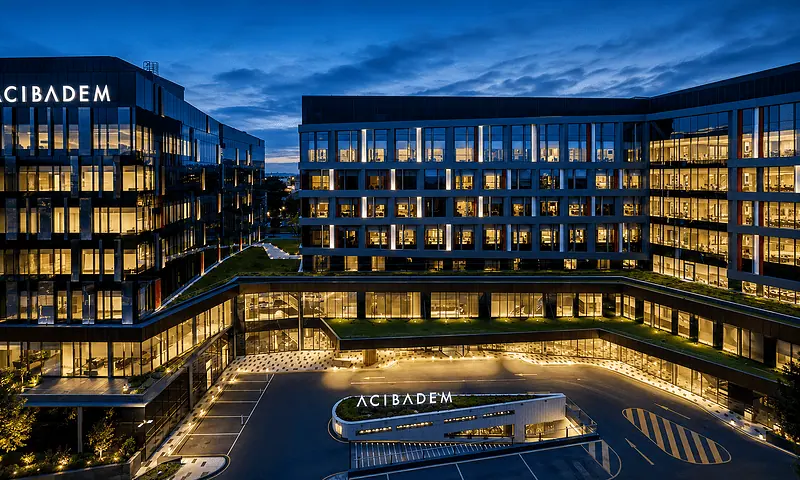
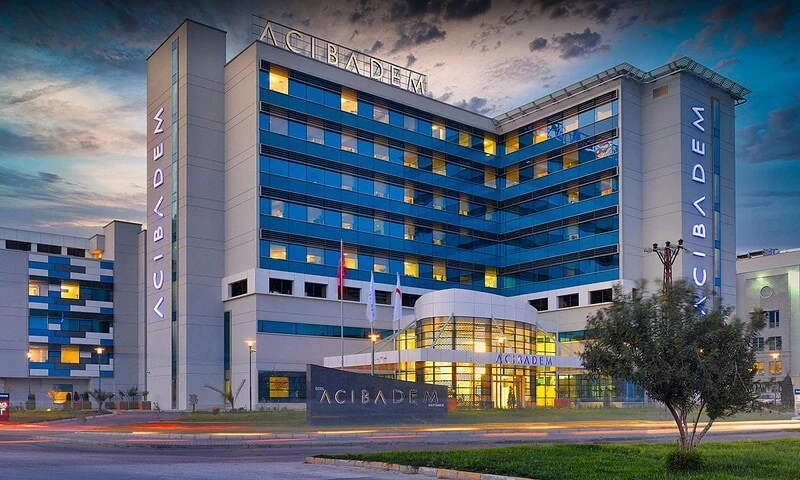
Available at These Hospitals






Frequently Asked Questions
What affects the cost of teeth whitening in Turkey?
Cost depends on the whitening method, dental examination findings, whether cleaning or sensitivity care is needed, the dentist’s experience, clinic setting, and what is included in the international patient package. A free consultation can help clarify the most suitable plan and provide a personalised quote.
How can I get a personalised quote before travelling?
You can usually share dental photos, a brief dental history, sensitivity concerns, and any previous whitening or restorative treatments with the international patient team. The final plan is confirmed after an in-person dental examination, because enamel condition and restorations must be assessed directly.
What is usually included in a teeth whitening package?
A package may include consultation, shade assessment, professional whitening, post-treatment instructions, and patient coordination support. Inclusions vary, so it is important to ask whether cleaning, trays, desensitising products, follow-up guidance, travel support, or interpreter assistance are included.
Will crowns, veneers, or fillings whiten with the treatment?
No. Bleaching agents work on natural tooth enamel and do not lighten ceramic, composite, or other restorative materials. If restorations are visible when smiling, the dentist may recommend planning whitening before any shade-matched restorative work.
Is professional teeth whitening safe for sensitive teeth?
Professional whitening is dentist-supervised and can be adjusted for enamel condition and sensitivity risk. Temporary sensitivity can occur, so the dentist may recommend desensitising measures, a gentler protocol, or postponing whitening if untreated dental problems are present.