Zirconium Teeth
Zirconium teeth are natural-looking zirconia crowns or veneers used to restore tooth shape, color and strength. They are planned individually for smile aesthetics and bite function.
Quick answer
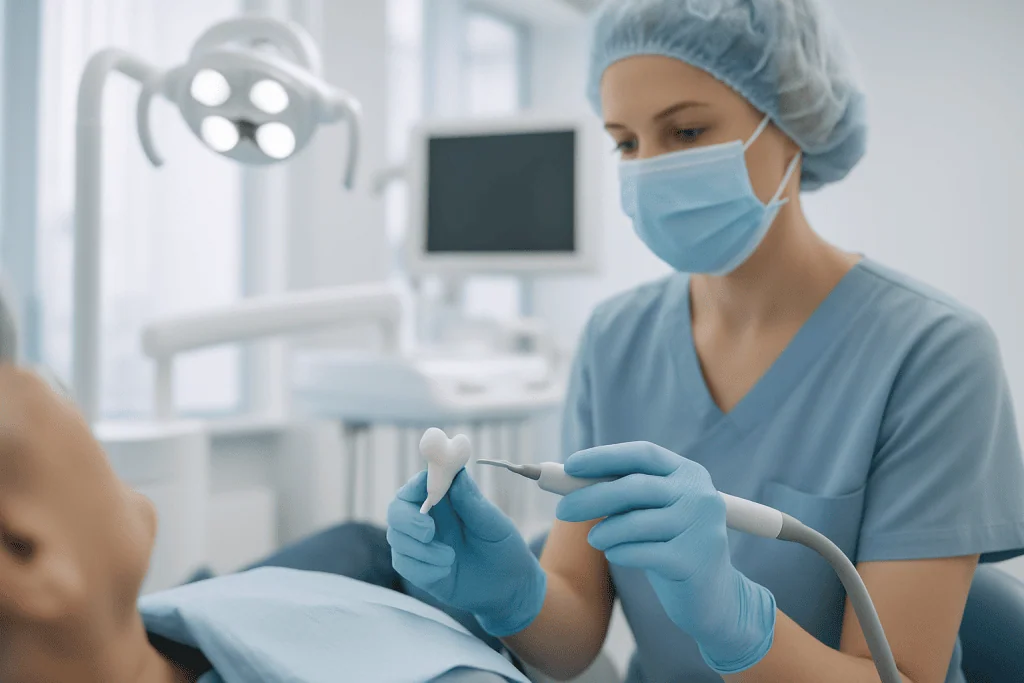
Zirconium teeth are dental restorations — crowns, veneers or bridges — made from zirconia, a strong, tooth-coloured ceramic. The dentist reshapes the affected tooth, takes a digital scan or impression, and a dental laboratory mills the restoration to fit precisely. Treatment usually takes several appointments spread over days to weeks, depending on how many teeth are involved and whether other dental work is needed first.
What Are Zirconium Teeth?
Zirconium teeth are dental restorations — most often crowns, veneers or bridges — made from zirconia, a high-strength, tooth-coloured ceramic. They rebuild or cover teeth that are damaged, worn, heavily filled or discoloured, so the tooth looks natural and works properly again. Zirconia restorations are used for single teeth, for groups of teeth, for full smile designs and, in some cases, on dental implants to replace missing teeth.
In everyday language, “zirconium teeth” usually means zirconia crowns, though the term also covers zirconia veneers and zirconia-based bridges. Dentists value zirconia because it combines two qualities that older materials struggled to deliver at the same time: it withstands strong chewing forces, and it can be made in shades and translucencies that blend with natural enamel. Earlier generations of zirconia were known mainly for durability and could look more opaque than a natural tooth. Modern zirconia ceramics allow the dentist and technician to choose different levels of translucency, layered colour and surface texture depending on where the restoration sits and what it needs to do. For back teeth, strength and chewing resistance usually come first. For front teeth, the plan tends to emphasise light reflection, incisal detail and harmony with the neighbouring teeth.
Zirconium teeth are not a one-size-fits-all product. A restoration must be designed for the individual tooth and for the whole bite. A crown that looks attractive but interferes with chewing can lead to discomfort, fracture risk or jaw muscle strain. A veneer that is too bright or too opaque tends to look noticeable rather than natural. That is why planning includes dental photographs, shade evaluation, bite analysis, digital scans or impressions and, in many cases, a trial smile or provisional restorations before the final zirconia is made.
Choosing this treatment is rarely only about appearance. Many patients start researching because of old crowns that no longer look right, teeth weakened by large fillings, deep discolouration that whitening cannot reach, or bite problems that make chewing uncomfortable. A good outcome answers all of these at once: it suits your lip line, gum contours, skin tone, bite and speech, and it protects the tooth underneath. Strength alone does not define a successful smile. Comfort, fit, bite balance and gum health matter just as much.
What is zirconia?
Zirconia is zirconium dioxide, a crystalline ceramic made from the element zirconium combined with oxygen. Despite the name, it is not a metal and contains no metal alloy: it is a metal-free ceramic, which matters for patients who want to avoid the dark line that can appear at the gum edge of older metal-based crowns. Dental zirconia is stabilised with small amounts of other oxides to control its strength and translucency, then supplied to laboratories as solid blocks or discs. The restoration is milled from the block using computer-controlled equipment and then sintered — fired at high temperature — which gives the ceramic its final hardness and dimensions. Different formulations behave differently: some are engineered mainly for strength, others sacrifice a measure of strength for a more enamel-like translucency. The dentist chooses the formulation to match the clinical job.
Is zirconia a real diamond, or something else entirely?
Dental zirconia is not a diamond, and it is not the same material as the “cubic zirconia” sold in jewellery. Cubic zirconia is a synthetic gemstone — the sparkling diamond substitute found in costume jewellery and crystal brands — while dental zirconia is an engineered ceramic processed specifically for medical and dental use. The two share chemistry on paper but are manufactured and used in completely different ways. Questions about whether zirconia jewellery is valuable belong to the gem trade; they say nothing about how zirconia performs as a dental material, where its value lies in strength, fit and biocompatibility rather than sparkle.
Are zirconium teeth the same as zirconium crystal teeth?
No. “Crystal teeth” usually refers to dental crystals — small decorative gems bonded to the surface of a natural tooth. That is a cosmetic accessory, not a restoration. Zirconium teeth, by contrast, are structural: they replace or cover damaged tooth material and are designed to carry chewing forces for years. If you are searching for tooth gems, the crystal page is the right place; this page covers zirconia crowns, veneers, bridges and implant restorations.
Types of Zirconium Restorations
The word “zirconium teeth” covers several distinct restorations. Which one suits you depends on how much healthy tooth structure remains, where the tooth sits in the smile, how your bite loads it and what you want to change.
What does a zirconia crown do?
A zirconia crown covers the entire visible portion of a tooth, much like a protective cap. It is recommended when a tooth is cracked, heavily filled, worn, weakened after root canal treatment, severely discoloured or significantly misshapen — situations where a thin veneer would not provide enough protection. A zirconia dental crown can be monolithic, meaning milled from a single piece of ceramic for maximum strength, or layered, meaning a strong zirconia core is veneered with aesthetic ceramic in the visible areas to add depth and translucency. Monolithic designs are often chosen for back teeth, where forces are highest; layered or high-translucency designs are more common at the front, where light behaviour matters most. You can read more about how crowns work in general on our dental crowns page, and about this specific material on the zirconium crown page.
Zirconia veneers
A zirconia veneer is thinner than a crown and covers mainly the front surface and edge of the tooth. Veneers are considered when the underlying tooth is generally healthy but needs a change in colour, proportion or minor alignment. Because a veneer relies on bonding to the remaining tooth, it needs enough sound enamel and a favourable tooth position. Veneers are the more conservative choice where they are feasible, because they preserve more of your own tooth. They are not the right answer for teeth that are structurally weak, heavily filled or significantly rotated — forcing a veneer onto such a tooth either creates excessive bulk or demands unnecessary tooth reduction.
Zirconia bridges
Zirconia can also be used to make a dental bridge — a restoration that replaces one or more missing teeth by anchoring artificial teeth to crowns on the neighbouring teeth. Whether zirconia is suitable for a given bridge depends on the length of the gap, the bite forces in that area and the condition of the supporting teeth. Short spans in favourable positions are more predictable than long spans under heavy load. Your dentist weighs these factors against alternatives such as implants before recommending a bridge.
Monolithic, layered and high-translucency zirconia
Not all zirconia is the same, and the differences matter for your result. Stronger, more opaque formulations resist fracture best and are typically reserved for molars, bridges and patients with heavy bites. High-translucency formulations mimic enamel more convincingly but tolerate less force, which makes them a front-tooth material. Layered restorations combine a zirconia framework with hand-finished aesthetic ceramic; they can achieve the most lifelike results but the layered porcelain is more delicate than the core beneath it. There is no single “best” type — there is only the right type for a particular tooth, bite and aesthetic goal, which is a clinical decision, not a catalogue choice.
Zirconia Dental Implants and Implant-Supported Teeth
Zirconia dental implants are one of two things patients usually mean when they search this phrase, and it is worth separating them. The first, and far more common, is a zirconia crown or bridge fitted on top of a conventional titanium implant — the implant replaces the missing root, and the zirconia restoration replaces the visible tooth. The second is an implant post itself made from ceramic rather than titanium; these zirconia implants exist as a metal-free alternative and may be discussed for selected patients, but titanium remains the standard, extensively documented option in implant dentistry.
When people talk about zirconia teeth implants, they are usually describing the first arrangement: an implant-supported zirconia crown. Zirconia suits this role well in visible areas because the ceramic works sympathetically with the gum tissue around the implant and avoids any grey shadow at the gumline. The design of the crown’s emergence — the way it rises out of the gum — is planned together with the implant position, which is why implant restorations demand close coordination between the surgical and restorative stages. If you are missing teeth and weighing your options, our dental implants page explains the implant process itself; this page covers the ceramic teeth that go on top.
Implant cases follow a longer timeline than crowns on natural teeth, because the implant needs time to integrate with the bone before the final zirconia restoration is fitted. Your dentist will explain the sequence and the waiting periods that apply to your situation, including any interim teeth you wear in between.
Who May Need Zirconium Teeth?
Patients consider zirconium teeth for many reasons, and the motivation is often both cosmetic and functional: you want a smile you are not self-conscious about, and you also want to chew comfortably and protect weakened teeth. Some people arrive with a single broken molar. Others arrive with a set of old crowns that have developed dark margins, or front teeth that have worn short over years of grinding.
You may be a candidate for zirconia crowns or veneers if your teeth are structurally compromised, aesthetically uneven or unlikely to improve enough with whitening or bonding alone. Common concerns include deep discolouration, old crowns with visible dark lines, chipped or fractured edges, spaces between teeth, teeth that look too small or short, and moderate wear from grinding. Teeth that have had root canal treatment often need crowns to reduce the risk of fracture, particularly back teeth that absorb strong chewing forces.
Diagnosis begins with a complete examination. Your dentist assesses the teeth, gums, jaw joints, bite relationship and oral hygiene. Dental X-rays or three-dimensional imaging may be used when roots, bone support or existing restorations need closer evaluation. Digital intraoral scans or conventional impressions create accurate models of your teeth, and clinical photographs let the dentist and laboratory analyse symmetry, tooth proportions, smile line and shade.
The gum evaluation deserves particular attention. Zirconium crowns or veneers should sit on a healthy foundation. If your gums are inflamed, bleeding or receding, periodontal treatment comes first. In some patients, orthodontic treatment, gum contouring, implant therapy or management of tooth grinding is recommended before or alongside the zirconia work. The principle is simple: beautiful ceramics do not belong on an unstable oral environment.
Zirconium teeth are not suitable for everyone in every situation. A tooth with extensive decay below the gumline, severe mobility or too little remaining structure may not hold a crown unless it can first be stabilised. Severely misaligned teeth are often better treated with orthodontics than with restorations that would require heavy tooth reduction. Heavy night-time grinders can still have zirconia, but the plan needs protective thinking — bite adjustment, careful material selection and usually a night guard. Whatever the starting point, the final treatment plan is always made after an in-person clinical examination, because photographs and scans alone cannot capture how a bite behaves in function.
Is zirconium good for teeth?
Zirconia is a good restorative material for teeth when it is used for the right indication: it is strong enough for chewing areas, metal-free, kind to gum tissue when margins are well made, and capable of a natural appearance. What it is not is a substitute for healthy tooth structure. Preparing a tooth for a crown or veneer removes enamel permanently, so a responsible dentist reserves zirconia for teeth that genuinely need coverage or significant change, and recommends less invasive options — whitening, bonding, orthodontics — where those would do the job. “Good for teeth” therefore depends less on the material and more on whether the treatment matches the problem.
Conditions and Indications Zirconium Teeth Can Address
Zirconium teeth may be recommended for a wide range of restorative and aesthetic concerns. The indication determines whether a crown, veneer, bridge or implant-supported restoration is most appropriate, and the plan is shaped by how much healthy tooth remains, the state of the gums, the bite forces involved and the appearance you are aiming for.
- Severely discoloured teeth: zirconia restorations can mask discolouration that does not respond well to whitening, including some medication-related stains, darkening after trauma or discolouration following root canal treatment.
- Worn or shortened teeth: teeth affected by grinding, acid erosion or age-related wear can sometimes be restored to regain tooth length, bite support and smile proportions.
- Cracked or fractured teeth: a zirconia crown can protect a weakened tooth when enough healthy structure remains and the root is stable.
- Large fillings or weakened structure: teeth with extensive restorations may need full coverage to reduce the risk of further fracture.
- Old crowns with poor aesthetics: zirconium crowns can replace crowns with visible dark lines, mismatched colour, bulky shape or poor fit.
- Irregular tooth shape or size: peg-shaped teeth, uneven edges or small teeth may be improved with veneers or crowns.
- Minor spacing or alignment concerns: selected gaps or mild irregularities may be addressed restoratively when orthodontics is not needed or when combined planning is appropriate.
- Implant restorations: zirconia crowns may be used on implants to replace missing teeth, especially where aesthetics and tissue harmony matter.
- Dental bridges: in selected cases, zirconia bridges replace missing teeth, depending on span length, bite forces and the supporting teeth.
Zirconium restorations are not always the first or only option. Mild discolouration may respond well to whitening. Small chips can often be repaired with composite bonding. Significant crowding is usually better treated with orthodontics. A responsible treatment plan compares the options and recommends the least invasive approach that can deliver a stable, attractive result.
Is Zirconium Safe for Teeth?
Zirconia has a long track record as a dental biomaterial and is generally well tolerated by the tissues of the mouth. It is metal-free, does not corrode, and does not cause the gumline shadowing associated with metal-based crowns. Ceramics of this family are also used elsewhere in medicine, which reflects how thoroughly the material has been studied. As with any restoration, safety in practice depends on execution: accurate margins, correct cementation, a balanced bite and healthy gums around the restoration. A poorly fitting crown of any material can trap plaque and irritate the gum; a well-made zirconia crown supports gum health rather than threatening it. Allergic reactions to zirconia are considered rare, and patients who wish to avoid metal alloys often choose it for exactly that reason. Tell your dentist about any known material sensitivities during planning, so the choice of ceramic and cement can take them into account.
Is zirconium stronger than teeth?
Yes — zirconia is harder and more fracture-resistant than natural enamel, which is precisely why it is used to protect weakened teeth. That strength cuts both ways. A zirconia surface that has been adjusted but not properly repolished can wear the opposing natural tooth over time, so finishing and polishing at the fitting appointment matter. Strength also does not make the tooth beneath invincible: the root, the bone and the gum still carry the load, and a crowned tooth can still develop decay at its margin if hygiene lapses. Think of zirconia’s strength as protection for the tooth it covers, not as permission to treat the tooth carelessly.
Do zirconium teeth stain?
Zirconium teeth resist staining better than natural enamel and much better than composite bonding, because the glazed ceramic surface is dense and non-porous. Coffee, tea and red wine do not soak into it the way they penetrate enamel. Two caveats are worth knowing. First, the cement line at the edge of the restoration and any exposed natural tooth can still pick up stain, so hygiene at the margins matters. Second, the ceramic’s colour is fixed: whitening products change natural teeth but not zirconia, so if you plan to whiten your other teeth, do it before the shade of your restorations is chosen — otherwise the restorations may end up looking darker than the teeth around them.
How Zirconium Teeth Treatment Is Performed
Zirconium teeth treatment is completed in a sequence of planned appointments. The exact number depends on how many teeth are being restored, whether additional dental treatment is needed first, and whether crowns, veneers, bridges or implant restorations are being made. Whatever the scope, the schedule needs to allow time for clinical accuracy — the laboratory work and the adjustments cannot be rushed without cost to the result.
1. Consultation and Diagnostic Planning
The first step is a detailed consultation. Your dentist asks about your goals, dental history, previous restorations, sensitivity, grinding habits, jaw discomfort and your expectations for shade and shape. Some patients want a brighter, more symmetrical smile; others prefer a subtle improvement that closely matches their existing teeth. This conversation sets the aesthetic direction before any instrument touches a tooth.
The clinical examination covers tooth structure, gum health, bite relationships and existing crowns or fillings. Dental X-rays detect decay, root problems, bone loss, infection or trouble under old restorations. Digital scanning may capture the teeth without conventional impression material, and intraoral and facial photography let the team assess how your teeth relate to your lips, cheeks and facial proportions. Many cases include digital smile planning, in which tooth proportions and proposed changes are evaluated on screen before preparation. Where useful, a wax-up or mock-up previews tooth length, contour and alignment in your own mouth, so you can see and feel the direction of travel before committing.
2. Treatment Planning and Choice of Restoration
With the diagnosis complete, the team decides whether zirconia crowns, veneers or another approach fits best. Crowns cover more of the tooth and are chosen when strength, protection or major shape correction is needed. Veneers are more conservative but need enough healthy enamel and a favourable tooth position. In implant cases, the implant position, gum contour and emergence profile shape the final restoration design.
Shade selection happens here too. Natural teeth are not one flat colour — they vary in brightness, translucency and depth from gumline to edge. For front teeth, the dentist may check shade under different lighting and involve the laboratory directly in complex aesthetic cases. If you want very bright teeth, discuss honestly how that shade will sit against your skin tone, lips and features. Refined results come from harmony, not maximum whiteness; the most convincing smiles are rarely the brightest ones in the room.
3. Preparation of the Teeth
To make room for the ceramic, the dentist removes a controlled amount of tooth structure. How much depends on the restoration type, the tooth’s position, the colour change required and the material thickness needed for strength. Local anaesthesia is routinely used, and most patients describe pressure and vibration rather than pain during preparation.
For crowns, the whole visible surface of the tooth is shaped. For veneers, preparation is more limited and concentrated on the front surface and edge, though some cases need more coverage. Any decay or failing old filling material is removed first, and the tooth is rebuilt as needed before the final scan or impression. Gum tissue is handled carefully throughout, because stable, healthy gums are what allow accurate margins and a natural-looking transition between crown and gum. After preparation, a digital scan or impression records the shaped teeth and the bite, and this record goes to the laboratory.
4. Temporary Restorations
Temporary crowns or veneers are usually fitted while the final zirconia is being made. These provisionals protect the prepared teeth, keep your appearance intact and let you eat and speak in the interim. They also serve as a rehearsal: they give you and the dentist real information about tooth length, speech, bite comfort and the overall look, and that feedback can be fed into the final design.
Temporaries are not as strong or as polished as the final ceramics. Avoid very hard or sticky foods, bite carefully and keep your hygiene gentle but thorough around them. A temporary that feels high in the bite, comes loose or irritates the gum should be reviewed by the dental team rather than tolerated, because problems at this stage are easy to fix and worth fixing.
5. Fabrication of the Zirconia Restorations
The laboratory designs the restorations from the records provided. Computer-aided design and manufacturing mills the zirconia with high precision, after which technicians refine shape, surface texture, shade and fit by hand. Depending on the case, the restoration may be monolithic — one solid piece of ceramic — or layered with aesthetic porcelain in the visible areas to add depth and translucency.
The collaboration between dentist and technician is where much of the quality is decided. The dentist supplies clinical instructions, photographs, shade information and bite requirements; the technician translates all of it into restorations that must fit the prepared teeth accurately, support gum health, contact the neighbouring teeth correctly and look like they grew there. Complex front-tooth cases sometimes involve the technician seeing the patient directly to judge shade and character in person.
6. Try-In, Adjustment and Cementation
At the fitting appointment, the temporaries come off and the teeth are cleaned. Each zirconia restoration is tried in to check fit, margins, contact points, bite and appearance. The dentist tests how your teeth meet in normal biting and in side-to-side movements — even small interferences matter, especially if you grind or clench. You are part of this evaluation: shape, length and shade are reviewed with you before anything is fixed permanently. Some adjustments happen chairside; significant changes go back to the laboratory. Only when both you and the dentist approve are the restorations bonded or cemented, using materials chosen for your specific clinical situation.
After placement, the bite is checked again and every adjusted surface is repolished. The team explains how to care for the restorations, what sensations are normal in the first days, and when to return for review. Mild sensitivity or a heightened awareness of the new bite can occur briefly. Persistent pain, pressure or difficulty chewing is not normal and should be evaluated by your dentist.
7. Typical Duration and Recovery
Duration varies with scope. A single crown needs fewer appointments than a full smile design across many teeth. Many cases are completed over several days to a couple of weeks, depending on diagnostic needs, laboratory work, gum condition and whether additional procedures are required. Allow time not only for preparation and placement but also for review and any final refinements — building in that margin is what separates a comfortable experience from a stressful one.
Recovery is usually straightforward. Most patients return to normal daily activities quickly after both preparation and final placement. The gums may feel tender for a short period, and prepared teeth can be sensitive to temperature until the final restorations go in. After cementation, expect several days for your tongue, lips and chewing muscles to adapt to the new contours — new teeth feel large at first and then stop being noticeable. Good hygiene and follow-up visits protect the result from there.
Why Acting Early Matters
Delaying treatment for damaged, heavily restored or cracked teeth lets problems compound. A tooth with a large filling may fracture further. A cracked tooth may become painful or develop deeper structural damage. Decay under an old crown can progress silently until the tooth needs root canal treatment or can no longer be saved. Gum inflammation around poorly fitting restorations contributes to bleeding, recession and loss of bone support.
For purely aesthetic concerns, waiting is not necessarily harmful — but untreated functional issues usually progress. Teeth affected by grinding keep shortening. Uneven bite forces stress individual teeth, restorations and jaw muscles. Missing teeth allow neighbours to shift, bites to collapse and remaining teeth to become overloaded. Timely evaluation preserves more natural tooth structure and can reduce the scale of treatment needed later.
Acting early does not automatically mean crowns or veneers now. Sometimes the right first step is gum therapy, whitening, an orthodontic opinion, replacement of old fillings, a night guard or simply monitoring. The real value of an early consultation is options. When diagnosis waits until pain, infection or fracture forces the issue, the choices narrow.
Benefits of Zirconium Teeth
When properly planned and maintained, zirconium restorations offer a combination of aesthetic, functional and protective benefits for suitable patients.
| Benefit | What It Means for You |
|---|---|
| Natural-looking appearance | Zirconia restorations can be made in shades and contours that blend with your face, lips and surrounding teeth, avoiding an artificial look. |
| High strength | Zirconia handles chewing forces well, making it suitable for crowns, selected bridges and restorations on back teeth. |
| Tooth protection | A crown covers and supports the remaining structure of a weakened, cracked or heavily filled tooth. |
| Improved smile harmony | Restorations can correct uneven size, shape, discolouration or worn edges when planned as part of a balanced smile design. |
| Biocompatible ceramic material | Zirconia is a metal-free ceramic that is generally well tolerated by gum tissue when margins are well designed and hygiene is maintained. |
| Colour stability | Ceramic resists staining better than natural enamel or composite bonding, though professional care and good habits remain important. |
Recovery Timeline After Zirconium Teeth Treatment
Most patients recover comfortably, though the exact experience depends on the number of teeth treated, gum sensitivity, bite adjustments and any additional procedures performed.
| Time Period | What Patients Can Expect |
|---|---|
| Day 1 | Numbness from local anaesthesia wears off gradually. Mild gum tenderness, tooth sensitivity or awareness of temporary restorations may occur. Soft foods are usually preferred. |
| First week | The mouth begins adapting to the new tooth shapes. Avoid very hard or sticky foods while wearing temporaries and clean carefully around the gums. |
| Placement visit | Final zirconia restorations are tried in, adjusted and cemented or bonded. The bite is checked and minor refinements made for comfort and appearance. |
| First month | Chewing and speech feel progressively more natural as tongue and muscles adapt. Any persistent high spot, pressure or sensitivity should be evaluated. |
| Longer term | Regular check-ups, professional cleanings, good home care and a night guard where recommended help maintain the restorations and the surrounding teeth. |
How Zirconia Compares With Other Restorative Materials
Zirconia is one of several materials your dentist may consider, and honest planning weighs it against the alternatives rather than defaulting to it. Porcelain-fused-to-metal crowns have a long history and remain serviceable, but their metal core blocks light and can produce a grey line at the gum as tissue recedes — the complaint that drives many crown replacements. Glass-ceramics such as lithium disilicate offer superb translucency for front teeth and bond strongly to enamel, but they are less robust than zirconia under heavy load, which limits them in molars, long bridges and heavy grinders. Composite bonding is the most conservative option of all — no laboratory, minimal tooth reduction — but it stains, chips and wears faster than any ceramic and suits smaller corrections rather than structural rebuilding.
Where zirconia earns its place is in the middle of these trade-offs: stronger than glass-ceramics, better-looking than metal-based crowns and available in formulations tuned toward either strength or translucency. It is not automatically superior; a healthy front tooth needing a modest colour change may be better served by a veneer in another ceramic or by whitening alone. The right question is never “which material is best” but “which material is best for this tooth, this bite and this patient”.
What Influences a Good Result?
The success of zirconium teeth depends on far more than the ceramic itself. A good result is shaped by diagnosis, planning, technical precision, oral health and long-term maintenance. Patients naturally focus first on colour and shape, but the foundation of a lasting result is biological and functional stability.
Gum health comes first. Inflamed or unstable gums compromise impressions, margins and final aesthetics. Healthy gums frame the restorations and reduce the risk of bleeding, swelling or recession. If periodontal disease is present, it is treated before cosmetic or restorative work begins — not alongside it, and never after.
Tooth structure matters just as much. Crowns and veneers need adequate support. A tooth that is severely decayed, fractured below the gumline or poorly supported at the root may need additional procedures — or a different treatment altogether, such as extraction and an implant. Preserving healthy tooth structure is a guiding principle, especially for younger patients and anyone seeking primarily aesthetic change.
Bite balance determines comfort and durability. Patients who clench or grind put higher forces on teeth and restorations. Zirconia is strong, but excessive force can still cause complications: chipping of opposing teeth, gum recession, jaw soreness or damage to the restoration. Bite analysis, careful adjustment and a custom night guard may all be part of a responsible plan.
Material selection should match the clinical need. Highly translucent zirconia suits visible front teeth where aesthetics lead; stronger formulations suit back teeth and bridges. In complex cases the dentist balances translucency, opacity, thickness and strength tooth by tooth.
Laboratory craftsmanship shapes the final appearance more than most patients realise. Natural teeth carry subtle variations in colour, texture and light reflection, and the technician must recreate them while meeting exact requirements for fit and function. Clear, detailed communication between dentist and laboratory is what makes results predictable rather than lucky.
Your own habits decide how long the result lasts. Nail biting, chewing ice, opening packages with your teeth, smoking, poor hygiene and skipped dental visits all work against restorations and gum health. Zirconium teeth need the same daily care as natural teeth: brushing, interdental cleaning and professional maintenance.
Realistic expectations round out the list. Zirconium restorations can transform a smile, but they work within biological limits. A smile that looks natural on one face may look wrong on another. The most satisfying outcomes come from a shared, honest understanding between you and your dentist about what is possible, what is advisable and what will age well.
Caring for Zirconium Teeth Long Term
Zirconium teeth do not need exotic maintenance, but they do need consistent maintenance. Brush twice daily with a non-abrasive toothpaste, clean between the teeth with floss or interdental brushes — paying particular attention to the crown margins at the gumline — and keep regular hygiene appointments so plaque and tartar never establish themselves around the restorations. The ceramic itself cannot decay, but the natural tooth beneath a crown margin can, and the gum around it can still develop disease if neglected.
If a night guard has been recommended, wear it. Grinding forces are the most common enemy of ceramic restorations, and a guard is a small nightly habit that protects a substantial investment. Avoid using your restored teeth as tools, and treat very hard foods — ice, olive stones, unpopped popcorn kernels — with the same caution you would extend to natural teeth. A restoration that chips, feels loose or changes in how it meets the opposing teeth should be examined by a dentist rather than watched; small problems caught early are usually small repairs.
Attend reviews even when nothing feels wrong. Your dentist checks the margins, the bite, the gum levels and the condition of the opposing teeth — the quiet variables that determine whether restorations last comfortably for many years or fail early. Well-made zirconia, looked after this way, is a long-term restoration rather than a repeating expense.
Zirconium Teeth at Acibadem
At Acibadem, zirconium restorations are planned within the Dental & Oral Health unit as part of a complete oral health assessment rather than as a stand-alone cosmetic product. Your dentist evaluates not only the visible smile but the health of the teeth, gums, jaw and bite. Diagnostic imaging, digital scanning, photographic analysis and close laboratory collaboration support the planning. Where digital dentistry is used, its purpose is not speed for its own sake — it is better fit, better communication between the clinical and technical teams, and a patient who understands each step before it happens.
This broader clinical setting matters most when zirconium teeth are one part of a larger plan. Some patients need only aesthetic crowns or veneers. Others need periodontal care, root canal treatment, implant planning, oral surgery or an orthodontic assessment first. Access to multidisciplinary care means the plan is shaped around you, rather than every concern being forced into a single procedure. It also matters for patients whose medical history — diabetes, heart disease, bleeding disorders, immune suppression or long-term medication use — affects dental planning; where appropriate, physicians and dental specialists coordinate so treatment can proceed safely. That coordination is particularly relevant for implant-supported zirconia restorations and any surgical procedures.
Zirconium treatment also rewards realistic timing. A rushed smile makeover compromises gum health, laboratory quality and adjustment time, so a well-organised plan accounts for consultation, diagnostic records, preparation, provisional restorations, laboratory fabrication, final placement and review — and the care team advises how much time each scope of treatment genuinely needs before it begins.
A careful dentist will not simply ask how white you want your teeth. They will talk about facial harmony, tooth proportions, gum display, bite comfort, maintenance and the long-term implications of preparing natural teeth. Your smile is personal, and changing it requires trust; that kind of conversation is what prevents overtreatment and supports decisions that are both aesthetic and responsible.
Moving Forward With Clarity
Zirconium teeth can be an excellent way to restore damaged teeth, replace failing old crowns or build a more balanced smile — when the treatment is carefully planned. The decisive step is a detailed evaluation. A good plan tells you whether zirconia crowns or veneers suit your situation, what alternatives exist, how much tooth preparation is involved, how your bite will be managed and what maintenance to expect over the years.
The final plan is always confirmed after an in-person examination, whatever preliminary information has been reviewed beforehand. That is not bureaucracy; it is what allows the dentist to design restorations that fit your mouth, your facial features and your long-term needs rather than a photograph of them. Understand the process, allow it the time it needs, and the decision you make will be an informed one rather than a rushed one.
Preparation
- A dentist examines your teeth, gums and bite, and may request dental X-rays or digital impressions. Existing decay, gum disease or old restorations should be treated before zirconium crowns. Tooth shade, smile design goals and the number of teeth to be restored are planned before preparation.
Aftercare
- Mild sensitivity or gum tenderness can occur for a few days after tooth preparation or crown placement. Maintain good oral hygiene, avoid biting very hard objects and attend follow-up visits for bite adjustment if needed. Regular dental check-ups help protect the crowns and surrounding gums.
Turkey vs UK, Germany & USA
Zirconium teeth are planned individually to improve tooth shape, shade, strength and bite comfort. Costs and treatment experience vary by country, clinic setting, laboratory process and the complexity of the smile design.
When comparing destinations for zirconia crowns or veneers, the main differences are usually related to clinical planning, laboratory fees, appointment flow, travel needs and support services.
| Factor | Turkey | UK | Germany | USA |
|---|---|---|---|---|
| Cost drivers | Often influenced by treatment extent, dental laboratory quality, material choice, digital planning and package services for international patients. | Mainly private dentistry for cosmetic zirconia work, with fees shaped by clinic location, dentist experience and lab costs. | Fees vary by practice, prosthodontic planning, lab standards and whether treatment is cosmetic or functionally indicated. | Usually private or insurance-dependent, with wide variation by state, provider credentials, lab type and restorative complexity. |
| Hospital and dentist factors | International hospital groups may offer multidisciplinary support, coordinated appointments and access to dental specialists. | Care is commonly delivered in private dental clinics, with specialist referral if bite, gum or complex restorative issues are present. | Care may involve detailed diagnostic planning and dental laboratory collaboration, especially for complex restorative cases. | Care ranges from general cosmetic dentistry to specialist prosthodontics, with pricing affected by provider setting and expertise. |
| Accreditation and quality | Some hospital-based providers, including JCI-accredited groups, combine dental care with international patient service standards. | Regulated dental care with professional oversight; quality depends on clinic governance, dentist training and lab selection. | Regulated dental care with strong emphasis on documentation, material standards and laboratory collaboration. | Regulated dental care with broad variation in practice models, technology access and laboratory pathways. |
| Waiting time and appointment flow | International patients may receive coordinated scheduling, subject to dental assessment, lab timing and need for gum or root treatment. | Waiting times vary between private clinics and specialist practices, especially for cosmetic or complex restorative planning. | Scheduling may depend on diagnostic workup, lab availability and specialist input for bite or gum concerns. | Access can be quick in private settings, while specialist restorative appointments may require advance scheduling. |
| Travel and language logistics | Packages may include airport guidance, hotel coordination, interpreter support and appointment planning for overseas visitors. | Travel support is usually limited unless arranged privately; language support depends on the clinic. | International support varies by clinic; language assistance may be available in larger urban or hospital-linked settings. | Travel coordination is usually arranged by the patient, although some clinics support out-of-town visitors. |
| Typical package scope | May include consultation, dental imaging, smile design, tooth preparation, temporary restorations, zirconia lab work, fitting and follow-up guidance. | Usually itemised by consultation, imaging, preparation, temporary work, lab fabrication and fitting appointments. | Often itemised with detailed diagnostics, laboratory stages, fitting and follow-up visits. | Commonly itemised, with additional costs possible for imaging, sedation, gum care, root canal treatment or bite guards. |
What affects your final cost:
- Number of teeth treated and whether crowns, veneers or a mixed plan is recommended.
- Need for gum treatment, root canal treatment, fillings, whitening, extractions or implant-related work before zirconia placement.
- Material type, shade complexity, translucency requirements and dental laboratory workflow.
- Digital smile design, bite analysis, temporary restorations and the number of fitting appointments required.
- Dentist or specialist experience, clinic setting, accreditation status and follow-up arrangements.
- Travel, accommodation, interpreter support and any included international patient services.
Compare your options
Zirconium teeth can refer to different restorative options, and the best choice depends on enamel condition, bite forces, gum health and aesthetic goals. Suitability is decided by a dental specialist after examination and imaging.
| Option | What it is | Typical use | Key considerations |
|---|---|---|---|
| Zirconia crowns | Tooth-shaped restorations that cover the visible part of a prepared tooth. | Used for teeth with larger restorations, cracks, discoloration, shape problems or strength needs. | Requires tooth preparation; bite design, gum margins and lab quality are important for comfort and appearance. |
| Zirconia veneers | Thin restorations bonded to the front surface of selected teeth. | Used for smile aesthetics when tooth shape, shade or minor alignment concerns need improvement. | Not suitable for every case; enamel amount, bite pressure and gum health affect success. |
| Layered zirconia restorations | Zirconia framework or base with aesthetic ceramic layering for a more customised appearance. | Often considered for front teeth where translucency and natural character are priorities. | Can provide refined aesthetics, but careful bite planning is needed to reduce chipping risk. |
| Full-contour zirconia restorations | Solid zirconia restorations shaped from the material without extensive ceramic layering. | Often used where strength and durability are important, including back teeth or patients with stronger bite forces. | Shade and translucency selection must be planned carefully, especially in the smile zone. |
| Porcelain veneers | Thin ceramic shells bonded to the front of the teeth. | Used for conservative cosmetic smile changes when teeth are generally healthy. | May offer high translucency, but may not be ideal for heavily discoloured teeth or strong bite forces. |
| Composite bonding | Tooth-coloured resin applied directly to reshape or repair teeth. | Used for minor chips, gaps or shape corrections. | Usually less invasive, but may stain or wear sooner than ceramic or zirconia options. |
General information only — not medical or financial advice. Final costs depend on the factors above and your individual case; request a free, personalised quote.
Frequently Asked Questions
What affects the cost of zirconium teeth?
The final cost depends on the number of teeth treated, whether crowns or veneers are used, the need for preparatory dental work, laboratory design, material selection, dentist experience and the clinic setting. Travel, accommodation and international patient services may also affect the overall budget.
How can I get a personalised quote from Acibadem?
You can request a free consultation by sharing photos, dental history and any recent dental imaging if available. A dental specialist can review your needs and provide a personalised treatment plan and quote after assessing suitability.
Are zirconium crowns and zirconium veneers priced the same?
Not always. Crowns and veneers involve different preparation, laboratory design and clinical indications. The recommendation depends on tooth structure, bite function, enamel condition and aesthetic goals.
Does the package usually include everything I need?
Packages may include consultation, imaging, smile design, temporary restorations, laboratory fabrication, fitting appointments and follow-up guidance. However, additional treatments such as gum care, root canal treatment, fillings or extractions are assessed separately.
Can I plan zirconium teeth during a short trip to Turkey?
Many international patients plan dental treatment around travel, but the required schedule depends on the number of teeth, laboratory timing, gum health and whether additional dental procedures are needed. The care team can advise on a suitable travel plan after assessment.
Is this medical or financial advice?
No. This information is general and educational. A personalised recommendation and quote can only be provided after consultation with a qualified dental specialist.
Medically reviewed by the Acıbadem International Medical Board — August 30, 2026
See our medical review board →
Update history
- PublishedJune 8, 2026
- Medical review approvedAugust 30, 2026
- Last content updateAugust 30, 2026
References1
- Dental Health — nhs.uk
Trusted care for international patients
Doctors Performing This Treatment

Assoc. Prof. Dr. Ferit Bayram
Oral & Dental Health
Dr. Ezgi Gülüm
Oral Dental & Maxillofacial Surgery
Dr. Emre Çengelli
Oral Dental & Maxillofacial Surgery
Dr. Arzu Morçiçek
Oral & Dental HealthDr. Deniz Turgut
Oral & Dental Health
Dr. Ceyda Sabancı
Oral & Dental Health
Dr. Çağla Su Doğangün Ayduk
Oral & Dental Health
Dr. Begüm Öykü Kesim
Oral & Dental Health
Dr. Eylül Türsen
Oral & Dental Health
Dr. Metin Kınacı
Oral & Dental Health
Dr. Duygu Yavuzer Karadeniz
PeriodontolgyDr. Ali Riza Özdurmuş
Oral & Dental Health
Dr. Bedii Ender Topçu
Oral & Dental Health
Dr. Sebiha Nihal Yılmaz
Oral Dental & Maxillofacial SurgeryDr. Seda Saygılı Özaydın
Oral & Dental Health
Dr. Zeynep Ekin Kılınç
Oral & Dental Health
Dr. Uğur Önder
Oral & Dental Health
Dr. Helin Kuşsever Topçu
Oral & Dental Health
Dr. Pelin Açık
Oral & Dental Health
Dr. İpek Saygılı
Oral & Dental Health
Dr. Halime Bayram
Oral & Dental Health
Dr. Havva Gölalan
Oral & Dental Health
Dr. Merve Ağartıoğlu
Oral & Dental Health
Dr. Mücahit Güner
Oral & Dental HealthMedical Units
Available at These Hospitals