

Hip Joint Pain Stretching Exercises: Common Causes, Related Conditions, and When to See a Doctor

Gentle stretching may ease hip discomfort caused by tight muscles or reduced mobility, but it should not worsen pain. Hip pain can come from the joint itself, surrounding muscles and tendons, the lower back, or nearby nerves.
Key Takeaways
- Gentle stretching may ease hip discomfort caused by tight muscles or reduced mobility, but it should not worsen pain.
- Hip pain can come from the joint itself, surrounding muscles and tendons, the lower back, or nearby nerves.
- Sudden severe pain, inability to bear weight, fever, swelling, or pain after a fall needs prompt medical assessment.
- Diagnosis may involve a physical examination, X-rays, MRI, or other imaging depending on the suspected cause.
- Treatment depends on the cause and may include activity changes, physiotherapy, medicines, injections, or surgery.
Hip joint pain stretching exercises can be useful when discomfort is linked to muscle tightness or mild stiffness, but they are not the right answer for every type of hip pain. Understanding the pattern of pain, related conditions, and warning signs helps a person stretch more safely and know when to seek medical care.
Overview: Do stretching exercises help hip joint pain?
Hip joint pain stretching exercises may help when pain is related to muscle tightness, reduced flexibility, overuse, or mild stiffness around the hip. In these situations, gentle and controlled stretches can improve range of motion, reduce tension in the surrounding tissues, and support better movement patterns. However, stretching is not a universal solution, because some hip pain comes from arthritis, tendon injuries, labral problems, bursitis, fractures, or pain referred from the spine.
A practical rule is that stretching should feel mild and relieving, not sharp or worsening. Pain that increases during or after stretching may be a sign that the exercise is not appropriate or that the underlying cause needs medical attention. This is especially important if pain is deep in the groin, associated with clicking or catching, follows an injury, or interferes with walking, sleep, or daily activity.
The hip is a complex ball-and-socket joint that depends on healthy cartilage, ligaments, muscles, tendons, and surrounding nerves. Because of this, pain can be felt in different places, including the groin, outer hip, buttock, thigh, or even the knee. Identifying where the pain is felt and what triggers it often gives useful clues about the source.
Common causes of hip pain and how they feel
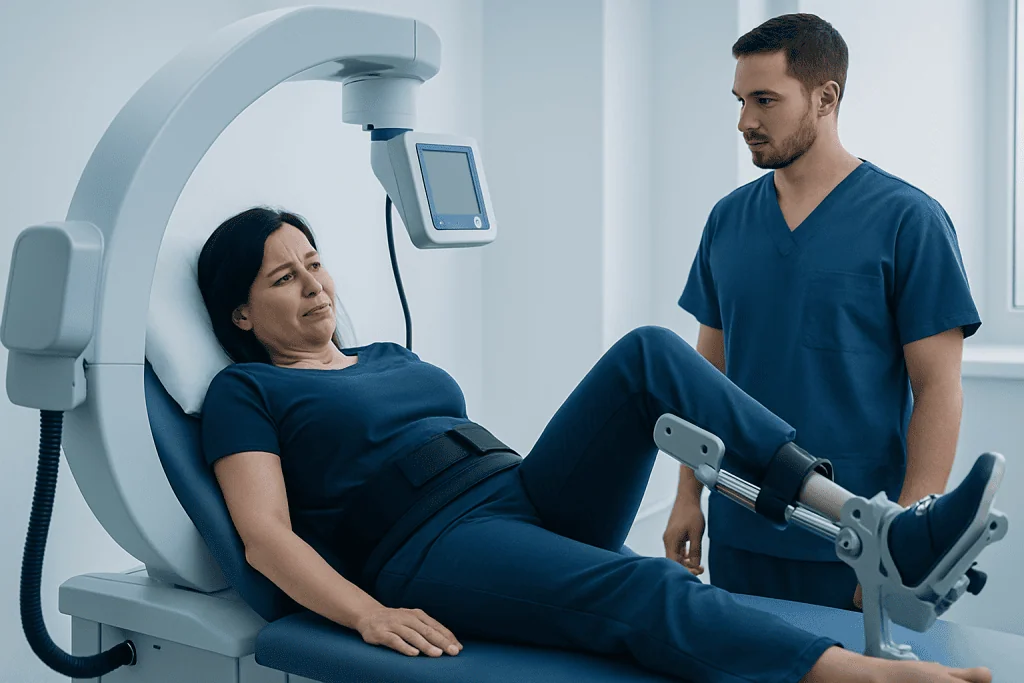
Hip pain has many possible causes, and the location of symptoms often helps narrow them down. Pain in the groin may suggest a problem inside the hip joint, such as cartilage wear, a labral tear, or inflammation. Pain on the outer side of the hip is often linked to irritated tendons or the bursa, while pain in the buttock can come from deep hip muscles, the sacroiliac region, or the lower back.
Mechanical pain that worsens with walking, climbing stairs, getting up from a chair, or certain movements may point to a joint or tendon issue. Morning stiffness that improves gradually can occur with osteoarthritis. Pain after sports or repetitive activity may be due to strain, tendinopathy, or impingement. Sharp pain with twisting, a catching sensation, or reduced motion can indicate a structural problem that should be assessed.
Common causes include:
- Muscle strain or tight hip flexors, gluteal muscles, or hamstrings
- Tendinopathy involving the gluteal, iliopsoas, or adductor tendons
- Bursitis, especially over the outer hip
- Osteoarthritis or other forms of joint degeneration
- Hip impingement and labral injury
- Referred pain from the lumbar spine or nerve irritation
- Stress fracture or traumatic fracture, particularly after a fall or overuse
Some people use the term hip pain when the true source is actually in the lower back, pelvis, or upper thigh. That is one reason why persistent symptoms should not be self-diagnosed for too long. A clinician can distinguish between joint pain, soft tissue problems, and referred pain more accurately.
Related conditions that may need medical evaluation

Several conditions can cause hip discomfort that is unlikely to improve with stretching alone. One of the most common is osteoarthritis, in which the cartilage inside the joint gradually wears down. This often leads to stiffness, reduced motion, and pain during walking or standing. Stretching may help mobility, but it does not treat the underlying joint changes.
Inflammation or injury around the outer hip can also mimic joint pain. bursitis may cause tenderness when lying on one side or walking for longer distances. Tendon problems, particularly in the gluteal region, can produce a similar pattern. These conditions may respond to activity modification and rehabilitation, but ongoing pain still needs proper diagnosis because the exercise approach differs.
Another important possibility is hip fracture, especially in older adults, people with osteoporosis, or anyone with severe pain after trauma. A fracture can sometimes present with sudden groin pain, inability to bear weight, or pain that is far more intense than typical muscle soreness. In this situation, stretching should be avoided and urgent medical care is necessary.
Less commonly, inflammatory arthritis, infection, avascular necrosis, or a tumor may affect the hip region. These are not everyday causes, but they matter because symptoms can overlap with more routine musculoskeletal pain. Red flags such as fever, unexplained weight loss, night pain, marked swelling, or significant loss of function should always prompt medical review.
Safe stretching ideas for mild hip stiffness
When a doctor or physiotherapist has ruled out serious injury and symptoms appear to be related to stiffness, gentle stretching may be useful. The goal is to improve comfort and mobility without forcing the joint. Movements should be slow, controlled, and pain-limited. Holding a mild stretch for a short period and breathing steadily is usually better than bouncing or pushing aggressively.
Commonly recommended stretches for mild hip tightness may include a hip flexor stretch, figure-four stretch for the outer hip, seated or lying hamstring stretch, and gentle gluteal or piriformis stretches. Some people also benefit from mobility exercises such as knee-to-chest movements or supported hip rotations. These are often most helpful after a brief warm-up, such as a few minutes of walking.
General safety points include:
- Stop if the pain is sharp, catching, or radiates down the leg
- Avoid deep stretches immediately after an acute injury
- Do not push through significant pain to gain more range
- Reduce intensity if symptoms are worse later the same day or the next morning
- Ask a clinician which stretches are appropriate if there is arthritis, bursitis, or suspected labral injury
Stretching works best as one part of a broader plan. In many cases, strengthening the gluteal muscles, improving core stability, correcting gait or posture issues, and adjusting activity levels are just as important. A structured physical therapy and rehabilitation program may be more effective than stretching alone for recurring hip pain.
How doctors diagnose the cause of hip pain
Diagnosis usually begins with a detailed history and physical examination. A doctor will ask where the pain is felt, when it started, what makes it worse or better, and whether there has been trauma, fever, back pain, numbness, or difficulty bearing weight. They may observe walking, assess joint motion, and test the muscles, tendons, and nerves around the hip and lower back.
Imaging is often helpful when symptoms persist, follow an injury, or suggest a structural problem. Standard X-rays can show fractures, arthritis, or shape changes in the joint. MRI can provide more detail about cartilage, the labrum, tendons, and early bone injury. Ultrasound may help evaluate bursitis or tendon disorders. In selected situations, blood tests are used to look for infection or inflammatory conditions.
A precise diagnosis matters because different causes can feel similar but need different treatment approaches. For example, stretching that feels reasonable for simple tightness may aggravate a labral problem or a fracture. Likewise, pain from the spine may improve more with back-focused treatment than with local hip exercises. If surgery is being considered for a joint condition, assessment by specialists in orthopedics may be appropriate.
Treatment options beyond stretching
Treatment depends on the cause, severity, age, activity level, and overall health of the person. For many non-emergency problems, early care focuses on relative rest, avoiding aggravating activities, using ice or heat as advised, and beginning tailored rehabilitation. Over-the-counter pain relief may be recommended by a doctor or pharmacist for some patients, but medicines should be used carefully, especially in people with kidney, stomach, heart, or bleeding concerns.
Physiotherapy is often central to recovery. A therapist may combine flexibility work with strengthening of the gluteal muscles, hip stabilizers, and core. Balance training, posture correction, gait retraining, and a gradual return-to-activity plan can reduce strain on the joint and surrounding tissues. If tendons or bursae are inflamed, treatment may focus more on load management than on deep stretching.
Some people benefit from image-guided injections when pain remains significant despite conservative treatment, particularly for certain inflammatory conditions. In more advanced joint disease or structural injury, surgical options may be discussed. These can range from minimally invasive hip arthroscopy for selected labral or impingement problems to hip replacement for severe arthritis or major joint damage.
Care is most effective when the diagnosis is clear and the treatment plan matches the person’s symptoms and goals. Near the end of the care pathway, some international patients choose centers such as Acibadem International, where multidisciplinary specialists in JCI-accredited hospitals evaluate and treat hip conditions using coordinated orthopedic, imaging, and rehabilitation services.
Self-care, prevention, and everyday habits that support the hip
Many episodes of mild hip discomfort improve with a combination of sensible self-care and time. Short periods of reduced activity can help calm irritation, but complete inactivity may increase stiffness. Gentle movement, gradually resumed walking, and avoiding positions that provoke pain often support recovery better than prolonged rest.
Long-term prevention focuses on keeping the hip strong, mobile, and well supported. Regular exercise that includes strengthening, flexibility, and low-impact aerobic activity can protect joint function. Weight management, supportive footwear, and attention to movement patterns during work, sports, and exercise also reduce unnecessary stress on the hip region.
Helpful habits may include:
- Warm up before activity and increase exercise intensity gradually
- Take breaks from prolonged sitting, especially if the front of the hip feels tight
- Strengthen the gluteal and core muscles, not only the hip flexors
- Use proper form during squats, lunges, and running drills
- Address lower back pain early if it seems to be contributing to hip symptoms
People with recurrent pain should be cautious about repeatedly searching for stronger stretches. More intensity is not always better. If discomfort keeps returning, the issue may be weakness, joint irritation, tendon overload, or another diagnosis that needs a different strategy.
When to seek medical care
Medical care is recommended if hip pain lasts more than a few days without clear improvement, keeps returning, limits daily activity, or prevents exercise that was previously comfortable. A doctor should also assess pain that feels deep in the groin, causes clicking or locking, or is associated with stiffness that is progressively worsening.
Prompt care is especially important after a fall, accident, or sports injury, or if there is severe pain, visible swelling, inability to bear weight, fever, redness, numbness, or pain that wakes a person regularly at night. These symptoms do not always mean a serious problem, but they should not be managed with stretching alone.
Early evaluation can shorten recovery by identifying the real cause and avoiding exercises that may irritate the hip further. A qualified clinician can advise whether home stretching is appropriate, whether supervised rehabilitation is needed, or whether imaging and specialist treatment should be arranged.
Frequently asked questions
Can stretching make hip joint pain worse?
Yes, it can if the pain is caused by a condition that does not respond well to stretching, such as a fracture, labral injury, acute tendon irritation, or advanced joint inflammation. Stretching should feel gentle and controlled, not sharp or unstable. If symptoms worsen during or after stretching, it is sensible to stop and seek medical advice.
What type of hip pain is most likely to improve with stretching?
Pain related to muscle tightness, mild stiffness, prolonged sitting, or overuse around the hip may improve with gentle stretching. This is more likely when the discomfort eases as the body warms up and there are no red-flag symptoms. Even then, stretching is usually most effective when combined with strengthening and activity adjustments.
How can a person tell whether the pain is in the hip joint or the muscles around it?
Pain deep in the groin often suggests the joint itself, while pain on the outer hip may be more related to tendons or bursitis. Buttock pain can come from the hip, but it may also come from the lower back or nearby nerves. Because symptoms can overlap, persistent pain is best evaluated by a clinician.
Should a person stretch if hip pain started after a fall or sports injury?
Not until a serious injury has been ruled out. Pain after trauma can reflect a strain, but it can also be caused by a fracture, significant tendon injury, or joint damage. If walking is difficult, pain is severe, or symptoms are not settling quickly, medical assessment is important.
When is hip pain more likely to be arthritis?
Hip arthritis often causes stiffness, reduced motion, and pain during walking, standing, or getting up from a chair. Symptoms may be worse in the morning or after rest, then loosen slightly with movement. A doctor may confirm the diagnosis with examination and imaging such as X-rays.
Is rest better than exercise for hip pain?
Short-term rest from aggravating activities can help, especially in the early phase of pain. However, prolonged inactivity may increase stiffness and reduce muscle support around the hip. In many cases, a balanced plan of relative rest, gentle movement, and guided exercise works better than complete rest alone.
This article is for general information only and is not a substitute for professional medical advice. Please consult a qualified doctor about your individual situation.
Joint and spine care in Turkey — expert assessment & treatment
JCI-accredited · board-certified surgeons · reply within 24h
Add us as a Preferred Source to see more of our trusted health content across Google Search, AI Overviews and Discover.

More from the Health Library

How Long Does a Yeast Infection Last? A Doctor-Reviewed Answer

How to Get Thick Hair? A Doctor-Reviewed Answer

Do Sunburns Turn Tan? A Doctor-Reviewed Answer

Why Do My Breasts Hurt? Here Is What the Evidence Says

Itchy Throat: Common Causes, Related Conditions, and When to See a Doctor

Can Having Sex Delay Your Period? Causes, Explanations, and Next Steps
Orthopedic Surgery & Traumatology Specialists at Acibadem

Prof. Dr. Cihangir Tetik
Orthopedic Surgery & Traumatology
Dr. Coşkun Akalın
Physical Medicine & Rehabilitation
Fzt. A.Sercan Soyarslan
Physical Medicine & Rehabilitation
Dr. Abdullah Yener İnce
Orthopedic Surgery & Traumatology