Operation Prk: A Complete Medical Overview

Operation PRK is a surface laser procedure used to correct common refractive errors. Unlike LASIK, PRK does not create a corneal flap.
Key Takeaways
- Operation PRK is a surface laser procedure used to correct common refractive errors.
- Unlike LASIK, PRK does not create a corneal flap.
- Vision usually improves gradually, and recovery is often longer than LASIK recovery.
- Careful screening is important to confirm whether PRK is safe and suitable.
- Temporary discomfort, light sensitivity, and blurry vision are common early in healing.
Operation PRK is a type of laser vision correction that reshapes the cornea to treat nearsightedness, farsightedness, and astigmatism. It can be a good option for people who are not ideal candidates for LASIK, especially when corneal thickness or lifestyle factors matter.
Overview: What operation PRK is
Operation PRK, short for photorefractive keratectomy, is a laser eye procedure used to reduce dependence on glasses or contact lenses. It works by reshaping the cornea, the clear front surface of the eye, so that light focuses more accurately on the retina. This can improve vision in people with nearsightedness, farsightedness, or astigmatism.
PRK was one of the earliest forms of laser vision correction and remains an important option today. While LASIK is more widely known, PRK is often recommended when the cornea is thinner than average, when there are concerns about flap-related complications, or when a person’s work or sports increase the chance of eye trauma. In those situations, PRK may offer a safer approach.
The main difference between PRK and LASIK is how the surgeon reaches the corneal tissue that needs reshaping. In PRK, the thin outer layer of the cornea, called the epithelium, is gently removed and then grows back during healing. In LASIK, a flap is created in the cornea. Because PRK does not involve a flap, it has a different recovery pattern and different advantages.
Who may benefit from PRK
Operation PRK may be considered for adults whose eyeglass prescription has been stable for at least a year and whose eyes are otherwise healthy. It is commonly used to treat refractive errors such as myopia, hyperopia, and astigmatism. The goal is to improve uncorrected vision so that daily activities may be easier without lenses.
PRK can be especially useful for people with relatively thin corneas, mild surface irregularities, or jobs and hobbies that involve physical contact. Athletes, military personnel, and people in occupations with a higher risk of facial impact may be advised to consider PRK because there is no corneal flap to dislodge later.
Not everyone is a good candidate. People with certain corneal diseases, significant dry eye, uncontrolled autoimmune disorders, active eye infection, or unstable vision may need a different plan. A thorough eye evaluation helps identify whether laser eye surgery is appropriate and whether PRK is the best laser technique for that individual.
How the procedure is performed
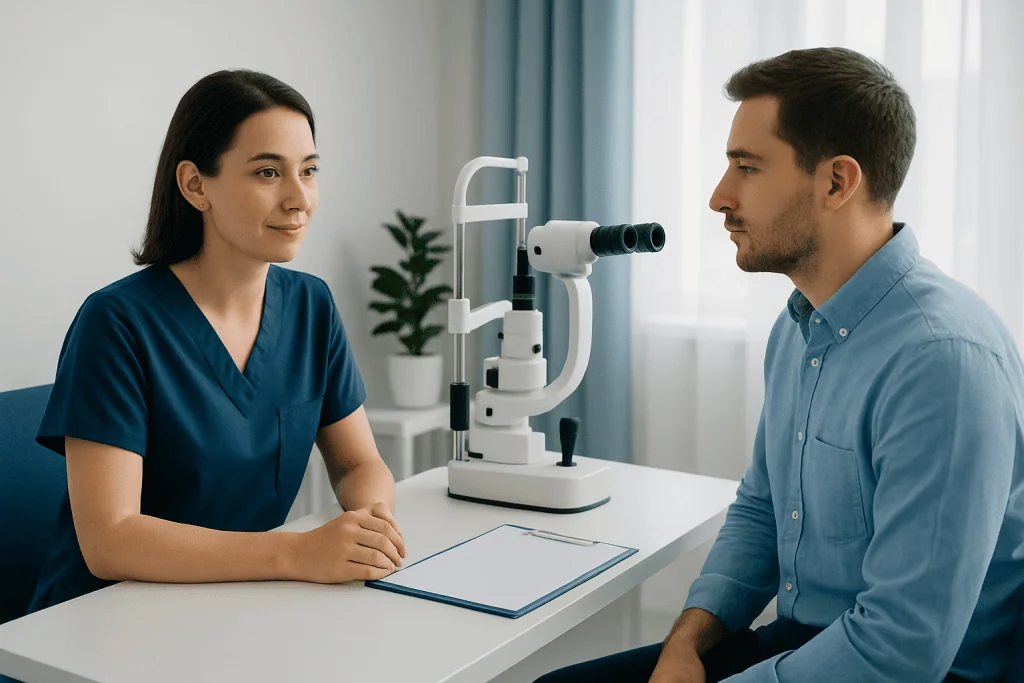
Before operation PRK, the eye is measured carefully using tests that assess refraction, corneal shape, corneal thickness, tear film quality, and pupil size. These measurements are used to plan the treatment precisely. Patients are usually asked to stop wearing contact lenses for a period of time before assessment, because contacts can temporarily change the shape of the cornea.
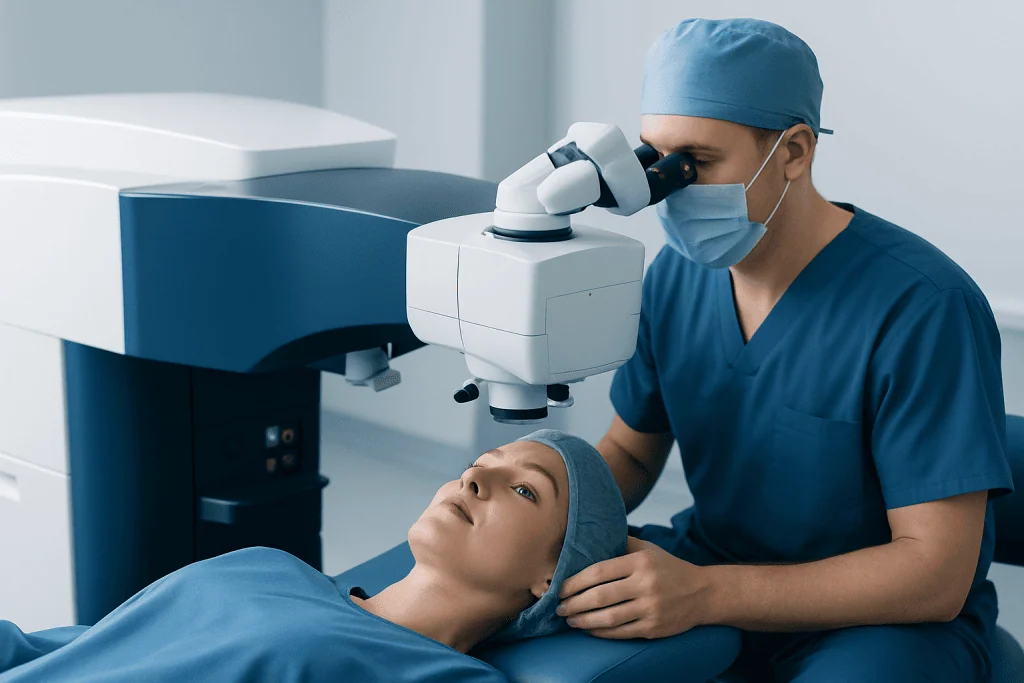
On the day of the procedure, numbing eye drops are used to keep the eye comfortable. The surgeon removes the epithelial layer and then applies an excimer laser to reshape the cornea according to the treatment plan. The laser treatment itself is usually brief. A soft bandage contact lens is then placed on the eye to protect the surface while it heals.
PRK is usually performed as an outpatient procedure, and both eyes may often be treated on the same day if appropriate. Patients return home shortly afterward, but they should not drive themselves. The most noticeable difference from flap-based procedures is that surface healing takes time, so vision recovery is more gradual.
Recovery and what to expect after PRK
Recovery after operation PRK tends to be slower than after LASIK, and this is one of the most important points for patients to understand. In the first few days, it is common to have discomfort, tearing, foreign-body sensation, light sensitivity, and blurry vision. These symptoms usually improve as the corneal surface heals and the epithelium regrows.
The bandage contact lens is often removed after several days, depending on healing. Vision may start to improve within the first week, but it can continue to fluctuate for several weeks or even longer before becoming more stable. Eye drops are typically prescribed to reduce inflammation, prevent infection, and support healing. Good follow-up is important so the doctor can monitor the cornea closely.
During recovery, patients are generally advised not to rub their eyes and to avoid swimming pools, hot tubs, dusty environments, and eye makeup until the doctor says it is safe. Sunglasses can help with light sensitivity outdoors. Some people also notice dry eye symptoms during healing, and these can be managed with lubricating drops and other supportive measures.
For people comparing procedures, PRK recovery may feel slower, but the final visual outcomes can still be very good in suitable candidates. If there are concerns about pre-existing dry eye, discussing them before surgery is important because surface symptoms can affect comfort during healing.
Benefits, limitations, and possible risks
One of the main advantages of operation PRK is that it avoids creating a corneal flap. This can make it an attractive option for people with thinner corneas or those at risk of eye injury. PRK can also provide effective correction for common refractive errors and may reduce or eliminate the need for glasses or contact lenses for many daily activities.
At the same time, PRK has limitations. The early recovery period is usually less comfortable than LASIK, and vision improvement is not immediate. Some people may still need glasses for certain tasks after surgery, especially as they age or if they had a higher prescription to begin with. Laser vision correction does not stop the natural aging changes of the eye, such as presbyopia.
As with any eye procedure, there are potential risks and side effects. These can include infection, corneal haze, glare, halos, under-correction, over-correction, dry eye symptoms, delayed healing, or regression of effect over time. Serious complications are uncommon, but they are part of informed decision-making. A careful exam helps reduce risk by identifying issues such as keratoconus or other corneal conditions that may make PRK unsuitable.
How doctors decide if PRK is right for someone
Choosing operation PRK is not only about the prescription number. Eye doctors look at the overall health of the cornea, the stability of vision, tear film quality, age, expectations, occupation, and medical history. This broader assessment helps match the person to the most suitable procedure rather than assuming one laser method fits everyone.
Corneal mapping is especially important because it can reveal subtle shape changes that increase risk with refractive surgery. Doctors also check for cataracts, retinal conditions, eyelid problems, and other eye disorders that could affect vision quality. In some cases, another approach may be more appropriate, or it may be safest to avoid elective laser correction altogether.
Patients benefit from asking practical questions about likely outcomes, healing time, activity restrictions, and the chance of needing enhancement later. Shared decision-making matters. In experienced centers, evaluation may also include comparison with alternatives such as LASIK or other refractive procedures when those options are relevant.
Self-care after surgery and when to seek medical care
After operation PRK, following postoperative instructions closely supports safe healing. This usually includes using prescribed eye drops as directed, attending follow-up visits, protecting the eyes from ultraviolet light with sunglasses, and avoiding activities that may expose the eyes to contamination or trauma. Resting the eyes and staying well hydrated may also help comfort in the early days.
It is sensible to expect some discomfort and blurred vision at first, but symptoms should gradually improve. It may help to prepare in advance by arranging transportation, reducing screen time for a short period, and planning a few quieter days during the earliest recovery phase.
Medical care should be sought promptly if there is severe or worsening eye pain, sudden drop in vision, marked redness, discharge, fever, or new sensitivity that feels significantly worse rather than better. These symptoms do not always mean a serious problem, but they should be assessed quickly by an eye specialist. Anyone with persistent healing concerns should contact their doctor rather than waiting for a routine follow-up.
For patients seeking expert assessment and treatment planning, Acibadem International’s multidisciplinary specialists and JCI-accredited hospitals care for international patients with a range of ophthalmic needs, including eye laser surgery and broader evaluation in ophthalmology.
Frequently asked questions
Is operation PRK the same as LASIK?
No. Both are laser vision correction procedures, but PRK reshapes the cornea after removing the surface epithelial layer, while LASIK creates a corneal flap first. The final goal is similar, but the recovery experience and candidacy factors can differ.
How long does PRK recovery take?
The first stage of healing usually takes several days, but vision often continues improving over weeks. Many people notice gradual stabilization rather than immediate clarity. The exact timeline varies from person to person.
Is PRK painful?
The procedure itself is usually not painful because numbing drops are used. However, discomfort, burning, tearing, and light sensitivity are common in the first few days afterward. Doctors typically provide medications and eye drops to help manage this period.
Who is a good candidate for operation PRK?
Good candidates are usually adults with stable vision, healthy eyes, and refractive errors that can be treated safely with laser correction. PRK may be preferred when the cornea is thinner or when avoiding a flap is important. A full eye examination is needed to decide this properly.
Can vision problems return after PRK?
Some people may notice partial regression over time, especially if they had a stronger prescription before surgery. In addition, normal age-related changes such as presbyopia can still develop later. This means some people may still need glasses for certain tasks in the future.
When can normal activities resume after PRK?
Many routine activities can be resumed gradually, but the timing depends on healing and the doctor's advice. Driving, exercise, swimming, and using eye makeup may need to wait until the eye surface has recovered adequately. Follow-up visits help determine when activities are safe.
This article is for general information only and is not a substitute for professional medical advice. Please consult a qualified doctor about your individual situation.
Explore treatments in Turkey — costs, top hospitals & a free quote
JCI-accredited · board-certified surgeons · reply within 24h
Add us as a Preferred Source to see more of our trusted health content across Google Search, AI Overviews and Discover.

More from the Health Library

Drusen: What Patients Need to Know

Toothpaste on Pimple: An Evidence-Based Guide for Patients

Left arm going numb: A Complete Medical Guide for Patients

Wet Dandruff: A Complete Medical Overview

Sucking Chest Wound: What Patients Need to Know