Biofeedback Therapy: Symptoms, Causes, and Treatment Options

Biofeedback therapy uses sensors and real-time feedback to help people recognize and change certain body responses. It may support symptom control in conditions such as tension headaches, migraine, pelvic floor dysfunction, anxiety-related symptoms, and some chronic pain disorders.
Key Takeaways
- Biofeedback therapy uses sensors and real-time feedback to help people recognize and change certain body responses.
- It may support symptom control in conditions such as tension headaches, migraine, pelvic floor dysfunction, anxiety-related symptoms, and some chronic pain disorders.
- Biofeedback is usually used alongside medical care, physical therapy, behavioral therapy, or rehabilitation rather than as a stand-alone cure.
- Treatment is personalized and may focus on breathing, relaxation, posture, muscle control, or heart rate variability.
- A qualified clinician should evaluate symptoms first to make sure a serious underlying condition is not being missed.
Biofeedback therapy is a noninvasive treatment that teaches a person to notice and influence body functions such as muscle tension, breathing, heart rate, or skin temperature. It is often used as part of a broader care plan to help manage symptoms linked to stress, pain, pelvic floor dysfunction, headaches, and some neurologic or rehabilitation needs.
Overview
Biofeedback therapy is a technique that helps a person learn how their body responds to stress, pain, posture, breathing, and emotion in real time. Sensors placed on the skin or body measure signals such as muscle activity, heart rate, breathing pattern, or skin temperature. A monitor then shows these signals back to the patient, making otherwise automatic body responses easier to notice and gradually influence.
In practical terms, biofeedback therapy is not a drug or surgery. It is a guided training process led by a clinician, often over several sessions, to build better control over body patterns that may worsen symptoms. Many people use it to reduce muscle tension, improve relaxation, retrain pelvic floor muscles, or support headache and stress management.
Biofeedback does not treat every symptom or disease by itself, and it is not a replacement for diagnosis. Instead, it is best understood as a supportive therapy that may improve self-regulation and symptom control when used for carefully selected problems. The exact approach depends on the person’s symptoms, goals, and medical evaluation.
How Biofeedback Therapy Works
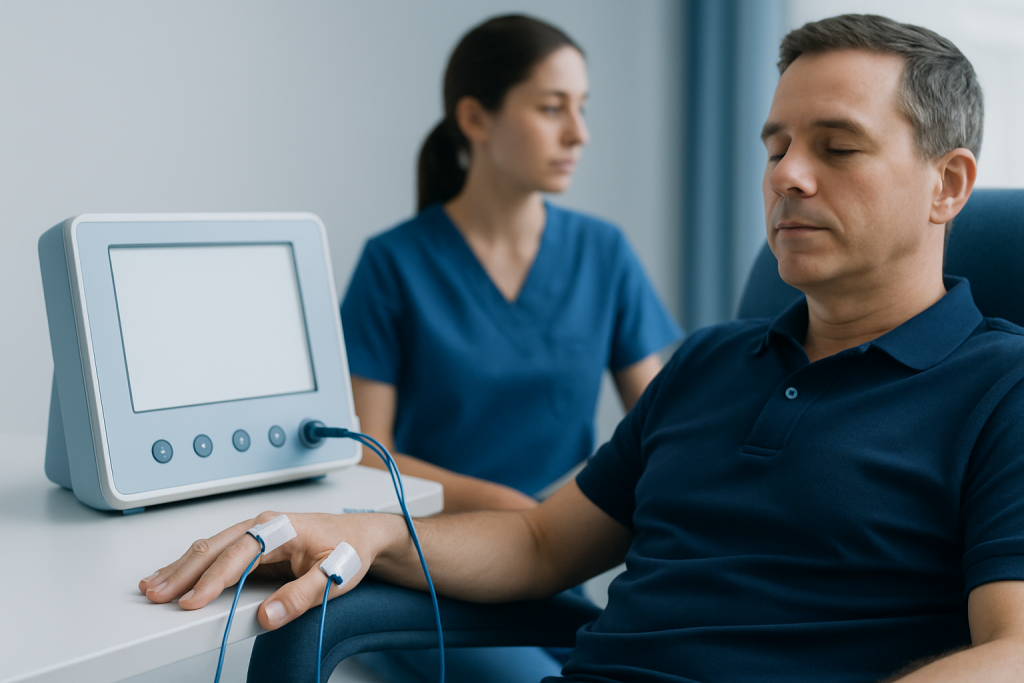
During a session, the clinician chooses the type of feedback that matches the symptom being addressed. For example, surface electrodes may measure muscle tension in the neck or jaw, a breathing sensor may track respiratory pattern, or heart rate sensors may be used to guide relaxation and heart rate variability training. The patient watches or listens to the feedback while practicing specific techniques such as slow breathing, posture correction, pelvic floor coordination, or progressive muscle relaxation.
Over time, the person begins to recognize what physical or emotional states increase symptoms and what strategies reduce them. This is the key goal of biofeedback therapy: turning hidden body signals into clear, learnable information. Repeated practice can help a person carry these skills into daily life, even when they are no longer attached to a monitor.
There are several forms of biofeedback, including electromyographic biofeedback for muscle activity, thermal biofeedback for skin temperature, respiratory biofeedback, and heart rate variability training. In pelvic health, biofeedback may be combined with pelvic floor therapy to improve awareness, relaxation, or coordinated muscle contraction. In rehabilitation settings, it may also be paired with structured exercise or physical therapy and rehabilitation to support functional recovery.
Symptoms and Conditions It May Help
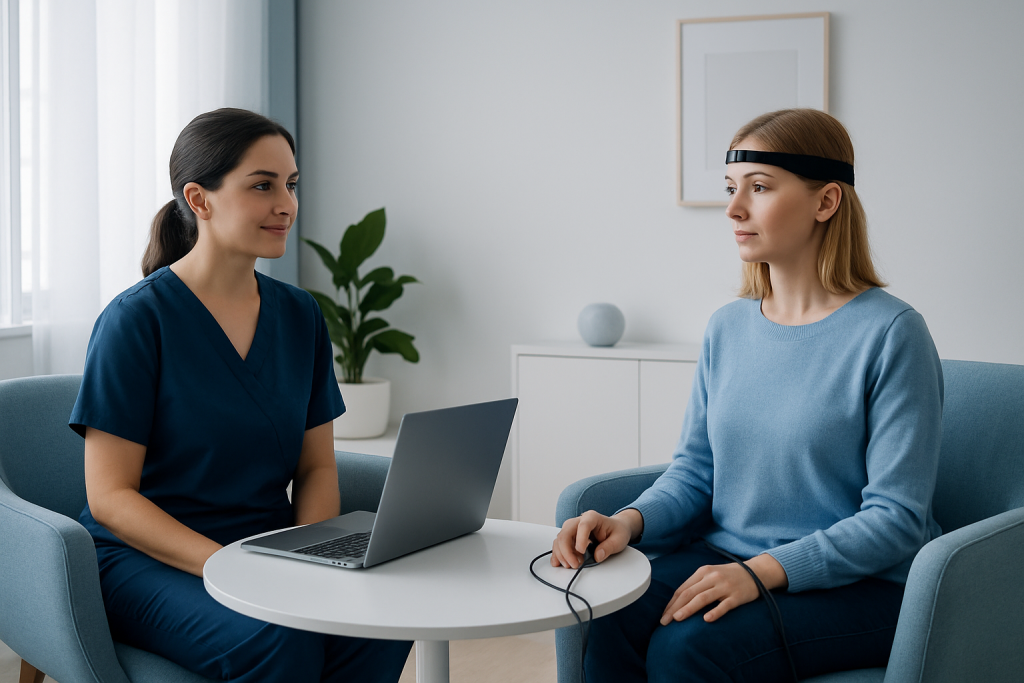
Biofeedback therapy is used to help manage symptoms rather than to label a disease on its own. It may be recommended when symptoms appear to be linked to muscle overactivity, inefficient breathing, pelvic floor dysfunction, stress-related body responses, or difficulties with relaxation and self-regulation. Typical examples include tension-type headaches, migraine support, jaw clenching, neck and shoulder tension, chronic pain patterns, urinary urgency related to pelvic floor dysfunction, and anxiety-related physical symptoms such as shallow breathing.
Some people are referred for biofeedback after standard treatment has only partly helped. Others use it when they want a noninvasive option that can complement medical therapy. In certain situations, clinicians may suggest it for constipation caused by pelvic floor dyssynergia, stress-related symptoms, or rehabilitation after neurologic injury, depending on the person’s overall assessment.
Biofeedback may be especially useful when symptoms fluctuate with stress, posture, breathing, or muscle tension. For instance, someone with recurring migraine may notice headache patterns improving when relaxation skills and trigger awareness become more consistent. A person with bladder or bowel symptoms may benefit if testing suggests a pelvic floor control problem rather than a structural disease alone.
- Muscle tension headaches or stress-related pain
- Migraine support as part of a broader plan
- Pelvic floor dysfunction affecting urination or bowel movements
- Temporomandibular joint tension and jaw clenching
- Anxiety-related physical symptoms and stress reactivity
- Some chronic pain and rehabilitation needs
Causes and Risk Factors Behind Symptoms
Biofeedback therapy is not aimed at one single cause. Instead, it addresses body patterns that can develop for many reasons. Stress is a common factor because it may increase muscle tightening, alter breathing, change heart rate patterns, and amplify pain sensitivity. Over time, these automatic responses can become habitual and difficult to notice without feedback.
Physical contributors can also play a role. Poor posture, repetitive strain, recovery after injury, pelvic floor overactivity, chronic pain conditions, and some neurologic disorders may interfere with normal muscle coordination. In these cases, biofeedback may help a person relearn more efficient movement or relaxation patterns under professional guidance.
Emotional and behavioral factors may interact with physical symptoms as well. Sleep problems, anxiety, persistent stress, and fear of pain can reinforce a cycle of tension and symptom flares. A careful evaluation helps identify whether biofeedback is likely to be useful or whether another diagnosis needs priority treatment. For example, a clinician may first need to rule out structural, endocrine, gastrointestinal, or neurologic causes before recommending supportive therapies like biofeedback.
Diagnosis and Evaluation Before Treatment
Before starting biofeedback therapy, a clinician should assess the underlying symptom and confirm that biofeedback is appropriate. The evaluation often begins with a medical history, review of symptom triggers, medication use, stress level, sleep patterns, and prior treatments. A physical examination may focus on muscle tenderness, posture, neurologic function, pelvic floor coordination, or other systems related to the complaint.
Some patients need additional testing depending on the symptom. Headache may require a neurologic assessment. Pelvic floor symptoms may call for examination by a specialist in pelvic health, gastroenterology, or urology. Chest discomfort, dizziness, or fainting should never be assumed to be stress-related without proper medical review.
Referral patterns vary by condition. Neurologists, rehabilitation specialists, psychologists, pain specialists, pelvic floor therapists, and other clinicians may all use biofeedback within their scope of practice. If symptoms involve the brain or nerves, a specialist may evaluate for related conditions such as Parkinson’s disease or other neurologic disorders before building a rehabilitation plan. This step helps ensure the right therapy is being used for the right problem.
Treatment Options and What Sessions Are Like
Biofeedback therapy is usually delivered in a series of sessions rather than a single visit. At the start, the clinician explains the body signal being measured and what changes are being targeted. The patient then practices techniques while receiving live feedback from the device. These may include diaphragmatic breathing, paced exhalation, relaxation exercises, guided attention, pelvic floor muscle coordination, or changes in posture and movement.
Home practice is often an important part of progress. The goal is to transfer what is learned in the clinic into real-life situations such as work stress, exercise, sleep preparation, or symptom flare-ups. Many treatment plans combine biofeedback with education, lifestyle adjustments, exercise, counseling, medications, or rehabilitation therapies. In some cases, it may complement care such as neurological rehabilitation when symptom control, coordination, and self-awareness are important goals.
Results vary by condition, severity, and consistency of practice. Some people notice better symptom awareness early on, while others need more time to build durable skills. Biofeedback is generally considered safe when provided by a qualified professional, although its usefulness depends on correct diagnosis, realistic goals, and active participation from the patient.
Near the end of treatment, the clinician may review progress, identify strategies that worked best, and create a maintenance plan. For international patients seeking coordinated evaluation and rehabilitation, Acibadem International’s multidisciplinary specialists and JCI-accredited hospitals provide diagnosis and treatment for selected conditions where biofeedback may form part of care.
Prevention, Self-care, and Daily Habits
Biofeedback skills are most effective when reinforced by healthy daily habits. Good sleep, regular physical activity, hydration, stress reduction, and posture awareness can all reduce the body strain that contributes to symptom cycles. For people with headaches, keeping a symptom diary may help identify triggers such as missed meals, poor sleep, muscle tension, or prolonged screen time.
Simple self-care strategies may include slow breathing practice, taking movement breaks, stretching tight muscles, reducing jaw clenching, and setting up an ergonomic work environment. For pelvic floor symptoms, self-care should follow professional advice because some people need strengthening, while others need relaxation and down-training rather than more exercise.
Biofeedback should not lead someone to ignore persistent or worsening symptoms. If headaches become severe, bowel or bladder symptoms change suddenly, or pain interferes more with daily life, a medical review is important. Self-management works best when it supports, rather than replaces, evidence-based medical care.
When to Seek Medical Care
Medical care should be sought if symptoms are new, severe, rapidly worsening, or interfering with normal daily activities. Biofeedback therapy may help many chronic or stress-linked symptoms, but urgent or serious causes must be ruled out first. This is especially important when symptoms involve the chest, severe headache, weakness, numbness, loss of bladder control, fainting, or unexplained weight loss.
A doctor should also be consulted if symptoms persist despite self-care, if over-the-counter treatments are being used frequently, or if anxiety, pain, or pelvic floor symptoms are affecting work, sleep, or relationships. Children, older adults, pregnant patients, and people with complex neurologic or medical conditions may need a more tailored assessment.
Prompt medical review is important for red flags such as a sudden severe headache, signs of stroke, blood in stool or urine, fever with pain, or new neurologic symptoms. Once a diagnosis is clear, a clinician can advise whether biofeedback therapy is likely to be useful as part of a personalized treatment plan.
Frequently asked questions
What is biofeedback therapy used for?
Biofeedback therapy is used to help people gain better control over body responses such as muscle tension, breathing, and stress reactivity. It may support treatment for headaches, pelvic floor dysfunction, some chronic pain conditions, and anxiety-related physical symptoms.
Is biofeedback therapy safe?
Biofeedback therapy is generally considered safe because it is noninvasive and does not rely on medication or surgery. The main safety issue is making sure symptoms are properly evaluated first so that an important underlying condition is not missed.
How long does biofeedback therapy take to work?
The timeline varies depending on the condition, the person’s goals, and how often the techniques are practiced. Some people notice better symptom awareness within a few sessions, while others need a longer program to build lasting control.
Can biofeedback therapy treat anxiety?
Biofeedback therapy can help some people manage the physical side of anxiety, such as rapid breathing, muscle tension, and stress-related body responses. It is usually most effective as part of a broader plan that may also include counseling, lifestyle changes, or other medical care.
Does biofeedback therapy cure migraines or chronic pain?
Biofeedback therapy is not usually described as a cure. Instead, it may reduce symptom frequency, intensity, or the impact of triggers when used alongside a clinician-directed treatment plan.
Who provides biofeedback therapy?
Depending on the symptom, biofeedback may be provided by psychologists, physical therapists, rehabilitation specialists, pelvic health therapists, or other trained clinicians. The best provider is the one whose training matches the condition being treated.
References
- National Center for Complementary and Integrative Health
- American Psychological Association
- International Continence Society
- American Migraine Foundation
This article is for general information only and is not a substitute for professional medical advice. Please consult a qualified doctor about your individual situation.
Joint and spine care in Turkey — expert assessment & treatment
JCI-accredited · board-certified surgeons · reply within 24h
Add us as a Preferred Source to see more of our trusted health content across Google Search, AI Overviews and Discover.
Check your numbers in seconds
BMI, calories, due date, blood pressure and 30+ more clinical calculators — free, instant, doctor-reviewed ranges.