Pediatric Vital Signs: An Evidence-Based Guide for Patients

Pediatric vital signs include heart rate, respiratory rate, blood pressure, temperature, and often oxygen saturation. Normal ranges vary by age, so a newborn's expected values are different from a teenager's.
Key Takeaways
- Pediatric vital signs include heart rate, respiratory rate, blood pressure, temperature, and often oxygen saturation.
- Normal ranges vary by age, so a newborn's expected values are different from a teenager's.
- Fever, crying, pain, exercise, dehydration, and anxiety can temporarily change readings.
- A single abnormal value does not always mean illness; trends and symptoms matter.
- Urgent evaluation is important if unusual vital signs occur with breathing difficulty, blue lips, poor responsiveness, or signs of dehydration.
Pediatric vital signs are the basic measurements clinicians use to understand how a baby, child, or teenager is doing in the moment. Because normal values change with age, growth, activity, and emotion, pediatric vital signs must always be interpreted in context rather than by a single adult standard.
Overview: what pediatric vital signs mean
Pediatric vital signs are the routine measurements used to check a child’s immediate physical status. They usually include heart rate, breathing rate, blood pressure, temperature, and oxygen saturation. Together, these numbers give a quick picture of how the heart, lungs, circulation, and overall body are functioning.
For patients and families, the most important point is that normal pediatric vital signs are not the same as adult values. Infants naturally breathe faster and have faster heart rates than older children and adults. As children grow, these measurements gradually shift toward adolescent and adult ranges.
Vital signs are most useful when they are read in context. A child who is crying, running a fever, frightened, or in pain may have a temporarily high pulse or breathing rate. Clinicians therefore look at the whole picture: the child’s age, behavior, medical history, exam findings, and whether the numbers improve once the child is calm.
The main vital signs checked in children
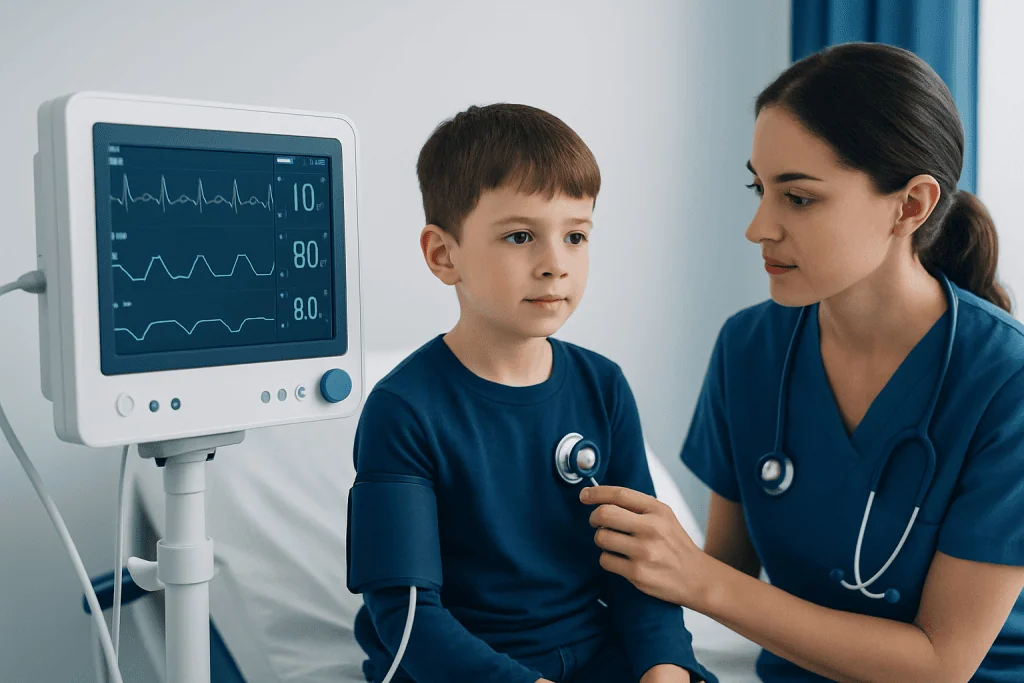
Each vital sign measures a different body function. Heart rate reflects how fast the heart is beating. Respiratory rate shows how often a child breathes each minute. Blood pressure measures the force of blood moving through the arteries. Temperature helps identify fever or low body temperature, and oxygen saturation estimates how much oxygen the blood is carrying.
In children, even small changes in these measurements can help guide care. A fast heart rate may happen with fever, dehydration, pain, or anxiety. Fast breathing can be seen with fever, lung infections, asthma, or stress. Low oxygen saturation may suggest a breathing problem that needs prompt attention, especially if it is paired with chest retractions, wheezing, or bluish lips.
Blood pressure deserves special mention because it is not interpreted from one simple number in younger children. Normal pediatric blood pressure depends on age, sex, and height percentile. Because of this, clinicians often compare a child’s reading with standardized charts rather than deciding based on adult cutoffs alone.
- Heart rate: beats per minute
- Respiratory rate: breaths per minute
- Blood pressure: systolic and diastolic pressure
- Temperature: body heat regulation
- Oxygen saturation: percentage of oxygen carried in the blood
Normal pediatric vital signs by age

Parents often want a simple chart, but pediatric vital signs are best understood as age-based ranges rather than exact targets. In general, newborns and infants have the fastest heart and breathing rates. Toddlers and preschool-aged children remain faster than school-aged children, while adolescents approach adult patterns.
As a broad guide, heart rate may be roughly 100 to 160 beats per minute in infants, around 90 to 150 in toddlers, and gradually lower in older children. Respiratory rate may be around 30 to 60 breaths per minute in newborns, then decrease over childhood. Normal temperature is usually close to 37°C or 98.6°F, though the method of measurement and time of day can affect the reading slightly.
These figures are approximate and should not replace clinical assessment. A healthy sleeping child may have a lower heart rate than when awake, and an upset child may have a higher value without being seriously ill. Repeated measurements under calm conditions are often more informative than a single reading taken during distress.
If a child has a chronic condition, the expected baseline may differ from textbook ranges. For example, children with some heart or lung conditions may have different usual oxygen saturation or pulse patterns. In those situations, the care team will usually explain what is normal for that child and what changes should trigger review.
Why readings can change: common causes and influencing factors
Pediatric vital signs can change for many reasons, and not all of them signal disease. Activity, crying, fear, a warm room, recent feeding, and pain commonly raise pulse and breathing rate. Fever often increases both heart rate and respiratory rate, while dehydration may lead to a faster pulse and lower blood pressure.
Illness can also affect these measurements. Respiratory infections, asthma, bronchiolitis, and pneumonia may cause fast breathing or low oxygen saturation. Gastrointestinal illnesses with vomiting or diarrhea may lead to dehydration, which can change pulse, blood pressure, and alertness. In some cases, clinicians may consider related conditions such as asthma or pneumonia when abnormal readings occur with cough, wheeze, fever, or breathing difficulty.
Medicines and underlying health conditions may influence vital signs as well. Some inhaled medications increase heart rate temporarily. Heart rhythm problems, thyroid disorders, anemia, or infections can also shift the expected values. Because so many factors can affect the numbers, healthcare professionals focus on patterns, symptoms, and the child’s overall appearance rather than relying on one value alone.
How pediatric vital signs are measured and interpreted
Accurate measurement matters. A child’s blood pressure should be taken with the correct cuff size, because a cuff that is too small or too large can give misleading results. Respiratory rate is ideally counted when the child is calm, since talking, crying, or moving can artificially raise the number. Temperature should be measured using an age-appropriate method, and pulse oximetry should be read with a properly fitted sensor.
Clinicians do not interpret pediatric vital signs in isolation. They also observe skin color, alertness, hydration, work of breathing, and capillary refill. For example, a slightly fast breathing rate in a playful child with normal oxygen saturation may be less concerning than a similar rate in a sleepy child using extra chest muscles to breathe.
Sometimes repeated checks are needed to understand whether a number reflects a true problem or a temporary change. In urgent settings, doctors may also use tests such as blood work or MRI or CT scan if symptoms suggest a deeper problem, though imaging is not part of routine vital sign assessment itself. The decision depends on the child’s symptoms, exam findings, and suspected cause.
What happens if a child's vital signs are abnormal
When pediatric vital signs fall outside the expected range, the next step is usually to confirm the measurement and assess the child clinically. A nurse or doctor may repeat the reading after the child rests, correct a poorly fitting blood pressure cuff, or recheck oxygen saturation with a different sensor. This helps avoid overreacting to a temporary or inaccurate reading.
Treatment depends on the cause, not just the number. A fever may be managed with hydration, rest, and clinician-guided fever care. Dehydration may require oral rehydration or, in some cases, intravenous fluids. If breathing problems are suspected, clinicians may evaluate for conditions such as bronchitis or asthma and consider therapies like oxygen therapy or nebulizer therapy when appropriate.
In hospital or emergency settings, doctors may monitor trends over time rather than relying on one result. Improving heart rate, easier breathing, and a return to normal alertness often matter as much as the starting value. This trend-based approach is one reason families may notice repeated checks during a visit.
Prevention, home monitoring, and self-care
Most children do not need routine home monitoring of all vital signs unless a clinician recommends it. However, parents can still support healthy readings by encouraging regular fluids, balanced meals, adequate sleep, and timely care for infections. For children with asthma, heart disease, or other chronic conditions, the care team may advise specific home checks or warning signs to watch for.
If a family uses a thermometer, pulse oximeter, or home blood pressure monitor, the device should be used correctly and the results should be interpreted cautiously. Home readings are most helpful when they are taken under similar conditions and compared over time. A child who appears comfortable, alert, and well hydrated may be less concerning than a child with a similar number who seems unusually sleepy or is working hard to breathe.
It can help to write down the time of day, symptoms, fever medicines, fluid intake, and any relevant events such as crying or exercise. This gives the doctor useful context. Near the end of a care pathway, families who need specialist support may choose centers such as Acibadem International, where multidisciplinary specialists in JCI-accredited hospitals diagnose and treat children and adults from many countries.
When to seek medical care
Medical advice is appropriate whenever parents are worried about a child’s breathing, alertness, hydration, or overall condition, even if the numbers themselves are uncertain. A healthcare professional can help interpret pediatric vital signs in the context of the child’s age and symptoms. Non-urgent review is sensible for repeated fever, persistent fast heart rate, ongoing cough with rapid breathing, unusual blood pressure readings, or home oxygen levels that seem lower than expected.
Urgent care is needed if a child has trouble breathing, grunting, ribs pulling in with breaths, blue or gray lips, severe lethargy, fainting, seizures, signs of severe dehydration, or poor responsiveness. Immediate emergency care is also important if abnormal vital signs follow a serious injury, allergic reaction, poisoning, or a sudden worsening of a known heart or lung condition.
For babies younger than 3 months, any fever should be assessed promptly by a qualified clinician. Families should also seek timely advice if they are unsure how to measure a reading or if a device repeatedly shows abnormal values that do not fit how the child looks or behaves.
Frequently asked questions
What are pediatric vital signs?
Pediatric vital signs are the key measurements used to assess a child's current physical condition. They usually include heart rate, respiratory rate, blood pressure, temperature, and oxygen saturation.
Why are normal vital signs different in children and adults?
Children are still growing, and their heart, lungs, and circulation work differently at different ages. Infants and younger children normally have faster heart rates and breathing rates than adults, so age-specific ranges are essential.
Can crying or fever change a child's vital signs?
Yes. Crying, fear, pain, exercise, and fever can temporarily raise heart rate and breathing rate, and sometimes affect blood pressure. This is why clinicians often repeat measurements once a child is calmer.
Is one abnormal reading always a sign of illness?
Not necessarily. A single unusual number may reflect distress, movement, an inaccurate device, or an incorrect blood pressure cuff size. Doctors usually consider symptoms, appearance, and repeat readings before deciding how concerning it is.
When should parents worry about oxygen saturation in a child?
A low oxygen reading is more concerning when it happens with breathing difficulty, chest retractions, wheezing, bluish lips, or unusual sleepiness. If parents see these symptoms, they should seek prompt medical attention rather than relying on the device alone.
Should parents check vital signs at home routinely?
Most healthy children do not need regular home monitoring unless a clinician recommends it. Home checks can be helpful for certain chronic conditions, but results should be interpreted carefully and discussed with a doctor if they seem abnormal.
This article is for general information only and is not a substitute for professional medical advice. Please consult a qualified doctor about your individual situation.
Explore treatments in Turkey — costs, top hospitals & a free quote
JCI-accredited · board-certified surgeons · reply within 24h
Add us as a Preferred Source to see more of our trusted health content across Google Search, AI Overviews and Discover.
Check your numbers in seconds
BMI, calories, due date, blood pressure and 30+ more clinical calculators — free, instant, doctor-reviewed ranges.

More from the Health Library

Rose Water for Hair: What Patients Need to Know

Alirocumab — Explained by Medical Evidence, Not Myths

Exophthalmos — Explained by Medical Evidence, Not Myths

Nystatin — Explained by Medical Evidence, Not Myths

Mediastinal Lymph Nodes: What Patients Need to Know