Oximetry: An Evidence-Based Guide for Patients

Pulse oximetry estimates blood oxygen saturation and pulse rate using light through the skin. A normal-looking reading does not always rule out illness, and a low reading should be confirmed and interpreted clinically.
Key Takeaways
- Pulse oximetry estimates blood oxygen saturation and pulse rate using light through the skin.
- A normal-looking reading does not always rule out illness, and a low reading should be confirmed and interpreted clinically.
- Cold hands, movement, nail products, poor circulation, and some skin pigmentation-related device limitations can affect accuracy.
- People with chronic lung or heart disease may have individual oxygen targets set by their clinician.
- Severe breathlessness, blue or gray lips, chest pain, confusion, or a persistently low reading requires urgent medical assessment.
Oximetry is a simple, noninvasive way to estimate how much oxygen the blood is carrying. Most often performed with a pulse oximeter placed on a finger, it provides useful information but must be interpreted alongside symptoms, medical history, and, when needed, further testing.
What Is Oximetry?
Oximetry is a test that estimates oxygen saturation: the percentage of hemoglobin in the blood that is carrying oxygen. In everyday clinical practice, this usually means pulse oximetry, which uses a small clip-like sensor on a fingertip, toe, or earlobe. The result is commonly displayed as SpO2, along with the pulse rate.
Oxygen is needed by organs and tissues throughout the body. Oximetry offers a quick snapshot of oxygen delivery through the bloodstream and can help clinicians assess people with breathing symptoms, lung or heart conditions, infections, sleep-related breathing concerns, or recovery after surgery. It is painless, does not use needles, and usually takes only seconds once a stable signal is obtained.
Importantly, oximetry is a screening and monitoring tool rather than a diagnosis. A reading should never be considered in isolation. How a person feels, how hard they are working to breathe, their medical conditions, and findings from an examination all matter when determining whether oxygen levels are adequate.
How Pulse Oximetry Works
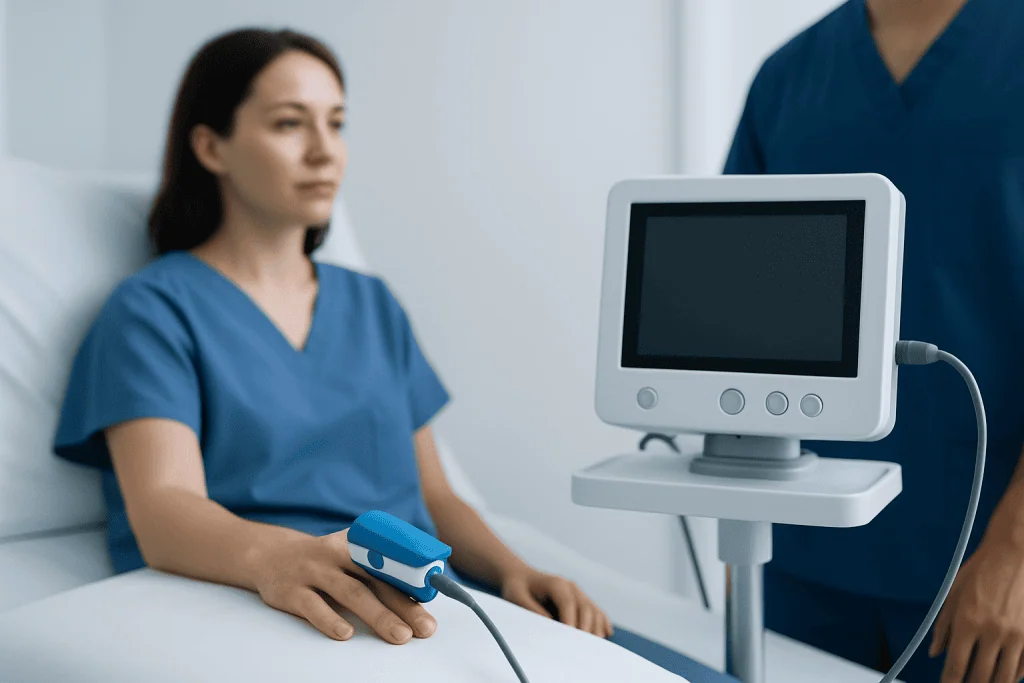
A pulse oximeter shines red and infrared light through a small area of skin. Oxygen-rich and oxygen-poor hemoglobin absorb these wavelengths differently. By detecting changes in light absorption with each heartbeat, the device estimates the proportion of hemoglobin carrying oxygen.
Most devices show two main numbers. SpO2 is the estimated oxygen saturation percentage, while the pulse rate is the number of heartbeats per minute. Some monitors also display a waveform or signal-strength indicator. A steady waveform or strong signal can suggest that the sensor is reading the pulse reliably, but it does not replace clinical judgment.
Pulse oximetry does not directly measure the amount of oxygen dissolved in blood, carbon dioxide levels, lung function, or the cause of low oxygen. When a more precise assessment is needed, clinicians may order an arterial blood gas test, which analyzes a blood sample from an artery and can measure oxygen, carbon dioxide, and blood acidity.
Understanding Oxygen Saturation Readings
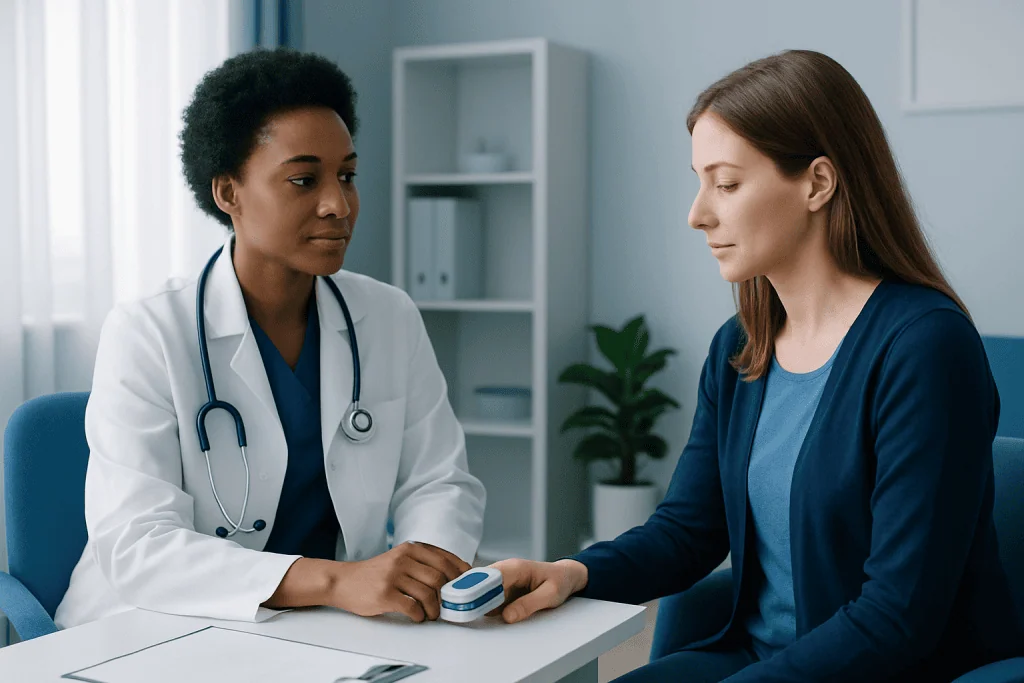
For many healthy adults at sea level, an SpO2 reading in the mid-to-high 90s is commonly expected. However, an individual’s appropriate range can vary with altitude, age, underlying health conditions, and clinical circumstances. People who live at higher elevations may have lower baseline readings than people at sea level.
Some people with chronic lung disease, including certain forms of chronic obstructive pulmonary disease, may have lower usual oxygen saturation levels. Their healthcare professional may provide a personalized target range and a plan for what to do if results change. It is not appropriate to adjust prescribed oxygen therapy based only on a single home reading without medical advice.
A number that is lower than expected should be rechecked carefully, especially if the person feels well and there may be a technical reason for the result. If the reading remains low, is falling over time, or is accompanied by symptoms such as breathlessness or chest discomfort, prompt clinical advice is important. Conversely, a reassuring reading does not rule out serious illness in a person who appears unwell.
- Readings should be considered in relation to the person’s usual baseline and symptoms.
- Trends over time can be more helpful than one isolated measurement.
- Clinical teams may use different thresholds depending on the setting and the person’s condition.
What Can Affect Oximetry Accuracy?
Pulse oximeters are useful but have limitations. The device needs a good pulsating blood-flow signal, so readings may be less reliable when hands are cold, circulation is reduced, blood pressure is very low, or the person is moving, shivering, or has an irregular heartbeat. Allowing the person to rest and warming cold hands may help obtain a better signal.
Nail polish, artificial nails, heavily soiled nails, and bright external light can sometimes interfere with a finger sensor. Removing nail products when practical, shielding the sensor from strong light, and trying another finger can help. In infants or people with small fingers, clinicians may use appropriately sized sensors or an alternative site.
Research and safety agencies have also highlighted that pulse oximeters may be less accurate in some circumstances for people with darker skin pigmentation, particularly when oxygen levels are low. This does not mean the devices are not useful, but it reinforces why symptoms and professional assessment remain essential. Medical-grade devices used in healthcare settings are generally subject to regulatory standards, while consumer devices can vary in quality and performance.
Carbon monoxide poisoning is another important limitation. Standard pulse oximeters can mistake carboxyhemoglobin for oxygenated hemoglobin and may show a falsely reassuring result. Anyone with possible smoke inhalation or carbon monoxide exposure should seek emergency assessment even if a home oximeter reading appears normal.
When Oximetry Is Used in Healthcare and at Home
Healthcare professionals use oximetry in many settings, including emergency care, hospital wards, operating and recovery rooms, outpatient clinics, and ambulance services. It can support monitoring during respiratory infections, asthma or COPD flare-ups, pneumonia, heart failure, anesthesia, sedation, and treatment with supplemental oxygen.
At home, a clinician may recommend pulse oximetry for selected people with known respiratory or cardiac disease, during recovery from an illness, or as part of an individualized monitoring plan. It can be useful for recording changes, but frequent checking without a clear medical reason may create unnecessary worry. A healthcare professional can explain when to check, how often to record results, and which changes should prompt a call.
Oximetry may also be used during sleep studies or exercise assessments. Overnight measurements can identify patterns of oxygen desaturation, but a home pulse oximeter alone cannot diagnose obstructive sleep apnea or another sleep disorder. Formal testing may be needed when symptoms such as loud snoring, witnessed pauses in breathing, morning headaches, or daytime sleepiness are present.
How to Take a More Reliable Home Reading
Before measuring, the person should sit quietly for several minutes and keep the hand relaxed and still. The sensor should fit comfortably on a clean, warm finger without squeezing. Nail polish or artificial nails should be removed if possible, and the hand should be kept away from bright direct light.
After placing the device, it is best to wait until the displayed number stabilizes and the pulse shown by the monitor seems plausible. Taking two or three readings a short time apart can be more informative than reacting to the first number. The result, date, time, activity level, and any symptoms can be written down if monitoring has been advised by a clinician.
Home oximetry should not delay care for a person with concerning symptoms. Someone who is struggling to breathe, cannot speak comfortably in full sentences, develops bluish or gray discoloration of the lips or face, has new confusion, fainting, or chest pain needs urgent assessment regardless of the device display. People using prescribed oxygen should follow their existing care plan and contact their clinical team for guidance about unexpected changes.
When to Seek Medical Care
Urgent medical care is needed for severe or worsening shortness of breath, chest pain or pressure, new confusion, extreme drowsiness, fainting, blue or gray lips or face, or signs of a severe allergic reaction. These symptoms can indicate a serious problem even when a pulse oximeter appears to show an acceptable reading.
A clinician should be contacted promptly if oxygen readings are repeatedly lower than the person’s usual range, particularly when this is accompanied by cough, fever, wheezing, rapid breathing, reduced exercise tolerance, or swelling of the legs. A sudden change in readings in a person with a known lung or heart condition also deserves medical advice.
For people who need assessment of persistent low oxygen readings or respiratory symptoms, Acibadem International’s multidisciplinary specialists and JCI-accredited hospitals can provide diagnostic evaluation and treatment planning for international patients. The aim of assessment is to identify the underlying cause rather than to focus on the oximeter number alone.
Frequently asked questions
What is the difference between oximetry and an arterial blood gas test?
Pulse oximetry estimates oxygen saturation through the skin and does not require a blood sample. An arterial blood gas test uses blood from an artery and can directly assess oxygen, carbon dioxide, and blood acidity. Clinicians may use an arterial blood gas when more detailed or precise information is needed.
Is a finger pulse oximeter accurate?
A well-functioning device can provide useful estimates when used correctly, but it is not perfect. Movement, cold hands, low circulation, nail products, and device limitations can affect results. Symptoms and repeat measurements are important when interpreting a reading.
Can anxiety lower oxygen saturation?
Anxiety can cause a feeling of breathlessness, rapid breathing, chest tightness, or tingling, but it does not usually lower oxygen saturation in an otherwise healthy person. Persistent low readings or significant breathing symptoms should not automatically be attributed to anxiety. Medical advice is appropriate when symptoms are new, severe, or unexplained.
Why does my oxygen reading change between fingers?
Small variations can occur because blood flow and sensor fit differ between fingers. Cold skin, movement, or nail products can also alter the signal. Warming the hands, staying still, and repeating the test on another clean finger may help clarify the result.
Can a pulse oximeter diagnose COVID-19, asthma, or sleep apnea?
No. Oximetry can show whether oxygen saturation may be lower than expected, but it cannot identify the cause. Diagnosis of infections, asthma, sleep apnea, and other conditions requires a clinical evaluation and may involve additional tests.
Should a person buy a pulse oximeter for home use?
A home device may be useful when recommended as part of a clinician-guided monitoring plan. For most people without a respiratory or cardiac condition, routine checking is not necessary. Anyone considering one should understand its limitations and know that concerning symptoms require care even with a normal reading.
References
- U.S. Food and Drug Administration
- World Health Organization
- American Thoracic Society
- National Heart, Lung, and Blood Institute
- NHS England
This article is for general information only and is not a substitute for professional medical advice. Please consult a qualified doctor about your individual situation.
Explore treatments in Turkey — costs, top hospitals & a free quote
JCI-accredited · board-certified surgeons · reply within 24h
Add us as a Preferred Source to see more of our trusted health content across Google Search, AI Overviews and Discover.
Check your numbers in seconds
BMI, calories, due date, blood pressure and 30+ more clinical calculators — free, instant, doctor-reviewed ranges.

More from the Health Library


Related Specialists

Prof. Dr. Saime Paydaş
Internal Medicine
Prof. Dr. Rıza Türköz
Cardiovascular Surgery
Dr. Jülide Çeldir Emre
Pulmonary Medicine
Prof. Dr. Metin Türkmen
Orthopedic Surgery & Traumatology