Progesterone and Menopause: A Complete Clinical Guide for Patients

People who have a uterus generally need a progestogen alongside systemic estrogen to lower the risk of excessive growth in the uterine lining. Progesterone is not required with systemic estrogen after a total hysterectomy in most cases, although individual exceptions exist.
Key Takeaways
- People who have a uterus generally need a progestogen alongside systemic estrogen to lower the risk of excessive growth in the uterine lining.
- Progesterone is not required with systemic estrogen after a total hysterectomy in most cases, although individual exceptions exist.
- Menopausal hormone therapy can relieve hot flashes and night sweats, but it is not suitable for everyone.
- Micronized progesterone may cause sleepiness or dizziness and should be used exactly as prescribed.
- Unexpected vaginal bleeding during or after menopause should be assessed by a healthcare professional.
Progesterone has an important role in menopause care, primarily by protecting the lining of the uterus when estrogen is used as menopausal hormone therapy. The right approach depends on whether a person has a uterus, their symptoms, medical history, preferences, and the balance of potential benefits and risks.
Overview: What Is the Role of Progesterone in Menopause?
Progesterone and menopause are connected because progesterone production falls as ovarian function declines. This change is part of the transition toward menopause, but progesterone treatment is not automatically needed for every menopausal symptom. Its most established role is within menopausal hormone therapy: it is used with estrogen to protect the uterus in people who still have one.
Estrogen is the hormone component most effective for bothersome vasomotor symptoms, including hot flashes and night sweats. When systemic estrogen is taken by tablets, patches, gels, or sprays, it can stimulate the endometrium, which is the lining of the uterus. Adding progesterone or a related medicine called a progestogen counteracts this effect and reduces the risk of endometrial hyperplasia, an abnormal thickening that can increase the risk of endometrial cancer.
“Progesterone” is often used as a general term, but there is a useful clinical distinction. Micronized progesterone is chemically identical to the progesterone made by the body, while progestogens include synthetic medicines with progesterone-like effects. Both may be used in hormone therapy, and the most appropriate option is selected individually.
How Hormones Change During Perimenopause and Menopause
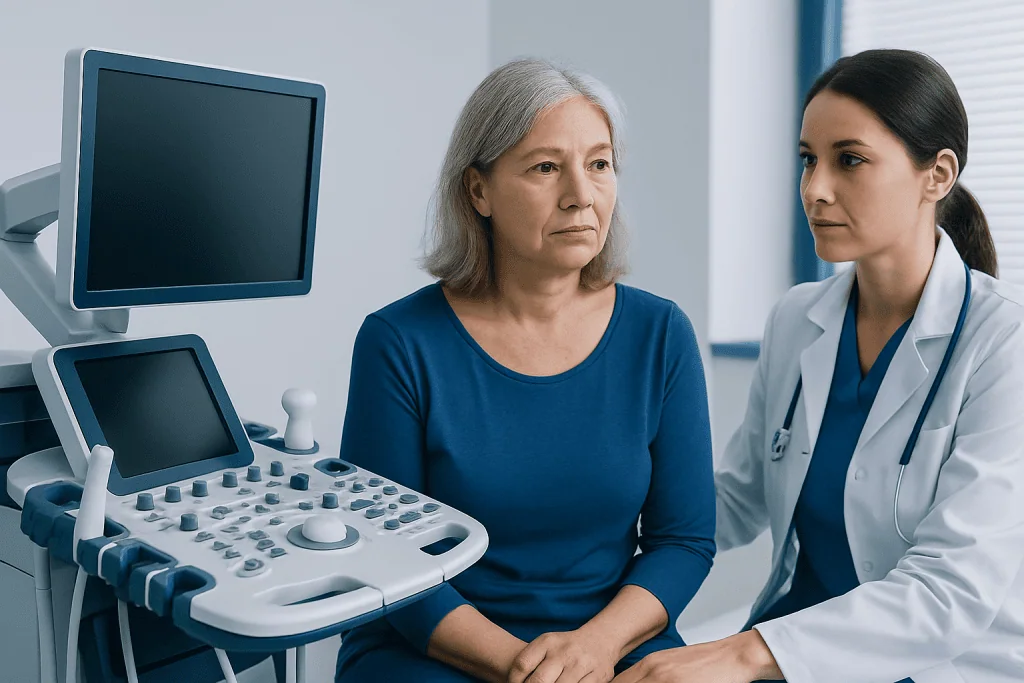
Perimenopause is the years leading up to menopause, when menstrual cycles and hormone levels become less predictable. Ovulation may occur less regularly, so progesterone levels can fluctuate and eventually decline. Estrogen levels also vary during this stage before settling at lower levels after menopause.
These shifts may contribute to irregular or heavier bleeding, hot flashes, sleep disruption, mood changes, vaginal dryness, and changes in sexual comfort. Symptoms differ widely: some people have few difficulties, while others have symptoms that significantly affect daily life. Symptoms alone cannot reliably show whether progesterone treatment is needed.
Menopause is confirmed retrospectively after 12 consecutive months without a menstrual period when no other explanation is present. In people using hormonal treatments, after certain gynecological procedures, or when periods have stopped for another reason, a clinician may use the person’s age, symptoms, medical history, and sometimes testing to guide assessment.
Hormone therapy is one possible treatment for menopause symptoms, not a required part of menopause. Decisions should consider symptom severity, quality of life, bone health considerations, age, time since menopause, and personal and family medical history.
Who May Need Progesterone With Estrogen?

For most people with an intact uterus, systemic estrogen therapy should be combined with adequate endometrial protection. This may be provided by oral micronized progesterone, another oral or transdermal progestogen, or in selected cases a levonorgestrel-releasing intrauterine device. The exact product and schedule are determined by a clinician.
Some regimens use progesterone for part of each month and may lead to a predictable withdrawal bleed, particularly during perimenopause. Others use estrogen and a progestogen continuously, with the aim of eventually avoiding bleeding. Irregular spotting can occur when treatment begins or changes, but persistent, heavy, or new bleeding needs medical review.
People who have had a total hysterectomy usually can use estrogen alone because there is no endometrium to protect. However, exceptions may apply, such as a history of endometriosis or surgery in which some endometrial tissue may remain. A gynecologist can clarify the safest regimen in these circumstances.
Low-dose vaginal estrogen used for genitourinary symptoms of menopause, such as vaginal dryness or discomfort with sex, generally has minimal absorption into the bloodstream. A progestogen is not usually required with these local treatments, but patients should follow the advice for the exact medicine they use.
Potential Benefits and What Progesterone Can and Cannot Do
When it is prescribed with estrogen, progesterone allows many people with a uterus to use systemic estrogen more safely for relief of hot flashes and night sweats. Systemic menopausal hormone therapy can also help prevent bone loss while it is being used. It should be reviewed periodically to ensure it remains appropriate.
Some people report improved sleep while taking oral micronized progesterone, partly because it can have a sedating effect. Evidence and individual responses vary, however, and progesterone should not be viewed as a universal sleep treatment. Clinicians also consider other potential causes of poor sleep, such as anxiety, depression, sleep apnea, pain, medication effects, or restless legs syndrome.
Progesterone alone may be considered in selected situations, but it is not generally the main first-line treatment for vasomotor symptoms when estrogen is safe and suitable. It is also not a proven treatment for every symptom attributed to menopause, including weight gain, fatigue, low mood, or reduced libido. These symptoms deserve a broader assessment rather than assuming a hormone imbalance is the only cause.
Neither progesterone nor menopausal hormone therapy is a contraceptive. People in perimenopause who could still become pregnant should discuss reliable contraception with a healthcare professional until contraception is no longer needed.
Side Effects, Risks, and Important Safety Considerations
Possible progesterone or progestogen side effects include sleepiness, dizziness, breast tenderness, bloating, headache, mood changes, and vaginal spotting. Oral micronized progesterone may make some people drowsy, so clinicians often advise taking it at bedtime. Alcohol and other medicines that cause drowsiness can increase this effect.
The overall benefits and risks of menopausal hormone therapy depend on the formulation, dose, route, duration of use, age, and timing since menopause, as well as individual health factors. Combined estrogen-progestogen therapy may affect breast cancer risk differently from estrogen-only therapy. The risk profile can also vary between different progestogens, but no option is risk-free.
Systemic hormone therapy may not be appropriate for people with certain conditions, including unexplained vaginal bleeding, current or previous hormone-sensitive cancer, a history of blood clots, stroke, heart attack, or active liver disease. The decision can be more complex for people with migraine, high blood pressure, diabetes, or a strong family history of breast or ovarian cancer. Specialist advice is important rather than stopping or starting treatment without guidance.
“Bioidentical” can mean regulated micronized progesterone or estradiol products that match hormones made in the body. It is different from unregulated compounded hormone preparations. Regulated medicines are preferred because their quality, dose, safety information, and monitoring standards are established.
Assessment, Monitoring, and Non-Hormonal Options
A menopause consultation typically begins with a discussion of symptoms, menstrual pattern, sleep, sexual and urinary concerns, medications, medical conditions, and family history. For many people over age 45 with typical symptoms, hormone blood tests are not necessary to diagnose perimenopause or menopause because hormone levels fluctuate substantially. Tests may be useful in particular clinical situations.
Before prescribing systemic hormone therapy, a clinician will assess whether there are contraindications and discuss expected benefits, possible adverse effects, and alternatives. Follow-up reviews help assess symptom control, blood pressure where relevant, bleeding patterns, side effects, and whether the regimen should be continued, changed, or stopped.
Non-hormonal options are available for people who cannot use hormones or prefer not to. Depending on the symptom and individual health profile, these can include certain prescription medicines for hot flashes, cognitive behavioral therapy for insomnia or menopause-related distress, vaginal moisturizers and lubricants, pelvic floor therapy, and treatment for contributing conditions.
Regular physical activity, adequate dietary protein and calcium, vitamin D when advised, limited alcohol intake, not smoking, and a consistent sleep routine can support general health during menopause. These measures may not eliminate hot flashes, but they can improve cardiovascular, bone, muscle, and emotional wellbeing.
When to Seek Medical Care
A person should arrange a medical appointment if menopause symptoms are disrupting sleep, work, relationships, or everyday activities. Individualized care can help identify whether hormone therapy, non-hormonal treatment, lifestyle measures, or a combination of approaches is most suitable.
Vaginal bleeding after menopause always needs assessment, even if it occurs while using hormone therapy. Medical review is also important for bleeding that is heavy, lasts longer than expected, begins after a period of stable treatment, or occurs with pelvic pain. These symptoms often have non-cancerous causes, but they should not be self-managed.
Urgent care is appropriate for symptoms that could indicate a blood clot, stroke, or severe allergic reaction, such as sudden chest pain, shortness of breath, coughing blood, one-sided leg swelling, sudden weakness or speech difficulty, or swelling of the face or throat. These symptoms require prompt evaluation regardless of hormone use.
Acibadem International’s multidisciplinary specialists and JCI-accredited hospitals can assess menopause concerns and provide individualized gynecological and hormonal care for international patients. A clinician can help patients make an informed plan that accounts for their symptoms, treatment goals, and medical history.
Frequently asked questions
Do all women need progesterone during menopause?
No. Progesterone or another progestogen is usually needed when a person with a uterus takes systemic estrogen therapy. People who have had a total hysterectomy commonly use estrogen without progesterone, although some medical circumstances require individual assessment.
Can progesterone alone relieve hot flashes?
Progesterone alone may help some individuals, but estrogen is generally the most effective hormonal treatment for moderate to severe hot flashes and night sweats when it is safe to use. A clinician can discuss whether progesterone alone, estrogen-based therapy, or a non-hormonal option fits the person's situation.
Is micronized progesterone safer than synthetic progestogens?
Micronized progesterone and synthetic progestogens have different properties, side-effect profiles, and evidence bases. Some research suggests their risks may differ in certain areas, but the best choice depends on the person, the estrogen regimen, uterine protection needs, and medical history.
Does progesterone help with sleep in menopause?
Oral micronized progesterone can cause drowsiness and may improve sleep for some people. Sleep difficulties can have many causes, so ongoing insomnia should be assessed rather than treated with progesterone alone without a broader review.
Can progesterone cause weight gain during menopause?
Weight changes around menopause are common and are influenced by aging, body composition changes, sleep, activity, diet, and other health factors. Some people experience bloating or fluid-related changes with hormone therapy, but progesterone is not established as a direct cause of significant long-term weight gain.
Is bleeding on estrogen and progesterone normal?
Spotting or irregular bleeding can occur in the first months after starting or changing some hormone therapy regimens. However, bleeding after menopause, heavy bleeding, or bleeding that persists or starts after a stable period should be reviewed promptly by a healthcare professional.
References
- North American Menopause Society
- American College of Obstetricians and Gynecologists
- National Institute for Health and Care Excellence
- International Menopause Society
- World Health Organization
This article is for general information only and is not a substitute for professional medical advice. Please consult a qualified doctor about your individual situation.
Explore treatments in Turkey — costs, top hospitals & a free quote
JCI-accredited · board-certified surgeons · reply within 24h
Add us as a Preferred Source to see more of our trusted health content across Google Search, AI Overviews and Discover.
Check your numbers in seconds
BMI, calories, due date, blood pressure and 30+ more clinical calculators — free, instant, doctor-reviewed ranges.