Edema Scale — Explained by Medical Evidence, Not Myths

The edema scale commonly grades pitting edema from 1+ to 4+ based on indentation depth and how long it remains. A higher edema grade does not identify the cause of swelling or, by itself, measure overall health risk.
Key Takeaways
- The edema scale commonly grades pitting edema from 1+ to 4+ based on indentation depth and how long it remains.
- A higher edema grade does not identify the cause of swelling or, by itself, measure overall health risk.
- Edema can occur after prolonged sitting or standing, but it may also be related to vein, heart, kidney, liver, lymphatic, hormonal, or medication-related factors.
- New, one-sided, painful, rapidly worsening, or breathlessness-associated swelling needs prompt medical assessment.
- Healthcare professionals interpret edema grading alongside symptoms, medical history, examination findings, and tests when needed.
An edema scale is a clinical tool used to describe the severity of swelling caused by fluid buildup in body tissues. It is most often used for pitting edema, where gentle pressure leaves a temporary indentation in the skin.
What Is an Edema Scale?
An edema scale is a standardized way for clinicians to record visible or felt swelling caused by excess fluid in the tissues. It is particularly useful when assessing the feet, ankles, lower legs, hands, or sacral area at the base of the spine in people who spend much of their time in bed. By using a consistent grade, clinicians can compare findings over time and communicate clearly with other members of the care team.
In everyday clinical use, the term usually refers to the pitting edema scale. With pitting edema, pressing gently on a swollen area for a few seconds creates a dent that remains briefly after the finger is lifted. The depth of that dent and the time it takes to refill are used to describe the edema grade.
The scale is a description, not a diagnosis. It cannot determine why fluid has accumulated, whether the swelling is dangerous, or how much total fluid the body is retaining. Some forms of swelling, such as lymphedema or swelling from inflammation, may be firm and non-pitting, so a pitting scale may not apply.
How the 1+ to 4+ Pitting Edema Scale Works
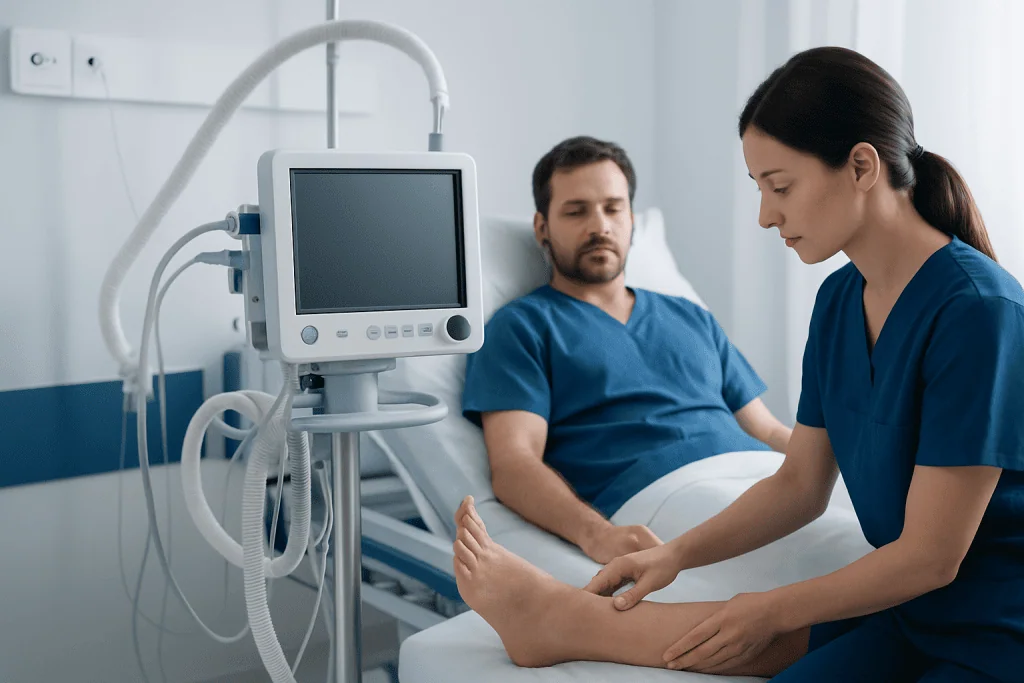
Although methods can vary slightly between clinical settings, pitting edema is commonly recorded from 1+ to 4+. The examiner applies gentle, steady pressure over a bony area, often the ankle or shin, and observes the indentation left behind. The assessment should be performed consistently, ideally in the same body location and at a similar time of day when monitoring change.
- 1+: Mild pitting. A small, shallow indentation appears and resolves quickly.
- 2+: Moderate pitting. The indentation is deeper and takes several seconds to disappear.
- 3+: Moderately severe pitting. A noticeable, deeper pit remains for a longer period, and the limb may look visibly swollen.
- 4+: Severe pitting. A very deep indentation persists for an extended time and may be accompanied by marked swelling or skin tightness.
These grades are not exact measurements. Skin thickness, body shape, hydration, the pressure applied, and the examiner’s technique can all influence the result. For this reason, an edema grade is most useful when considered with other observations, such as whether swelling is present in one or both legs, changes with elevation, affects body weight, or is linked with shortness of breath.
What Edema Grades Can and Cannot Tell You
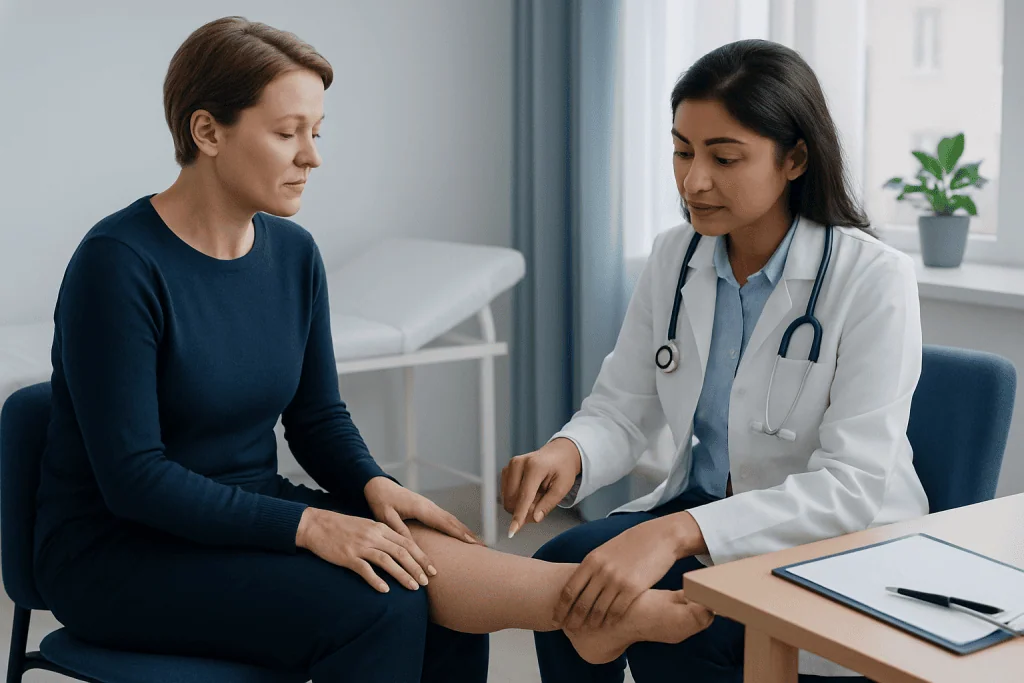
A documented edema grade can help show whether pitting swelling is improving, stable, or increasing. For example, clinicians may monitor edema during recovery after surgery, while reviewing a medication that can cause fluid retention, or when following a long-term heart, kidney, or vascular condition. Repeated assessments can be more informative than one isolated grade.
However, a 3+ grade in one person is not automatically more medically serious than a 1+ grade in another. The cause, location, speed of onset, associated symptoms, and person’s overall health matter greatly. Mild bilateral ankle swelling after a long flight has a different context from sudden swelling in one calf or swelling accompanied by chest discomfort.
Edema grading also has limitations. It does not reliably measure non-pitting swelling, and it cannot replace appropriate testing. A clinician may use a physical examination, blood and urine tests, heart or kidney assessment, ultrasound imaging, or other investigations to understand the underlying cause.
Common Causes of Edema and Risk Factors
Edema develops when fluid moves from blood vessels into surrounding tissues faster than the body can remove it. Temporary ankle and foot swelling can occur after prolonged standing, sitting, heat exposure, travel, pregnancy, or a high-salt meal. Minor injury or inflammation may also cause localized swelling.
Persistent or widespread edema can be associated with chronic venous insufficiency, in which leg veins have difficulty returning blood to the heart. It may also be linked with heart conditions, kidney disease, liver disease, low blood protein, thyroid disorders, lymphatic problems, or certain medicines. Medication-related edema may occur with some blood pressure medicines, anti-inflammatory medicines, hormones, and other treatments; a person should not stop prescribed medicine without speaking to the prescriber.
Risk factors depend on the cause but may include older age, reduced mobility, obesity, pregnancy, previous blood clots, varicose veins, long periods of sitting or standing, and chronic medical conditions. Unilateral leg swelling can sometimes be caused by a blood clot in a deep vein, also called deep vein thrombosis, which requires urgent evaluation.
How Clinicians Assess Swelling Beyond the Edema Scale
A healthcare professional begins by asking when the swelling started, whether it affects one side or both, and whether it changes throughout the day. They may ask about recent travel, injury, surgery, pregnancy, infections, medications, heart or kidney symptoms, and a personal or family history of circulation problems.
During the examination, the clinician may inspect the skin for redness, warmth, wounds, color changes, varicose veins, or signs of infection. They may check pulses, compare limb size, look for pitting, and assess the lungs, heart, abdomen, and other areas as appropriate. Skin that is very tight, shiny, discolored, or fragile may need specific attention.
Tests are chosen according to the suspected cause. These may include blood pressure measurement, blood tests, urine testing, an electrocardiogram, echocardiography, or a vascular ultrasound. If a clot is suspected, timely imaging is important. For circulation-related causes, evaluation may overlap with assessment of varicose veins or other venous conditions.
Practical Self-care for Mild Swelling
For mild swelling with an identifiable, non-urgent trigger, simple measures may help. Regular walking and ankle movements can support circulation, especially during desk work or travel. Taking breaks from prolonged sitting or standing, resting with the legs elevated when appropriate, and wearing comfortable shoes may also reduce dependent ankle swelling.
Reducing excess dietary salt can be helpful for some people, particularly when fluid retention is a concern. Maintaining a healthy activity level and discussing weight management with a clinician when relevant may also support circulation. Compression stockings can help selected people with venous swelling, but the correct type should be chosen with medical advice, particularly for anyone with known arterial circulation problems, diabetes-related foot concerns, or reduced sensation.
It is not advisable to self-treat ongoing edema with over-the-counter diuretics or drastic fluid restriction. Diuretic medicines are used for particular conditions and require clinical supervision because they can affect blood pressure, kidney function, and electrolyte balance. New or persistent swelling deserves a medical review rather than assumptions about its cause.
When to Seek Medical Care
Medical advice is appropriate for swelling that lasts, recurs often, worsens, affects daily activities, or has no clear explanation. A clinician should also assess swelling accompanied by skin changes, pain, fever, unexpected weight change, reduced urine output, or symptoms of an underlying heart, kidney, liver, or thyroid condition.
Urgent medical assessment is needed for sudden swelling of one leg, especially if it is painful, warm, red, or tender. Emergency care is important if swelling occurs with shortness of breath, chest pain, fainting, coughing blood, confusion, or a rapidly worsening general condition. These symptoms can have several causes and should not be evaluated at home.
For international patients who need assessment of unexplained swelling or its underlying cause, Acibadem International’s multidisciplinary specialists and JCI-accredited hospitals provide diagnostic evaluation and treatment planning. Bringing a symptom timeline, medication list, and any previous test results can help make the appointment more productive.
Frequently asked questions
What does 1+ edema mean?
A 1+ edema grade usually means mild pitting edema. Gentle pressure leaves a small, shallow dent that disappears quickly. The grade describes the physical finding but does not explain why the swelling is present.
Is 4+ edema always dangerous?
A 4+ grade indicates pronounced pitting and should be medically assessed, especially if it is new or worsening. However, the grade alone does not determine the cause or urgency. Associated symptoms and the speed and location of swelling are important.
Can edema be present without pitting?
Yes. Non-pitting edema feels firm or tight and does not leave a lasting indentation after pressure. It may occur with lymphatic disorders, certain thyroid conditions, inflammation, or long-standing tissue changes.
How can a person check for pitting edema at home?
A person may notice whether gentle pressure on a swollen ankle or shin leaves a temporary dent, but home checking cannot diagnose the cause. Repeated pressing can irritate delicate skin, and grading is not fully consistent without clinical training. Persistent or unexplained swelling should be discussed with a healthcare professional.
Does ankle swelling always mean a heart problem?
No. Ankle swelling can result from prolonged standing, travel, heat, vein problems, pregnancy, medicines, injury, and several medical conditions. Heart-related edema is one possible cause, so a clinician considers the full symptom pattern and examination.
Should someone take water pills for swollen legs?
Diuretics, sometimes called water pills, should only be taken when prescribed for a diagnosed reason. They are not appropriate for every type of edema and can cause dehydration, low blood pressure, or electrolyte changes. A clinician can advise whether they are needed.
This article is for general information only and is not a substitute for professional medical advice. Please consult a qualified doctor about your individual situation.
Explore treatments in Turkey — costs, top hospitals & a free quote
JCI-accredited · board-certified surgeons · reply within 24h
Add us as a Preferred Source to see more of our trusted health content across Google Search, AI Overviews and Discover.
Check your numbers in seconds
BMI, calories, due date, blood pressure and 30+ more clinical calculators — free, instant, doctor-reviewed ranges.

More from the Health Library

IUD Removal: What Patients Need to Know

Friction Burn — Explained by Medical Evidence, Not Myths

Secondary Syphilis: A Complete Medical Overview

Yag Laser: An Evidence-Based Guide for Patients

Cat Allergies: An Evidence-Based Guide for Patients