

Hooded Eyes Surgery: Blepharoplasty Guide

Hooded eyelids can be a normal inherited facial feature or develop with ageing as skin and supporting tissues change. Upper blepharoplasty removes or repositions selected eyelid skin and fat; it is different from surgery to correct a weak eyelid-lifting muscle.
Key Takeaways
- Hooded eyelids can be a normal inherited facial feature or develop with ageing as skin and supporting tissues change.
- Upper blepharoplasty removes or repositions selected eyelid skin and fat; it is different from surgery to correct a weak eyelid-lifting muscle.
- A careful eye and facial assessment is essential, particularly for people with dry eye, thyroid eye disease, glaucoma, previous eye surgery, or vision symptoms.
- Recovery commonly involves temporary swelling and bruising, while incision lines continue to settle over several months.
- Sudden eyelid drooping, unequal pupils, double vision, pain, or vision loss needs urgent medical assessment rather than cosmetic treatment.
Hooded eyes surgery most often refers to upper blepharoplasty, a procedure that reshapes excess skin and sometimes fat around the upper eyelids. It may be chosen for cosmetic reasons or when eyelid tissue obstructs the upper field of vision.
Overview: What Is Hooded Eyes Surgery?
Hooded eyes describe an upper eyelid shape in which skin from the brow or upper lid folds over the natural eyelid crease. In some people, this is simply a normal, inherited facial characteristic. In others, it becomes more noticeable over time as skin loses elasticity, fatty tissue changes position, and the brow gradually descends.
Hooded eyes surgery usually means upper blepharoplasty, also called upper eyelid surgery. During this procedure, a surgeon removes a carefully planned amount of excess skin and may adjust or remove small amounts of fat. The aim may be to create a less heavy eyelid appearance, improve symmetry, or relieve skin that blocks the upper visual field.
Not every hooded eyelid needs surgery, and surgery is not always the right treatment. A low brow, true eyelid drooping (ptosis), dry-eye disease, or another eye condition can contribute to a heavy-lid appearance. Identifying the cause helps the surgeon recommend the safest and most appropriate approach.
Why Hooded Eyelids Develop
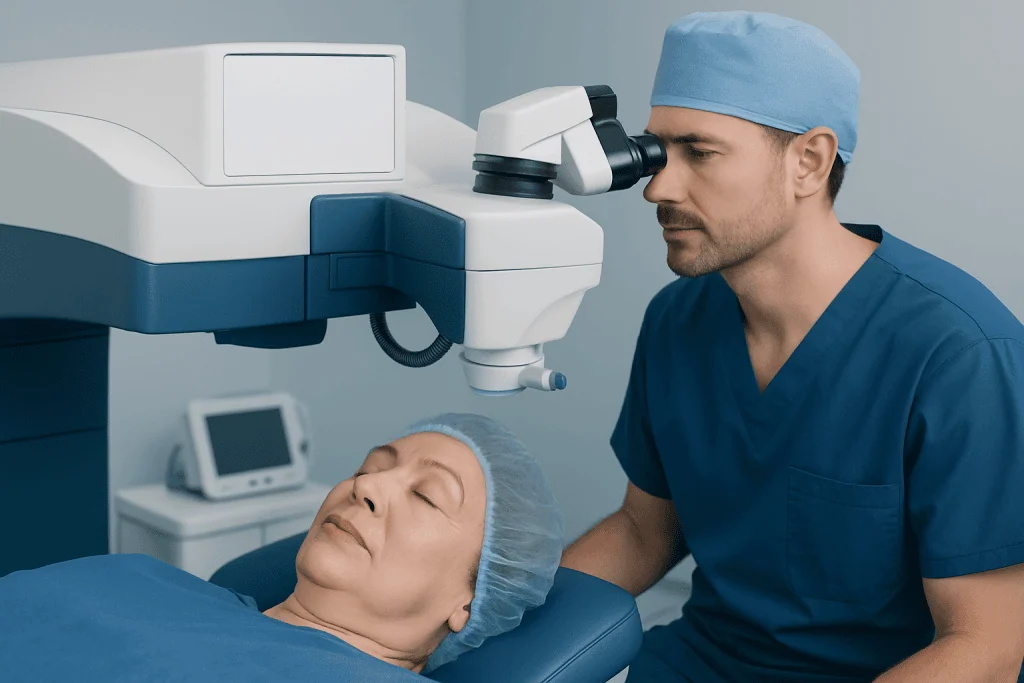
Upper eyelid hooding often has more than one cause. Genetics strongly influence eyelid crease height, skin thickness, fat distribution, and brow position. A person may therefore have hooded eyes from childhood or notice that their eyelids resemble those of close family members.
Age-related changes are another common reason. The upper eyelid skin may become looser, the brow may sit lower, and the tissues that support the eyelid can weaken. These changes can create a sense of heaviness or make eye makeup more difficult to apply. They do not necessarily indicate a medical problem.
Sometimes the issue is not excess skin alone. Ptosis occurs when the upper eyelid margin itself sits lower because the muscle or tendon responsible for lifting it is weakened. Brow ptosis refers to a descended brow that pushes skin downward. These conditions require different planning than a standard skin-only blepharoplasty and may be assessed alongside ptosis.
Rarely, new eyelid changes may be related to neurological disease, thyroid eye disease, injury, inflammation, or a medication effect. A newly developing or rapidly changing eyelid position should be examined by a qualified clinician rather than assumed to be a cosmetic concern.
Who May Benefit From Upper Blepharoplasty?

Upper blepharoplasty may be considered by adults who have stable health and realistic expectations about what surgery can achieve. Some seek a refreshed eyelid contour, while others report that overhanging skin makes them lift their brows, causes forehead fatigue, or reduces their ability to see objects above or to the side.
When vision is affected, an eye specialist may measure visual fields with the eyelids in their natural position and sometimes with the excess skin lifted. Photographs and eyelid measurements can help distinguish functional obstruction from a primarily cosmetic concern. The evaluation also considers brow position, eyelid symmetry, and the health of the eye surface.
People who smoke or use nicotine products are generally advised to stop well before and after surgery because nicotine can impair healing. Certain medicines and supplements may increase bleeding risk and should be reviewed with the surgical team; they should not be stopped without advice from the clinician who prescribed them.
Extra caution is appropriate for people with dry eyes, previous laser vision correction, glaucoma, thyroid eye disease, facial nerve weakness, bleeding disorders, or prior eyelid surgery. These factors do not automatically rule out treatment, but they can change the surgical plan, expected benefits, and risks.
Assessment and Planning Before Surgery
A consultation begins with a medical history and examination of the eyelids, brow, facial symmetry, vision, eye movements, and tear film. The surgeon will ask about contact lens use, eye irritation, previous procedures, allergies, medications, and any history of difficulty closing the eyes during sleep.
Planning is individualized. Removing too much upper-lid skin can make eye closure difficult and worsen dryness, while leaving too much tissue may not address the person’s goals. A careful surgeon preserves enough skin for normal blinking and closure, and assesses whether lifting the brow or repairing ptosis would be more helpful than, or should accompany, an upper blepharoplasty.
Preoperative photographs are commonly used for planning and comparison. Patients should discuss desired changes openly, including whether they want a subtle adjustment or a more visible change in the eyelid crease. No operation can guarantee perfect symmetry, because natural facial asymmetry is very common.
Depending on the person’s eye history and planned procedure, assessment may involve an ophthalmologist, oculoplastic surgeon, or plastic surgeon experienced in eyelid surgery. A comprehensive consultation should include discussion of alternatives, recovery needs, expected scars, possible complications, and when to seek help after surgery.
How Hooded Eyes Surgery Is Performed
Upper blepharoplasty is commonly performed as an outpatient procedure under local anaesthesia with sedation or, in selected cases, general anaesthesia. The choice depends on the extent of surgery, the individual’s health, anxiety level, and whether other facial procedures are planned at the same time.
The surgeon places an incision in the natural upper eyelid crease so that the scar is usually concealed when the eyes are open. Through this incision, excess skin is removed conservatively. Small amounts of fat may be removed, repositioned, or left untouched depending on the anatomy. The incision is then closed with fine sutures or another suitable closure method.
If the upper eyelid margin is low because of ptosis, a ptosis repair may be needed to improve lid height. If brow descent is a major contributor, a brow-lifting procedure may be discussed. Combining procedures is not necessary for everyone and should be based on anatomy, eye safety, and the person’s priorities.
There is no single ideal eyelid shape. Appropriate planning respects the person’s natural anatomy, ethnicity, age, and facial proportions. The goal is generally improved function or a balanced, natural-looking contour rather than an identical result on both sides.
Recovery, Results and Possible Risks
Swelling, bruising, mild tightness, watering, light sensitivity, and temporary numbness around the incision are common after eyelid surgery. Cool compresses, head elevation, rest, and prescribed or recommended eye care can support comfort during the early recovery period. The surgical team gives specific instructions about bathing, wound care, eye drops, activity, and follow-up visits.
Many people feel comfortable returning to desk-based activities after roughly one to two weeks, although bruising and swelling can remain visible longer. Strenuous exercise, heavy lifting, and swimming are usually restricted for a period recommended by the surgeon. Contact lenses and eye makeup should only be restarted when the clinician confirms that healing is adequate.
Early results may be obscured by swelling. The eyelid contour and scar typically continue to settle over several weeks to months. Ageing continues after surgery, and future changes in skin elasticity or brow position may occur, but the tissue removed during blepharoplasty does not grow back.
Potential complications include bleeding, infection, noticeable scarring, asymmetry, under- or over-correction, dry or irritated eyes, difficulty closing the eyes, and need for revision surgery. Serious complications affecting vision are uncommon but require urgent attention. Following aftercare instructions and selecting an appropriately qualified surgeon help reduce avoidable risks.
Non-Surgical Options and Eye Care
Non-surgical options cannot remove substantial excess eyelid skin or repair significant ptosis. However, they may be useful when surgery is not wanted or not appropriate. Depending on the cause, clinicians may recommend treatment for dry eye or allergy-related irritation, adjustment of glasses, or observation when the eyelid position is stable and vision is not affected.
Some injectable or energy-based aesthetic treatments are promoted for the eye area. Their effects on true upper-lid hooding are limited, and treatments close to the eye require particular expertise because this area is delicate. Anyone considering a non-surgical procedure should ask about the evidence, expected degree and duration of improvement, risks, and the clinician’s experience with periocular anatomy.
Practical measures can improve comfort when eyelids feel heavy or irritated: using prescribed lubricating drops if recommended, protecting the eyes from wind and sun, managing allergies, and arranging regular eye examinations when indicated. Makeup techniques may alter the appearance of a hooded crease but do not change the underlying anatomy.
For people exploring a surgical option, Acibadem International’s multidisciplinary specialists and JCI-accredited hospitals can assess eyelid concerns and provide treatment planning for international patients. The most suitable pathway depends on a personal examination and eye-health assessment.
When to See a Doctor
A routine appointment is appropriate when upper eyelid skin interferes with daily activities, causes persistent brow strain, affects peripheral vision, or creates a concern about eyelid appearance. An ophthalmologist, oculoplastic surgeon, or qualified plastic surgeon can determine whether the main issue is excess skin, brow position, ptosis, or an eye condition requiring medical care.
Urgent assessment is important if eyelid drooping appears suddenly, especially when it occurs with double vision, unequal pupils, severe headache, facial weakness, new trouble speaking, eye pain, or changes in vision. These symptoms can have causes unrelated to ageing and should not wait for a cosmetic consultation.
Medical advice is also important for a red, painful, swollen eyelid; a new lump; persistent discharge; or symptoms of dry eye that are severe or worsening. People who have had eyelid surgery should contact their surgical team promptly for increasing pain, marked swelling, bleeding, fever, discharge, inability to close the eye, or any reduction in vision.
Frequently asked questions
What is hooded eyes surgery called?
Hooded eyes surgery is most commonly called upper blepharoplasty or upper eyelid surgery. It usually involves removing a measured amount of excess upper-eyelid skin and, in some cases, adjusting fat. If the eyelid margin is low because of muscle weakness, ptosis repair rather than blepharoplasty alone may be needed.
Can upper blepharoplasty improve vision?
It can improve the upper visual field when excess upper-lid skin physically blocks vision. A clinician may perform visual-field testing and eyelid measurements to document this. It will not improve vision problems caused by the eye itself, such as refractive errors, cataracts, or retinal disease.
How long does recovery from hooded eyes surgery take?
Bruising and swelling are usually most noticeable during the first one to two weeks, though recovery varies between individuals. The eyelids can continue to refine and incision lines can mature over several months. The surgeon will advise when it is safe to return to exercise, contact lenses, makeup, and other normal activities.
Will hooded eyes surgery leave scars?
Upper blepharoplasty requires an incision, so a scar will form. It is usually placed in the natural upper eyelid crease, where it tends to be less visible when the eyes are open. Scar appearance depends on healing, skin type, surgical technique, and appropriate aftercare.
Is hooded eyes surgery painful?
Most people report pressure, tightness, tenderness, or mild discomfort rather than severe pain after surgery. Local anaesthesia prevents pain during the procedure, and the care team provides guidance on suitable pain relief afterward. Worsening pain, especially with vision changes or marked swelling, should be reported promptly.
Can hooded eyes return after surgery?
Removed skin does not return, but the face and eyelids continue to age. Over time, further skin laxity or lowering of the brow may contribute to renewed hooding. Results and longevity vary according to anatomy, skin quality, lifestyle factors, and whether brow descent or ptosis was also present.
References
- American Academy of Ophthalmology
- American Society of Ophthalmic Plastic and Reconstructive Surgery
- Mayo Clinic
- National Eye Institute
- NHS
This article is for general information only and is not a substitute for professional medical advice. Please consult a qualified doctor about your individual situation.
Explore treatments in Turkey — costs, top hospitals & a free quote
JCI-accredited · board-certified surgeons · reply within 24h
Add us as a Preferred Source to see more of our trusted health content across Google Search, AI Overviews and Discover.

Related Treatments
Related Conditions
More from the Health Library



Related Specialists
Assoc. Prof. Dr. Erdem Güven (m)
Aesthetic Plastic & Reconstructive Surgery
Prof. Dr. Şükrü Yazar
Aesthetic Plastic & Reconstructive Surgery
Prof. Dr. Hakan Ağır
Aesthetic Plastic & Reconstructive Surgery
Prof. Dr. Bülent Saçak
Aesthetic Plastic & Reconstructive Surgery