Humidifier for Eczema: A Complete Medical Overview

A humidifier can be helpful when dry indoor air worsens eczema, but it does not treat the underlying condition. Indoor humidity should be kept in a moderate range; excessive humidity can promote mold and dust mites, which may aggravate symptoms for some people.
Key Takeaways
- A humidifier can be helpful when dry indoor air worsens eczema, but it does not treat the underlying condition.
- Indoor humidity should be kept in a moderate range; excessive humidity can promote mold and dust mites, which may aggravate symptoms for some people.
- Daily cleaning and correct maintenance are essential because poorly maintained humidifiers can spread irritants or microorganisms.
- Moisturizers, trigger avoidance, and clinician-recommended medicines remain the mainstays of eczema management.
- Medical advice is important for infected, widespread, painful, sleep-disrupting, or poorly controlled eczema.
A humidifier for eczema may help reduce skin dryness and discomfort when indoor air is very dry, particularly during heating seasons. It works best as part of a broader eczema care plan that includes gentle skin care, regular moisturizer use, and medical treatment when needed.
Overview: Can a Humidifier Help Eczema?
A humidifier for eczema can be useful when indoor air is dry and the skin feels tighter, rougher, or itchier than usual. By adding moisture to the air, it may reduce water loss from the outer skin barrier and make eczema-prone skin feel more comfortable. However, a humidifier is a supportive environmental measure rather than a cure, and its benefit varies from person to person.
Eczema, often called atopic dermatitis, is a long-term inflammatory skin condition that can cause dry, itchy, inflamed, and sometimes cracked skin. The skin barrier is less effective at retaining moisture and protecting against irritants. Cold weather, indoor heating, frequent washing, fragranced products, sweating, allergens, stress, and some fabrics can all contribute to flares.
Humidification is most likely to help during cold or dry seasons, in air-conditioned rooms, or in homes where heating makes the air noticeably dry. It should be used alongside consistent moisturizing, gentle cleansing, avoidance of known triggers, and treatments advised by a healthcare professional. For a broader explanation of the condition, see eczema.
How Dry Air Can Affect Eczema-Prone Skin
The outermost layer of skin, called the stratum corneum, helps limit the loss of water from the body and blocks entry of irritants and allergens. In eczema, this barrier is more vulnerable. When the surrounding air is dry, water can evaporate from the skin more readily, leaving it rough, flaky, tight, and itchy.
Itching may lead to scratching, which can further damage the skin barrier and prolong inflammation. This itch-scratch cycle is one reason eczema can interfere with daily comfort and sleep. Dry air does not cause eczema on its own, but it can be one factor that makes existing symptoms harder to control.
Humidity is only one part of the indoor environment. Overheating rooms, taking long hot showers, using harsh soaps, and wearing rough wool garments may also increase dryness or irritation. A practical approach is to identify patterns over time, such as whether symptoms are consistently worse overnight, after heating is switched on, or in particular rooms.
Choosing and Using a Humidifier Safely

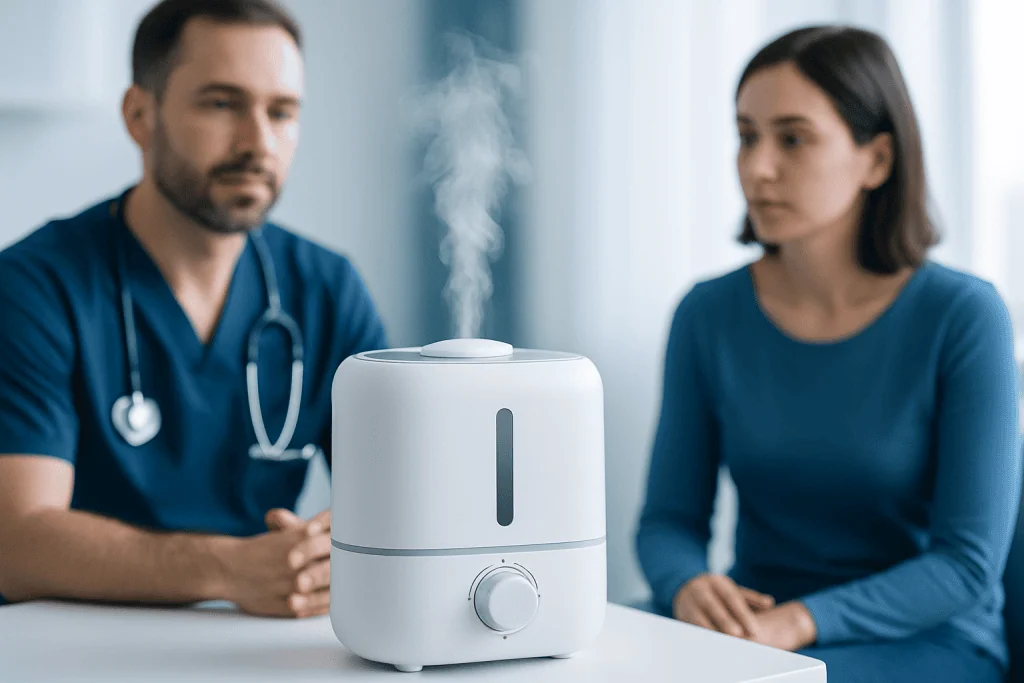
Cool-mist humidifiers are commonly chosen for home use because they do not use hot steam. The most important consideration is not the device type but safe, consistent maintenance. A humidifier that is dirty or left with standing water may release mineral particles, mold, or microorganisms into the air, which can irritate the respiratory tract or worsen indoor air quality.
Moderate indoor humidity is generally preferable. Many homes aim for approximately 30% to 50% relative humidity, using a hygrometer to monitor levels if possible. Humidity that is too high can encourage mold growth and increase dust mites, both of which may be relevant triggers for some people with eczema or allergies.
For safer use, empty the water reservoir daily, refill it with fresh water, and clean the device according to the manufacturer’s instructions. Using distilled or demineralized water may reduce mineral residue in some units. Place the humidifier on a stable surface away from bedding and walls, and avoid allowing nearby surfaces to become damp.
- Use the lowest setting that maintains comfortable, moderate humidity.
- Clean and dry the tank regularly; do not simply top up old water.
- Replace filters or cartridges as directed by the manufacturer.
- Stop use and inspect the room if there is condensation, a musty smell, visible mold, or worsening respiratory symptoms.
Building an Eczema-Friendly Daily Routine
For most people, moisturizing remains more directly helpful for eczema than changing room humidity alone. A fragrance-free emollient, cream, or ointment can be applied generously and regularly, especially after bathing while the skin is still slightly damp. Thicker ointments may be particularly useful for very dry areas, although the best option is one the person can use comfortably and consistently.
Bathing and showering should be brief and lukewarm rather than hot. A gentle, fragrance-free cleanser can be used where needed, followed by patting the skin dry rather than rubbing. Moisturizer should then be applied promptly to help retain water in the skin. Fragranced skin products, harsh scrubs, and strongly scented laundry products may irritate sensitive skin.
When eczema is inflamed, a clinician may recommend topical anti-inflammatory treatment, such as a corticosteroid or non-steroidal prescription medicine, according to the person’s age, symptoms, and affected body area. These therapies should be used as directed rather than replaced by home environmental measures. People with persistent or recurring eczema may benefit from an individualized dermatology assessment.
Simple comfort measures may also help: choosing soft, breathable fabrics; keeping fingernails short; avoiding overheating; and using cool compresses for short periods when itching is intense. A symptom diary can help identify possible environmental or product-related triggers, although not every flare has a clear cause.
When Humidifiers May Not Be the Best Choice
A humidifier may be less suitable if a room already feels damp, windows frequently collect condensation, or there is visible mold. In these circumstances, adding moisture could worsen the indoor environment. Addressing dampness, ventilation, leaks, and mold is more important than increasing humidity.
People who have known dust mite allergy may need particular care with humidity levels, because dust mites thrive in more humid environments. A clinician or allergy specialist can help determine whether allergies may be contributing to eczema symptoms. Keeping humidity moderate, washing bedding regularly, and reducing dust accumulation can be sensible steps.
Some people find that humidifiers make little difference to their skin. This does not mean eczema care has failed; the condition is influenced by many factors, including genetics, immune activity, skin-barrier function, irritants, infection, climate, and stress. The most useful plan is usually one that focuses on the individual’s proven triggers and response to treatment.
When to Seek Medical Care
Medical review is appropriate when eczema is not improving with regular moisturizer use and appropriate over-the-counter skin care, or when symptoms are affecting sleep, work, school, or emotional wellbeing. A doctor can confirm the diagnosis, check for look-alike conditions such as contact dermatitis or psoriasis, and recommend treatment based on the severity and location of symptoms.
Prompt medical advice is important if the skin becomes increasingly painful, warm, swollen, weepy, crusted, or develops pus-filled spots. These changes can indicate a skin infection and may require specific treatment. Urgent assessment is also advisable for fever or rapidly spreading redness alongside a significant skin flare.
Children with persistent eczema, people with frequent flares, and those who suspect a reaction to a skin product or occupational exposure may benefit from specialist evaluation. Acibadem International’s multidisciplinary specialists and JCI-accredited hospitals can assess and treat eczema for international patients, with care plans tailored to the individual’s skin symptoms and medical history.
Prevention and Practical Home Measures
Preventing eczema flares is not always possible, but regular habits can reduce the impact of common triggers. Moisturizing every day, even when the skin looks settled, supports the skin barrier. During dry weather, using a humidifier carefully in the room where a person spends the most time may be a reasonable addition to this routine.
It is helpful to keep bedroom temperatures comfortable rather than overly warm, as heat and sweating can increase itch for some people. Bedding and clothing should be washed with mild, fragrance-free products where possible. New products can be introduced one at a time so that a possible irritant is easier to recognize.
Stress management, adequate sleep, and treatment adherence can also support long-term eczema control. If a person needs repeated courses of medication or is unsure how to use prescribed topical treatments, they should ask a healthcare professional for clear instructions. Ongoing review allows the plan to be adjusted as symptoms and circumstances change.
Frequently asked questions
Does a humidifier really help eczema?
A humidifier may help if dry indoor air is making eczema-prone skin feel dry, tight, or itchy. It is most useful as an addition to regular moisturizing and prescribed eczema treatment, not as a replacement for them. The benefit can vary depending on the person, season, and home environment.
What humidity level is best for eczema?
A moderate indoor humidity level, often around 30% to 50%, is generally a practical target. Very dry air may worsen skin dryness, while excessive humidity can encourage mold and dust mites. A hygrometer can help monitor the room so adjustments are based on actual humidity rather than guesswork.
Can too much humidity make eczema worse?
Yes, excessive humidity may contribute to mold growth and more dust mites, which can trigger symptoms in some people with eczema or allergies. Humid, hot conditions can also increase sweating, another possible irritant. The goal is comfortable, moderate humidity rather than a damp room.
Should a humidifier run all night for eczema?
It may be used overnight if the bedroom air is dry and the device is clean, correctly positioned, and monitored with a humidity gauge. It should not create condensation on windows or dampness on nearby surfaces. Some people prefer using a timer or low setting to avoid excessive humidity.
How often should an eczema humidifier be cleaned?
The water should be emptied and replaced with fresh water daily. The tank and other components should be cleaned as often as the manufacturer recommends, with more thorough cleaning performed regularly. Proper maintenance helps reduce the chance of dispersing mineral residue, mold, or microorganisms into the air.
What else helps dry, itchy eczema skin?
Regular use of fragrance-free moisturizers, brief lukewarm bathing, gentle cleansers, and avoidance of known irritants are core measures. A doctor may recommend topical anti-inflammatory medicines when the skin is actively inflamed. Persistent, severe, or infected-looking eczema needs medical assessment.
This article is for general information only and is not a substitute for professional medical advice. Please consult a qualified doctor about your individual situation.
Eczema in Turkey — costs, top hospitals & a free quote
JCI-accredited · board-certified surgeons · reply within 24h
Add us as a Preferred Source to see more of our trusted health content across Google Search, AI Overviews and Discover.

More from the Health Library

Aseptic Technique — Explained by Medical Evidence, Not Myths

Tetraplegia: An Evidence-Based Guide for Patients

Fexofenadine: A Complete Medical Overview

Bump Underside Tongue: An Evidence-Based Guide for Patients

Aaa Screening: An Evidence-Based Guide for Patients