Red Light Therapy for Eyes: How It Works, Results and What to Expect
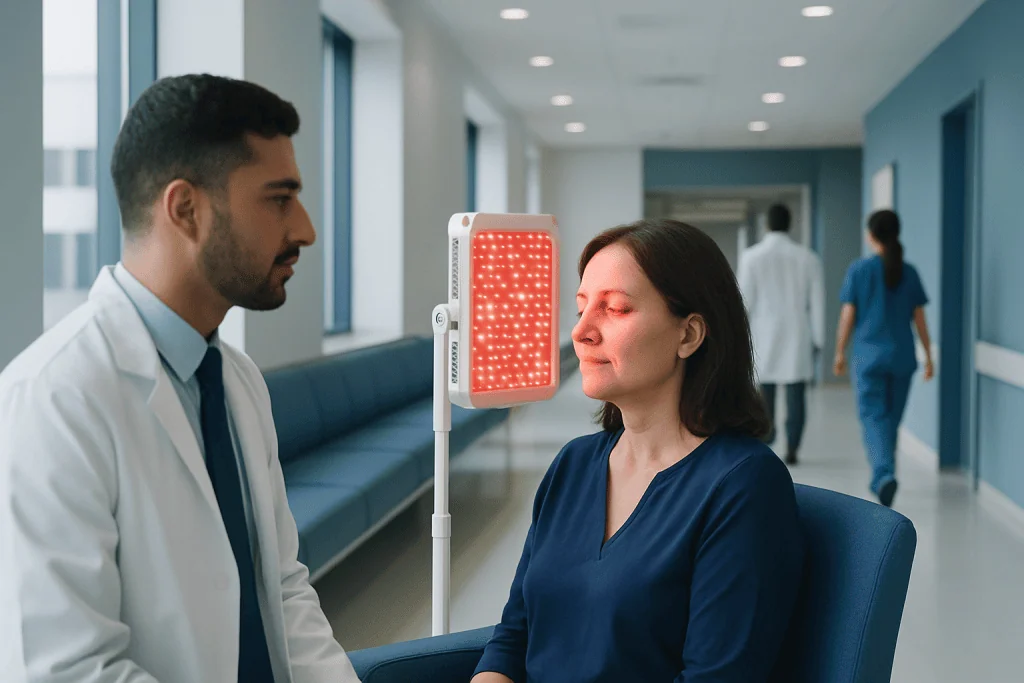
Red light therapy for eyes is an emerging treatment, not a replacement for glasses, contact lenses, medicines or eye surgery. Research suggests possible benefits for some retinal conditions, dry eye symptoms and visual function, but evidence remains limited and varies by condition.
Key Takeaways
- Red light therapy for eyes is an emerging treatment, not a replacement for glasses, contact lenses, medicines or eye surgery.
- Research suggests possible benefits for some retinal conditions, dry eye symptoms and visual function, but evidence remains limited and varies by condition.
- The wavelength, brightness, duration and delivery device matter; consumer red-light devices may not be safe or appropriate for direct eye exposure.
- A qualified eye specialist should assess vision changes before photobiomodulation is considered.
- Sudden vision loss, eye pain, flashes, new floaters or a curtain-like shadow require urgent medical assessment.
Red light therapy for eyes, also called photobiomodulation, uses low-level red or near-infrared light to influence cellular activity. Early research is promising for selected eye conditions, but it is not a proven general treatment for improving eyesight and should be considered only after an ophthalmology assessment.
Red Light Therapy for Eyes: An Overview
Red light therapy for eyes is a form of photobiomodulation: controlled exposure to low-intensity red or near-infrared light. It is being studied because light at particular wavelengths may affect how cells produce energy, manage inflammation and respond to stress. In eye care, researchers are investigating whether these effects can support the retina, tear film or other structures involved in vision.
It is important to separate research interest from established care. Red light therapy is not a reliable way to correct refractive errors such as short-sightedness, long-sightedness, astigmatism or presbyopia. It does not replace a comprehensive eye examination, prescribed treatment, corrective lenses or surgery when these are needed.
Some studies have explored photobiomodulation for retinal diseases, age-related changes in vision and dry eye disease. Results are still developing, and the best candidates, protocols and long-term safety profile have not been fully defined. Any use involving direct or near-direct exposure of the eye should be guided by an ophthalmologist rather than based on online claims or home-device instructions.
How Red Light Therapy May Work in the Eye
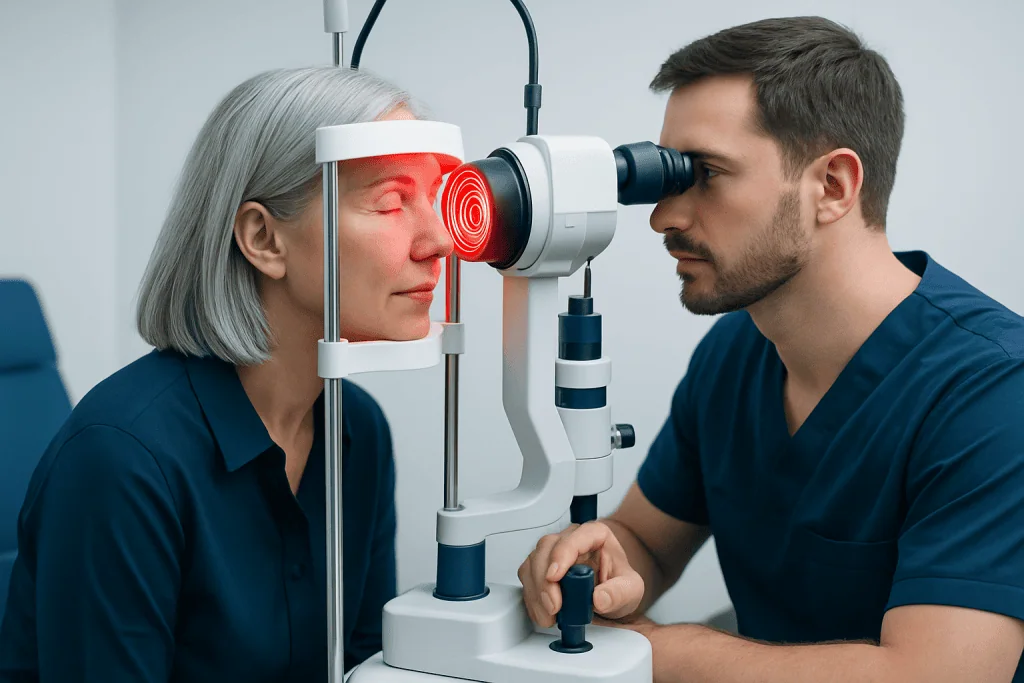
Red and near-infrared light can penetrate tissues to varying depths, depending on the wavelength and the way it is delivered. At low levels, this light may be absorbed by structures within cells called mitochondria. Mitochondria help generate the energy cells need to function, repair damage and maintain normal activity.
In laboratory and early clinical studies, photobiomodulation has been linked with changes in cellular energy production, oxidative stress and inflammatory signaling. These effects are of interest in the retina, a light-sensitive layer at the back of the eye with high energy demands. However, a biological effect does not automatically mean that a treatment will improve vision or prevent eye disease.
Light therapy devices differ substantially in wavelength, power, treatment area and exposure time. These details affect both potential benefit and safety. A red-light panel intended for skin or muscle use should not be assumed safe for the eyes, even if it is marketed as low level or non-thermal.
Does Red Light Therapy Really Work for Eyesight?
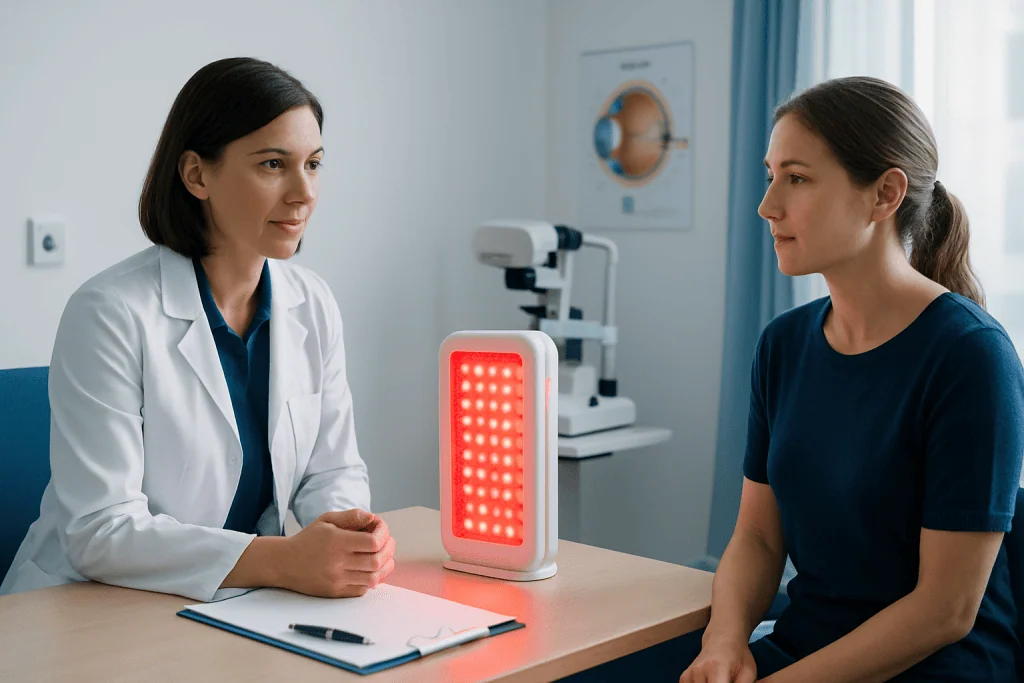
Red light therapy does not currently have strong evidence as a general treatment to improve eyesight. It cannot reshape the cornea, remove a cataract, reverse glaucoma damage or reliably eliminate the need for glasses. People who notice blurred vision should first have the cause identified, since effective treatment depends on the diagnosis.
There is early, limited evidence that carefully designed photobiomodulation protocols may improve certain measures of visual function or symptoms in selected groups, particularly where retinal cell stress or dry eye symptoms are involved. Studies are often small, use different devices and treatment schedules, and may measure outcomes that do not translate into a noticeable improvement in everyday vision.
For established retinal conditions, an ophthalmologist may discuss evidence-based monitoring and treatments first. For example, people with central visual distortion or retinal changes may need assessment for age-related macular degeneration or another retinal disorder rather than self-treating with light exposure.
Who May Be a Candidate for Red Light Therapy?
Candidacy depends on the reason for considering treatment, the health of the eye and the type of device being proposed. An ophthalmologist may consider photobiomodulation as an adjunctive, carefully monitored option in selected cases, usually within an evidence-informed clinical setting or where appropriate research protocols are available.
Before considering treatment, the clinician will generally assess visual acuity, eye pressure, the cornea and lens, the retina and optic nerve, and any symptoms such as dryness, glare, distortion or reduced night vision. Retinal imaging may be needed when symptoms suggest macular or other retinal disease. The aim is to avoid delaying treatment for a condition that has a more established option.
People should be particularly cautious if they have a retinal disease, glaucoma, a history of eye surgery, light sensitivity, migraine triggered by light, seizures linked to flashing light, or take medicines that can increase photosensitivity. Pregnancy, childhood and complex medical conditions may also require individualized specialist advice because evidence is limited.
What Happens During the Procedure?
When photobiomodulation is offered in a clinical eye-care setting, the process begins with a review of the diagnosis, symptoms, medicines and treatment goals. The eye specialist should explain the uncertainty of expected benefit, alternatives, potential risks and the planned follow-up. Baseline vision testing and retinal imaging may be recorded to allow objective comparison later.
The person is positioned in front of a purpose-designed device or light source. Depending on the protocol, they may look toward a controlled target, keep the eyes open or closed, or receive light through a system designed for ophthalmic use. The exact wavelength, intensity and exposure duration are selected by the clinician or device protocol; these should not be copied from consumer-device advice.
The session is generally painless and does not involve injections or surgery. A person may perceive brightness or colored afterimages briefly afterward. Treatment schedules vary widely in research and practice, so a clinician should define the number of sessions and monitoring plan rather than promising a standard course.
How Long Do You Use Red Light Therapy on Your Eyes?
There is no universally accepted duration for red light therapy on the eyes. In studies, exposure times, wavelengths, frequencies and total numbers of sessions vary considerably according to the device and the condition being studied. A safe duration for one system cannot be assumed safe for another.
For this reason, people should not stare into red lamps, LED panels, lasers or wearable devices in an attempt to treat their vision. Direct exposure can be uncomfortable and may carry unknown or device-specific retinal risks, particularly if the intensity is high or the equipment has not been designed and tested for ophthalmic use.
If an ophthalmologist recommends photobiomodulation, the treatment team should provide the exact protocol and explain whether eye protection is required. The person should report pain, prolonged afterimages, worsening glare, headache or any new visual symptom promptly.
Benefits, Risks and Recovery Timeline
The possible benefit of red light therapy for eyes is usually described as supportive rather than curative. Depending on the clinical context, research has explored changes in visual function, contrast sensitivity, retinal health markers or dry-eye-related discomfort. Not everyone responds, and an apparent improvement in symptoms should not be taken as proof that an eye disease has stopped progressing.
There is usually no physical recovery period after a supervised session. Most people can return to usual activities straight away, although temporary brightness, color perception changes or mild eye fatigue may occur. If the eyes have been dilated or other diagnostic tests were performed during the appointment, the clinician may give separate advice about driving and light sensitivity.
Potential risks include discomfort from bright light, headache, temporary visual disturbances and the possibility of harm from inappropriate intensity, duration or device use. The long-term effects of repeated direct exposure are not fully understood. Contact an eye specialist if symptoms persist, and avoid using a device again until the cause has been reviewed.
How Long Will It Take to See Results From Red Light Therapy?
There is no predictable timeframe for results because red light therapy for eyes is not standardized and outcomes depend on the underlying condition, the device and the treatment protocol. Some research evaluates changes after several sessions or weeks, while other studies assess longer-term outcomes. A person should not expect immediate restoration of sharp eyesight.
When treatment is being considered, the most meaningful changes are assessed with repeat eye examinations rather than subjective impressions alone. Visual acuity, contrast sensitivity, retinal imaging and symptom questionnaires may help the eye specialist judge whether there is a measurable response.
If vision becomes worse during a course of treatment, the person should not wait for further sessions in the hope that it will improve. New or progressive symptoms require a clinical review to identify whether another eye condition needs treatment.
How Will I Know If Red Light Therapy Is Working?
Red light therapy may be considered to be helping only when there is a relevant, sustained and clinically meaningful improvement confirmed by follow-up assessment. Depending on the original concern, this could include improved comfort from dry-eye symptoms, a stable or improved visual function test, or a favorable change on retinal imaging. Feeling that lights appear brighter or experiencing temporary afterimages is not evidence that eyesight has improved.
People are encouraged to keep track of symptoms such as dryness, blurred vision, distortion, glare and difficulty seeing in low light. They should also continue routine monitoring, wear prescribed glasses or contact lenses, and follow treatment plans for diagnosed conditions. Self-monitoring should complement, not replace, professional testing.
Acibadem International’s multidisciplinary specialists and JCI-accredited hospitals can assess visual symptoms and guide appropriate ophthalmology care for international patients. For eye problems caused by dry, irritated eyes, evaluation and individualized dry eye treatment may be more appropriate than unsupervised light therapy.
When to Seek Medical Care
Any sudden or significant change in vision deserves prompt medical assessment. This includes sudden vision loss, a new curtain or shadow in the field of vision, flashes of light, a sudden increase in floaters, severe eye pain, marked redness, injury to the eye, double vision or a severe headache with visual symptoms. These signs may indicate conditions that need urgent treatment.
Arrange a routine ophthalmology appointment for persistent blurred vision, gradual loss of central or side vision, ongoing dryness, night-vision difficulty, frequent headaches associated with vision or concern about an eye device. A detailed eye examination can identify causes that may be treatable with established care, such as refractive correction, treatment for dry eye disease or management of retinal conditions.
Regular eye examinations are particularly important for people with diabetes, high blood pressure, a family history of glaucoma or retinal disease, or previous eye surgery. Red light therapy should never delay medical evaluation or recommended treatment for these conditions.
Frequently asked questions
Is red light therapy safe for the eyes?
Safety depends on the device, wavelength, intensity, exposure time and the person’s eye health. Because direct eye exposure has potential risks and long-term effects are still being studied, red-light devices should not be used on or near the eyes without advice from an ophthalmologist.
Can red light therapy replace glasses or contact lenses?
No. Red light therapy does not correct refractive errors such as myopia, hyperopia, astigmatism or presbyopia. Glasses, contact lenses and, for suitable people, refractive procedures remain the established ways to correct these vision problems.
Can red light therapy help dry eyes?
Some early research suggests that photobiomodulation may have a role in supporting dry eye symptoms for selected people, but it is not a first-line treatment for everyone. An eye specialist can identify the cause of dryness and recommend proven measures such as lubricating drops, eyelid care, environmental changes or other therapies.
Can I use a red light face mask or body panel for my eyes?
A device intended for the skin or body should not be assumed safe for direct eye use. Its output, beam pattern and safety testing may not be designed for the retina, so people should keep the eyes protected and follow medical advice.
Can red light therapy treat macular degeneration?
Photobiomodulation is being researched in retinal conditions, including age-related macular degeneration, but it is not a substitute for ophthalmologist-led diagnosis, monitoring or established treatment. A person with distortion, reduced central vision or new difficulty reading should have a retinal assessment promptly.
What should I do if my vision worsens after red light exposure?
Stop using the device and seek advice from an eye-care professional. Urgent assessment is needed for sudden vision loss, flashes, many new floaters, a curtain-like shadow, significant eye pain or severe redness.
References
- American Academy of Ophthalmology
- National Eye Institute
- U.S. Food and Drug Administration
- Cochrane
- International Council of Ophthalmology
This article is for general information only and is not a substitute for professional medical advice. Please consult a qualified doctor about your individual situation.
Explore treatments in Turkey — costs, top hospitals & a free quote
JCI-accredited · board-certified surgeons · reply within 24h
Add us as a Preferred Source to see more of our trusted health content across Google Search, AI Overviews and Discover.

More from the Health Library



Related Specialists

Dr. Tahir Ateş
Gynecology & Obstetrics
Dr. İrem Hatipoğlu
Gynecology & Obstetrics
Dr. Ufuk Güngör
Physical Medicine & Rehabilitation
Dr. Oya Yeşim Hacımustafaoğlu Utkan (m)
Dermatology