Myopic Therapy: How It Works, Results and What to Expect

Myopia causes distant objects to look blurred because light focuses in front of the retina rather than directly on it. Glasses and contact lenses correct vision, while selected approaches in children may help slow myopia progression.
Key Takeaways
- Myopia causes distant objects to look blurred because light focuses in front of the retina rather than directly on it.
- Glasses and contact lenses correct vision, while selected approaches in children may help slow myopia progression.
- Laser vision correction and lens-based procedures can reduce dependence on glasses or contact lenses in suitable adults.
- No single treatment is best for everyone; a comprehensive ophthalmology assessment guides safe selection.
- Sudden vision changes, flashes, floaters or a curtain-like shadow require prompt medical assessment.
Myopic therapy is a broad term for treatments that improve vision affected by myopia (short-sightedness) or help slow its progression, particularly in children. The best option depends on a detailed eye examination, the person’s age, prescription stability, corneal health and everyday visual needs.
Myopic Therapy Overview
Myopic therapy refers to treatments used to correct myopia, also called short-sightedness or nearsightedness. In myopia, nearby objects are usually clear while distant objects appear blurred. This happens when the eye is relatively too long or the cornea is too curved, causing incoming light to focus in front of the retina, the light-sensitive layer at the back of the eye.
For many people, glasses or contact lenses provide clear and reliable vision. In children and teenagers, myopic therapy may also focus on slowing the worsening of myopia as the eyes grow. In adults with a stable prescription, refractive procedures may reduce reliance on corrective lenses. The purpose is not always to eliminate myopia completely, but to support clear, comfortable vision while protecting long-term eye health.
High myopia deserves regular monitoring because it is associated with a higher lifetime risk of retinal problems, glaucoma and certain other eye conditions. Routine eye examinations help detect changes early, even when vision seems unchanged.
How Myopic Therapy Works
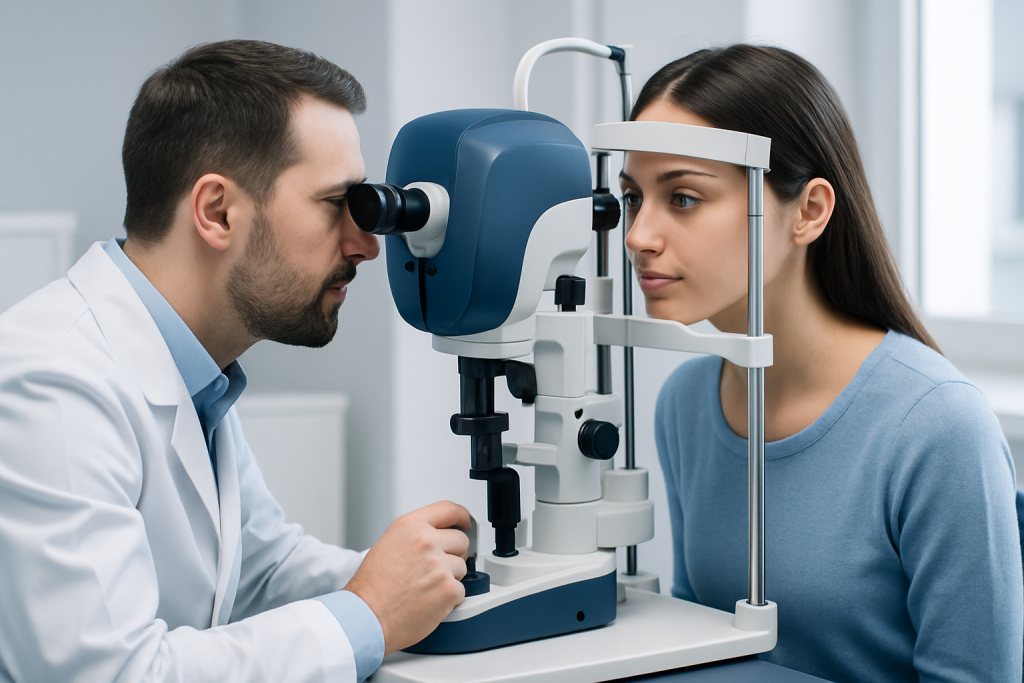
Corrective lenses work by changing how light enters the eye. Spectacles and standard contact lenses move the focal point back onto the retina, improving distance vision while they are worn. They correct the blur but do not change the underlying shape or length of the eye.
Myopia-control approaches are mainly considered for children whose prescriptions are increasing. Depending on the child and local clinical practice, these may include specially designed spectacle lenses, multifocal soft contact lenses, overnight orthokeratology lenses, or low-dose atropine eye drops. These treatments aim to slow eye elongation and may reduce the amount of myopia that develops over time; they do not usually provide a permanent cure.
For selected adults, refractive surgery reshapes the cornea so light focuses more accurately on the retina. Procedures such as laser-assisted in situ keratomileusis (LASIK), photorefractive keratectomy (PRK) and SMILE may be considered after careful testing. For people with unsuitable corneas or higher prescriptions, a doctor may discuss lens-based options such as a phakic intraocular lens or refractive lens exchange.
Candidacy and Eye Assessment
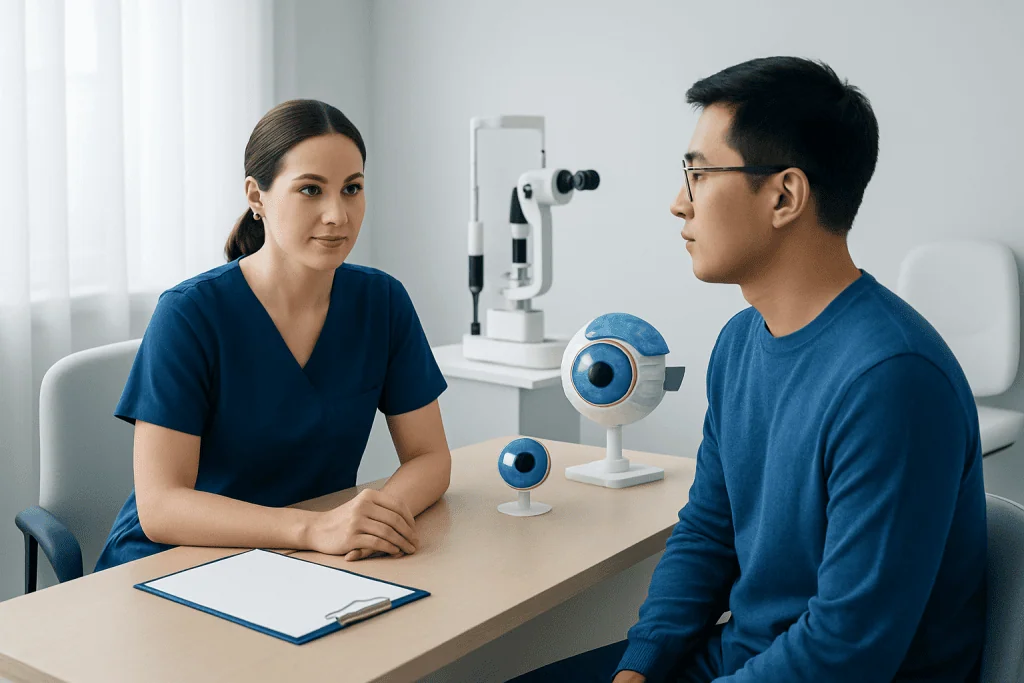
Suitability for myopic therapy depends on the person’s age, prescription, eye anatomy, medical history and visual priorities. Children with progressing myopia may be candidates for myopia-control treatment, while adults considering surgery generally need a stable prescription and healthy eyes. Stability is important because a changing prescription can affect long-term satisfaction after a refractive procedure.
An ophthalmologist or optometrist may measure visual acuity, refraction, eye pressure, corneal thickness and curvature, pupil size, tear-film health and retinal status. Corneal mapping and imaging can help identify conditions that may make laser treatment less appropriate. A dilated retinal examination may be particularly important for people with moderate or high myopia.
Pregnancy, breastfeeding, uncontrolled diabetes, significant dry eye, certain autoimmune conditions, corneal disorders and some medicines may influence timing or eligibility for surgery. An assessment should also include a discussion of work, driving, sports, screen use and expectations. Myopia can be managed effectively, but the most appropriate plan is individual rather than one-size-fits-all.
What Happens During Myopic Therapy
Non-surgical treatment usually begins with an updated prescription and guidance on safe use. Contact lens wearers are taught cleaning, replacement and hand-hygiene routines. Children using myopia-control lenses or drops need scheduled reviews to monitor prescription changes, treatment tolerance and eye health.
Laser vision correction is normally performed as an outpatient procedure. Before treatment, the eyes are measured in detail and the planned correction is confirmed. On the day, anaesthetic eye drops numb the surface of the eye. Depending on the technique, the surgeon creates a thin corneal flap, removes a small amount of corneal tissue from the surface, or creates a small internal corneal lenticule. The laser portion is typically brief, although preparation and post-procedure checks take longer.
Afterward, vision may be temporarily hazy and the eyes can feel gritty, watery or sensitive to light. Patients usually need someone else to take them home and should use prescribed drops as directed. A discussion of laser eye surgery can clarify whether a corneal procedure matches the individual’s prescription and eye measurements.
Recovery Timeline, Benefits and Risks
Recovery varies by treatment. Glasses provide vision correction immediately, while people adapting to new contact lenses may need a short adjustment period. After LASIK or SMILE, many patients notice meaningful visual improvement within days, although vision can fluctuate during early healing. PRK often has a slower initial recovery because the corneal surface needs time to heal. Follow-up visits help the clinical team assess healing and vision.
Potential benefits of refractive treatment include reduced dependence on glasses or contact lenses and greater convenience for some daily activities. However, results are not identical for every person. Some people still need glasses for certain tasks, and reading glasses commonly become necessary with age because of presbyopia, whether or not someone has had myopia surgery.
Possible short-term effects after laser procedures include dry eye symptoms, glare, halos around lights and fluctuations in vision. Less common complications can include infection, inflammation, undercorrection, overcorrection or the need for enhancement treatment. Thorough screening, following aftercare advice and reporting concerning symptoms promptly help reduce risk. Contact lenses also carry a small but important risk of corneal infection if hygiene or wear instructions are not followed.
Is Myopia Treatment Worth It?
Myopia treatment may be worthwhile when blurred distance vision interferes with school, work, driving, sport or daily independence. Glasses are a simple and effective solution for many people. Contact lenses may be convenient for particular activities, while myopia-control treatment can be valuable for children whose prescriptions are progressing.
For adults considering refractive surgery, value is personal. The potential convenience of less dependence on glasses must be weighed against cost, recovery time, possible side effects and the possibility that glasses may still be needed in some situations. A consultation can help a person compare options based on their specific prescription, eye health and lifestyle.
Even after vision correction, regular eye examinations remain important. This is especially true with high myopia, because corrective surgery changes the cornea but does not remove retinal risks associated with an elongated eye.
What Is the Best Age to Treat Myopia?
Vision correction can be provided at almost any age when it is needed. Children may receive glasses as soon as an eye professional identifies a prescription that affects their vision or visual development. For children with increasing myopia, treatment to slow progression is often considered during the school years, when myopia commonly changes most rapidly.
Laser refractive surgery is generally considered only after eye growth has largely finished and the prescription has been stable for a period determined by the treating ophthalmologist. Many adults are assessed from their late teens or early twenties onward, but eligibility depends more on stability and eye health than on a single age threshold.
Later in life, natural changes in the eye can alter the most suitable approach. Cataract development, presbyopia and retinal health may affect the choice between glasses, contact lenses, corneal laser treatment and lens-based procedures. Individual examination is essential at every age.
What Is the Most Effective Treatment for Myopia?
The most effective treatment is the one that safely meets the person’s main goal. For immediate clear distance vision, properly prescribed glasses and contact lenses are highly effective. For children, the most appropriate strategy may be one shown to slow progression and that the child can use consistently under professional supervision.
For eligible adults who wish to reduce reliance on corrective lenses, laser refractive procedures can be effective, but they are not suitable for everyone. The choice between LASIK, PRK, SMILE and lens-based treatment depends on factors such as corneal thickness, corneal shape, degree of myopia, dry-eye symptoms and occupation.
There is no treatment that reverses eye elongation once it has occurred. A balanced plan combines clear vision correction, myopia-progression management where appropriate and ongoing monitoring for complications associated with higher prescriptions.
How Much Does Myopia Treatment Cost?
The cost of myopia treatment varies widely by country, clinic, treatment type, prescription complexity and the tests and follow-up care included. Glasses and contact lenses involve ongoing replacement costs, while myopia-control products and medicines may require regular reviews as a child grows.
Refractive surgery is usually a planned elective procedure, and coverage through public or private health insurance differs by policy and location. A written estimate should clearly explain the assessment, procedure, medications, follow-up appointments and any potential additional costs, such as enhancement treatment if it is clinically appropriate.
Cost should not be the only deciding factor. It is sensible to prioritize a thorough suitability assessment, experienced eye-care professionals, clear aftercare arrangements and an opportunity to ask questions about expected outcomes and risks.
When to Seek Medical Care
A routine eye examination is appropriate for persistent distance blur, frequent squinting, headaches associated with visual tasks, difficulty seeing a board at school or problems with night driving. Children should be assessed if parents or teachers notice that they sit unusually close to screens or books, hold objects very near, or struggle to see distant detail.
Urgent assessment is needed for sudden vision loss, a sudden increase in floaters, flashes of light, a shadow or curtain across vision, severe eye pain, marked redness or light sensitivity. These symptoms can have several causes and should not be self-treated.
Acibadem International’s multidisciplinary eye specialists and JCI-accredited hospitals assess and treat myopia for international patients, including suitability evaluations for corrective and refractive options. A qualified ophthalmologist can provide individualized advice and arrange follow-up appropriate to the person’s needs.
Frequently asked questions
Can myopia be cured permanently?
Myopia cannot usually be reversed because it is related to the eye’s shape and length. Glasses and contact lenses correct the resulting blur, while refractive surgery can reduce dependence on them in suitable adults. Myopia-control approaches may help slow progression in children but do not remove existing myopia.
Does spending time outdoors help myopia?
Regular outdoor time is associated with a lower likelihood of myopia developing in children and may be part of a healthy prevention plan. It does not replace prescribed glasses or treatment for established myopia. Families should ask an eye-care professional for age-appropriate advice.
Can adults use myopia-control eye drops or special lenses?
Myopia-control treatments are most commonly used in children because their eyes are still growing. Their role in adults is more limited and depends on the reason for treatment and the individual’s eye findings. An ophthalmologist can explain whether any approach is appropriate.
Will laser surgery stop myopia from getting worse?
Laser surgery changes the cornea to correct the current prescription; it does not stop the eye from changing in the future. This is why surgeons usually look for prescription stability before recommending treatment. Some people may still experience prescription changes later in life.
Is high myopia dangerous?
High myopia does not mean that vision loss will occur, but it is linked with a higher risk of retinal detachment, myopic macular changes, glaucoma and cataract. Regular dilated eye examinations are important for monitoring. Sudden flashes, floaters or a curtain-like shadow require urgent eye assessment.
How often should someone with myopia have an eye examination?
The appropriate interval depends on age, prescription level, symptoms and eye health. Children with progressing myopia and people using myopia-control treatment often need more frequent reviews. An eye-care professional can recommend an individual schedule.
References
- American Academy of Ophthalmology
- National Eye Institute
- World Health Organization
- International Myopia Institute
- Royal College of Ophthalmologists
This article is for general information only and is not a substitute for professional medical advice. Please consult a qualified doctor about your individual situation.
Explore treatments in Turkey — costs, top hospitals & a free quote
JCI-accredited · board-certified surgeons · reply within 24h
Add us as a Preferred Source to see more of our trusted health content across Google Search, AI Overviews and Discover.