Hydrocele: Scrotal Swelling, Diagnosis, and Treatment

A hydrocele is a collection of fluid around the testicle, commonly causing painless scrotal swelling. Hydroceles can occur in newborns, children, and adult men, and the causes differ by age group.
Key Takeaways
- A hydrocele is a collection of fluid around the testicle, commonly causing painless scrotal swelling.
- Hydroceles can occur in newborns, children, and adult men, and the causes differ by age group.
- Diagnosis is usually based on a physical examination and may be confirmed with scrotal ultrasound.
- Small, painless hydroceles may only need observation, while larger or uncomfortable hydroceles may require surgery.
- Sudden pain, rapid swelling, fever, redness, or a new testicular lump should be assessed promptly by a doctor.
A hydrocele is a fluid-filled swelling around the testicle that is usually painless and often benign. Proper medical evaluation helps confirm the diagnosis, rule out other causes of scrotal swelling, and choose the most appropriate treatment.
Overview
A hydrocele is a buildup of clear fluid within the thin sac that surrounds a testicle. This fluid collection can make one side of the scrotum look or feel enlarged, although hydroceles can sometimes affect both sides. Many hydroceles are painless and develop gradually, so a person may first notice a change in scrotal size rather than pain.
Hydroceles are common in newborn boys because of how the testicles descend before birth. In many infants, the condition improves naturally during the first year of life. In adults, a hydrocele may develop after inflammation, injury, infection, or surgery in the scrotal area, although in many cases no clear cause is found.
Most hydroceles are not dangerous. However, any new scrotal swelling should be evaluated because several conditions can look similar, including inguinal hernia, varicocele, epididymal cyst, infection, or, less commonly, a testicular tumor. A medical assessment helps confirm that the swelling is truly a hydrocele and guides safe treatment decisions.
Symptoms

The main symptom of a hydrocele is swelling of the scrotum. The swelling is often smooth, soft or tense, and painless. It may feel heavier by the end of the day or after standing for long periods. Some men describe a dragging sensation or discomfort rather than sharp pain.
Hydroceles vary in size. A small hydrocele may be noticed only during a routine examination, while a larger one can make walking, exercise, sexual activity, or wearing fitted clothing uncomfortable. The skin of the scrotum usually remains normal unless another condition, such as infection or inflammation, is present.
Symptoms that are not typical of a simple hydrocele include sudden severe testicular pain, nausea, vomiting, fever, redness, warmth, or a hard lump within the testicle. These symptoms need prompt medical evaluation because they may suggest conditions that require urgent care, such as testicular torsion, infection, or trauma-related complications.
Types and Causes
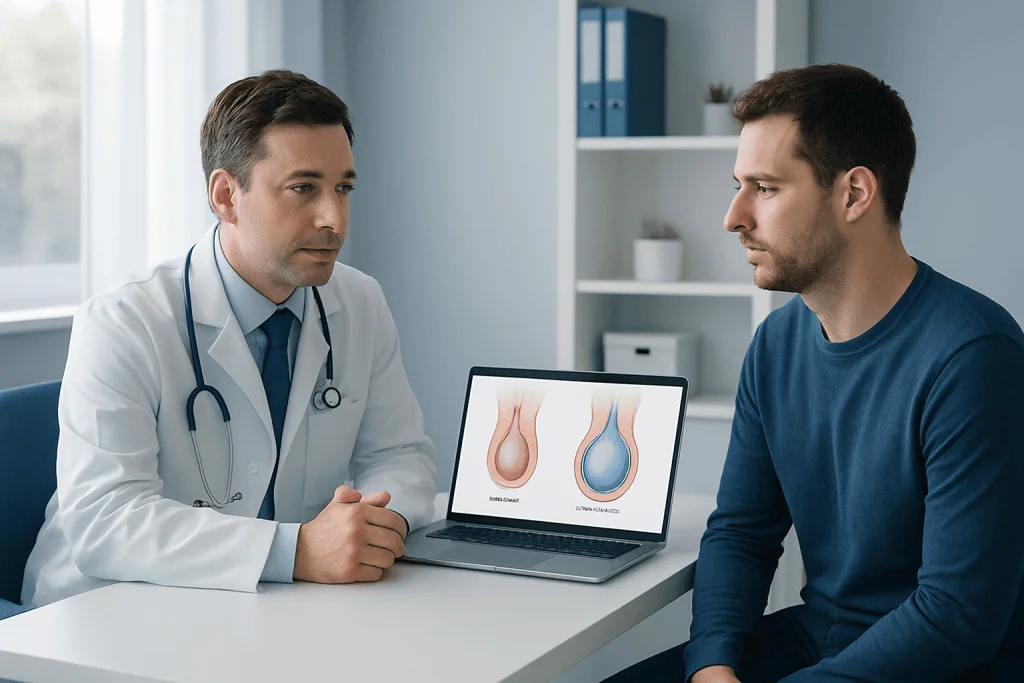
Hydroceles are often described as communicating or non-communicating. A communicating hydrocele occurs when there is an open channel between the abdomen and the scrotum, allowing fluid to move in and out. This type is more common in infants and children and may be associated with an inguinal hernia. The swelling may change in size during the day.
A non-communicating hydrocele means fluid is trapped around the testicle without an open connection to the abdomen. In infants, this may happen when fluid remains after the channel closes. In adults, a non-communicating hydrocele may occur when the balance between fluid production and absorption in the scrotal sac is disrupted.
Possible causes or contributing factors in adults include scrotal injury, inflammation of the epididymis or testicle, infections including sexually transmitted infections, previous groin or scrotal surgery, and rarely blockage of lymphatic drainage. Sometimes a hydrocele appears without an identifiable trigger. Because the cause is not always obvious, a doctor may recommend ultrasound or additional tests depending on the person’s age, symptoms, and examination findings.
Diagnosis
Diagnosis begins with a medical history and physical examination. The doctor will ask when the swelling began, whether it changes in size, whether pain or fever is present, and whether there has been trauma, infection, or previous surgery. The examination may include checking the abdomen and groin for a possible hernia, as well as gently examining the testicles and surrounding structures.
One traditional examination technique is transillumination, in which a light is shone through the scrotum. A hydrocele often allows light to pass through because it contains clear fluid. However, transillumination alone is not enough in all cases, especially if the swelling is large, the scrotal skin is thick, or another condition is suspected.
Scrotal ultrasound is a common and reliable imaging test used to confirm a hydrocele and assess the testicle. It can help distinguish fluid from solid masses, evaluate blood flow, and identify other findings such as epididymal cysts, inflammation, varicocele, or hernia. Blood or urine tests may be requested if infection is suspected, and sexually transmitted infection testing may be appropriate in some situations.
Treatment Options
Treatment depends on age, symptoms, hydrocele size, and whether another condition is present. In babies, many hydroceles resolve without treatment during the first year of life. If swelling persists, becomes very large, or appears to be communicating with the abdomen, a pediatric surgeon or urologist may recommend repair, especially if an associated hernia is suspected.
In adults, a small and painless hydrocele may be monitored if ultrasound confirms there are no concerning features. Observation is reasonable when the hydrocele does not interfere with daily life and the underlying cause has been considered. Follow-up allows the doctor to check for changes in size or symptoms.
When treatment is needed, the standard approach is usually hydrocelectomy, a surgical procedure to remove or repair the fluid sac. It is commonly performed by a urologist and may be done as a day procedure depending on the patient’s overall health and local practice. Recovery instructions typically include scrotal support, wound care, limited strenuous activity for a period of time, and follow-up with the surgeon.
Aspiration, which removes fluid with a needle, may be considered in selected patients who are not good candidates for surgery, but fluid often returns. Sometimes a sclerosing agent is used after aspiration to reduce recurrence, though this is not suitable for everyone and may carry risks such as pain, inflammation, or infection. The best option should be discussed with a qualified urologist based on the individual case.
Prevention and Self-care
Not all hydroceles can be prevented, especially those related to development before birth or those with no clear cause. However, general scrotal health measures may reduce the risk of some contributing conditions. Protecting the groin during contact sports, using appropriate safety equipment, and seeking care after significant injury are sensible steps.
Preventing and promptly treating infections can also be helpful. Safer sex practices, including condom use and testing when appropriate, may reduce the risk of sexually transmitted infections that can cause epididymitis or orchitis. Men should consult a doctor if they develop urinary symptoms, penile discharge, fever, or scrotal pain.
Self-care does not make a true hydrocele disappear quickly, but it may ease discomfort while waiting for evaluation or treatment. Supportive underwear, avoiding prolonged heavy lifting if it worsens symptoms, and using pain relief only as advised by a clinician may help. A person should avoid attempting to drain or treat a hydrocele at home, as this can cause infection, bleeding, or injury.
When to See a Doctor
Any new, persistent, or unexplained scrotal swelling should be assessed by a healthcare professional. Even when the swelling seems painless and mild, diagnosis is important because hydrocele can resemble other conditions. Early evaluation is especially useful if the swelling is increasing, causing discomfort, or interfering with daily activities.
Urgent medical care is needed for sudden or severe testicular pain, rapid swelling, redness, fever, nausea, vomiting, or scrotal injury. These symptoms can be linked to conditions that need immediate attention. A new hard lump in the testicle or a noticeable change in testicular shape should also be checked promptly.
Patients can prepare for an appointment by noting when symptoms began, whether swelling changes during the day, and any recent infections, injuries, surgeries, or urinary symptoms. Acibadem International’s multidisciplinary specialists and JCI-accredited hospitals diagnose and treat scrotal conditions, including hydrocele, for international patients, with care plans guided by individual evaluation.
Frequently asked questions
Is a hydrocele dangerous?
Most hydroceles are benign and not dangerous, especially when they are painless and develop gradually. However, a doctor should evaluate new scrotal swelling to confirm the diagnosis and rule out other conditions such as hernia, infection, or a testicular mass.
Can a hydrocele go away on its own?
In infants, many hydroceles improve naturally during the first year of life. In adults, some small hydroceles remain stable and may not need treatment, but they are less likely to disappear completely without addressing an underlying cause.
How is hydrocele different from a hernia?
A hydrocele is a fluid collection around the testicle, while an inguinal hernia occurs when tissue, often part of the intestine, pushes through a weak area in the groin. They can look similar, and communicating hydroceles in children may be associated with hernias. Physical examination and ultrasound can help distinguish them.
Does hydrocele affect fertility?
A simple hydrocele usually does not directly cause infertility. Very large hydroceles, associated infections, trauma, or other testicular conditions may affect comfort or testicular health, so medical assessment is recommended if there are concerns about fertility or testicular changes.
What happens during hydrocele surgery?
Hydrocelectomy involves making a small incision to drain the fluid and repair or remove the sac so fluid is less likely to return. The exact technique depends on the size and type of hydrocele. A urologist will explain anesthesia, recovery time, activity restrictions, and possible risks before the procedure.
Can a hydrocele come back after treatment?
Recurrence is possible, although surgical repair is generally intended to reduce that risk. Recurrence may be more likely after simple aspiration because the fluid-producing lining remains. Follow-up with the treating doctor helps monitor healing and address any return of swelling.
References
- American Urological Association
- European Association of Urology
- Mayo Clinic
- Cleveland Clinic
- Merck Manual Professional Edition
This article is for general information only and is not a substitute for professional medical advice. Please consult a qualified doctor about your individual situation.
Explore treatments in Turkey — costs, top hospitals & a free quote
JCI-accredited · board-certified surgeons · reply within 24h
Add us as a Preferred Source to see more of our trusted health content across Google Search, AI Overviews and Discover.