

Herniated Disc
Herniated Disc is a spinal disc problem that can cause back or neck pain, nerve pain, numbness or weakness. Learn symptoms, diagnosis and treatment.

Quick answer
A herniated disc occurs when the soft center of a spinal disc pushes through its outer layer and irritates nearby nerves, often causing back or neck pain, numbness, or weakness. Treatment depends on the location and severity and may include medication, physical therapy, pain-relief procedures, or surgery when symptoms persist or nerve compression is significant.
A herniated disc is a spinal condition in which the soft inner material of an intervertebral disc pushes through a weakened outer layer and may irritate or compress nearby nerves. It can cause back or neck pain, radiating arm or leg pain, numbness, tingling or weakness, although some herniated discs cause no symptoms.
Overview
A herniated disc, also called a slipped disc, ruptured disc or prolapsed disc, is a condition affecting the cushioning discs between the bones of the spine. Each disc has a tougher outer ring and a softer gel-like center. When the outer ring weakens or tears, part of the inner material can move outward and irritate or compress nearby nerves.
The spine is divided into regions, and herniated discs most often occur in the lower back, known as the lumbar spine, or the neck, known as the cervical spine. A lumbar disc herniation may cause low back pain and pain traveling down the leg, often called sciatica. A cervical disc herniation may cause neck pain and symptoms traveling into the shoulder, arm or hand.
Not every herniated disc causes pain. Some are found incidentally on imaging performed for another reason. When symptoms do occur, they usually relate to inflammation around a nerve root, mechanical pressure on a nerve, or both. The condition is common in adults and is often linked to age-related disc wear, but it can also follow a lifting injury or sudden twisting movement.
Symptoms
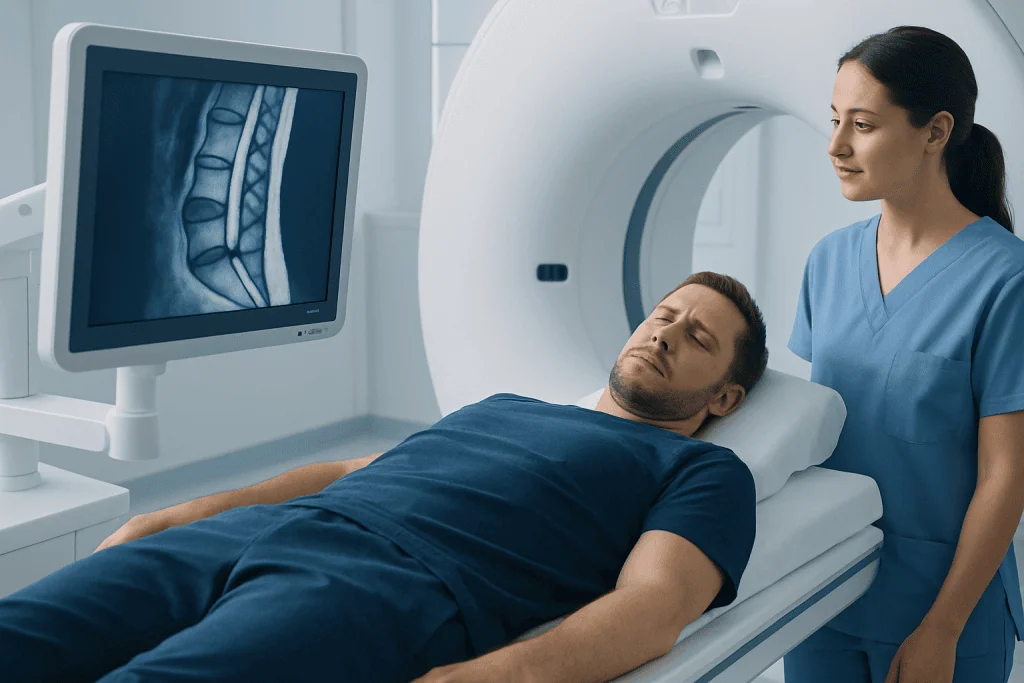
Herniated disc symptoms vary according to the level of the spine involved and whether a nerve is affected. Pain may be local, such as pain in the neck or lower back, or it may radiate along the path of a nerve. Symptoms can appear suddenly after an activity or develop gradually over time.
Common symptoms may include:
- Low back pain, sometimes with pain traveling through the buttock and down the leg.
- Neck pain, sometimes with pain traveling into the shoulder, arm or hand.
- Numbness, tingling, burning or pins-and-needles sensations.
- Muscle weakness in the leg, foot, arm or hand.
- Pain that worsens with coughing, sneezing, bending, sitting or certain movements.
- Reduced ability to walk, stand, lift or perform daily activities because of pain.
In the lower back, nerve irritation can cause sciatica, which is pain that follows the sciatic nerve pathway into the leg. In the neck, nerve irritation may affect grip strength, fine hand movements or arm sensation. The exact pattern of symptoms can help the doctor identify which spinal nerve may be involved.
Some symptoms require urgent medical attention. These include loss of bladder or bowel control, numbness in the saddle area around the groin or inner thighs, severe or rapidly worsening weakness, fever with spinal pain, or pain after a major injury. These signs can indicate a serious problem that needs prompt assessment.
Causes & Risk Factors
The most common cause of a herniated disc is gradual disc degeneration. Over time, spinal discs naturally lose water content and elasticity, making them less flexible and more likely to tear. A smaller tear in the outer disc can allow the inner material to bulge outward or escape into the spinal canal.
A herniated disc can also occur after a sudden strain, such as lifting a heavy object with poor body mechanics, twisting while lifting, or an awkward fall. In many cases, there is no single dramatic injury. A person may notice symptoms after a routine activity because the disc had already become weakened.
Risk factors that may increase the likelihood of disc herniation include increasing age, repetitive bending or lifting, prolonged sitting, physically demanding work, smoking, excess body weight, reduced core strength and a family tendency toward disc problems. Occupations or sports involving vibration, heavy loads or repeated twisting may also contribute.
Risk factors do not mean a herniated disc is inevitable. Good lifting technique, regular exercise, maintaining a healthy weight and avoiding tobacco can support spinal health. However, even people with healthy habits may develop a herniated disc, so persistent symptoms should be evaluated rather than ignored.
Diagnosis
Diagnosis begins with a medical history and physical examination. The doctor asks about the location of pain, how symptoms started, what makes them better or worse, and whether there is numbness, tingling or weakness. A neurological examination may check reflexes, muscle strength, sensation, walking pattern and specific movements that reproduce nerve pain.
Imaging is not always needed immediately, especially when symptoms are mild and improving. If pain is severe, symptoms persist, or there are signs of nerve compression, magnetic resonance imaging, or MRI, is commonly used because it shows discs, nerves and soft tissues in detail. Computed tomography, or CT, may be used in selected situations, especially when MRI is not suitable.
X-rays do not show a herniated disc directly, but they may help assess spinal alignment, arthritis, fractures or other bony changes. In some cases, electrodiagnostic tests such as nerve conduction studies or electromyography may be used to evaluate nerve function and distinguish a spine-related problem from other nerve conditions.
It is important to interpret imaging together with symptoms and examination findings. Many adults have disc bulges or degenerative changes on MRI without pain. A specialist diagnosis focuses on whether the imaging finding truly explains the person’s symptoms and whether there are signs that require more urgent treatment.
Treatment Options
Treatment for a herniated disc depends on symptom severity, the location of the disc, the degree of nerve involvement, general health and the person’s daily needs. The right approach is decided by a qualified specialist after clinical assessment and, when needed, imaging. Many herniated discs improve over time with non-surgical treatment.
Conservative treatment may include short-term activity modification, avoiding movements that worsen pain, and gradually returning to normal activities as symptoms allow. Doctors may recommend pain-relieving or anti-inflammatory medication when appropriate, and sometimes medicines aimed at nerve-related pain. Medication choices should always be individualized, especially for people with stomach, kidney, heart, liver or bleeding risks.
Physiotherapy and rehabilitation are important for many patients. A rehabilitation program may include education about posture and movement, gentle mobility exercises, stretching, core strengthening, nerve gliding techniques and a gradual return to work or sport. The goal is to reduce pain, improve function and help prevent recurrence without excessive rest, which can slow recovery.
If symptoms remain disabling despite appropriate conservative care, or if there is significant nerve compression, injection-based pain procedures or surgery may be considered. Surgical options generally aim to remove the portion of disc pressing on the nerve while preserving as much normal structure as possible; in selected cases, additional spinal procedures may be needed. Decisions about injections or surgery require careful discussion of expected benefits, risks, recovery time and alternatives.
Living With / Prognosis
The outlook for a herniated disc is often favorable, especially when there is no severe or progressive nerve damage. Many people experience gradual improvement in pain and function with time, guided activity and rehabilitation. Recovery can be uneven, with some better days and some symptom flares, but steady progress is common.
Living well with a herniated disc usually involves learning which movements aggravate symptoms and building strength and flexibility safely. Patients are often encouraged to stay as active as possible within comfort limits, avoid prolonged bed rest, use supportive sitting and lifting habits, and follow their physiotherapist’s exercise plan. Walking and low-impact activities may be helpful when approved by the treating clinician.
Preventing recurrence focuses on spinal conditioning and everyday mechanics. This may include maintaining a healthy weight, strengthening the trunk and hip muscles, taking breaks from long sitting, using safe lifting techniques, and avoiding smoking. Ergonomic adjustments at work and during travel can reduce repeated strain on the spine.
Emotional stress, poor sleep and fear of movement can make pain feel more intense and limit recovery. Clear education, reassurance and a step-by-step return to activity can help patients regain confidence. For international patients who need coordinated assessment, Acibadem International offers multidisciplinary specialists and JCI-accredited hospitals for diagnosis and treatment of spinal conditions, including herniated disc.
When to See a Doctor
A doctor should be consulted if back or neck pain radiates into an arm or leg, if numbness or tingling persists, or if pain interferes with sleep, work or daily activities. Medical assessment is also recommended when symptoms do not improve after a short period of sensible self-care, or when episodes keep recurring.
Urgent care is needed for red-flag symptoms. These include new loss of bladder or bowel control, numbness around the groin or inner thighs, severe weakness in the foot, leg, hand or arm, difficulty walking, fever with spinal pain, unexplained weight loss, history of cancer, or pain after a significant accident or fall. These symptoms may indicate conditions that require immediate evaluation.
People with existing health problems, pregnancy, immune suppression, osteoporosis, or long-term use of blood-thinning or steroid medications should seek medical advice earlier. A qualified clinician can determine whether symptoms are likely due to a herniated disc or another condition and can recommend safe next steps.
Frequently asked questions
What is a herniated disc?
A herniated disc is a spinal disc problem in which the soft inner part of a disc pushes through a weakened or torn outer layer. This can irritate or compress nearby nerves, causing pain, numbness, tingling or weakness. Some herniated discs cause no symptoms and are found only on imaging.
Is a herniated disc the same as a slipped disc?
Yes, the term slipped disc is commonly used to describe a herniated disc, although the disc does not actually slip out of place. The more accurate medical term is herniated disc or disc herniation. Other terms may include ruptured disc or prolapsed disc.
Can a herniated disc heal without surgery?
Many people improve without surgery through time, guided activity, medication when appropriate and physiotherapy. Symptoms often lessen as inflammation decreases and the body adapts or reabsorbs some disc material. Surgery is usually considered only when symptoms are severe, persistent or associated with significant nerve problems.
How is a herniated disc diagnosed?
Diagnosis starts with a medical history and physical examination, including checks of strength, sensation and reflexes. MRI may be used when symptoms are severe, prolonged or suggest nerve compression. Imaging findings must be matched with symptoms because disc changes can appear in people who have no pain.
What are the warning signs of a serious herniated disc?
Warning signs include loss of bladder or bowel control, numbness around the groin or inner thighs, rapidly worsening weakness, or major difficulty walking. These symptoms need urgent medical attention. Severe pain after trauma, fever with spinal pain or unexplained weight loss should also be assessed promptly.
What activities should be avoided with a herniated disc?
Activities that clearly worsen symptoms, such as heavy lifting, repeated bending, twisting under load or prolonged sitting, may need to be limited temporarily. Complete bed rest is usually not helpful for most people. A doctor or physiotherapist can advise how to stay active safely and return to normal activities gradually.
When is surgery considered for a herniated disc?
Surgery may be considered when disabling pain continues despite appropriate conservative treatment or when there is significant nerve compression causing weakness or other neurological problems. The decision depends on examination findings, imaging results, overall health and personal goals. A spine specialist should explain the potential benefits, risks and alternatives before any procedure.
References
- American Academy of Orthopaedic Surgeons
- North American Spine Society
- National Institute of Neurological Disorders and Stroke
- Mayo Clinic
- National Health Service
This article is for general information only and is not a substitute for professional medical advice. Please consult a qualified doctor about your individual situation.
Treatments for This Condition
Doctors Who Treat This Condition

Prof. Dr. Alp Dinçer
Radiology
Prof. Dr. Bora Peynircioğlu
Interventional Radiology
Prof. Dr. Düzgün Yıldırım
Radiology
Prof. Dr. Ercan Karaarslan
Radiology
Prof. Dr. Erkan Yildirim
Radiology
Prof. Dr. Filiz Saçan
Interventional Radiology
Prof. Dr. Irmak Durur Subaşı
Radiology
Prof. Dr. Koray Güven
Interventional Radiology
Prof. Dr. Çınar Başekim
Radiology
Dr. Baki Adapınar
Radiology
Dr. Ebru Banu Türk
Radiology