Essential Tremor
Essential Tremor is a common movement disorder causing rhythmic shaking, often in the hands. Learn symptoms, diagnosis and treatment options.

Quick answer
Essential tremor is a neurological movement disorder that causes involuntary, rhythmic shaking, most often affecting the hands during everyday activities. Treatment depends on symptom severity and may include medication, lifestyle adjustments, and in selected cases procedures such as deep brain stimulation, with evaluation and care planned by neurology specialists at Acibadem in Turkey.
Essential Tremor is a neurological movement disorder that causes rhythmic, involuntary shaking, most often affecting the hands during actions such as writing, eating or holding objects. It is usually not life-threatening, but it can interfere with daily activities and should be assessed by a doctor to confirm the diagnosis and discuss treatment options.
Overview
Essential Tremor is a common neurological movement disorder that causes rhythmic, involuntary shaking. It most often affects the hands and arms, especially during purposeful movement such as drinking from a cup, using cutlery, writing, buttoning clothing or holding a phone. The tremor may also affect the head, voice, jaw or legs in some people.
The term “essential” means that the tremor is not caused by another clearly identified disease, medication or metabolic problem. Essential Tremor is typically an action tremor, meaning it appears or becomes more noticeable when a person is using the affected body part. This differs from a resting tremor, which occurs when a limb is relaxed and supported.
Essential Tremor can range from mild and barely noticeable to more disruptive. Some people have stable symptoms for many years, while others experience gradual progression. Although it is usually not dangerous in itself, it may affect independence, confidence, handwriting, eating, work tasks and social comfort.
A medical assessment is important because many conditions can cause shaking. A neurologist can confirm whether symptoms are consistent with Essential Tremor, check for signs of other neurological conditions and discuss options to reduce the effect of tremor on everyday life.
Symptoms
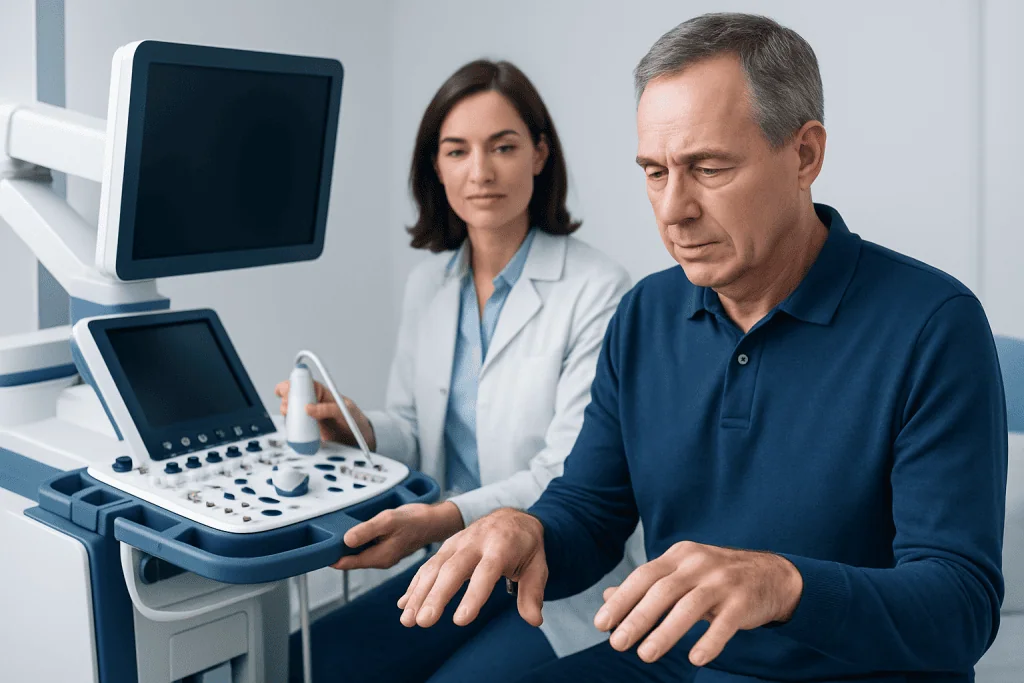
The main symptom of Essential Tremor is a rhythmic shaking movement. It usually develops gradually and may start in one hand before affecting both sides. The tremor is often more noticeable when the person reaches for an object, holds the arms outstretched, writes, drinks, eats or performs fine hand movements.
Common features of Essential Tremor may include:
- Shaking of the hands or forearms during activity
- Tremor that becomes more obvious with stress, excitement, fatigue or caffeine
- Difficulty with handwriting, drawing, typing or using tools
- Spilling liquids or difficulty bringing food to the mouth
- A head tremor, sometimes described as a “yes-yes” or “no-no” movement
- A shaky or quivering voice in some patients
Symptoms can vary from day to day. Many people notice that tremor is worse when they are anxious, rushed, sleep-deprived or physically tired. It may improve temporarily when the body is relaxed, although this is not the same for everyone.
Essential Tremor usually does not cause weakness, numbness, loss of sensation or problems with thinking. If shaking is accompanied by new weakness, severe imbalance, confusion, sudden speech changes or sudden onset of symptoms, urgent medical evaluation is needed because another condition may be responsible.
Causes & Risk Factors
The exact cause of Essential Tremor is not fully understood. Current medical knowledge suggests that it involves changes in brain circuits that help coordinate movement, particularly networks connecting the cerebellum and related pathways. It is not caused by anxiety, although anxiety and stress can make tremor more visible.
Family history is an important risk factor. In many patients, Essential Tremor runs in families, and it may be described as familial tremor. Having a parent or close relative with tremor can increase the likelihood of developing the condition, although inheritance patterns are not always predictable.
Age is another factor. Essential Tremor can begin at almost any age, including early adulthood, but it is more common with advancing age. Symptoms may slowly progress over time, but the speed and degree of progression differ widely between individuals.
Several factors can trigger or worsen tremor without being the underlying cause. These may include fatigue, emotional stress, caffeine, stimulant substances, low blood sugar, fever, certain medications and thyroid or metabolic problems. Because some reversible conditions can mimic or worsen tremor, doctors often review medications, lifestyle factors and general health during evaluation.
Diagnosis
Essential Tremor is diagnosed mainly through medical history and neurological examination. The doctor asks when the tremor began, which body parts are affected, what makes it better or worse, whether there is a family history, and how symptoms affect daily activities. The pattern of tremor during rest, posture and movement provides important diagnostic clues.
During the examination, the specialist may observe the patient writing, drawing spirals, holding the arms out, touching a finger to the nose or performing simple coordination tasks. The doctor also looks for signs that suggest other conditions, such as stiffness, slowness of movement, changes in walking, abnormal eye movements, weakness or sensory changes.
There is no single blood test that proves Essential Tremor. However, tests may be requested to rule out other causes, such as thyroid disease, metabolic abnormalities, medication effects or other neurological conditions. In some cases, imaging studies may be used when the history or examination suggests an alternative diagnosis, but many patients do not require extensive testing.
Essential Tremor is sometimes confused with Parkinson’s disease, enhanced physiological tremor or medication-related tremor. A neurologist, especially one experienced in movement disorders, can help distinguish these conditions and recommend an appropriate management plan.
Treatment Options
Treatment for Essential Tremor depends on symptom severity, the body parts affected, the patient’s age, general health, occupation and personal goals. Not everyone needs medical treatment. If tremor is mild and does not interfere with daily life, reassurance, monitoring and trigger management may be enough.
Lifestyle and practical strategies can be helpful. These may include reducing caffeine if it worsens symptoms, improving sleep, managing stress, using heavier cups or utensils, resting elbows during tasks, choosing adaptive writing tools, and planning delicate tasks for times when tremor is less active. Occupational therapy may help patients modify techniques and equipment for eating, dressing, writing and work activities.
Medication may be considered when tremor affects function or quality of life. Doctors may use medicines that calm tremor-related nerve activity or reduce physical tremor response. The choice depends on medical history, other conditions, possible side effects and patient preference. Medication should only be started, changed or stopped under medical supervision.
For selected patients with significant tremor that does not respond adequately to conservative measures and medication, specialist treatments may be discussed. These can include targeted injections for particular tremor patterns, neurosurgical procedures such as brain stimulation, or focused lesioning techniques in carefully assessed cases. The right approach is decided by a specialist after detailed evaluation, because benefits, risks and suitability vary from person to person.
Living With / Prognosis
Many people live well with Essential Tremor, especially when they understand their triggers and use practical adaptations. The condition is usually long-term and may change gradually over time. While it can be frustrating, it is not a sign of personal weakness and is not caused by nervousness, even though emotional stress can amplify the shaking.
Daily planning can reduce the impact of tremor. Patients may benefit from using cups with lids, electric grooming tools, voice-to-text software, wrist supports, non-slip mats, weighted utensils or simplified writing methods. In work settings, adjustments such as ergonomic tools, scheduled breaks or alternative input devices may be useful.
Emotional well-being is also important. Some people avoid meals, meetings or public situations because they feel embarrassed by visible tremor. Education, supportive communication with family and colleagues, and professional help for anxiety or low mood can improve confidence and participation.
The outlook varies. Some patients remain mildly affected for many years, while others need ongoing treatment and specialist follow-up. Acibadem International’s multidisciplinary specialists and JCI-accredited hospitals assess and treat movement disorders such as Essential Tremor for international patients, with care planned according to each person’s medical needs.
When to See a Doctor
A doctor should be consulted if tremor is new, worsening, interfering with daily activities or causing concern. Medical assessment is especially important when tremor affects handwriting, eating, drinking, work, driving safety, speech or social confidence. Early evaluation can identify treatable causes and help patients access practical support.
People with an existing diagnosis should return for review if symptoms change noticeably, treatments stop helping, side effects occur, or tremor begins to involve new body parts. Follow-up allows the doctor to adjust the management plan and reassess whether another condition may be contributing.
Urgent medical care is needed if tremor starts suddenly or occurs with weakness, facial drooping, severe headache, confusion, chest pain, fainting, loss of balance, new speech difficulty or sudden vision changes. These symptoms are not typical of Essential Tremor and may indicate another medical problem that requires prompt attention.
Patients should also seek medical advice before using supplements, alcohol or non-prescribed remedies to manage tremor. Some substances can interact with medicines or worsen other health conditions. A qualified doctor can provide safer, individualized guidance.
Frequently asked questions
What is Essential Tremor?
Essential Tremor is a neurological movement disorder that causes rhythmic shaking, most often in the hands during action. It may also affect the head, voice, jaw or other body parts. It is usually a long-term condition and should be evaluated by a doctor to confirm the diagnosis.
Is Essential Tremor the same as Parkinson’s disease?
No. Essential Tremor and Parkinson’s disease are different conditions, although both can cause tremor. Essential Tremor usually appears during movement or when holding a posture, while Parkinsonian tremor often appears at rest and may be accompanied by stiffness and slowness. A neurologist can distinguish between them through examination and history.
What makes Essential Tremor worse?
Tremor may become more noticeable with stress, fatigue, lack of sleep, caffeine, excitement or certain medications. Some medical problems, such as thyroid imbalance or low blood sugar, can also worsen shaking. Identifying triggers can help reduce day-to-day impact.
Can Essential Tremor be cured?
There is currently no simple cure that removes Essential Tremor for every patient. However, many people manage symptoms successfully with lifestyle changes, medication, rehabilitation strategies or specialist procedures when appropriate. Treatment aims to improve function and quality of life.
How is Essential Tremor diagnosed?
Diagnosis is mainly based on the pattern of tremor, medical history and neurological examination. The doctor may ask the patient to write, draw, hold the arms out or perform coordination tasks. Blood tests or imaging may be used when another cause needs to be ruled out.
When should someone with hand tremor see a neurologist?
A neurologist should be consulted if hand tremor is new, worsening, affects daily activities or is associated with other neurological symptoms. Specialist evaluation is also helpful if a person is unsure whether the tremor is Essential Tremor, Parkinson’s disease, medication-related or due to another cause.
References
- National Institute of Neurological Disorders and Stroke
- International Parkinson and Movement Disorder Society
- American Academy of Neurology
- Mayo Clinic
- National Health Service
This article is for general information only and is not a substitute for professional medical advice. Please consult a qualified doctor about your individual situation.
Treatments for This Condition
Doctors Who Treat This Condition

Prof. Dr. Akin Sabanci
Neurosurgery
Prof. Dr. Ali Kurtsoy
Neurosurgery
Prof. Dr. Altay Bedük
Neurosurgery
Prof. Dr. Deniz Konya (m)
Neurosurgery
Prof. Dr. Gökhan Bozkurt
Neurosurgery
Prof. Dr. Hakan Seçkin
Neurosurgery
Prof. Dr. Halit Çavuşoğlu
Neurosurgery
Prof. Dr. Kağan Tun
Neurosurgery
Prof. Dr. Kenan Koç
Neurosurgery
Prof. Dr. Koray Özduman
Neurosurgery
Prof. Dr. Mehmet Zafer Berkman
Neurosurgery
Prof. Dr. Memet Özek
NeurosurgeryRelated Articles

Nerve Compression Symptoms: When Peripheral Nerve Treatment May Help

Unexplained Fainting: When Heart Rhythm and Neurology Tests Are Both Needed

Swallowing Problems in Neurological Disease: When Dysphagia Needs Specialist Care

When Dizziness Is Neurological: Signs You May Need a Neuro-Otology Assessment

Motor Neuron Disease: When Speech or Swallowing Problems Are the First Clues

Tourette Syndrome in Children and Adults: Symptoms and Treatment Options

Swallowing Problems in Motor Neuron Disease: Early Warning Signs and Supportive Care

Narcolepsy Testing: How to Prepare for an MSLT and Sleep Lab Evaluation

What Is a Neuro-Ophthalmology Exam? Step by Step for Patients With Vision and Nerve Symptoms

Pediatric Epilepsy Surgery: Who May Be a Candidate and How Evaluation Works

Cerebral Angiography vs MR Angiography: Which Brain Vessel Test Is Right?