Vocal Cord Paralysis
Vocal Cord Paralysis affects voice, breathing or swallowing. Learn symptoms, causes, diagnosis and treatment options from ENT specialists.

Quick answer
Vocal cord paralysis is a condition in which one or both vocal cords cannot move properly, causing hoarseness, breathing difficulty, swallowing problems, or a weak voice. Treatment depends on the cause and severity and may include voice therapy, procedures to improve cord position or bulk, and surgery, with assessment typically involving ENT examination and imaging when needed.
Vocal Cord Paralysis is a condition in which one or both vocal cords cannot move normally because the nerve signals to the voice box are disrupted. It can affect the voice, swallowing, cough strength and, less commonly, breathing, and it should be assessed by an ear, nose and throat specialist.
Overview
Vocal Cord Paralysis, also called vocal fold paralysis, is a disorder of the voice box in which one or both vocal cords cannot move normally. The vocal cords are two flexible bands of tissue inside the larynx. They open for breathing, close to protect the airway during swallowing, and vibrate to produce sound when a person speaks.
When the nerve supply to a vocal cord is impaired, the affected cord may stay in an open, closed or partly open position. One-sided paralysis is more common and often causes a weak, breathy or hoarse voice. Paralysis of both vocal cords is less common but can be more serious because it may narrow the airway and make breathing difficult.
Vocal Cord Paralysis can occur suddenly or develop gradually. It may follow neck, chest or thyroid surgery, occur after a viral illness, be related to a neurological condition, or result from pressure on the nerve by a mass in the neck or chest. In some people, no clear cause is found even after careful evaluation.
The condition is treatable. The best approach depends on which vocal cord is affected, the position of the cord, how long symptoms have been present, the underlying cause, and whether the main problem is voice quality, swallowing safety or breathing.
Symptoms
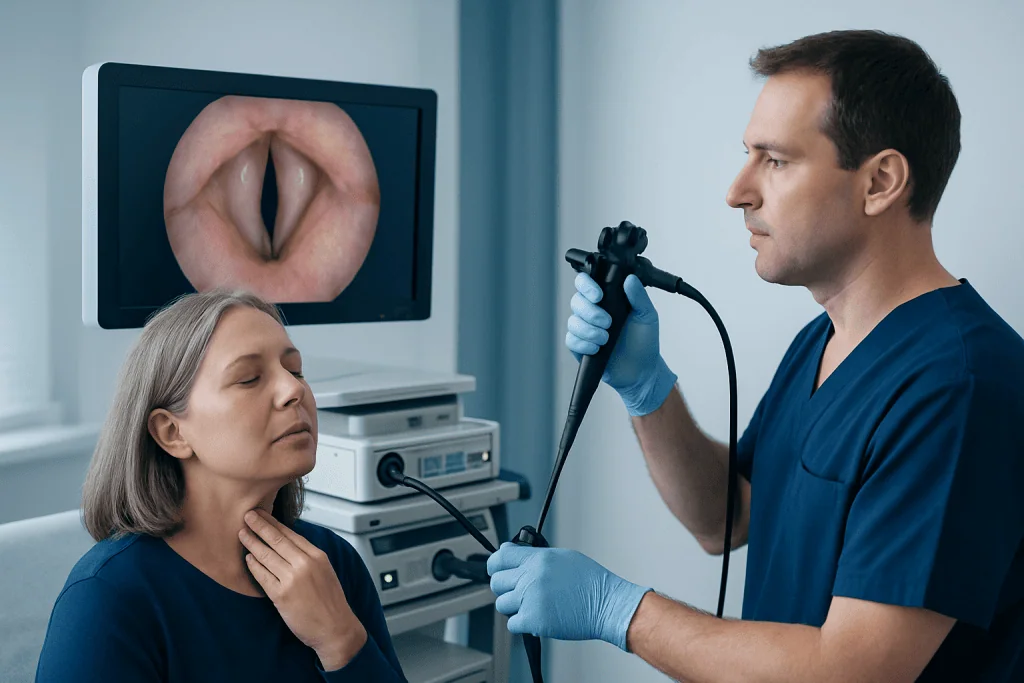
Symptoms of Vocal Cord Paralysis vary depending on whether one or both vocal cords are affected and where the paralyzed cord rests. In one-sided paralysis, the voice may sound hoarse, breathy, weak or easily tired. Some people notice that they cannot speak loudly, sing as before, or maintain their voice during long conversations.
Swallowing symptoms can also occur because the vocal cords help protect the airway. A person may cough or choke when drinking liquids, feel that food “goes down the wrong way,” or experience repeated throat clearing. A weak cough may make it harder to clear mucus from the airway.
Breathing symptoms are less common in one-sided paralysis but may appear when both vocal cords are affected or when the airway is narrowed. These symptoms can include noisy breathing, shortness of breath during activity, a feeling of tightness in the throat, or difficulty breathing when lying down.
- Hoarseness or voice change lasting more than a few weeks
- Breathy, weak or tiring voice
- Loss of vocal range or difficulty singing
- Coughing or choking while eating or drinking
- Frequent throat clearing or aspiration symptoms
- Noisy breathing or shortness of breath, especially in bilateral paralysis
Causes & Risk Factors
Vocal Cord Paralysis usually occurs when the nerves that control the larynx are injured, compressed or not functioning properly. The most important nerve involved is the recurrent laryngeal nerve, which travels from the brainstem down through the neck and chest before returning to the voice box. Because of this long pathway, problems in the neck, chest, thyroid, lungs, heart or nervous system may affect vocal cord movement.
One recognized cause is surgery in the neck or chest, particularly procedures involving the thyroid gland, parathyroid glands, cervical spine, carotid artery, heart, esophagus or lungs. Paralysis may also follow injury, intubation, infections, inflammation, stroke, neurological disorders or tumors that press on the nerve. In some patients, the cause is called idiopathic, meaning no definite reason is identified.
Risk factors include a recent operation near the course of the laryngeal nerves, previous neck or chest radiation, known thyroid or lung disease, neurological disease, and a history of neck or chest trauma. However, Vocal Cord Paralysis can occur in people without obvious risk factors.
Understanding the cause is important because treatment may need to address both the paralyzed vocal cord and the condition that led to it. For example, management may differ if paralysis follows a temporary nerve injury compared with paralysis caused by a structural problem that requires separate evaluation.
Diagnosis
Diagnosis begins with a detailed medical history and examination by an ear, nose and throat specialist, often called an ENT doctor or otolaryngologist. The doctor asks about voice changes, swallowing symptoms, breathing difficulty, recent surgery, infections, trauma, neurological symptoms and other medical conditions.
The key test is laryngoscopy, which allows the specialist to look directly at the vocal cords. This is often performed with a thin flexible camera passed gently through the nose, usually in an outpatient setting. The examination shows whether one or both vocal cords are moving normally, whether there is swelling or a lesion, and how well the vocal cords close during speech.
Additional tests may be recommended depending on the findings. Voice analysis can assess pitch, loudness, breathiness and vocal effort. Swallowing assessment may be used when coughing, choking or aspiration is suspected. Imaging, such as CT or MRI, may be needed to examine the neck, chest or brain along the nerve pathway and to look for causes that are not visible during laryngoscopy.
In selected cases, laryngeal electromyography may be used to evaluate nerve and muscle activity in the vocal cords. This can help estimate whether nerve recovery is likely and guide timing of treatment. The diagnostic plan is individualized and should be interpreted by clinicians experienced in voice and airway disorders.
Treatment Options
Treatment for Vocal Cord Paralysis is chosen after specialist assessment and depends on the cause, the expected chance of nerve recovery, the patient’s voice and swallowing needs, and whether breathing is affected. Some cases, especially after a recent nerve injury or viral illness, may improve over time. In these situations, careful monitoring and supportive treatment may be appropriate.
Voice therapy is often an important part of care, especially for one-sided paralysis. A speech and language therapist or voice therapist teaches techniques to improve breath support, reduce strain, strengthen vocal efficiency and protect the voice. Therapy may also help patients communicate more comfortably while waiting to see whether nerve function returns.
Procedural treatments may be considered when the vocal cords do not close well and the voice is very breathy or swallowing is unsafe. These may include temporary injection augmentation, in which material is placed into the affected vocal cord to help it meet the other cord more effectively. Longer-term surgical options may reposition or support the paralyzed vocal cord to improve closure during speech and swallowing.
When both vocal cords are paralyzed and breathing is limited, treatment focuses on securing an adequate airway while preserving voice and swallowing as much as possible. Options may include airway procedures or, in selected cases, temporary or longer-term breathing support through a surgical opening in the neck. The right treatment category and timing should always be decided by an ENT or laryngology specialist after a full evaluation.
Living With / Prognosis
The outlook for Vocal Cord Paralysis depends on the cause, whether one or both cords are affected, and how severe the symptoms are. Some people recover partial or full movement if the nerve injury is temporary. Others may not regain normal movement but can still achieve better voice, safer swallowing and improved daily communication with appropriate treatment.
Practical strategies can help while evaluation and treatment are ongoing. People with a weak voice may benefit from pacing conversations, avoiding shouting, using amplification when needed, staying well hydrated and reducing throat clearing. If swallowing is affected, a clinician may recommend a swallowing assessment and safer eating techniques tailored to the individual.
Emotional and social effects should not be overlooked. A persistent voice change can affect work, family life and confidence, particularly for people who use their voice professionally. Reassurance, voice therapy and clear communication with the care team can help patients understand what to expect and what options are available.
International patients may seek coordinated assessment from centers with ENT, voice, swallowing, imaging and airway expertise. Acibadem International’s multidisciplinary specialists and JCI-accredited hospitals diagnose and treat Vocal Cord Paralysis for international patients, with the care plan guided by medical evaluation and individual needs.
When to See a Doctor
A person should see an ENT specialist if hoarseness, voice weakness or a breathy voice lasts longer than a few weeks, especially if symptoms began after surgery, intubation, a neck or chest procedure, trauma or a neurological event. Early assessment helps identify Vocal Cord Paralysis and rule out other causes of voice change.
Medical evaluation is also important when voice symptoms are accompanied by coughing or choking while eating or drinking. These symptoms may indicate that food or liquid is entering the airway, a problem known as aspiration. Repeated chest infections, unexplained coughing during meals or a weak cough should be discussed with a doctor.
Urgent care is needed if there is noisy breathing, severe shortness of breath, blue lips, rapidly worsening breathing difficulty, or an inability to swallow saliva. These symptoms may suggest significant airway compromise and require prompt medical attention.
People with known Vocal Cord Paralysis should keep follow-up appointments because vocal cord movement, swallowing safety and airway status can change over time. Follow-up also allows the specialist to decide whether continued observation, therapy or a procedure is the safest next step.
Frequently asked questions
What is Vocal Cord Paralysis?
Vocal Cord Paralysis is a condition in which one or both vocal cords cannot move normally because the nerve signals to the larynx are disrupted. It may affect speaking, swallowing, coughing and, in some cases, breathing. The condition is diagnosed by viewing the vocal cords with a specialist examination.
What are the most common symptoms of Vocal Cord Paralysis?
The most common symptoms are hoarseness, a weak or breathy voice, vocal fatigue and difficulty speaking loudly. Some people cough or choke when drinking liquids or feel that swallowing is less safe. If both vocal cords are affected, noisy breathing or shortness of breath can occur.
Can Vocal Cord Paralysis heal on its own?
Some cases improve over time, especially when the nerve has been stretched, irritated or affected by a temporary inflammation. Recovery can take months, and the likelihood depends on the cause and the results of specialist assessment. Regular follow-up is important to monitor movement, voice quality and swallowing safety.
How is Vocal Cord Paralysis diagnosed?
Diagnosis usually involves laryngoscopy, where an ENT specialist looks at the vocal cords with a thin camera. The doctor may also recommend voice assessment, swallowing evaluation, imaging of the neck or chest, or nerve testing in selected cases. These tests help identify the cause and guide treatment.
What treatments are available for Vocal Cord Paralysis?
Treatment may include observation, voice therapy, swallowing support, injection procedures or surgery to improve vocal cord closure or airway size. If both vocal cords are paralyzed and breathing is affected, airway-focused treatment may be needed. The best approach is decided by a specialist after examining the vocal cords and understanding the patient’s symptoms.
Is Vocal Cord Paralysis dangerous?
Many people with one-sided Vocal Cord Paralysis are stable and can be treated effectively, especially when the main issue is voice quality. The condition becomes more concerning if it causes aspiration, repeated chest infections or breathing difficulty. Noisy breathing, severe shortness of breath or rapidly worsening symptoms require urgent medical attention.
Which doctor treats Vocal Cord Paralysis?
Vocal Cord Paralysis is usually treated by an ear, nose and throat specialist, particularly one with experience in laryngology or voice disorders. Speech and language therapists, swallowing specialists, neurologists, radiologists and other clinicians may also be involved depending on the cause. A multidisciplinary approach is helpful when voice, swallowing and airway problems overlap.
References
- American Academy of Otolaryngology–Head and Neck Surgery
- National Institute on Deafness and Other Communication Disorders
- Mayo Clinic
- Cleveland Clinic
- Merck Manual Professional Edition
This article is for general information only and is not a substitute for professional medical advice. Please consult a qualified doctor about your individual situation.
Treatments for This Condition
Doctors Who Treat This Condition





Related Articles

Dizziness With Hearing Loss: When Neurotology Evaluation Is Needed

Vestibular Neuritis: Sudden Vertigo, Balance Problems, and Recovery

Neuro-Otology Tests for Dizziness: What Happens at Your Visit?

Persistent Dizziness After a Viral Illness: When Neuro-Otology Can Help

Tonsillectomy Recovery: What to Expect Each Day After Surgery

Ear Tubes Recovery: How Long Healing Takes and How to Care for the Ear

Common Cold or Sinus Infection: When ENT Assessment Is Needed

ESS vs FESS: Which Sinus Surgery Is Right for You?

When Dizziness Needs a Neurotology Second Opinion

How Ear Tubes Drain Fluid and Relieve Repeated Ear Infections

FESS Surgery for Nasal Polyps: Who May Benefit and What to Expect