Coronary Angioplasty and Stents: Procedure, Benefits, and Risks

Coronary angioplasty can relieve chest pain caused by narrowed heart arteries and is a key emergency treatment for many heart attacks. Most procedures include placement of a stent, commonly a drug-eluting stent, to reduce the chance of the artery narrowing again.
Key Takeaways
- Coronary angioplasty can relieve chest pain caused by narrowed heart arteries and is a key emergency treatment for many heart attacks.
- Most procedures include placement of a stent, commonly a drug-eluting stent, to reduce the chance of the artery narrowing again.
- Angioplasty is performed through a small puncture in the wrist or groin, usually without open-heart surgery.
- Possible risks include bleeding, artery re-narrowing, blood clots in the stent, allergic reactions, and rarely heart attack, stroke, or kidney problems.
- Long-term success depends on follow-up care, prescribed heart medications, and lifestyle changes such as stopping smoking, heart-healthy eating, and regular activity.
Coronary angioplasty, also called percutaneous coronary intervention or PCI, is a minimally invasive procedure used to widen narrowed or blocked coronary arteries. A small expandable stent is often placed to help keep the artery open and improve blood flow to the heart muscle.
Overview
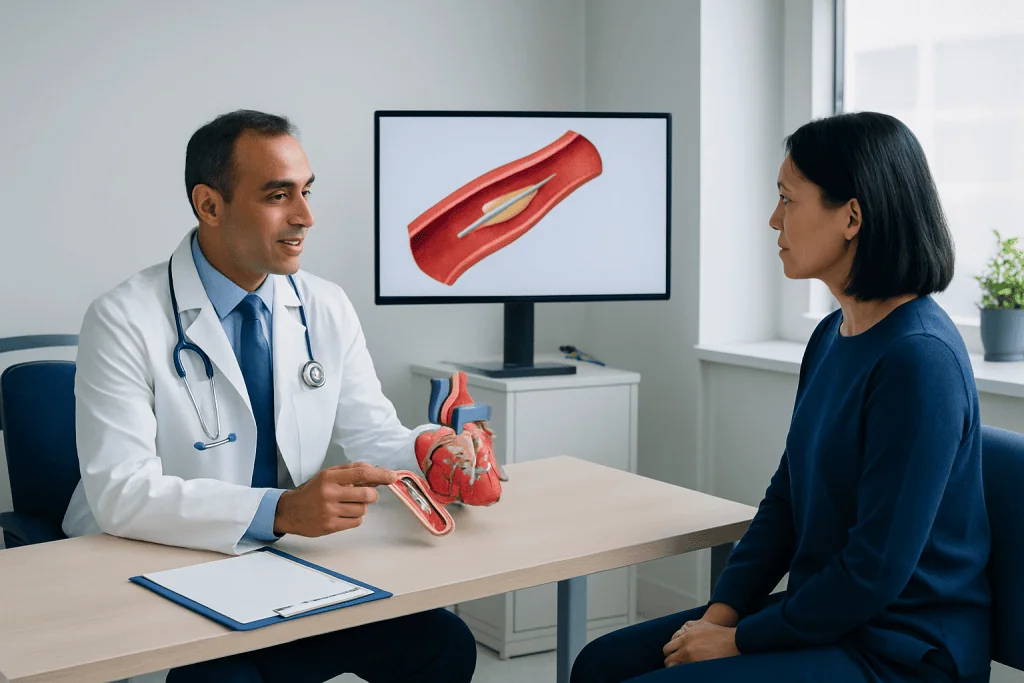
Coronary angioplasty is a procedure that opens narrowed or blocked coronary arteries, the blood vessels that supply oxygen-rich blood to the heart muscle. It is also known as percutaneous coronary intervention, or PCI. During the procedure, a cardiologist threads a thin tube called a catheter through a blood vessel, usually from the wrist or groin, to the heart artery that needs treatment.
A tiny balloon at the tip of the catheter is inflated at the narrowed area to press plaque against the artery wall and create more space for blood to flow. In most cases, a coronary stent is placed at the same time. A stent is a small mesh tube that supports the artery from the inside and helps keep it open after the balloon is removed.
Angioplasty is not the same as open-heart bypass surgery. It does not require opening the chest, and recovery is generally faster. However, it treats specific narrowed areas rather than curing the underlying process of coronary artery disease, so ongoing medical care and prevention remain essential.
When Coronary Angioplasty and Stents Are Used

Coronary angioplasty may be recommended when coronary artery disease causes symptoms such as chest pain, shortness of breath, or reduced exercise capacity despite appropriate medical treatment. It can also be used when a stress test, coronary CT angiography, or diagnostic coronary angiogram shows a narrowing that is likely to limit blood flow to the heart muscle.
In many heart attacks, angioplasty is performed urgently to restore blood flow through a suddenly blocked coronary artery. In this setting, timely treatment can help limit damage to the heart muscle. The exact approach depends on the type of heart attack, the patient’s condition, and the facilities available.
For stable coronary artery disease, the decision is more individualized. Angioplasty can be very helpful for relieving angina that affects daily life, but it may not always reduce the risk of future heart attack compared with optimal medical therapy alone. The cardiology team considers symptoms, test results, artery anatomy, other health conditions, and the patient’s preferences before recommending treatment.
How the Angioplasty Procedure Is Performed
Before angioplasty, the care team reviews medical history, allergies, kidney function, current medicines, and previous imaging or test results. Patients are usually asked not to eat or drink for a period before the procedure. Blood-thinning and diabetes medicines may need special instructions, so patients should follow the plan given by their cardiologist rather than stopping medicines on their own.
The procedure is performed in a cardiac catheterization laboratory. A local anesthetic is used to numb the access site, most often the radial artery in the wrist or the femoral artery in the groin. Sedation may be given to help the patient relax, but many people remain awake and able to respond. Contrast dye and X-ray imaging guide the catheter through the blood vessels to the coronary arteries.
Once the narrowed area is reached, the balloon is inflated for a short time to widen the artery. A stent is then expanded and left in place. The most commonly used stents are drug-eluting stents, which slowly release medication to reduce tissue growth inside the stent. After the procedure, the catheter is removed and pressure or a closure device is used to prevent bleeding at the access site.
Benefits and Expected Results
The main goal of coronary angioplasty is to improve blood flow to the heart muscle. For many patients with angina, this can reduce chest discomfort, improve breathing during activity, and increase the ability to exercise or perform daily tasks. In emergency treatment of certain heart attacks, reopening the artery can be lifesaving and can reduce the amount of heart muscle damage.
Compared with bypass surgery, angioplasty is less invasive and usually involves a shorter hospital stay. Some planned procedures may require only an overnight stay, while others may need longer monitoring depending on the patient’s condition and the complexity of treatment. Recovery is often faster, especially when the wrist artery is used.
Benefits can vary. A stent helps open the treated artery, but it does not remove all plaque from the coronary arteries or stop new blockages from developing. The best long-term results are seen when the procedure is combined with careful risk factor control, including prescribed medicines, cholesterol management, blood pressure control, diabetes care when needed, and healthy lifestyle changes.
Possible Risks and Complications
Coronary angioplasty is a commonly performed procedure, and serious complications are uncommon, but no invasive heart procedure is risk-free. The cardiologist explains the individual risk before treatment, taking into account age, kidney function, heart function, the number and location of blockages, and whether the procedure is planned or urgent.
Possible risks include bleeding or bruising at the wrist or groin access site, damage to a blood vessel, irregular heart rhythms during the procedure, reaction to contrast dye, and kidney strain from the dye, especially in people with existing kidney disease. Rare but serious complications include heart attack, stroke, emergency bypass surgery, or death.
After stent placement, two important concerns are restenosis and stent thrombosis. Restenosis means the treated area narrows again, which is less common with modern drug-eluting stents than with older stents. Stent thrombosis is a blood clot forming inside the stent; it is uncommon but serious, which is why antiplatelet medicines are prescribed and should not be stopped without a cardiologist’s advice.
Recovery, Medicines, and Self-Care After PCI
After angioplasty, patients are monitored for heart rhythm, blood pressure, chest symptoms, and bleeding from the access site. Mild soreness or bruising can occur where the catheter was inserted. The care team provides instructions about when to resume walking, driving, work, bathing, and lifting objects. These instructions may differ depending on whether the wrist or groin was used and whether the procedure was planned or done during a heart attack.
Medicines are a central part of recovery. Most patients who receive a stent need antiplatelet therapy to reduce clotting risk, often including aspirin plus another antiplatelet medicine for a defined period. Other medicines may include cholesterol-lowering therapy, blood pressure medicines, beta blockers, or diabetes treatment, depending on the person’s diagnosis. Patients should take medicines exactly as prescribed and discuss side effects promptly rather than stopping treatment.
Healthy habits help protect the stent and the rest of the coronary arteries. Useful steps include:
- Stopping smoking and avoiding tobacco exposure.
- Following a heart-healthy eating pattern rich in vegetables, fruits, whole grains, legumes, fish, and unsaturated fats.
- Being physically active as advised by the cardiology team, often through a supervised cardiac rehabilitation program.
- Managing blood pressure, cholesterol, blood sugar, weight, sleep, and stress.
- Keeping follow-up appointments and reporting new or returning symptoms early.
When to See a Doctor
People should seek urgent medical help if they have chest pain or pressure that is severe, new, lasts more than a few minutes, or occurs with shortness of breath, sweating, nausea, fainting, or pain spreading to the arm, jaw, neck, back, or stomach. These symptoms can suggest a heart attack and need immediate assessment. It is safer not to drive oneself in this situation.
After angioplasty, patients should contact their doctor promptly for increasing chest discomfort, shortness of breath, fainting, a fast or irregular heartbeat, fever, worsening pain or swelling at the catheter site, or bleeding that does not stop with gentle pressure. New numbness, weakness, speech difficulty, or severe headache also requires urgent evaluation.
Follow-up with a cardiologist is important even when recovery feels smooth. The doctor can review symptoms, adjust medicines, check risk factors, and decide whether further testing is needed. Acibadem International’s multidisciplinary specialists and JCI-accredited hospitals diagnose and treat coronary artery disease, including angioplasty and stent care, for international patients as part of individualized cardiology services.
Frequently asked questions
Is coronary angioplasty painful?
Most patients do not feel sharp pain during the procedure because the access site is numbed with local anesthetic. Some people feel pressure at the wrist or groin, warmth from the contrast dye, or brief chest discomfort when the balloon is inflated. The team monitors symptoms closely throughout the procedure.
How long does a coronary stent last?
A stent is designed to remain permanently inside the artery. Over time, the artery lining grows over the stent. The treated area can sometimes narrow again, but modern stents and appropriate medicines have reduced this risk.
Will angioplasty cure coronary artery disease?
Angioplasty treats a specific narrowing or blockage, but it does not cure the underlying tendency for plaque to develop in the coronary arteries. Long-term care includes medicines, follow-up visits, and lifestyle changes to lower the risk of future symptoms or heart events.
How soon can a person return to normal activities after angioplasty?
Recovery time depends on the reason for the procedure, the access site, and the person’s overall health. Many patients gradually return to light activities within a few days after a planned procedure, while recovery after a heart attack may take longer. The cardiologist should give personalized guidance about work, driving, exercise, and travel.
Why are blood-thinning medicines needed after a stent?
Antiplatelet medicines help prevent blood clots from forming inside the stent while the artery heals. Stopping these medicines too early can increase the risk of a serious clot. Patients should speak with their cardiologist before stopping them, including before dental work or surgery.
What is the difference between angioplasty and bypass surgery?
Angioplasty opens a narrowed artery from inside the blood vessel using a balloon and often a stent. Bypass surgery creates a new route for blood flow around blocked arteries using a blood vessel graft. The best option depends on the number, location, and complexity of blockages, as well as diabetes, heart function, age, and other medical factors.
This article is for general information only and is not a substitute for professional medical advice. Please consult a qualified doctor about your individual situation.
Heart care in Turkey — expert evaluation and treatment
JCI-accredited · board-certified surgeons · reply within 24h
Add us as a Preferred Source to see more of our trusted health content across Google Search, AI Overviews and Discover.

Cardiology Department
Diagnosis and treatment of heart and vascular conditions, from prevention to advanced interventional procedures.
93 specialists in this unitRelated Treatments
Related Conditions
More from the Health Library

Implantable Defibrillators: Preventing Dangerous Heart Rhythms

Rheumatic Heart Disease: When Valve Damage Appears Years After Rheumatic Fever

Chronic Total Occlusion: When Coronary Bypass Surgery May Be Considered

Diabetes Medicines Around CABG: Insulin, Metformin, and Surgery Safety

How to Choose a Heart Specialist for Arrhythmia Care