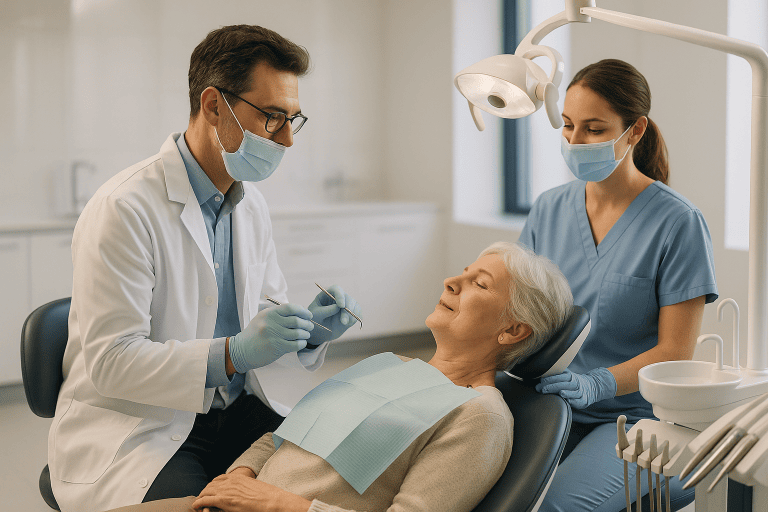
Fluoride Application
Fluoride application is a preventive dental treatment in which a clinician places concentrated fluoride varnish, gel, or foam directly onto the teeth to strengthen enamel and reduce the risk of tooth decay.…

Quick answer
Fluoride application is a quick, painless preventive dental treatment in which a clinician paints or applies a concentrated fluoride varnish, gel, or foam onto the teeth to strengthen enamel and help prevent tooth decay. It takes a few minutes, needs no anesthesia, has no real recovery time, and is often repeated every three to twelve months based on cavity risk.
What is fluoride application?
Fluoride application is a preventive dental treatment in which a dentist, dental hygienist, or other trained clinician places a concentrated fluoride product directly onto the teeth. Fluoride is a naturally occurring mineral that helps strengthen tooth enamel (the hard outer layer of the tooth) and makes it more resistant to the acids produced by bacteria in the mouth. Professional fluoride application uses a higher concentration of fluoride than everyday toothpaste and is applied in a controlled way by a clinician.
The treatment is used mainly to help prevent dental caries, the medical term for tooth decay or cavities. It may also be used to slow or stop very early decay that has not yet formed a hole in the tooth, to reduce tooth sensitivity, and to help protect the exposed root surfaces of teeth in people whose gums have receded. Fluoride application is one of the most widely used and best studied preventive measures in dentistry, and it is considered a non-surgical, low-risk treatment for most people.
Fluoride works in several ways. It helps remineralize enamel, meaning it supports the natural repair of areas that have started to lose minerals. It can also reduce the ability of mouth bacteria to produce acid. Because of these effects, regular fluoride application is often recommended as part of an overall plan that also includes brushing, flossing, a balanced diet, and routine dental check-ups.
Who is a candidate: who needs fluoride application
Many people can benefit from fluoride application, but it is most commonly recommended for those at higher than average risk of tooth decay. A dentist usually assesses risk based on dental history, diet, oral hygiene habits, and medical background. Asking who needs fluoride application is really a question about individual risk.
Groups who are often considered good candidates include:
- Children and adolescents, because developing and newly erupted teeth are especially vulnerable to decay, and because professional fluoride is a well-established part of pediatric dental care.
- People with a history of frequent cavities or with early signs of decay, sometimes called white spot lesions.
- People with dry mouth (xerostomia), a condition in which the mouth produces too little saliva. Saliva normally protects teeth, so a dry mouth raises decay risk. Dry mouth can be caused by many medications, radiation treatment to the head and neck, and some medical conditions.
- People with gum recession, where the softer root surface is exposed and more prone to decay and sensitivity.
- People wearing braces or other orthodontic appliances, which make cleaning harder and can trap food and plaque.
- People with limited ability to clean their teeth, for example due to physical or cognitive disabilities.
- People who frequently consume sugary or acidic foods and drinks.
Fluoride application is not suitable, or may need to be adjusted, in a small number of situations. Clinicians are generally cautious about using high-concentration products in very young children who cannot yet reliably spit out excess product, although small amounts of fluoride varnish are commonly used in young children under professional supervision. A known allergy to an ingredient in a specific product, such as a resin or flavoring in a varnish, may mean a different product is chosen. People with certain conditions affecting the mouth lining, such as active ulcers or severe gum inflammation, may be asked to wait until the tissue has healed. If you have a medical condition or take regular medication, telling the dental team helps them choose the safest option.
How the fluoride application procedure works
The fluoride application procedure is quick and usually painless. It is typically performed in a dental clinic as part of a routine visit, and no anesthesia is needed. The exact steps depend on the type of product used, but most appointments follow a similar pattern.
Before the application
- The dentist or hygienist reviews your dental and medical history and looks at your teeth and gums.
- In many cases the teeth are cleaned first to remove plaque (the soft film of bacteria) and any tartar (hardened plaque), so the fluoride can contact the enamel directly.
- The teeth are then dried with a gentle stream of air or with cotton rolls, because fluoride bonds better to a dry surface.
During the application
- Fluoride varnish is the most common professional product today. It is a sticky, resin-based coating that is painted onto the tooth surfaces with a small brush. It sets within seconds when it comes into contact with saliva. Only a small amount is used.
- Fluoride gel or foam is placed in a soft tray shaped like a mouthguard. The tray is held in the mouth for a few minutes while a suction tube removes excess saliva and product. You are asked not to swallow during this time.
- Fluoride rinse may occasionally be used in the clinic, though rinses are more often prescribed for home use.
The whole application generally takes only a few minutes. The teeth may look slightly yellow or dull immediately after a varnish is applied; this is normal and disappears once the varnish is brushed away later.
After the application
- You are given brief instructions on eating, drinking, and brushing for the next few hours.
- Most people leave the clinic immediately and continue their normal day.
- The dentist may recommend how often the treatment should be repeated, which is often every three to twelve months depending on your risk level.
Fluoride application is often combined with other preventive measures such as dental sealants, dietary advice, and personalized brushing instruction. In a hospital setting, this type of care is generally provided through a dental and oral health department.
Preparation for fluoride application
Preparation for fluoride application is minimal, but a few practical steps can make the visit smoother.
- Share your medical history. Tell the dental team about any allergies, current medications, pregnancy, or medical conditions. This helps them choose the right product and timing.
- Mention any home fluoride use. If you already use a prescription fluoride toothpaste, gel, or rinse, or if your drinking water is fluoridated, let the clinician know so total fluoride exposure can be considered.
- Brush and floss as usual before the appointment. Clean teeth allow the fluoride to reach the enamel more easily. If a professional cleaning is planned, the team will do this for you.
- Eat beforehand if you wish. There are no fasting requirements, and because you may be asked to avoid eating for a short time afterward, having a meal before the visit can be convenient.
- Prepare children. Explaining that the treatment is quick, painless, and simply involves painting something onto the teeth can reduce anxiety. Some varnishes have a mild taste that children generally tolerate well.
No sedation or time off work is normally needed, and you can drive yourself to and from the appointment.
Recovery and aftercare: fluoride application recovery time
Because fluoride application is non-invasive, there is essentially no recovery period in the usual sense. When people ask about fluoride application recovery time, they are usually asking how long they need to follow the short list of aftercare instructions. Most people return to their normal activities immediately.
Typical aftercare instructions include:
- Avoid eating or drinking for about 30 minutes after gel or foam, so the fluoride has time to work on the enamel. The exact time may vary, so follow the advice you are given.
- After varnish, eat soft foods and avoid very hot drinks for the rest of the day, as heat and crunchy foods can dislodge the coating early. Many clinicians suggest waiting a few hours before eating anything hard, sticky, or hot.
- Do not brush or floss until later the same day or the next morning if a varnish was used, following your clinician’s specific instructions. When you do brush, the varnish comes off and the teeth return to their normal color.
- Continue routine oral hygiene afterward, brushing twice daily with a fluoride toothpaste and cleaning between the teeth.
A slightly sticky or gritty feeling on the teeth after varnish is normal and typically fades within a day. Mild, temporary changes in taste are also common. If you were given a home fluoride product, the dentist will explain how and when to use it. Fluoride application is usually repeated at intervals decided by your risk level rather than being a one-time treatment.
Risks and side effects: fluoride application risks and benefits
Weighing fluoride application risks and benefits is straightforward for most people, because the treatment has a long safety record when used as directed by trained clinicians. Still, no treatment is entirely without side effects, and it is important to have an honest picture.
Possible side effects include:
- Temporary tooth discoloration. Varnish can make teeth look yellowish or dull for several hours until it is brushed away. This is expected and not harmful.
- Unpleasant taste or texture. Some people dislike the taste of the product or the sticky feel of varnish. These effects are short-lived.
- Nausea or stomach upset. This can occur if a larger amount of gel or foam is swallowed, which is why suction and careful tray placement are used. It is uncommon and usually mild.
- Gum irritation. Rarely, the gums may become mildly irritated where product touched them, especially if the tissue was already inflamed.
- Allergic reaction. True allergy to fluoride itself is not recognized, but allergy to other ingredients in a specific product, such as resins in varnish, has been reported very rarely.
Dental fluorosis is a condition in which developing teeth take on faint white streaks or, in more severe cases, brown spots and surface pitting because of too much total fluoride during childhood while the teeth are forming. It results from chronic excess intake over time, not from occasional professional treatments applied correctly. Nonetheless, this is why clinicians use small amounts in young children and ask about other fluoride sources. Fluorosis is mainly a cosmetic concern.
Acute fluoride toxicity from a single professional application is considered extremely unlikely because the doses used are small and the product is applied topically rather than swallowed. Keeping home fluoride products out of the reach of children remains important.
On the benefit side, fluoride application is widely regarded as an effective way to reduce the risk of new cavities and to slow early decay, particularly in people at higher risk. It is quick, does not require drilling or anesthesia, and can help preserve natural tooth structure, potentially reducing the need for fillings and more complex treatment later.
Results and outlook
Decades of research and clinical experience support fluoride as one of the most effective tools for preventing tooth decay. Professionally applied fluoride varnish and gel are recommended by major dental and public health organizations for children and for adults at increased risk of caries. The general evidence indicates that regular professional fluoride application meaningfully reduces the number of new cavities compared with no fluoride treatment, although the size of the benefit varies from person to person and depends on other factors such as diet and oral hygiene.
Fluoride application works best as part of a broader preventive plan. It does not repair existing cavities that have already formed a hole in the tooth; those still need restorative treatment such as a filling. It can, however, help stop very early lesions from progressing and may reduce sensitivity in exposed root surfaces.
Because the protective effect is not permanent, repeat applications are usually recommended at intervals matched to your risk. Your dentist will typically reassess your risk at each check-up and may adjust how often fluoride is applied, or recommend additional home fluoride products, based on how your teeth are doing over time.
Cost considerations
Fluoride application is generally one of the least expensive treatments in dentistry, but the total cost of a visit can vary. Factors that commonly influence the price include:
- The type of product used, since varnish, gel, and foam differ in cost.
- Whether the application is combined with other services such as an examination, professional cleaning, x-rays, or sealants during the same visit.
- The number of applications recommended per year, which depends on individual decay risk.
- The setting, for example a general dental practice compared with a hospital-based dental department or a specialist pediatric clinic.
- Insurance or public health coverage, which in many places covers preventive fluoride for children and sometimes for high-risk adults, but rules vary widely.
Fluoride application does not involve a hospital stay, implants, or devices, so those cost drivers do not apply. Follow-up costs are mainly related to routine check-ups. Asking the clinic in advance what is included in the quoted fee can help avoid surprises.
Frequently asked questions
What is the fluoride application procedure like for a child?
For children, the fluoride application procedure is usually very quick. The clinician dries the teeth and paints on a small amount of varnish with a soft brush, which takes about a minute. The child may notice a sticky feeling and a mild taste. Children are generally asked to avoid hard or hot foods for the rest of the day and to skip brushing until the next morning. Most children tolerate it well, especially after a simple explanation.
How long is fluoride application recovery time?
There is essentially no recovery time after fluoride application. People typically leave the clinic and carry on with their day right away. The only restrictions are short-term: avoiding food and drink for about 30 minutes after gel or foam, and avoiding hot drinks, hard foods, and brushing for several hours after varnish. Any temporary discoloration or stickiness usually disappears once the teeth are brushed.
Who needs fluoride application as an adult?
Adults who may benefit include those with a history of frequent cavities, dry mouth from medications or medical treatment, receding gums with exposed roots, braces, or difficulty cleaning their teeth. Adults who have had radiation therapy to the head and neck are often considered high priority because their saliva production may be reduced. A dentist can assess your individual risk and suggest whether professional fluoride is likely to help.
What are the main fluoride application risks and benefits?
The main benefits are a reduced risk of new cavities, the potential to halt early decay, and relief of some tooth sensitivity, all achieved without drilling or anesthesia. The main risks are minor and temporary, such as tooth discoloration from varnish, an unpleasant taste, and rarely mild nausea if gel is swallowed. Dental fluorosis is linked to excess fluoride intake over time during childhood, not to occasional supervised professional treatments.
How often should fluoride application be repeated?
The frequency depends on your risk of decay. Many dentists recommend professional fluoride every six months for people at moderate risk and more often, sometimes every three months, for those at high risk. People at low risk may need it less often or not at all beyond daily fluoride toothpaste. Your dentist will usually review this at each check-up.
Is fluoride application safe during pregnancy?
Topical fluoride applied to the teeth in a dental clinic is generally considered safe during pregnancy, since very little is absorbed into the body. Good oral health during pregnancy is encouraged, and preventive care is usually not delayed. It is still sensible to tell the dental team you are pregnant so they can tailor your care and avoid any unnecessary procedures.
Does fluoride application replace brushing with fluoride toothpaste?
No. Professional fluoride application is an addition to daily home care, not a replacement for it. Brushing twice a day with a fluoride toothpaste, cleaning between the teeth, limiting sugary foods and drinks, and attending regular dental check-ups remain the foundation of decay prevention. Professional fluoride offers an extra layer of protection, particularly for people at higher risk.
When to see a doctor
Consider asking a dentist about fluoride application if you or your child have had recent cavities, notice white or chalky spots on the teeth, experience sensitivity to hot, cold, or sweet foods, have receding gums with exposed root surfaces, or have a dry mouth from medication or medical treatment. People with braces, limited ability to brush, or a diet high in sugar may also benefit from a preventive assessment. Within the Acibadem network, this type of preventive dental care is typically coordinated through the dental and oral health department.
Serious problems after fluoride application are very rare, but seek prompt medical or dental attention if you notice:
- Signs of an allergic reaction, such as swelling of the lips, tongue, face, or throat, hives, or difficulty breathing. Difficulty breathing is an emergency.
- Persistent vomiting, stomach pain, or unusual drowsiness after a treatment, particularly in a child, which could indicate that a larger amount of product was swallowed.
- Gum or mouth soreness that does not settle within a day or two, or any sores or ulcers that develop after the application.
- Tooth pain, swelling, or sensitivity that worsens rather than improves, which may signal an underlying problem such as decay or infection that needs separate treatment.
If you are ever unsure whether a symptom is related to the treatment, contacting the dental clinic that performed the application is a reasonable first step, and any breathing difficulty should be treated as an emergency.
Preparation
- Tell the dental team about allergies, medications, pregnancy, and any fluoride products you already use at home. Brush and floss as usual before the visit so the fluoride can reach clean enamel. No fasting or sedation is needed, and eating beforehand can be convenient since you may be asked to wait a short time before eating afterward.
Aftercare
- Avoid eating or drinking for about 30 minutes after gel or foam, and avoid hot drinks, hard or sticky foods, and brushing for several hours after varnish, following your clinician's instructions. Temporary yellowish discoloration and stickiness from varnish clear once you brush. Continue brushing twice daily with fluoride toothpaste and attend follow-up visits as recommended.
Medically reviewed by the Acıbadem International Medical Board — September 13, 2026
See our medical review board →
Update history
- PublishedSeptember 13, 2026
- Medical review approvedSeptember 13, 2026
- Last content updateSeptember 13, 2026